You paid for the property. You maintain the building. But the driveway that is cracked, stained, or just embarrassingly worn keeps getting pushed to next year’s list. For most New York City homeowners, driveway paving feels like a project with too many moving parts: permits, material choices, contractor vetting, zoning rules, and a price tag that varies wildly depending on who you ask.
At Kings Pavers & Concrete, we’ve worked on driveway installations, replacements, and hardscape projects across Brooklyn, Queens, Staten Island, and the Bronx. From narrow urban lots to large residential properties, our team understands the permitting, drainage, and climate challenges unique to NYC paving projects.
This guide cuts through all of it. Here’s what you actually need to know before a single shovel hits the ground.
Why Getting This Wrong Is Expensive
A bad driveway isn’t just an eyesore. It’s a financial liability that compounds over time.
- You’ll pay twice. NYC driveway replacement costs $4,000–$15,000. If the base failed, that’s the bill again, plus $1,500–$3,000 to rip out and haul away the old material.
- It hurts your home’s value. Buyers notice. A cracked, patchy driveway signals neglect, and that impression bleeds into how they see the whole property.
- You’re legally on the hook. Uneven surfaces = slip-and-fall risk. Injuries on your property are your problem, and insurers don’t look kindly on known hazards that went unfixed.
- Stormwater rules catch people off guard. Large impermeable driveways may trigger NYC compliance requirements. Get it wrong, and you’re facing fines plus mandatory fixes at your expense.
The Material Breakdown: What Actually Works in NYC
There is no universally correct paving material. The right choice depends on your budget, your lot, your neighborhood’s aesthetic standards, and how long you intend to own the property. Here’s an honest assessment of each option.
Asphalt
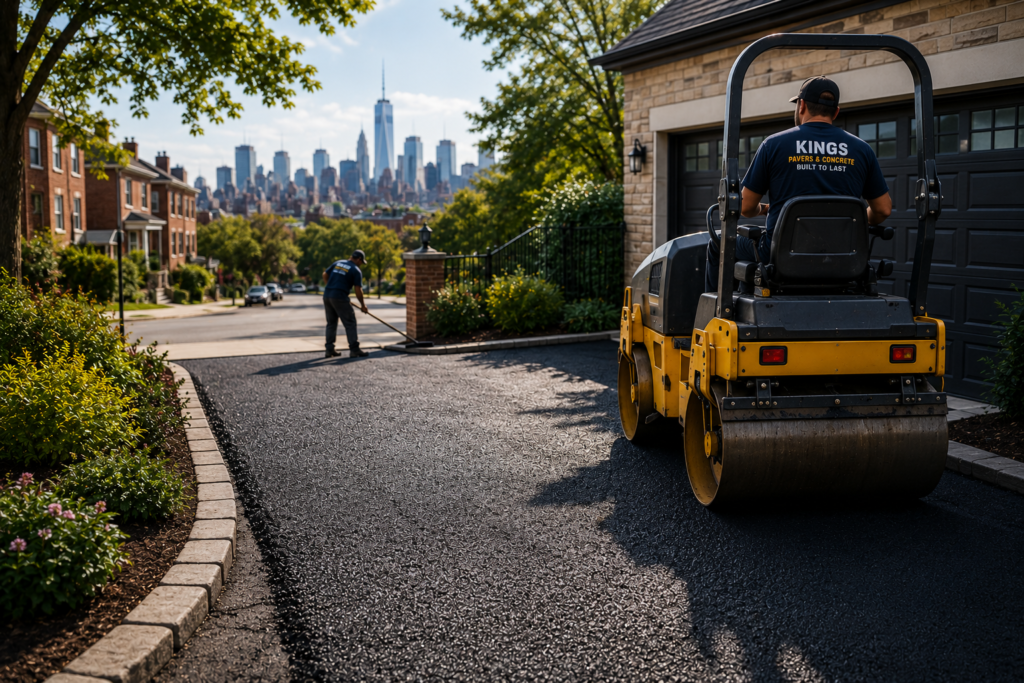
Asphalt is the most common driveway surface in New York City for good reason. It performs well through freeze-thaw cycles, installs faster than any alternative, and costs less upfront, typically $3 to $7 per square foot installed. It does require maintenance: sealing every three to five years extends its life significantly and prevents the surface from becoming brittle. Lifespan with proper maintenance is 20 to 30 years.
The downside is aesthetics. Asphalt looks functional, not attractive. It also softens in extreme summer heat, which can cause surface deformation under heavy vehicle weight. For homeowners who want curb appeal, it’s a practical choice but not a premium one.
Concrete
Concrete costs more upfront, $6 to $12 per square foot, but lasts 30 to 50 years with minimal maintenance. It can be stamped, textured, or colored, which makes it one of the few materials that offers both durability and visual flexibility.
The critical caveat for NYC: concrete is vulnerable to salt damage. Road salt and de-icing chemicals, which are heavily used on NYC streets and sidewalks, accelerate surface deterioration if they reach the driveway. Sealing is essential. You also need a contractor who knows how to pour and cure concrete in variable temperatures, a common problem in early spring and late fall installations.
Brick and Clay Pavers
Brick pavers are the right choice if longevity and repairability matter more than upfront cost. Individual units can be pulled up and replaced without disturbing the surrounding surface, a meaningful advantage over monolithic poured materials. Installation runs $10 to $20 per square foot, and a well-built brick driveway can last 50 years or more.
The requirement is base prep. Brick pavers distribute load through their bed layer; if that layer isn’t properly compacted and leveled, pavers shift and settle unevenly. In NYC, where soil conditions vary block by block, this is not a step to shortcut. Hire a contractor who treats the base as seriously as the surface.
Natural Stone (Bluestone, Granite)
Bluestone is the material you see on the stoops and garden paths of brownstone Brooklyn, and it translates well to driveways in historic neighborhoods. Granite cobblestones are common in older properties in Queens and Staten Island. Both are extremely durable, genuinely attractive, and expensive, $15 to $30 per square foot installed.
One practical note: polished or smooth natural stone is slippery when wet. Specify a flamed or bush-hammered finish for any surface that gets vehicle or foot traffic in the rain.
Permeable Options (Gravel, Permeable Pavers)
Permeable surfaces, compacted gravel, permeable interlocking pavers, or plastic grid systems filled with gravel handle NYC stormwater regulations most cleanly because they allow water to drain through rather than run off. If your lot triggers stormwater compliance requirements, a permeable surface can eliminate the need for additional drainage engineering.
Gravel is the lowest-cost option at $1 to $4 per square foot, but requires edging to prevent spread and occasional regrading. Permeable pavers cost $10 to $18 per square foot, but look more finished and hold their position better. Both are worth considering if you’re in a neighborhood with strict impervious surface limits.
Expert Driveway Solutions That Prevent Costly Repairs
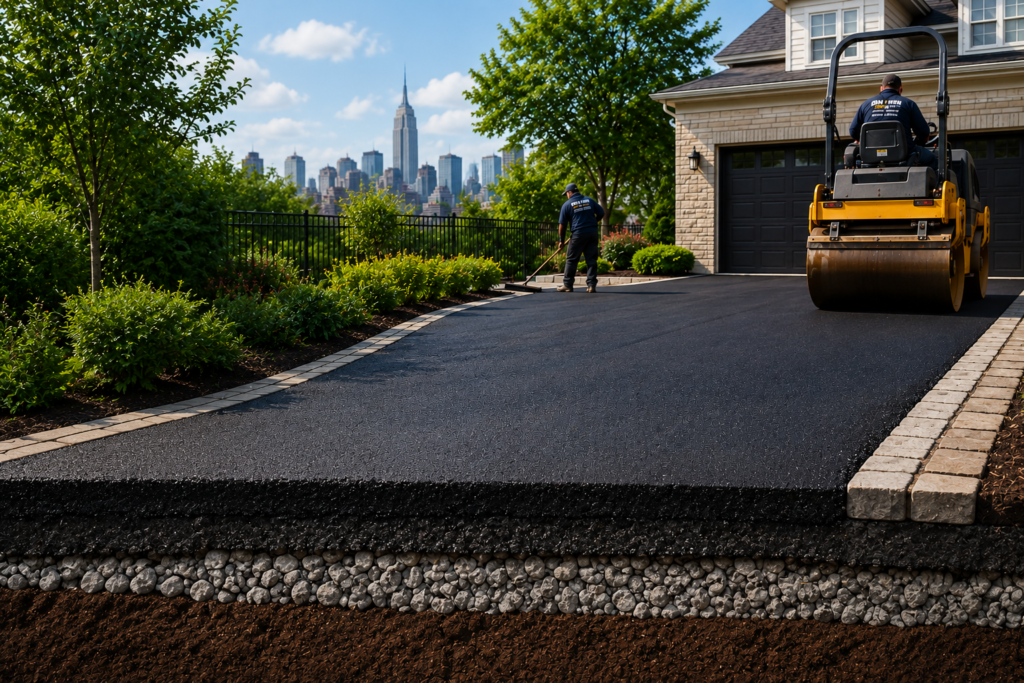
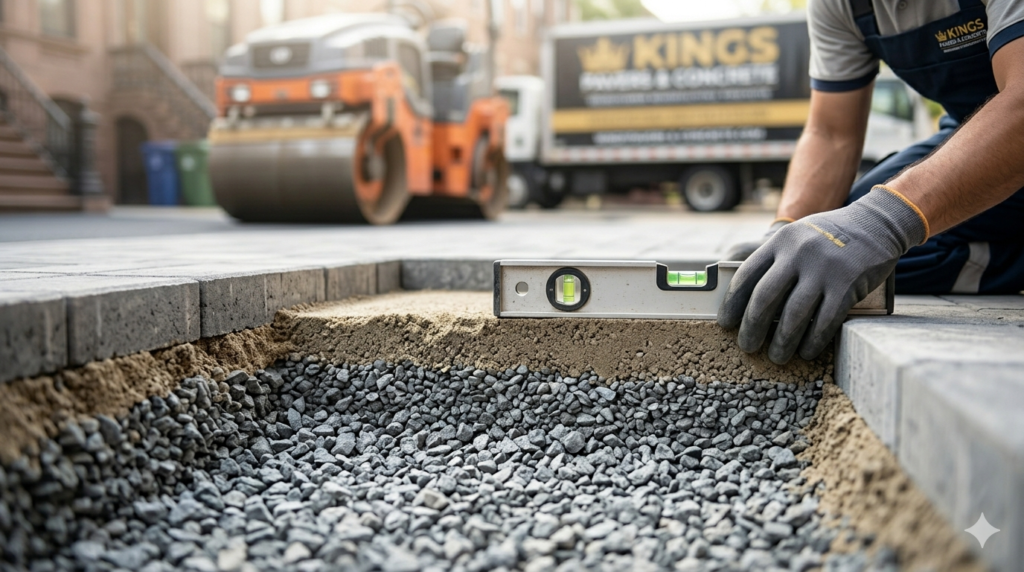
A long-lasting driveway starts below the surface. In NYC, expert installation means proper excavation, compacted base preparation, drainage planning, and materials designed to handle freeze-thaw cycles year after year.
Professional contractors also account for:
- Water runoff and drainage slope
- NYC DOT and DOB permit requirements
- Reinforced edges and joint protection
- Stormwater compliance solutions
- Long-term maintenance planning
These details are what separate a driveway that lasts 20+ years from one that starts cracking after a few winters.
Experienced NYC contractors understand that long-term durability depends more on proper installation methods and drainage engineering than the surface material alone.
How to Hire the Right Contractor
In New York City, experienced contractors should be familiar with DOT regulations, curb cut requirements, sidewalk integration, and local building compliance standards before any work begins.
Before you sign anything, check these five things:
- HIC License. NYC requires a Home Improvement Contractor license. Verify it before you shake hands. Unlicensed work creates headaches when selling or filing claims.
- Insurance. General liability + workers’ comp. No certificate? No deal. An injured worker on your property becomes your problem without it.
- Base prep talk. A good contractor leads with excavation depth, gravel base, and drainage slope, not price. If they skip straight to surface options, walk away.
- Three bids, read carefully. The lowest number usually means something’s missing: base depth, permits, warranty, or cleanup. A bid 30% below the rest is a red flag, not a bargain.
- They pull the permits. Always. If they tell you to do it yourself or claim you don’t need one, that’s your cue to leave.
The Decision Checklist
Before you contact a contractor, answer these questions:
- What is your total budget? Be realistic. Underfunding a driveway project leads to cutting corners.
- What is the lot size and shape? Measure the actual area, including any irregular sections.
- Are there landmark district or HOA restrictions? Some Brooklyn and Manhattan neighborhoods have design guidelines that limit material choices.
- Do you have stormwater compliance requirements? Check with your contractor or the NYC DEP if your lot is large or in a flood zone.
- How long do you plan to own the property? A five-year timeline favors asphalt. A 20-year timeline justifies concrete or pavers.
- What matters more, the upfront cost or the long-term durability? There’s no wrong answer, but be honest about it.
Why Trust Kings Pavers & Concrete?
Kings Pavers & Concrete has helped NYC homeowners improve their properties with professionally installed driveways, patios, sidewalks, and masonry work built for long-term durability. Our team combines hands-on field experience, code-compliant installation practices, and premium materials to deliver surfaces designed for New York City’s demanding climate conditions.
- Local expertise, not guesswork. Years of NYC-specific experience mean we know the permits, the soil, the winters, and the neighborhoods.
- Full transparency. No surprise charges, no vague timelines. You know exactly what you’re getting before work begins.
- Premium materials only. We don’t cut corners on base prep or surface quality because a cheap install always costs more in the long run.
- Built-to-last philosophy. From design to final compaction, every surface we build is engineered to stand the test of time.
- We treat your property like our own. Driveways, walkways, patios, sidewalk repair, whatever the job, we bring the same care and precision.
The Bottom Line
Paving a driveway in NYC is a significant investment, and the decisions you make before the crew shows up determine whether that investment holds for decades or starts failing within a few years. Choose a material that fits your lot, your budget, and your timeline. Understand the permit requirements before work begins. And hire a contractor who treats base preparation as the foundation of the job because it is.
Done right, a properly paved driveway adds value, reduces liability, and stays off your maintenance list for a generation. Done wrong, it becomes a recurring expense that costs far more than the money you saved on the original bid.
Most New York City homeowners wait too long. Cracks spread, bases shift, and a $500 fix turns into a $10,000 replacement. Don’t be that story. Fully licensed and insured, Kings Pavers & Concrete provides transparent estimates, professional workmanship, and NYC-compliant installations designed to last.
Get Your Free On-Site Estimate Today
No forms. No runaround. A real expert visits your property and tells you exactly what’s needed and what it costs.
Is paving a driveway worth the investment?
Absolutely. Beyond daily convenience, it significantly boosts resale value. For commercial owners, a smooth surface reduces liability (trip hazards) and provides a professional environment for clients and tenants.
How long does the process take?
Most NYC projects are completed within 3 to 7 days. We prioritize efficiency to minimize disruption to your home or business operations.
Do I need a permit for my driveway project?
In many NYC cases, yes. Projects involving curb cuts, sidewalks, drainage modifications, or expanded driveway footprints often require DOT or DOB approvals. An experienced contractor should help guide you through the permitting process before work starts.
Can you help with sidewalk violations?
Yes. We specialize in sidewalk violation removal. We can coordinate your driveway project with your sidewalk repairs to ensure your entire property entrance complies with city code.
How do I maintain a paver driveway?
Maintenance is minimal. An occasional power wash and sweeping in new sand every few years will keep the joints tight and prevent weed growth.