Concrete driveway pavers are manufactured units made from cement, aggregate, and pigment. Genuine clay brick pavers are shaped from clay and fired in a kiln at high heat. These manufacturing differences affect their appearance, color retention, typical costs, and performance under winter conditions and daily vehicle traffic.
For concrete vs. brick driveway pavers in New Hyde Park, there is no single winner. A well-chosen, vehicle-rated product of either type, installed correctly, can serve a residential driveway well. Understanding these differences can help you choose a material that fits your budget, complements your home, and meets your maintenance expectations.
Concrete vs. Brick Driveway Pavers: Quick Comparison
Concrete pavers generally offer more product choices across budgets, colors, and shapes. Paving-grade clay brick is usually chosen for its traditional look and fired-in color, often at a higher material cost. Neither is automatically more durable. What matters is whether the specific product is rated for vehicles and how the driveway is built.
| Concrete Pavers | Clay Brick Pavers | |
| Material | Cement, aggregate, and pigment, molded and cured | Clay fired at high temperatures |
| Appearance | Wide range of colors, textures, and shapes, including brick-look styles | Classic, warm look with natural variation; fewer shape options |
| Relative cost | Broad range, including budget-oriented lines | Often higher material cost; varies by product and sourcing |
| Durability | Product-dependent; depends on vehicle rating, thickness, and quality | Product-dependent; depends on paving-grade rating and quality |
| Color | Pigment-based; may shift gradually with wear and exposure | Typically fired into the unit; ages differently |
| Maintenance | Sweeping, cleaning, joint sand; sealing optional | Sweeping, cleaning, joint sand; sealing optional |
| Repairability | Units can be replaced individually; color matching can be tricky | Units can be replaced individually; natural variation can help blending |
| Best fit | Budget flexibility, design variety, contemporary looks | Traditional appearance, long-term color priorities |
These are general tendencies, not rankings. Individual products vary, so use the table to ask better questions of your contractor and supplier.
What Is the Difference Between Concrete and Brick Driveway Pavers?
How Concrete Driveway Pavers Are Made
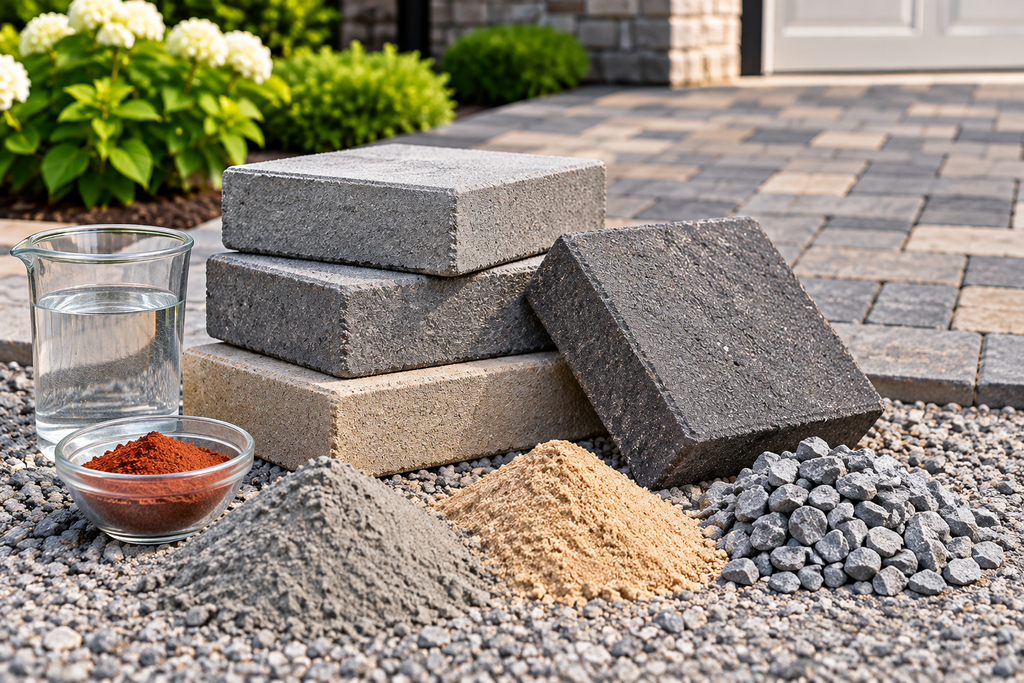
Concrete pavers are individual units made from cement, sand, stone aggregate, water, and usually pigment. Manufacturers compact the mix in molds and cure it. Because the units are cast, they come in many shapes, thicknesses, textures, and colors, including styles that imitate brick, stone, or slate.
Concrete paver quality varies by manufacturer and product line. Factors such as density, thickness, and surface finish affect long-term performance, so not all concrete pavers offer the same durability. Driveways call for units designed for vehicle loads, since thinner patio units are made for foot traffic.
Concrete pavers are also not poured concrete, which is a continuous slab cast in place. This article compares individual paving units only. For paver systems against slabs, see Paver Driveway vs Poured Concrete in New Hyde Park.
How Clay Brick Driveway Pavers Are Made
Genuine clay pavers start as clay or shale that is shaped, dried, and fired at high temperatures. Firing hardens the unit and, in many products, sets the color throughout the body instead of only on the surface.
Two cautions matter here. First, paving-grade brick is made for horizontal use under foot and wheel traffic, while ordinary building brick, the kind used in walls and facades, is not designed for that and may break down when exposed to moisture and freezing. Second, many “brick” driveways are actually brick-look concrete pavers, which behave like concrete. When you see a sample, ask directly which one it is.
Why Material Differences Matter for Driveways
A driveway is a harsher setting than a patio. It sees concentrated wheel loads, turning and braking forces, snow removal, deicing, and repeated freezing and thawing. Two product traits matter most: whether the unit is rated for vehicles and how much water it absorbs.
The paver material is only one part of a durable driveway. Proper base preparation and drainage are essential for both concrete and brick pavers. Even high-quality pavers can develop problems when installed over a poorly prepared base. For that foundation work, see Why Base Preparation Matters for New Hyde Park Paver Driveways.
Concrete vs. Brick Paver Cost Comparison
Genuine clay brick pavers often carry a higher material cost than many concrete pavers, largely because concrete offers more budget-oriented product lines. That is a tendency, not a rule. Premium concrete pavers can approach or exceed some brick options, and installation, sourcing, and layout all influence the final number.
Upfront Material Costs
Product price depends on the manufacturer, thickness, size, finish, color, and how far the unit travels to reach your supplier. Concrete spans a wide spectrum, from simple smooth units to textured, tumbled, or large-format lines. Clay options may be narrower in some markets, and paving-grade units can mean special orders or longer lead times.
Compare products with similar specifications. For example, the price difference between a basic concrete paver and a premium clay brick paver may appear significant.
Installation Cost Considerations
Both materials follow a similar installation process, but several factors can affect labor costs. Smaller units and intricate patterns mean more cuts and more time. Special-order products can affect scheduling. Cutting methods and waste allowances may differ depending on the unit. Ask your contractor whether your selected paver requires additional labor and make sure those costs are included in the written estimate.
This section compares materials only. For how project size, excavation, drainage, and other factors shape a total estimate, see Driveway Pavers Cost in New Hyde Park: What Affects Your Estimate?.
Long-Term Ownership Costs
Ongoing costs include cleaning, joint sand upkeep, optional sealing, and replacing damaged units. Availability matters too: matching a unit years later is easier with a product line that stays in production. A lower initial price does not always mean lower long-term costs, just as a higher price does not necessarily guarantee better value. Because performance varies by product and installation, there are no reliable lifespan or return-on-investment figures to quote here.
Which Is More Durable: Concrete or Brick Driveway Pavers?
Neither material is inherently more durable. Durability depends on whether the specific paver is rated for vehicles, its thickness, how much water it absorbs, and how well the base and drainage were built. A vehicle-rated unit of either type can perform well, while a patio-grade or building-grade unit will struggle under cars.
Vehicle Loads and Everyday Wear
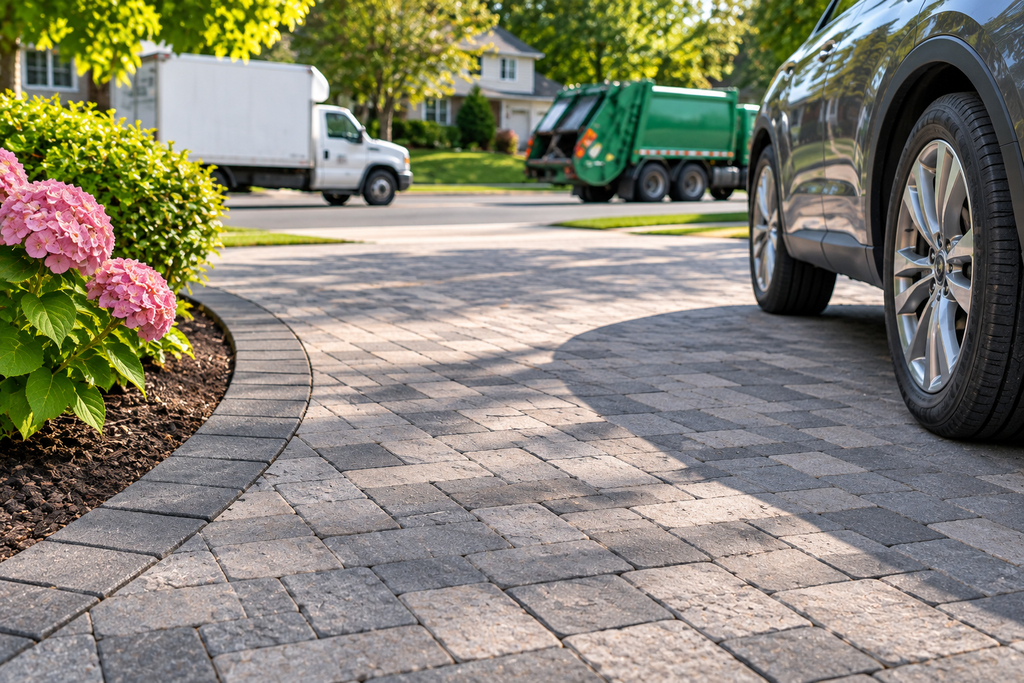
Cars, SUVs, delivery vehicles, and garbage trucks can place additional stress on driveway turning areas and the apron near the street. Thickness and product design matter here, and units meant for vehicles are generally built differently than pedestrian units.
Over time, concrete surfaces can wear so that texture softens or aggregate becomes more visible, depending on the product. Fired clay is hard, though edges can still chip under impact. Ask for the manufacturer’s written vehicle-suitability information for any product you are considering. How well the units stay locked together depends largely on installation, covered in Why Paver Driveways Sink or Shift: A New Hyde Park Homeowner Guide.
Freeze-Thaw Conditions and Moisture
New Hyde Park winters bring freezing and thawing cycles. Water that enters a paver and freezes can contribute to flaking or cracking, so a product’s water absorption and manufacturing quality matter. Water trapped in the base and joints also affects how the whole surface behaves.
It would be inaccurate to say clay always beats concrete in cold weather, or the reverse. Ask the supplier what freeze-thaw documentation exists for the specific product and how it applies to Northeast winters, and make sure the driveway is designed to move water away.
Color Retention and Surface Aging
Many clay pavers have color fired through the unit, so everyday wear tends to reveal similar color underneath, though finishes vary by product. Concrete pavers get their color from pigments, and sun, weather, abrasion, and cleaning can gradually change how that color looks, to a degree that depends on the product.
White, powdery haze called efflorescence, caused by natural salts moving to the surface, can appear on new concrete pavers and is often temporary. It can occasionally occur with clay as well. Some homeowners prefer a consistent appearance, while others appreciate the natural character that develops as pavers age. Consider which look best suits your preferences.
Concrete vs. Brick Paver Maintenance
Both materials need routine sweeping, occasional washing, and periodic joint-sand attention. The key differences are color aging, sealing at all, and finding matching replacement units years later. Neither is maintenance-free, and the manufacturer’s instructions for your specific product should guide cleaning, sealing, and deicing.
Cleaning and Stain Removal
Sweep regularly and rinse as needed. Treat oil and grease quickly, since absorption varies by product within both categories. A small test on a spare unit is a sensible way to check how a surface reacts. Pressure washing can strip joint sand and roughen surfaces, so keep pressure moderate and follow manufacturer guidance. Moss and algae usually point to shade and persistent moisture.
Joint Maintenance and Sealing
Joint sand helps keep pavers stable, but some may be lost through weathering or cleaning. Periodic inspection and replenishment can help maintain the joints. Polymeric sand hardens after proper water activation and may help reduce weed growth. However, it can deteriorate over time and may require maintenance or replacement.
Sealing is optional, not mandatory. It can deepen color, reduce stain absorption, and help stabilize joints, but it changes the surface appearance, may need reapplication, and must be compatible with the product. For winter, ask the manufacturer which deicing products are acceptable, and be careful with plow blades near paver edges.
Repairs and Individual Paver Replacement
Both types can be lifted and replaced one unit at a time. The main challenge is finding replacement pavers that match the existing driveway. Concrete colors may vary between production batches, while natural color variations in clay brick can sometimes make replacements less noticeable. Ask your installer to leave spare units after the job. If several pavers in one area keep sinking, the cause is usually underneath, not the paver itself.
Appearance and Design Differences
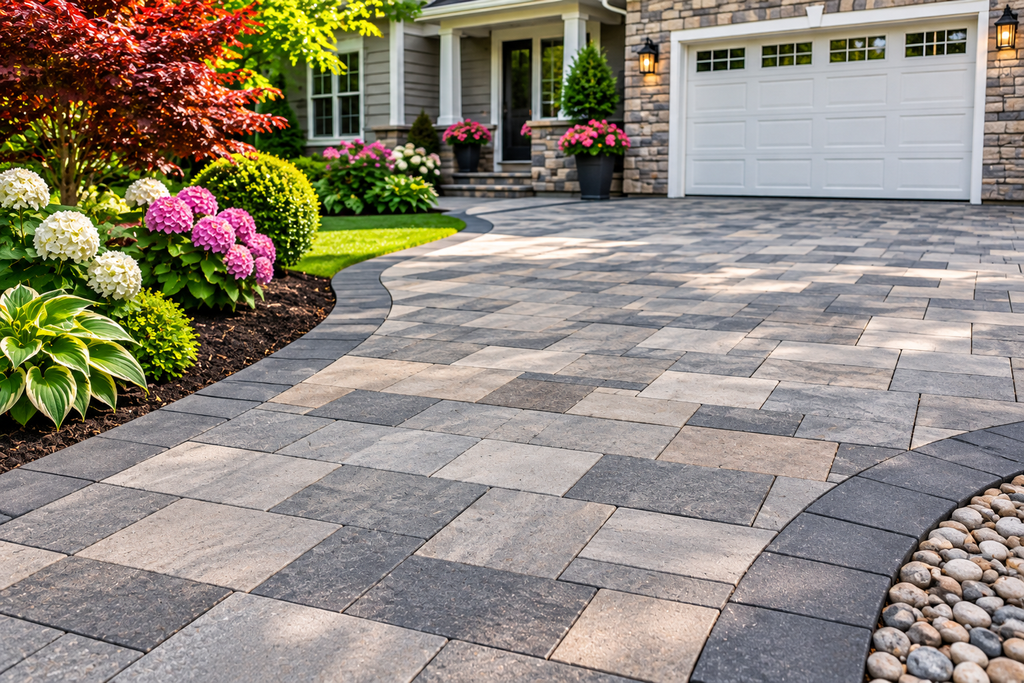
Concrete pavers offer a wider range of design options, including different colors, textures, shapes, and finishes that resemble natural stone, cobblestone, or slate. Clay brick offers a classic, warm look in reds, browns, and charcoals, with natural variation across the surface and usually fewer shape options.
Contemporary homes often pair well with clean, large-format concrete units, while traditional exteriors may suit brick’s familiar character. These are general design guidelines. Viewing physical samples at your property in natural daylight can help you make a more informed decision. For layouts and patterns, see Paver Driveway Design Ideas for Small and Narrow New Hyde Park Properties.
Which Driveway Paver Material Is Better for Your New Hyde Park Property?
If budget flexibility is your top priority, concrete pavers give you the widest range of price points, and a vehicle-rated mid-range concrete unit may offer the best balance.
If you want a traditional look, clay brick may complement an older or brick-faced home, especially if long-term color retention matters to you. Its classic appearance can create a cohesive look with traditional architectural styles.
If you prefer a contemporary or highly customized design, concrete’s range of shapes, sizes, and finishes is hard to match.
If you want minimal upkeep, neither wins outright. Choose a product with clear manufacturer care guidance, decide upfront about sealing, and keep spare units.
If availability and installation conditions matter, ask which products your supplier can deliver reliably and whether your site’s drainage and access suit the choice.
Before making a final decision, discuss your driveway requirements, material preferences, and installation conditions with a local paving contractor. You can learn more about paver installation with Kings Pavers, or browse the full range of services.
What Should You Ask Before Choosing Concrete or Brick Pavers?
- Is this specific product rated for residential vehicle use, and can I see the manufacturer’s documentation?
- Is it genuine paving-grade clay brick, a brick-look concrete paver, or something else?
- Can I see physical samples, ideally in daylight at my property?
- What freeze-thaw and water-absorption information is available for this product?
- What does the written estimate include, and does labor differ by material?
- What are the manufacturer’s maintenance, sealing, and deicing recommendations?
- Will this product line be available for future repairs, and can spare units be left on site?
Frequently Asked Questions
Are brick pavers more expensive than concrete pavers?
Genuine clay brick pavers often cost more per unit than many concrete pavers, mainly because concrete offers more budget-oriented lines. Premium concrete can narrow or close the gap, and installation and sourcing affect the final price. Compare specific products in written estimates.
Which paver material is better for a driveway?
Neither is better in every case. A vehicle-rated unit of either type, installed over a properly prepared base with good drainage, can work well. Budget, appearance, product specifications, and maintenance preferences should decide.
Do concrete pavers fade faster than clay brick pavers?
Many clay brick pavers have color throughout the material, while concrete pavers typically use pigments that may change in appearance over time. However, color retention varies by product, manufacturing quality, and exposure to sunlight and weather. Compare manufacturer specifications rather than assuming one material will always retain its color better.
Can brick pavers handle vehicle traffic?
Paving-grade clay brick made for vehicular use can. Ordinary building brick is not designed for driveways. Confirm the product’s vehicle-suitability documentation before you buy.
Can damaged concrete or brick pavers be replaced individually?
Yes, both can be lifted and replaced as individual units. The main challenge is matching color and style, which is why keeping spare units from the original installation helps.
Which material is better for New Hyde Park winters?
Neither can be named the winner without knowing the specific product. Freeze-thaw performance depends on the paver’s water absorption and quality, plus drainage and installation. Ask for manufacturer freeze-thaw information and confirm how the driveway will manage water.
Choosing Between Concrete and Brick Driveway Pavers
The better choice comes down to a few questions. Is the product rated for vehicles? Does the price fit your budget once installation is included? Does the look suit your home? Are you comfortable with the upkeep and the way the surface will age? Local requirements, including any permits, depend on your property’s jurisdiction and project scope, so confirm those with the appropriate local authority.
If you’re comparing concrete vs. brick driveway pavers in New Hyde Park, Kings Pavers can help you explore suitable materials and installation options. Contact our team to discuss your driveway project and request an estimate through our paver installation page.