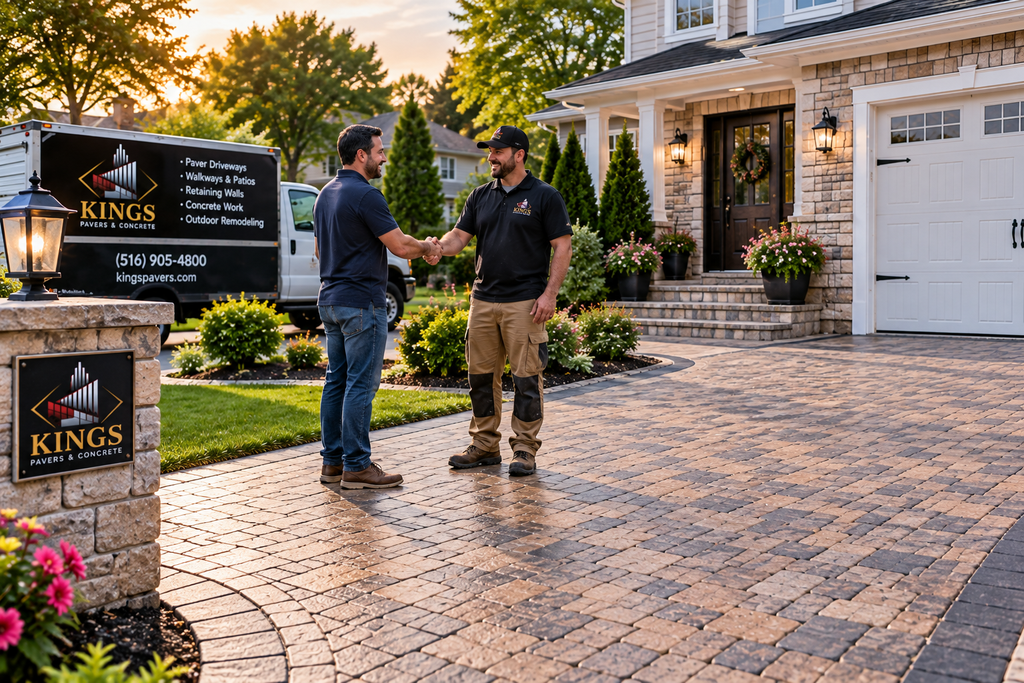
A brick driveway looks finished the day the crew packs up. Whether it still looks that way after a few Long Island winters depends on what you can’t see from the street: what’s underneath, where the water goes, and how the edges are held in place.
This guide walks through brick driveway paving New Hyde Park property owners ask about most often. It covers what the work involves, how local weather affects it, what upkeep looks like, and what to ask a contractor before you commit. It applies to homes and smaller commercial lots, though heavier commercial traffic changes the base requirements quite a bit.
What People Usually Mean by a “Brick Driveway”
Ask three people to describe a brick driveway and you’ll get a few different products. Some mean traditional clay brick, which is kiln-fired, dense, and colored all the way through. Most mean interlocking pavers, which are typically molded concrete units, sometimes in brick-like proportions and sometimes in larger or more varied shapes. Either way, the units sit on a compacted base and a thin bedding layer, and sand-filled joints lock them together.
The difference matters when you compare quotes. Clay pavers hold their color well and have a classic look. Concrete pavers come in a wider range of shapes, colors, and textures, and they’re usually easier to source. Ask any contractor to name the exact unit they’re proposing, including its thickness and whether it’s rated for vehicle traffic. Driveway pavers are generally thicker than patio pavers (around 3 1/8 inches, or 80 mm, is a common figure, but follow the manufacturer’s rating). Brick sold for building walls isn’t made to be driven on. Reclaimed brick can also be unpredictable, since soft or absorbent units may flake after repeated freezing and thawing.
Why Homeowners Choose Brick and Paver Driveways, and Where They Fall Short
The appeal is easy to see. Pavers give you control over color, pattern, borders, and even a change of texture near the entry. The system is also flexible. Small ground movement tends to show up as a slightly low spot rather than a crack running across a slab. When something goes wrong, or a utility crew has to dig, the units can be lifted and reset without leaving a patch that never quite matches.
The downsides deserve equal time. Pavers usually cost more up front than asphalt or plain concrete. The work is labor-intensive, so the result depends heavily on the crew. Joints need occasional attention, snow removal takes a little more care, and if the base or drainage is wrong, settlement is visible. A paver driveway is durable, but it isn’t maintenance-free. For a long, plain, straight driveway on a tight budget, asphalt or concrete may serve you better, and that’s a perfectly reasonable call.
What Matters Before the First Paver Goes Down
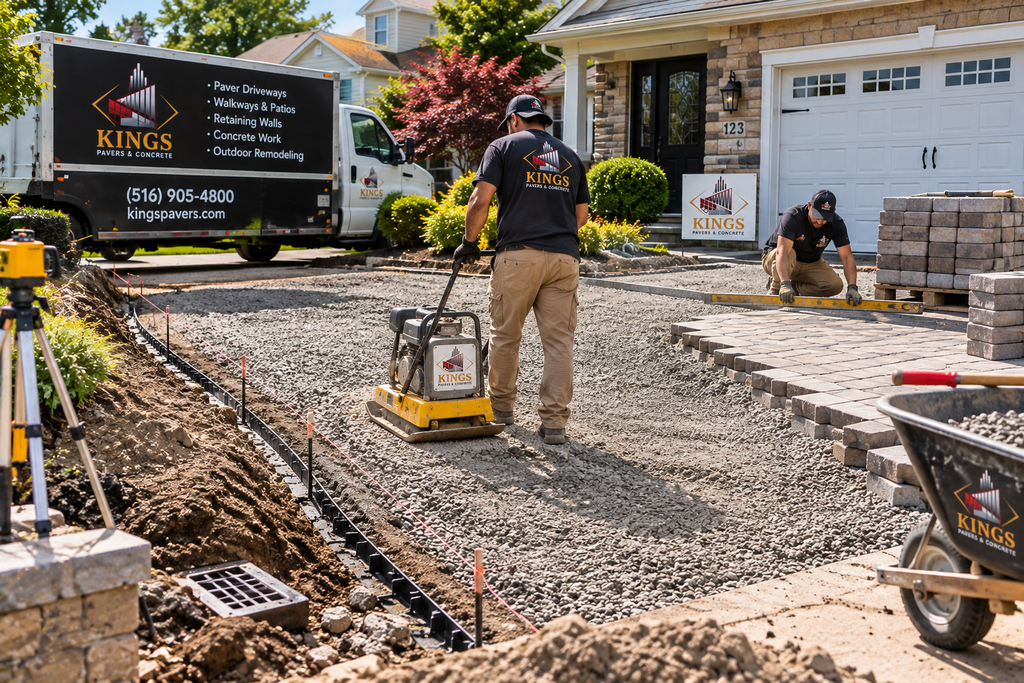
Pull up a failed paver driveway, and the pavers are often fine. The trouble is a few inches below them. That’s why the planning stage matters more than the product catalog.
Soil and site conditions. Much of Long Island has sandy soil that drains well, but lots vary. Fill, clay pockets, tree roots, buried debris, and low spots all change what the base needs. A good contractor looks at your property instead of applying one recipe everywhere.
Excavation. Old pavement and loose or organic soil have to come out. The depth depends on the soil and the expected loads, and it’s considerably deeper than for a patio.
Base and compaction. The base is typically crushed, well-graded aggregate installed in layers and compacted as it goes. Compacting one thick layer leaves soft pockets underneath. In weak soils, a geotextile fabric or a thicker base may be called for.
Grading and drainage. The finished surface needs a consistent slope so water leaves instead of standing. Look at where roof downspouts discharge, how the driveway meets the garage and the street, and where runoff will end up. Flat lots have little natural fall, so they may need added measures such as a trench drain at the garage door or a dry well. Rules on where runoff can go vary by municipality, so confirm them before the design is final.
Edge restraints. Turning tires push sideways. Without a firm edge, pavers spread, joints open, and the pattern drifts. Driveways need stronger restraint than walkways.
Paver selection and vehicle loads. Think about what actually drives on the surface: a family car, a work truck, a delivery van, a dumpster, an RV. Commercial properties see heavier and more frequent loads, which changes both the paver and the base. Spots where vehicles brake, turn, or park in the same place take the most abuse.
General contractor guidance: A paver driveway is only as stable as the ground and base beneath it, and water is what most often undermines both. Plan the drainage first, then choose the pavers.
How Winter Treats a Brick Driveway in New Hyde Park
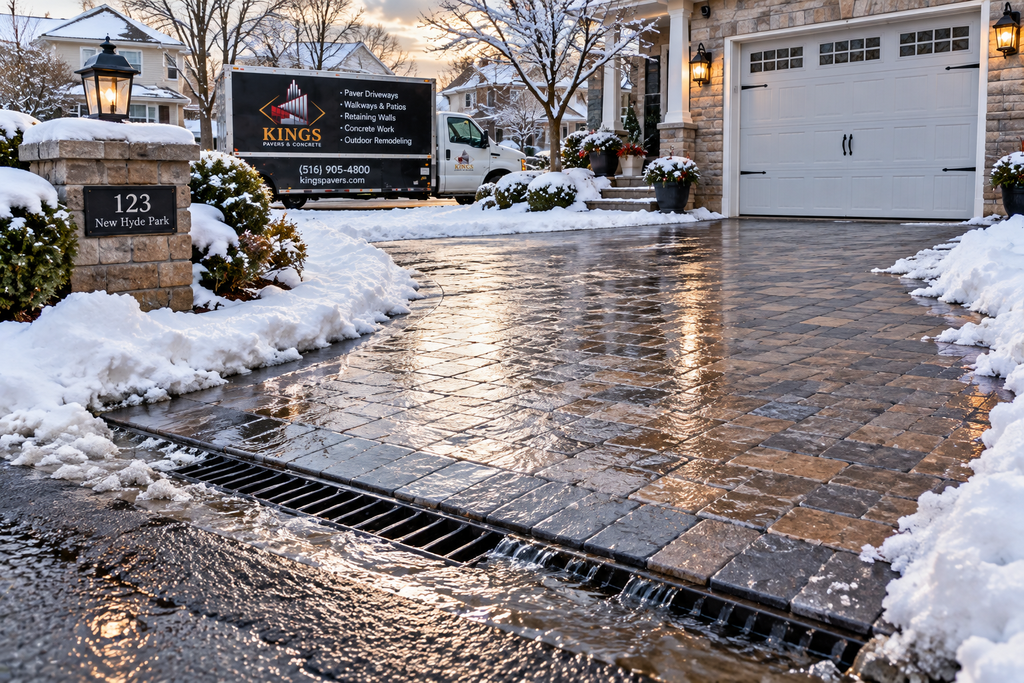
Freeze-thaw is the mechanism to understand. Rain and melting snow get in through the joints and low spots. If that water reaches a base that doesn’t drain, it freezes, expands, and lifts the surface slightly. When it thaws, it leaves a void or a softened area, and the next vehicle pushes the pavers down. Long Island winters tend to swing above and below freezing repeatedly, so that cycle can repeat many times in one season.
Prevention is mostly about not letting water hang around:
- Slope the surface away from the house and garage.
- Build the base from clean, compacted aggregate that drains instead of holding moisture.
- Send downspouts well away from the driveway edge rather than dumping them beside it.
- Keep the joints filled so the surface sheds water and the pavers stay locked together.
- Consider permeable pavers only if the whole system is designed for it. They need their own base and aren’t just standard pavers with wider joints.
Seasonal temperature swings also make the units expand and contract slightly. Good joint fill and firm edge restraint absorb that movement. Plowing and deicing add their own stress, which the maintenance section covers below.
Brick and Paver Driveway Installation: Step by Step
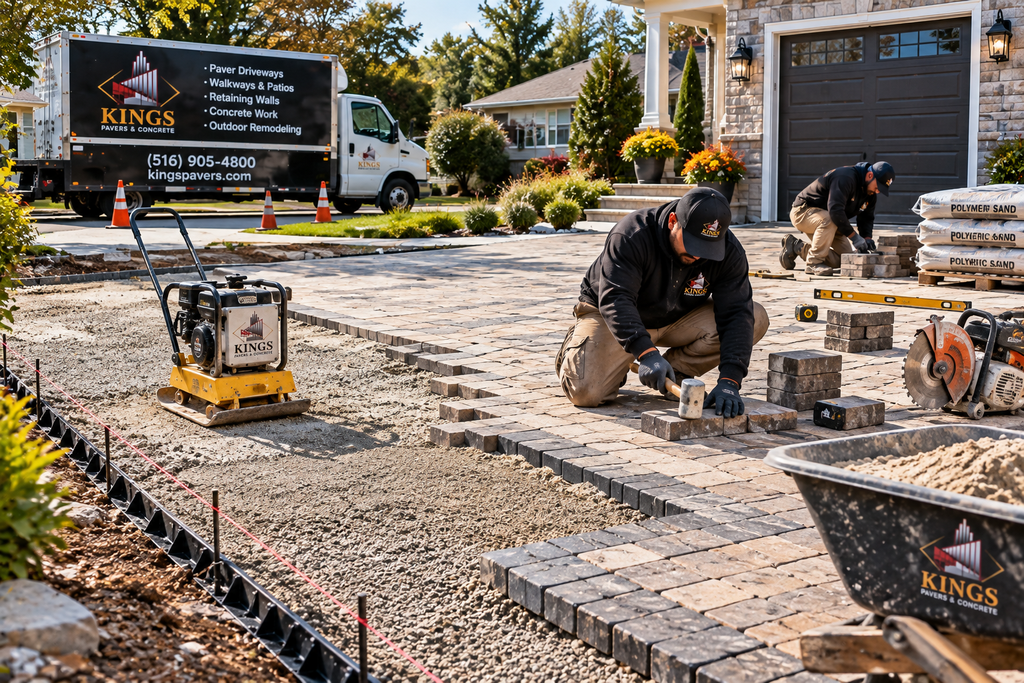
The details change from site to site, but a properly done job generally follows this order:
- Site evaluation. Measure the area, check soil and existing slope, note downspouts, utilities, and access, and settle on the pattern and edging. Ask your local building department whether permits or approvals apply, especially near the curb or apron.
- Removal and excavation. Existing pavement and unsuitable soil come out to the planned depth.
- Subgrade preparation. The exposed soil is compacted, and soft spots are corrected before any base goes in.
- Grading. Slopes are set with string lines or a laser so water will leave the surface.
- Base installation. Aggregate goes in layers, and each layer is compacted before the next.
- Bedding layer. A thin, screeded layer, roughly an inch, gives the pavers an even seat. It isn’t meant to make up for an uneven base.
- Paver laying. Units are set from a straight baseline, with lines and pattern checked as the work moves. Edge pieces are cut to fit.
- Edge restraints. Restraints are secured so the field can’t creep outward.
- Joint material. Sand or polymeric sand is swept into the joints.
- Final compaction and inspection. A plate compactor settles the surface, joints are topped off, and the crew checks slope, water flow, and any uneven units.
Brick Pavers Compared With Other Driveway Materials
| Material | Appearance | Maintenance | Repairability | Winter considerations | Longevity characteristics | Relative initial cost |
| Brick/clay pavers | Classic look, stable color | Sweep, refill joints, control weeds | Individual units can be reset or replaced | Handle freeze-thaw well when vehicle-rated; base and drainage still decide the outcome | Long service life when the base is sound | Higher |
| Concrete pavers | Wide range of shapes, colors, textures | Similar to clay | Individual units can be reset or replaced | Use vehicle-rated units; ask about deicer guidance | Long service life when the base is sound | Moderate to higher |
| Poured concrete | Clean, uniform; stamping and coloring possible | Low; occasional sealing | Cracks are common, and patches show; large repairs mean replacing panels | Salt can scale the surface, especially on young concrete | Can last a long time, but cracking is a realistic expectation | Moderate |
| Asphalt | Plain black surface | Periodic sealcoating and crack filling | Patches and overlays are common | Flexible, but prone to cracking and potholes after winter | Generally shorter than well-built pavers; resurfacing is common | Lowest |
| Natural stone | Distinctive, varies piece to piece | Low to moderate | Repairable, but matching stone can be difficult | Must be suited to freeze-thaw; some stones are slick or porous | Long for suitable stone | Highest |
Costs and lifespans depend on site conditions, installation quality, and use. No material comes with a guaranteed lifespan, so treat this table as a starting point and compare written quotes for your own property.
Common Mistakes
- Choosing on appearance alone. The prettiest paver in the showroom won’t help if it isn’t rated for vehicles or the base underneath is thin.
- Skimping on the base. Shallow excavation, uncompacted layers, or mixed material with too many fines are the classic causes of sinking.
- Ignoring drainage. Water pooling near the garage or along an edge is behind many “mysterious” settlement problems.
- Weak edge restraint. Pavers spread when nothing firm holds the perimeter.
- Using the wrong material. A patio paver on a driveway that takes truck traffic will struggle.
- Ignoring small settlement. One low paver is easy to fix. A dip that’s been driven over for two winters is not.
- Harsh winter habits. Metal blades scraping across joints and heavy deicer use can damage a driveway that was built well.
Maintaining a Brick or Paver Driveway
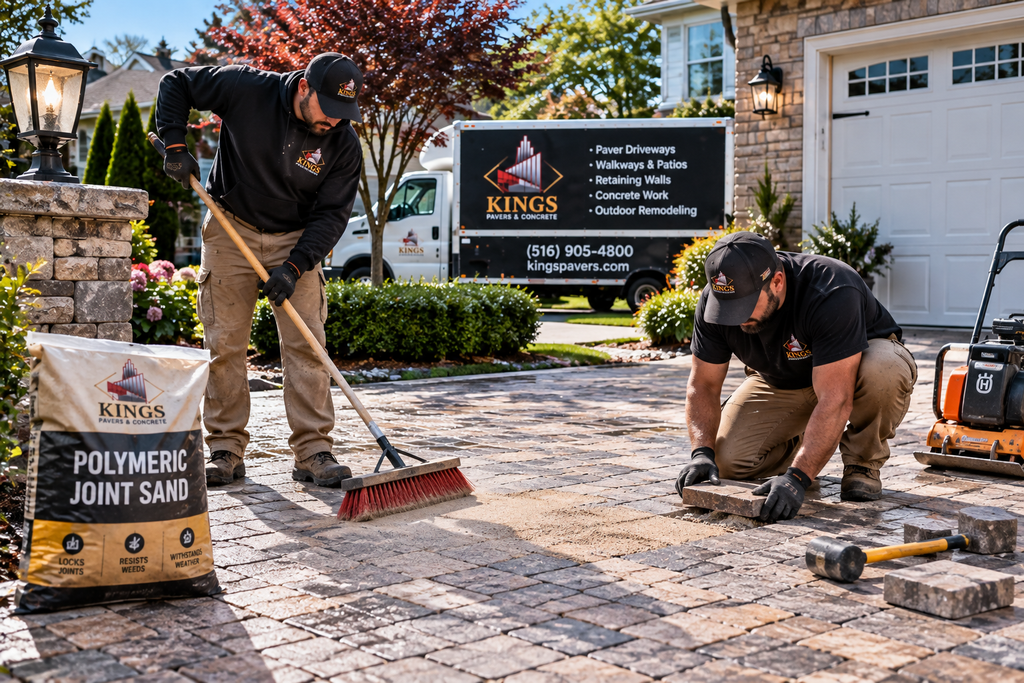
Cleaning. Sweep regularly and hose the surface off. For dirt, use a mild detergent and a soft brush. Pressure washing works only at moderate pressure with a wide tip held back from the surface, because too much force blows sand out of the joints and dulls the pavers.
Joints. Joint sand is what locks the pavers together. Check it after winter and after heavy rain, and top it off where it’s thin. Where polymeric sand has worn out, clean the joints and reapply following the product instructions.
Weeds. Weeds start in windblown soil and debris that collect in the joints. Sweep often, pull small weeds early, and keep the joints full. Read the label before using any herbicide near pavers or plantings.
Drainage. Keep trench drains and gutters clear of leaves. Note where puddles linger after a rain, since that tells you something about the slope.
Stains. Blot fresh oil, cover it with an absorbent such as cat litter, then use a cleaner made for pavers after testing a small area. A white haze on new concrete pavers is often efflorescence, a natural mineral deposit that tends to fade over time. Ask the manufacturer before treating it.
Snow and ice. Use a plastic-edged shovel or a snow blade with a rubber or poly edge, and avoid sharp metal scrapers that catch the joints. Ask your installer or the paver manufacturer which deicers they recommend, particularly for the first winter. Use as little as you can, and avoid products containing ammonium nitrate or ammonium sulfate, which can damage concrete. Rinse residue away in spring and refill any joints that lost sand.
Sunken or loose pavers. Deal with them early. One low unit gets hit by tires, and its neighbors start to follow.
Sealing. Sealer is optional. It can deepen color, help resist stains, and stabilize joint sand, but it needs reapplying over time. A poor choice or heavy application can leave a hazy or slippery surface. Wait until efflorescence has run its course (the manufacturer can tell you how long), choose a sealer suited to driveways, and test a small area first.
Repair or Replacement?
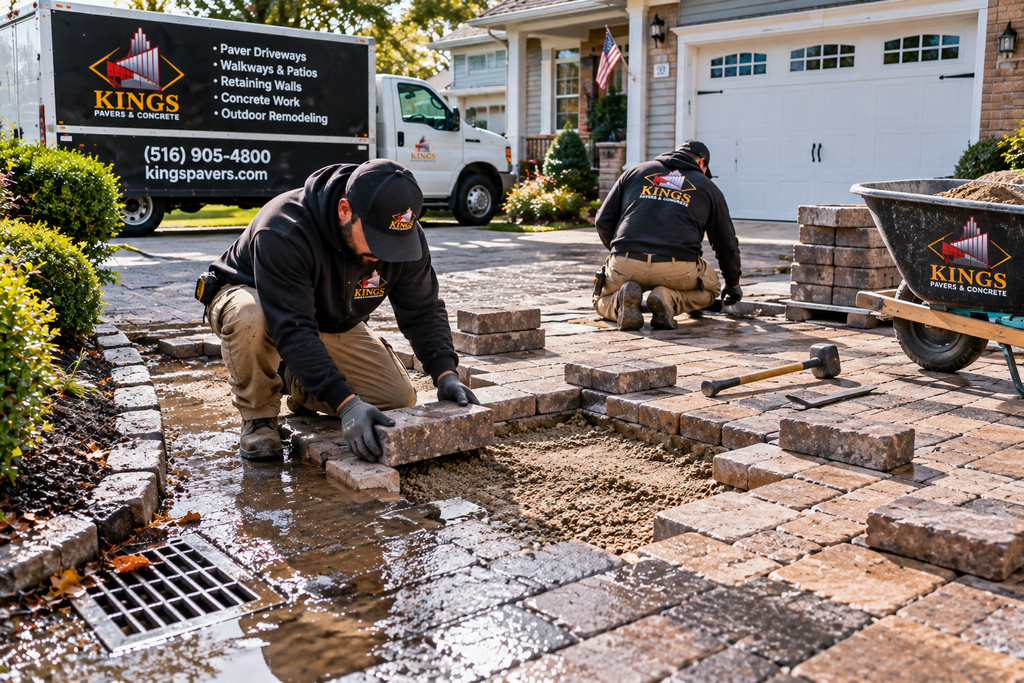
A single cracked or badly stained paver can simply be swapped. A few units that sank after utility work or a one-time heavy load can usually be lifted, re-leveled on fresh bedding, and reset. Once the same area keeps sinking, wheel paths are rutting, or the edges are spreading, the pavers aren’t the problem. The base, the drainage, or the restraint is.
Illustrative example (hypothetical, not a real customer project). Picture a Cape-style home in New Hyde Park where the driveway slopes slightly toward the garage. A downspout empties near the driveway edge. A few winters in, the pavers near the garage door begin to sink, and the joints wash out. The owner resets the pavers each spring, and the dip returns every year.
Resetting only treats the symptom. In this scenario, the base is shallow, poorly compacted, and repeatedly saturated by roof and surface water, so it softens whenever it freezes and thaws. The real fix would mean lifting the affected area, and probably more than the visibly sunken part, then excavating to firm subgrade. The crew would rebuild the base in compacted layers, regrade for positive drainage, redirect the downspout, and add a trench drain at the garage threshold if needed. They would then reinstall the edge restraint and lay the original pavers on new bedding with fresh joint material.
| Problem | Likely cause | Recommended action |
| One or two low pavers | Local settling, utility work, or a heavy point load | Lift, re-level bedding, reset, refill joints |
| Repeated sinking near the garage or apron | Water collecting, thin or weak base | Excavate the area, rebuild the base, fix drainage |
| Ruts along wheel paths | Base too shallow or poorly compacted for the loads | Rebuild the section; reconsider paver thickness and base depth |
| Pavers drifting apart at the edge | Weak or failed edge restraint | Reset pavers and install stronger restraint |
| Joint sand washing out | Surface runoff, aggressive pressure washing, worn polymeric sand | Correct the water source, clean and refill joints |
| White haze on the surface | Efflorescence | Usually fades; check with the manufacturer before cleaning or sealing |
| Standing water after rain | Too little slope, low spots, blocked drain | Regrade; add or clear drainage |
Choosing a Contractor for Brick Driveway Paving
Ask these before you sign anything, and expect specific answers:
- What base material and depth do you recommend for my soil and the vehicles that use this driveway, and why?
- How will water leave the surface, and where will it go? How will you handle downspouts and the garage threshold?
- Exactly which paver are you proposing, including manufacturer, thickness, and vehicle rating?
- What edge restraint will you use, and how is it secured?
- How do you compact the base and pavers, and with what equipment?
- Who will be on site, and who supervises the work?
- Who handles permits or municipal approvals, if any apply?
- What does the written warranty cover (workmanship, settlement, materials), for how long, and what could void it?
- Can I see similar completed projects or speak with past customers?
- Did you notice anything specific about my property, such as trees, slope, or soil, that changes the plan?
Get the estimate itemized in writing so you can compare bids on the same scope.
Brick Driveway Paving New Hyde Park FAQ
Is a brick driveway suitable for New York weather?
Yes, when the pavers are rated for vehicles, and the base and drainage are built for freeze-thaw conditions. The flexible, joint-locked system tolerates small movement better than a rigid slab. The weakness is water trapped in a poor base, not the cold itself.
How long can a properly installed brick or paver driveway last?
Many well-built paver driveways last for decades, but no honest contractor can promise a specific number. Longevity depends on base quality, drainage, loads, materials, and maintenance. Ask any installer what their warranty actually covers.
Are brick pavers better than concrete for a driveway?
Neither is better in every case. Clay pavers offer stable color and a traditional look. Concrete pavers offer more shape and color choices and are often easier to source. Both perform well over a proper base and poorly over a bad one. Choose based on look, budget, availability, and manufacturer specifications.
What causes driveway pavers to sink?
Usually an inadequate or poorly compacted base, water saturating the base, weak soil, or a failed edge restraint. Utility trenches and heavy point loads can do it too. The fix depends on which cause it is.
Can individual driveway pavers be replaced?
Yes. That’s one of the biggest advantages of pavers. You can lift out a damaged unit and swap it, and you can reset a low area. If the same spot keeps sinking, look for a base or drainage issue.
How do you maintain a paver driveway in winter?
Use a plastic-edged shovel or a rubber or poly-edged blade, keep deicer use light, avoid ammonium-based products, and clear snow before it packs into ice. In spring, rinse off residue and refill any joints that lost sand.
How much does brick driveway paving cost in New Hyde Park?
There isn’t a reliable fixed number, because the cost depends on the property. The main factors are the driveway’s size and shape, removal and disposal of the old surface, excavation depth and soil conditions, base thickness, the paver type and pattern, edge restraints, and any drainage work. Access, curb or apron work, permits, and sealing also affect the price. Ask for itemized written estimates, and verify current costs and requirements with your contractor and local authorities.
Talk Through the Site Before You Decide
If you’re weighing a brick or paver driveway in New Hyde Park, Kings Pavers & Concrete can review the project with you before you decide. That means how water moves across your property, what the soil and existing base are like, what vehicles use the driveway, and which materials fit your budget and winters. Settling those questions up front is much easier than fixing settlement later. Contact Kings Pavers & Concrete to talk through your project and request an estimate.