Picture a backyard patio in Queens. The concrete was poured twenty years ago and has turned gray and blotchy. There’s a hairline crack near the steps and a few rough patches where the surface has flaked. It still does its job, but nobody wants to sit out there.
Tearing it out sounds like a dusty, expensive mess, so the question comes up: can you put pavers over concrete? Often, yes. But it only works when the slab underneath is in good shape, water can drain off it, and there’s enough height to add a new surface without creating problems at doors and steps.
This guide explains how to tell whether your slab qualifies, what the installation involves, and when pulling the concrete out is the smarter move.
Can You Put Pavers Over Concrete?
Yes, you can put pavers over existing concrete if the slab is stable, drains properly, and leaves enough clearance for the extra thickness. If the concrete is cracked, sinking, or holding water, removing it is usually the better option.
The slab is the foundation of the new surface. A sound slab can be a strong base, since it doesn’t settle like poorly compacted soil. A moving slab is the opposite. Whatever it does underneath, the pavers will do on top.
The type of project matters too:
- Patios and walkways carry foot traffic and furniture. They’re the most forgiving applications for an overlay.
- Driveways carry vehicles, which makes slab strength, edge support, and drainage far more critical. We cover that further down.
- Steps and landings add height and safety concerns, so you need to evaluate each one separately.
There’s no single method that fits every slab. Industry groups such as the Interlocking Concrete Pavement Institute (ICPI) publish separate guide specifications for different overlay systems, including pavers set in sand over a concrete base and pavers mortared to a rigid base. Which one suits your property depends on the slab, the paver, and the intended use.
When Is Existing Concrete Suitable for Pavers?
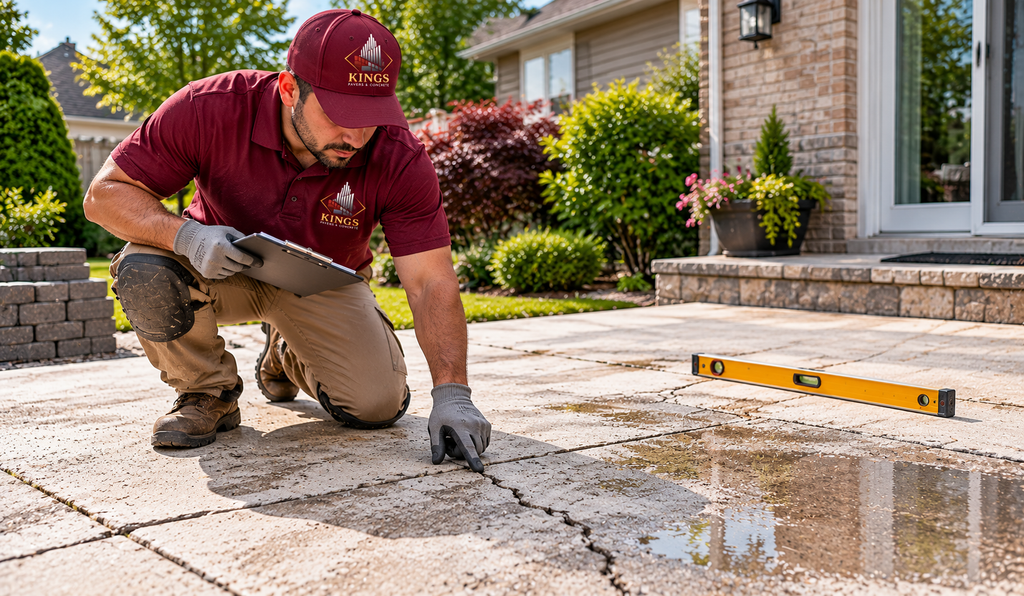
A few things need to line up.
The slab is structurally sound. It shouldn’t rock, sound hollow when tapped, or show sections sitting higher or lower than their neighbors.
Surface problems are cosmetic. Staining, light scaling, fading, and hairline cracks that haven’t moved usually aren’t dealbreakers.
The slope works. Water has to run away from the house. A slab that’s flat or tilts toward the foundation needs attention first.
You have the height. The new surface adds the thickness of the paver plus a setting layer. Many sand-set overlays use a bedding layer of about an inch over a concrete base, according to ICPI inspection guidance, and common pavers add a couple of inches on top of that. Doors, garage thresholds, and steps need to tolerate the change.
Water can escape. Pavers set in sand over a slab can trap water between layers. Contractors often handle this by adding drain (weep) holes through the slab and using fabric to keep the bedding layer from washing out through them.
Quick Reference: Concrete Condition and Next Steps
| Concrete condition | Can pavers be installed? | Recommended action |
| Solid slab with stains, fading or light surface wear | Usually yes | Clean thoroughly, confirm drainage, choose an overlay system suited to the slab |
| Hairline cracks that haven’t moved | Often yes | Have a contractor check whether the cracks are surface issues or signs of movement |
| A few wider cracks, no height difference | Possibly | Find the cause first. Active cracking points to base or drainage trouble |
| Slab rocks, sounds hollow or has sunken areas | Usually no | Remove and rebuild the base |
| Cracks with one side higher than the other | No | Remove the section or the slab |
| Water pools or runs toward the house | Not until fixed | Correct the drainage. Demolition may be needed to re-slope |
| Too little clearance at doors or steps | Not as planned | Consider a thinner system, or remove the slab and lower the grade |
This table is a starting point, not a verdict. Slabs can look similar and behave very differently, so a hands-on inspection matters.
When Should You Avoid Installing Pavers Over Concrete?
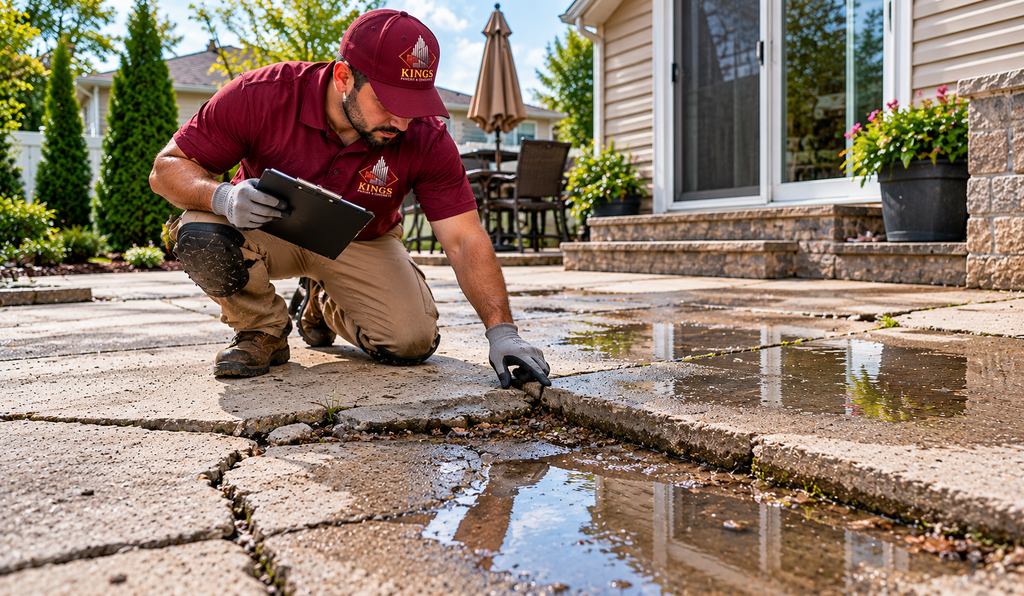
Covering a problem doesn’t fix it. If the slab has structural trouble, new pavers will usually just hide it for a while.
Watch for these red flags:
- Significant cracking. Wide or growing cracks often mean the ground underneath is shifting or washing out.
- Uneven or settling slabs. Pavers follow the surface below them, so dips and tilts come through.
- Poor drainage or standing water. Water that sits on a slab in a New York winter is a freeze-thaw problem waiting to happen.
- Frost-related movement. If sections heave in winter and drop in spring, the slab isn’t a stable platform.
- Not enough clearance. A patio that ends up level with or above a door threshold invites water into the house.
- Hollow or crumbling concrete. If it breaks apart under light pressure, it can’t support anything.
A common mistake is deciding to overlay because it’s cheaper, without asking why the slab cracked in the first place. If the cause is still there, the new surface will eventually show it.
How to Install Pavers Over Existing Concrete
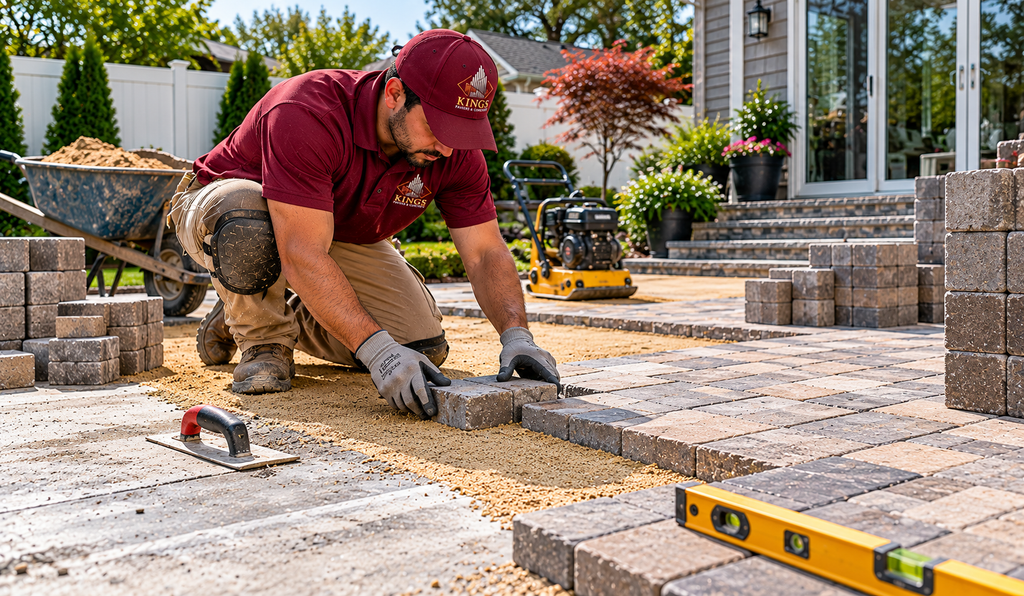
Here’s what a careful overlay generally looks like. Details change with the paver type, the manufacturer’s instructions, and how the area will be used.
- Inspect the slab. Look for cracks, movement, hollow spots, scaling, and past repairs. Tap and probe it. Note any areas that don’t feel right.
- Check drainage and slope. Find where water goes after rain. Look for low spots and any runoff toward the house or a neighbor.
- Measure available height. Add up the paver thickness and the setting layer, then compare against door thresholds, steps, siding, and any adjacent surfaces.
- Clean and prepare the concrete. Remove dirt, oil, loose material, paint, and sealers, and patch minor surface damage. Some systems need a specific surface profile.
- Pick the right system. Options include pavers on a sand bedding layer or pavers bonded to the slab with mortar or an approved adhesive. Each has different requirements and trade-offs.
- Install the bedding or bonding layer. For sand-set systems, this means screeding an even layer, adding drainage provisions, and protecting against sand loss. For bonded systems, it means following the product’s instructions closely.
- Lay the pavers. Start from a straight reference line, keep joints consistent, and cut pieces cleanly at the edges.
- Secure the edges and finish the joints. Edge restraints keep the pavers from creeping outward. Joints are filled with sand or another suitable material, and the surface is compacted where the system calls for it.
- Inspect the finished surface. Check slope, drainage, lippage between pavers, and clearance at doors and steps.
Because methods vary, be cautious about any quote that treats every slab the same.
Can You Install Pavers Over a Concrete Driveway?
Sometimes, but a driveway is a much tougher test than a patio.
Vehicles put heavy, repeated loads on the surface, and turning wheels push sideways. That makes several things critical:
- Slab strength. The concrete has to be uniformly sound across the whole driveway. A slab that has handled cars for years without cracking is a better candidate than one with patched sections and settling.
- Edge restraint. Without strong edges, the pavers can slowly spread under traffic.
- Drainage. Water flowing off a driveway has to be managed, especially near the garage and the street.
- Garage clearance. Raising the surface a few inches can send water toward the garage door or change the way the apron meets the curb.
- Paver thickness. Pavers made for vehicles are thicker than those used for patios. That extra thickness uses up height.
- Long-term settlement. If the slab underneath moves, the pavers will too.
If you’re considering this, a contractor should be talking about the load, the slab’s condition, and manufacturer approval for vehicle use. It should never be treated the same as a patio job. For many aging driveways, a full rebuild with a properly compacted base is the safer route. You can see how that process works on our driveway paver installation page.
How New York Weather Affects Pavers Installed Over Concrete
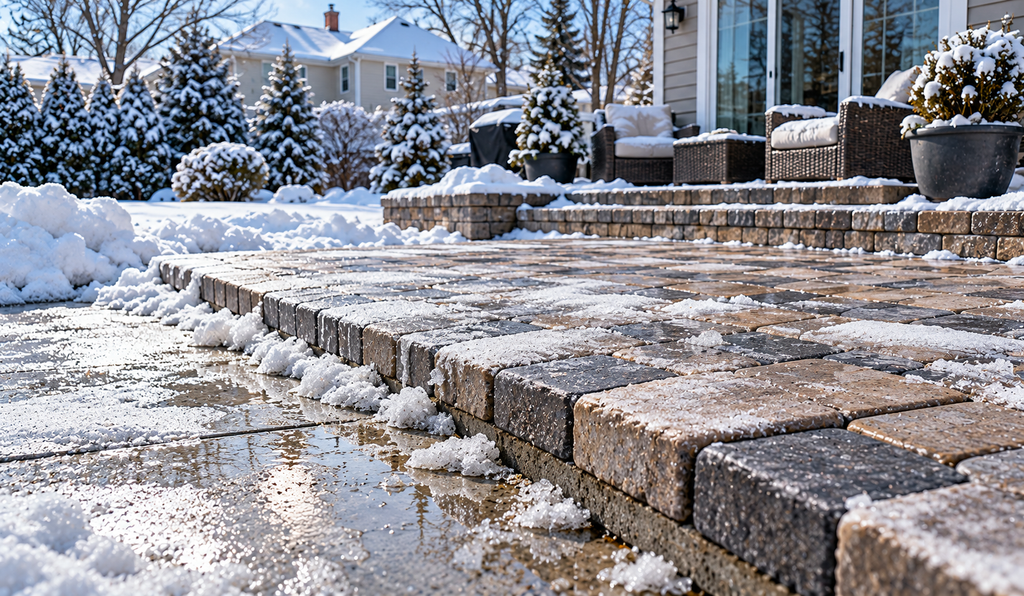
New York’s climate asks a lot of any outdoor surface.
Freeze-thaw cycles. Water gets into small spaces, freezes, expands, and then thaws. Repeating that all winter can shift materials and open cracks. A paver surface doesn’t make a slab immune to this. It just changes how the movement shows up.
Trapped water. This is the big one with overlays. If water gets between the pavers and the slab and can’t leave, it can freeze there. That can push pavers out of position, wash out bedding material, or leave damp, slippery patches.
Snow and ice. Shoveling and plowing can catch edges. De-icing products can stress certain surfaces, so check what your paver manufacturer recommends.
Heavy rain. Summer storms test your drainage. If the slope or drain holes aren’t doing their job, you’ll see puddles, washed-out joints or staining.
Seasonal swings. Hot summers and cold winters make materials expand and contract. Good edge restraints and properly designed joints help the surface handle it.
When these problems show up, it’s often because of how the job was done, not the pavers. Poor drainage and the wrong installation method are the usual causes of movement and moisture trouble.
Benefits and Drawbacks of Installing Pavers Over Concrete
| Factor | Advantages | Limitations |
| Appearance | Gives a tired slab a fresh look with many colors and patterns | Adds height and may need extra edging or transitions |
| Installation time | Can be quicker when demolition and base work are avoided | Prep and drainage work still take time |
| Cost | May lower costs if the slab is sound | Savings shrink if the slab needs repairs, drainage work or special materials |
| Durability | A stable slab can be a strong base | Any movement in the slab affects the surface above |
| Maintenance | Individual pavers can usually be cleaned or replaced | Joints still need upkeep, and trapped water can cause trouble |
| Drainage | Can work well when drain holes and slope are planned | Easy to get wrong, and a common source of problems |
| Repair access | Single pavers can be lifted and reset | Reaching the slab beneath means removing pavers, and bonded systems are harder to undo |
An overlay is a good fit for a stable slab that just looks worn. It’s a weak fit for a slab with deeper problems.
Is It Cheaper to Install Pavers Over Concrete or Remove the Slab?
It can be cheaper to keep the slab, but not always. Prices in New York vary by project, so we’re not going to quote figures here. Ask for a written, itemized estimate for your property.
The things that move the price most:
- Condition of the concrete. Repairs and patching can eat into the savings.
- Demolition and disposal. Removing a slab means breaking it up, hauling it away, and paying disposal costs.
- Surface preparation. Cleaning, patching, and drilling drain holes all take labor.
- Paver material. Thicker, premium, or specialty pavers cost more than basic ones.
- Labor. Complex patterns, cuts, and curves take more time.
- Drainage changes. Re-sloping or adding drains can be a significant part of the job.
- Project size. Larger areas can make some steps more efficient.
- Access. Tight yards, narrow gates, and rooftop or townhouse sites make material handling slower.
Removing the slab costs more upfront, but it lets you rebuild the base, fix the slope, and choose paver thickness freely. If the slab has problems, that can be the better value over time.
Common Mistakes to Avoid
- Covering unstable concrete. If the slab moves, so will the pavers. Fix or remove it first.
- Ignoring drainage. Water between the layers causes more overlay failures than almost anything else.
- Choosing the wrong thickness. A thin paver that works on a patio may not belong on a driveway.
- Forgetting door clearance. Measure before you commit. A raised surface can send water toward doors, garage thresholds, and siding.
- Using the wrong installation method. Sand-set and bonded systems behave differently, and a paver’s manufacturer may only approve certain methods over concrete.
- Skipping edge restraints. Without them, pavers drift outward over time.
- Not planning for winter. Think through snow storage, de-icers, and how meltwater will leave the surface.
A Hypothetical New York Property Example
This is an illustrative scenario, not a completed Kings Pavers & Concrete project.
A homeowner in Queens has a twenty-year-old concrete patio behind a two-family house. It’s stained and rough, with one hairline crack. They’d like pavers but don’t want the cost and noise of removing the slab.
A contractor visiting the site should look at several things:
- Whether the crack is just on the surface or has one side sitting higher.
- Whether the slab sounds solid across its whole area.
- Where water goes during rain, and whether any of it heads toward the foundation.
- How much room there is between the patio surface and the back door threshold.
Suppose the slab is solid, the crack is stable, the slope is fine, and there’s enough clearance. An overlay makes sense. The contractor might clean and repair the surface, add drainage provisions, and install pavers with proper edge restraints.
Now suppose that one corner has dropped and water collects against the house. Here, demolition becomes the better option. The slab can be removed, the base rebuilt, and the grade corrected.
The lesson is that the decision comes from inspection, not from the look of the slab alone.
Expert Advice Before Installing Pavers Over Concrete
Three questions should be answered before any method is chosen.
Where does the water go? Check slope, downspouts, nearby grade, and any areas that stay wet. If water can’t leave the surface, the overlay isn’t ready.
Is the slab stable? Look for movement, voids, and seasonal heaving. Stability matters more than surface appearance.
What will the surface carry? A seating area, a front walkway, and a driveway ask very different things of the slab and the pavers.
Also read the paver manufacturer’s installation guidance, since it can limit which systems are approved over concrete. For commercial properties and public-facing sites, confirm any accessibility or local requirements with the appropriate authority before work begins. If something about the slab is unclear, it’s better to get it inspected than to guess.
Frequently Asked Questions
Can you put pavers directly over concrete?
Yes, when the slab is stable, sloped to drain, and has enough clearance. The pavers are normally installed with a bedding layer or bonding system, not placed loose on bare concrete.
Can you install pavers over a cracked concrete patio?
Sometimes. Hairline cracks that haven’t moved may be fine. Wide, growing, or uneven cracks usually mean the slab should be repaired or replaced first.
How long do pavers last over concrete?
There’s no fixed number. Lifespan depends on the slab’s condition, drainage, the paver, the installation method, and how the surface is used and maintained. A sound slab with good drainage gives the overlay its best chance.
Is it cheaper to put pavers over concrete?
It can be, if the slab needs little repair. Drainage work, patching, and specialty materials can narrow the gap, so compare itemized quotes for both approaches.
Can you put driveway pavers over existing concrete?
In some cases, yes, but driveways need a stronger, more uniform slab, thicker pavers, solid edge restraints, and careful drainage. Many aging driveways are better rebuilt.
Will pavers over concrete cause drainage problems?
They can if water gets trapped or the surface is raised in the wrong spot. Proper slope, drain provisions, and a suitable bedding system reduce the risk.
Do you need to remove old concrete before installing pavers?
Not always. If the slab is solid and drains well, it can stay. If it’s cracked, sunken, crumbling, or poorly sloped, removal is usually the better choice.
What is the best type of paver to install over concrete?
It depends on use. Patios and walkways may suit thinner pavers or slabs approved by the manufacturer for installation over concrete. Driveways need pavers rated for vehicles. Always check the product’s installation guidance.
Professional Paver Installation in New York
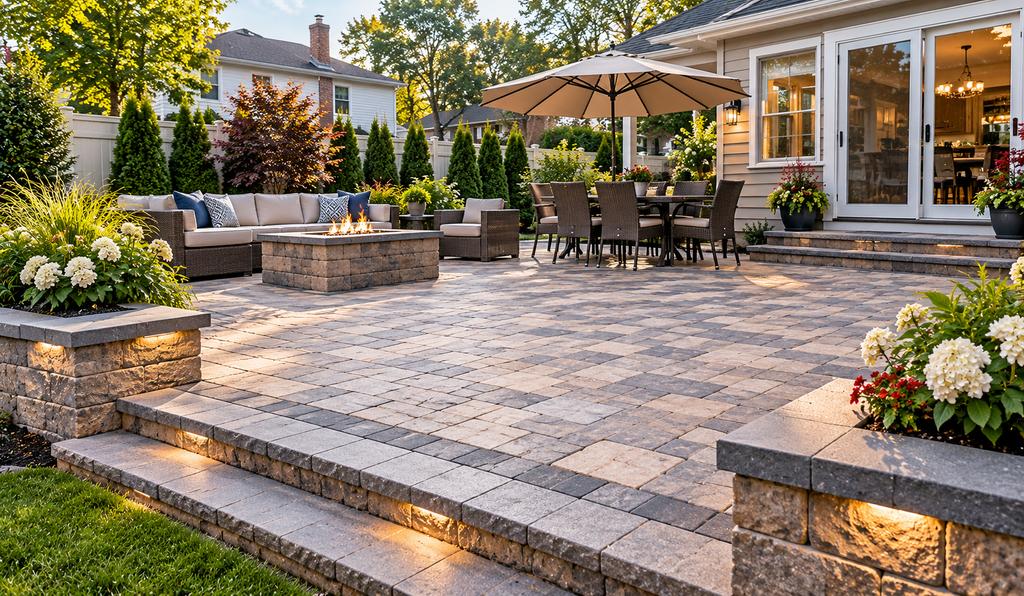
An overlay makes sense when the slab is solid, water drains well, and there’s room for the extra height. When the concrete is cracked, uneven, or holding water, replacing it gives you a stronger foundation, and that often pays off in the long run.
Kings Pavers & Concrete provides paving and concrete services for homes and businesses across the five boroughs, including paver installation, patio paver installation, and concrete services. If you’re not sure whether your slab can be cov