
Asphalt looks simple. You pave it, drive on it, and forget about it. Then a few winters go by, and the driveway has a crack running toward the garage and a soft spot where water never seems to drain.
In New York, that story is common. Freezing temperatures, snow, ice, and humid summers all put stress on pavement, and the surface takes a beating even when the paving was done well. Knowing what to expect helps you budget, schedule maintenance, and avoid replacing a driveway or parking lot earlier than you have to.
How Long Does Asphalt Last?
In general, a residential asphalt driveway lasts around 15 to 20 years, and a well-built, well-maintained one can go longer. Commercial parking lots often fall in a similar range, though heavy use can shorten it. These are general industry ranges, not guarantees.
Why not a single number? Because two driveways paved the same year can age very differently. One sits on a well-compacted base with good drainage and gets cracks filled every few years. The other has water running onto its edge every spring and has never had a repair. The second one may need work a decade sooner.
Lifespan comes down to how the pavement was built, what’s underneath it, how much traffic it carries, how water moves across and beneath it, and how well it has been maintained. The weather is the backdrop for all of that.
Typical Lifespan of Different Asphalt Surfaces
| Asphalt Surface | Typical Lifespan | Major Factors Affecting It |
| Residential driveway | About 15 to 20 years, sometimes longer | Base preparation, drainage, sealcoating and crack repair, snow removal practices |
| Commercial parking lot | About 15 to 25 years with regular maintenance | Traffic volume, delivery trucks, drainage design, maintenance schedule |
| High-traffic or heavy-vehicle areas (loading zones, entrances, truck lanes) | Often shorter, depending on loads and thickness | Vehicle weight, turning movements, repeated use of the same lanes |
Treat these as starting points. A thicker pavement section on a solid base can outperform the range. A thin overlay on a failing base may not reach it.
What Determines How Long Asphalt Lasts?
Installation quality. Compaction, correct mix temperature, and proper slope all matter. Mistakes made on installation day usually show up later as early cracking, ravelling, or low spots.
Base preparation. The base is the part you can’t see, and it carries most of the load. If it’s poorly compacted, thin, or sitting on soft or wet soil, the asphalt on top will follow it down. Surface repairs can’t fix a weak base.
Thickness. A driveway used by passenger cars doesn’t need the same pavement thickness as a lot that gets delivery trucks. Thin asphalt under heavy loads tends to crack and rut.
Drainage. Water is the biggest long-term enemy of pavement. It softens the base, works into cracks, and freezes. Pavement needs enough slope to shed water, and the ground around it shouldn’t send water toward it.
Traffic and vehicle weight. Cars are one thing. Dumpster trucks, moving vans, and fully loaded delivery vehicles are another. Repeated passes in the same lane or tight turns in the same spot wear pavement faster.
Maintenance. Small repairs done on time cost far less than big repairs done late. This is the one factor owners fully control.
Weather exposure. Sun, heat, rain, snow, and freezing temperatures all work on the surface year after year.
How New York Weather Affects Asphalt
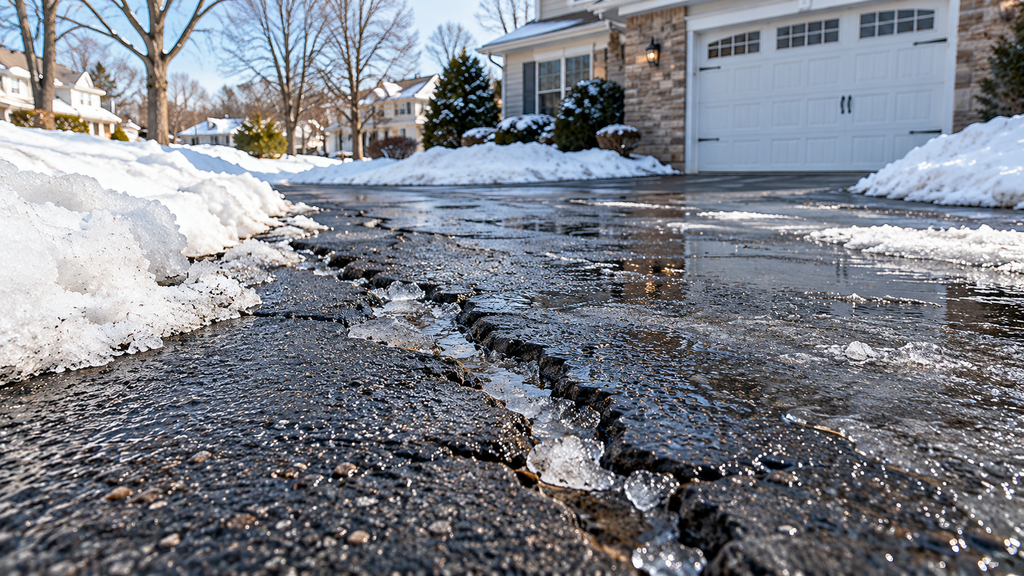
New York isn’t one climate. Winters in Buffalo and Rochester, with heavy lake-effect snow, are different from winters on Long Island or in the Hudson Valley. The common thread is that most of the state sees temperatures swing above and below freezing during winter and early spring.
Freeze-thaw cycles. Here’s the simple version. A small crack lets water in. When temperatures drop, that water freezes and expands, pushing the crack wider. When it thaws, the water drains deeper. Repeat that dozens of times in a season and a thin crack becomes a wide one, and the edges start to break apart. That’s freeze-thaw damage, and it’s a big reason spring is pothole season.
Snow and ice. Snow cover itself isn’t harmful. The trouble comes from melt and refreeze, plus plowing. Plow blades can catch cracked edges, scrape the surface, and tear up loose pavement. Piles of snow that melt slowly can also send water across the same section of driveway all season.
Road salt and deicers. Salt is generally less aggressive on asphalt than on concrete. But it lowers the freezing point of water, which can create more melt-and-refreeze cycles, and it carries water into cracks. It also washes off onto lawns and plantings along the edge. Use it sparingly, and sand gives traction without the same effect.
Summer heat. Asphalt softens in hot weather. Heavy point loads can leave marks, like a kickstand, a trailer tongue, or a truck parked in the same spot every day. Sun and oxygen also dry out the surface over time, which causes the gray, faded look called oxidation.
Heavy rainfall. Intense storms test drainage. If water has nowhere to go, it sits along edges and low spots and soaks into the base. Edges are especially vulnerable because there’s no support on one side.
Expert Tip: Look at your pavement the day after a rainstorm and again after the first hard freeze. Wet and frozen conditions show you where water is actually going, which is hard to see on a dry sunny day.
Signs Your Asphalt Is Starting to Deteriorate
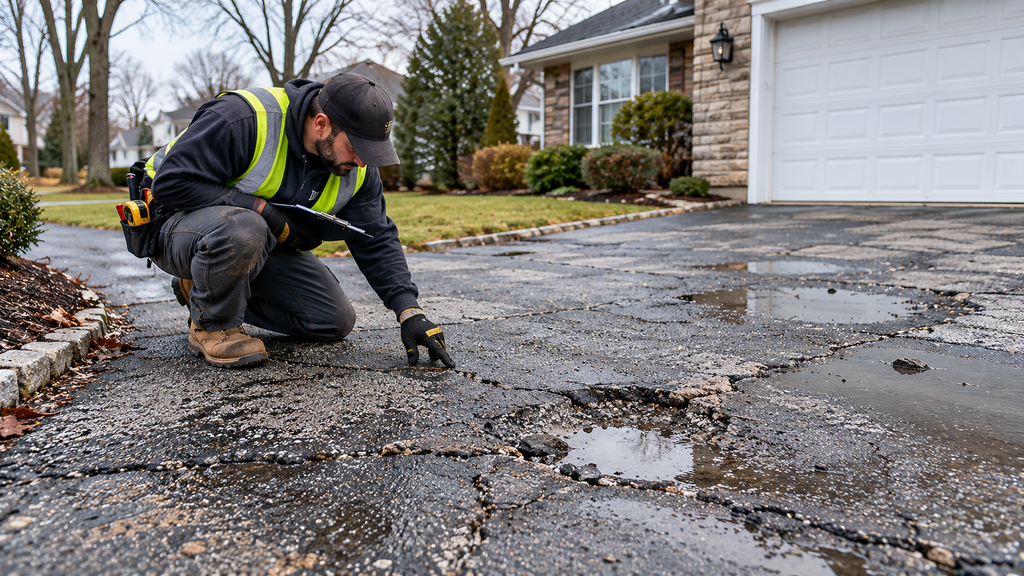
Not every sign means the same thing. Some call for simple maintenance, and others suggest it’s worth having a professional take a look.
- Small, isolated cracks. Usually a maintenance item. Clean and fill them before water gets in.
- Larger or interconnected cracking. When cracks link together in a pattern, often called alligator cracking, the problem may go deeper than the surface. A professional assessment is worthwhile.
- Potholes. These form when water gets under the surface and traffic breaks it apart. Address them early, since they tend to grow.
- Fading or oxidation. A gray, dull surface is a sign of aging. It’s mostly cosmetic at first, but it means the surface is drying out.
- Standing water. Puddles that last long after rain point to a low spot or drainage problem. This one is worth fixing, because water speeds up almost every other kind of damage.
- Crumbling edges. Often caused by lack of side support, water along the edge, or vehicles driving too close to it.
- Uneven or sunken areas. These can suggest base problems underneath. Surface patching alone may not hold.
If you see several of these together, or a problem keeps coming back after repair, have it evaluated before spending more on surface fixes.
Step-by-Step Guide to Extending Asphalt Lifespan
1. Inspect regularly. Walk the surface at least twice a year, in spring after the thaw and in fall before winter. Photos help you track whether a crack is growing.
2. Keep it clean. Sweep off leaves, dirt, and debris. Organic material holds moisture against the surface and can encourage weeds to grow in cracks.
3. Manage drainage. Extend downspouts away from the pavement, clear any debris from drains and swales, and make sure soil or mulch beds don’t send water onto the surface. Don’t let water sit along driveway edges.
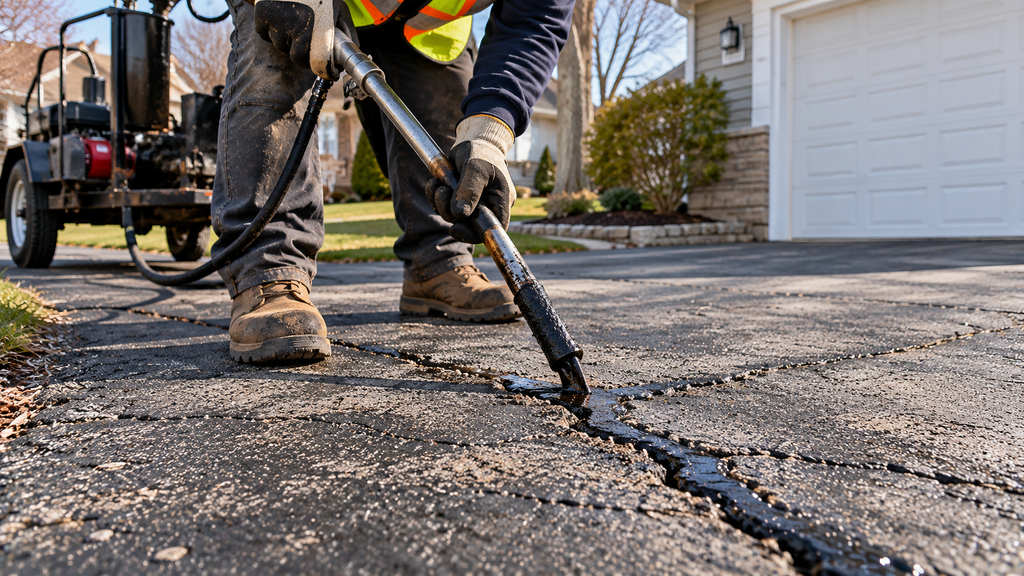
4. Repair cracks early. Clean out dirt and loose material, then fill cracks with a product made for asphalt. Do it while cracks are still narrow. Waiting until they open up to a few inches lets water reach the base.
5. Fix potholes promptly. A cold patch can serve as a temporary fix over winter. A more permanent hot-mix repair is usually done in warmer months, since many asphalt plants in the Northeast close for part of the winter.
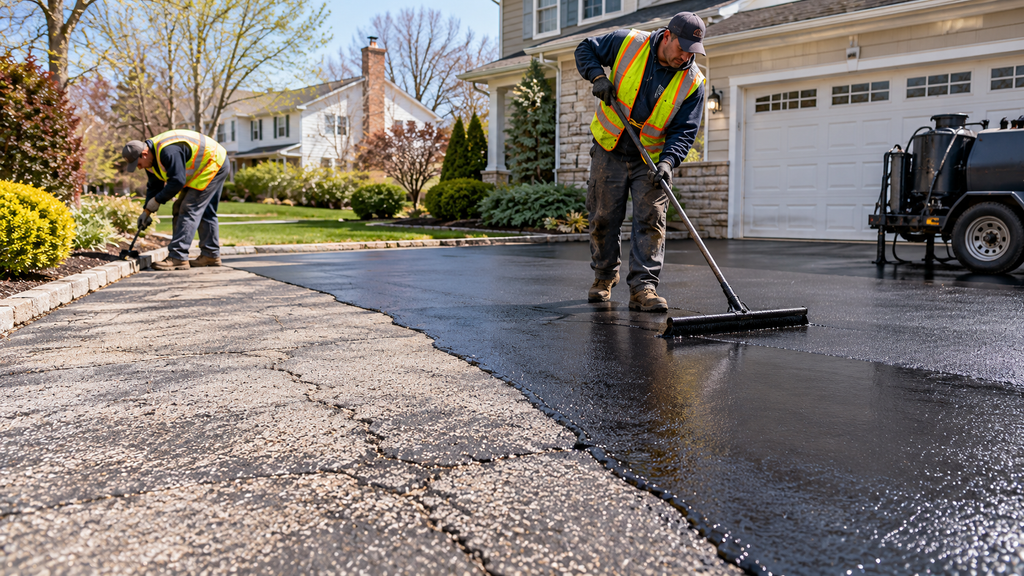
6. Use sealcoating appropriately. Sealcoat is a protective layer. It slows oxidation, helps keep out water, and resists oil and fuel stains. It doesn’t repair structural problems or bridge over open cracks, so repairs need to come first. Many contractors recommend waiting several months to a year after new paving before the first coat, and then resealing every few years depending on traffic and condition.
7. Limit heavy loads. Keep dumpsters, trailers, and heavy equipment off the pavement when possible. If they must be there, use boards or a stable pad, and avoid leaving them parked in the same spot through the summer.
8. Use care when clearing snow. Raise the plow blade slightly or use plow shoes so it doesn’t dig into the surface. Mark driveway edges with stakes so plow operators don’t catch them. Avoid metal shovels that scrape the surface.
9. Get a professional assessment when deterioration spreads. If damage is widespread or repairs aren’t holding, an assessment will tell you whether more maintenance makes sense or whether it’s time to plan for a larger fix.
Asphalt Maintenance by Season in New York
| Season | What to Check | Recommended Maintenance |
| Spring | New cracks, potholes, drainage problems after the thaw, edge damage from plowing | Clean the surface, fill cracks, patch potholes with a lasting repair when weather allows, clear drains |
| Summer | Soft spots, ruts from heavy loads, oil and fuel stains, fading | Sealcoat if the pavement is due and repairs are done, avoid parking heavy vehicles in one spot, clean stains |
| Fall | Cracks before winter, drainage, leaves and debris | Fill cracks, clear gutters and drains, remove debris, finish any sealcoating before cold weather |
| Winter | Ice buildup, damage from plows, melt patterns | Plow with care, use sand or limited deicer, note new damage to deal with in spring |
Repair or Replace: How Can You Tell?
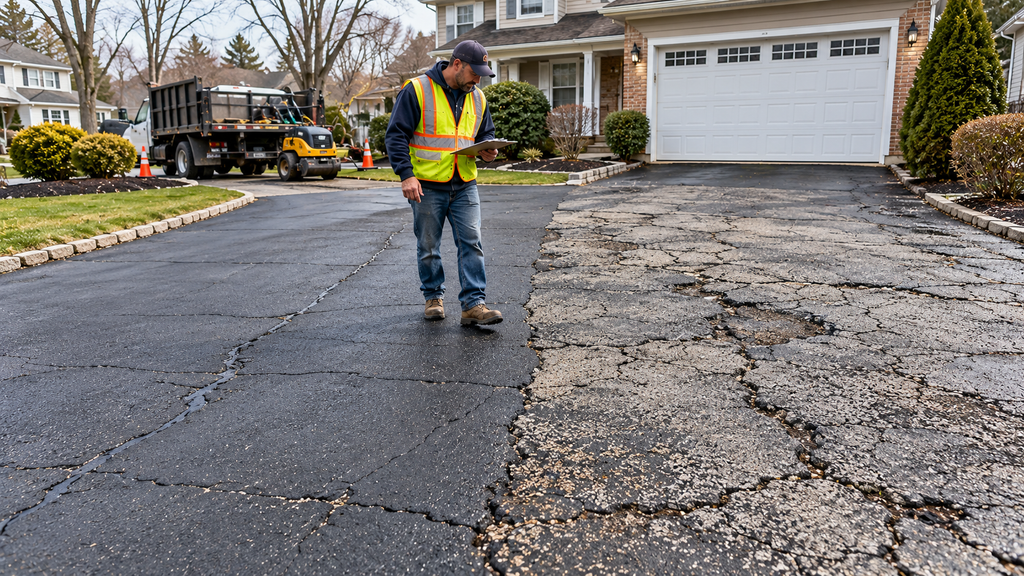
The simplest way to think about it is isolated versus widespread.
Isolated problems, like a few cracks, one pothole, or a small area of edge damage, are generally good candidates for repair. If the rest of the pavement is solid, fixing a small area is usually practical.
Widespread problems point in a different direction. Cracking across much of the surface, multiple potholes, large sunken areas, or repairs that keep failing may mean the base or the pavement structure has issues. In those cases, patching can turn into a cycle of recurring repairs.
Age matters too. A pavement that is 20 years old and showing broad deterioration is in a different position from a 7-year-old driveway with a few cracks.
It’s hard to tell what’s happening underneath from the surface alone. A contractor can assess the pavement in person, look at the condition of the base, and talk through options, from repair to resurfacing to full replacement.
Residential vs. Commercial Asphalt Lifespan
A residential driveway sees a few cars a day. A commercial lot may see hundreds of vehicles, along with delivery trucks and garbage trucks, and those loads add up.
Commercial pavement also tends to wear in patterns. Entrances, exits, loading areas, and turning lanes get the most stress. Parking stalls in the back of the lot might look nearly new, while the main drive aisle shows heavy cracking.
Drainage is another difference. Larger paved areas collect more water, and that water has to go somewhere. Poor grading or clogged catch basins can leave water sitting on a lot for days.
Maintenance schedules matter more at scale. A lot that’s inspected regularly and repaired in small sections generally ages better than one that’s left alone until problems are obvious. Property managers often find it useful to build pavement maintenance into an annual plan, so a repair doesn’t become a surprise expense.
Illustrative New York Example
This is a hypothetical example to show how maintenance decisions play out. It is not a real customer or completed project.
Imagine a homeowner in the Rochester area with a 9-year-old asphalt driveway. A downspout empties near the edge of the pavement, and over a couple of seasons, a thin crack forms along that edge. It looks minor.
The first winter, water gets into the crack and freezes. By spring, the crack is wider and a small piece of the edge has broken off. A second winter follows, and the edge starts to crumble where the plow has been catching it. Now the damage isn’t a crack anymore. It’s a broken edge with exposed base material, and water is getting under the surface.
Here’s the alternative. The homeowner notices the crack the first fall, extends the downspout so water drains away from the driveway, cleans out the crack, and fills it. The repair takes an afternoon. Stakes along the edge keep the plow blade away from it. In following years, the crack is checked each spring and touched up as needed.
The two outcomes start from the same place. The difference is moving water away and dealing with the crack while it was small.
Common Asphalt Maintenance Mistakes
- Ignoring small cracks. They rarely stay small. Moisture, freezing, and traffic all work on them.
- Allowing drainage problems to continue. Fixing the surface without fixing where the water comes from means the damage will return.
- Treating sealcoating as a structural repair. Sealcoat protects the surface. It won’t strengthen a weak base or repair major cracking.
- Waiting until potholes become severe. A small hole is a simple repair. A large one often involves cutting out a section and rebuilding it.
- Using damaging snow-removal practices. Plow blades set too low, metal shovels, and heavy use of deicer can all shorten pavement life.
- Skipping inspections. If you only look at the driveway when it looks bad, you’ve missed the window for inexpensive fixes.
Frequently Asked Questions
How long does asphalt last?
Most asphalt driveways last about 15 to 20 years, and commercial lots often fall in a similar range with regular maintenance. Actual lifespan depends on installation quality, base preparation, drainage, traffic, climate, and upkeep.
How long does an asphalt driveway last in New York?
Many New York asphalt driveways last around 15 to 20 years. Some go longer when they’re well built and maintained. Freeze-thaw cycles, snow removal practices, and drainage tend to have a big effect.
Does New York winter weather shorten asphalt lifespan?
It can. Repeated freezing and thawing widens cracks and weakens pavement edges. Plowing adds stress as well. Regular crack repair and good drainage help limit the damage.
How often should asphalt be maintained?
Inspect it at least twice a year, in spring and fall. Fill cracks as they appear. Sealcoating is often done every few years depending on traffic and the condition of the pavement.
Does sealcoating make asphalt last longer?
It can help. Sealcoat protects against water, sun, and stains, which slows surface aging. It doesn’t fix structural problems, and cracks should be repaired before it’s applied.
When should an asphalt driveway be replaced?
Consider replacement when damage is widespread, such as extensive interconnected cracking, large sunken areas, or repairs that keep failing. A professional assessment can help you decide between repair, resurfacing, and replacement.
Can cracked asphalt be repaired?
Often, yes. Smaller cracks can be cleaned and filled. More extensive cracking may need patching or resurfacing, and widespread cracking can signal deeper problems that need assessment.
How can I make my asphalt driveway last longer?
Keep water draining away from the pavement, fill cracks early, patch potholes promptly, and use sealcoating appropriately. Be careful during snow removal and limit heavy loads.
What It Really Comes Down To
There isn’t one number that answers how long asphalt lasts. The range is wide because the result depends on choices made at installation and in the years afterward: how solid the base is, how well water drains, how heavy the traffic is, and whether small problems get handled while they’re still small.
New York’s freeze-thaw cycles, snow, and plowing make that last point matter even more. The pavement that lasts longest is usually not the one that never cracks. It’s the one where cracks get filled, water gets directed away, and someone checks on it each spring and fall.
If you’re unsure about the condition of your driveway or parking lot, an inspection can give you a clear picture. Whether you need a repair, maintenance plan, or a paving estimate, reach out to us, and we’ll take a look and tell you what we see.