
A lot of patios are perfectly usable and still get ignored. The pavers are fine, the space is the right size, but it feels bare, a little too bright at noon, and too dark at 8 p.m. Two folding chairs and a grill won’t make anyone want to sit out there.
The good news is that decorating an outdoor patio mostly comes down to a few practical decisions, not a full renovation. Where the furniture goes, how the space is lit, what happens when it rains, and what’s underfoot all matter more than any single piece of decor.
How to Decorate an Outdoor Patio Without Overspending
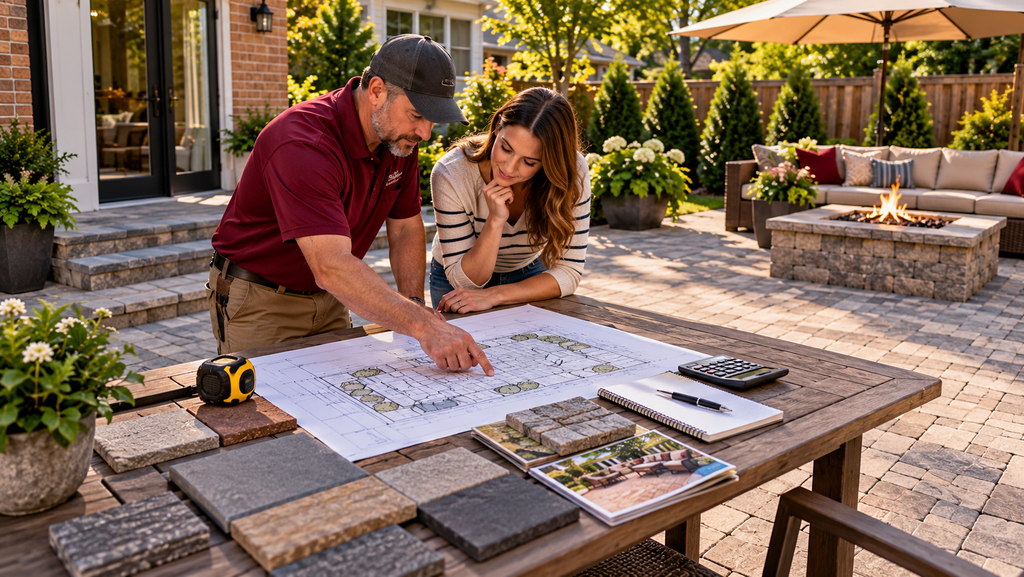
Start with the patio you actually have, not the one in a magazine. Measure it, and note where the door, the downspouts, and the sun are.
Then decide what you want to do out there. Eating dinner, reading, hosting six people, and watching kids play all call for different layouts. If you try to do all four on a 10-by-12-foot slab, none of them will work well.
A few ground rules help:
- Leave walking room. About 36 inches for main paths keeps people from squeezing past chairs.
- Give a dining table space. Plan roughly 3 feet around it so chairs can be pulled out.
- Pick one style and a small color palette. Two or three colors plus natural wood or stone tones is plenty.
- Set the budget by priority. Seating and lighting usually deserve the most money. Accessories can come later.
Materials matter more outside than in. Anything on a New York patio has to handle humidity, heavy rain, summer sun, and freezing temperatures. Cushions should be made for outdoor use, metal should be powder-coated or rust-resistant, and wood needs a finish you’re willing to maintain.
Outdoor Patio Decorating Ideas for New York Homes
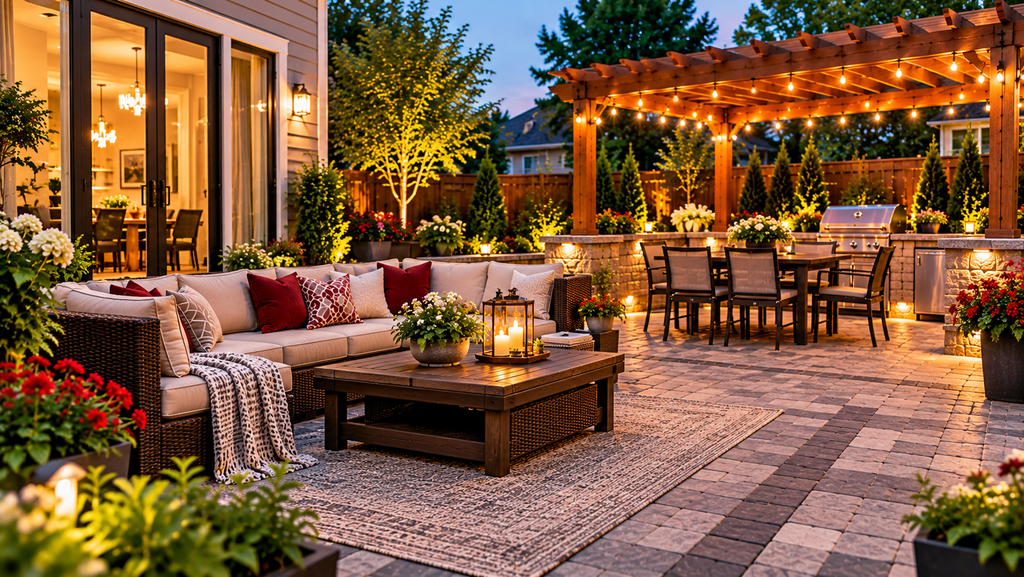
Not every idea fits every patio. Here’s what tends to work, and where.
Seating. This is the foundation. Choose pieces you’d be comfortable in for an hour, not just ones that look good. On a small patio, a loveseat and one chair beat a six-piece sectional that blocks the door.
Cushions and textiles. Solution-dyed acrylic fabric resists fading and mildew better than standard cotton. Throw pillows can be brought inside when rain is coming, which keeps them looking decent for years.
Lighting. String lights are popular for good reason. They give soft, even light and cost little. Add a few low-voltage path or step lights so people can see changes in level. Solar lights are fine for accents but are often too dim for stairs.
Plants. Containers let you add greenery without digging up pavers. Larger pots hold moisture longer and survive a hot July better than small ones. Choose plants rated for your USDA zone if you plan to leave them out in winter, or treat them as seasonal.
Outdoor rugs. A rug defines a seating area and softens hard pavers. Polypropylene rugs dry quickly. Avoid anything with a rubber backing that traps water against the surface.
Privacy. New York yards are often close together. Tall planters with ornamental grasses, a lattice panel, or a slatted wood screen can block sightlines without making the patio feel boxed in. Check local rules on fence and screen heights before building anything fixed.
Shade. A cantilever umbrella, shade sail, or pergola changes how often the space gets used in July and August. Anchor anything large securely. Wind can turn an umbrella into a hazard.
Stone and paver details. A contrasting paver border, a soldier course, or an inset pattern adds character without adding furniture. These are installation decisions, so they’re easiest to do when pavers are being laid or replaced.
Fire features. A fire pit or fire table can extend the season into October and November. Rules vary by city, building type, and even the fuel used, and some places restrict open flames altogether. Check with your local building or fire department first, and keep it well away from structures and overhanging branches.
| Patio size | What usually works | What tends to go wrong |
| Small (under about 120 sq ft) | Compact seating, vertical planters, one rug, string lights | Too many pieces, blocked doorway |
| Medium | Seating group plus small dining set, shade umbrella | Furniture floating in the middle with no anchor |
| Large | Separate zones for dining and lounging, fire feature, pergola | Spreading pieces too far apart so nothing feels connected |
How to Decorate a Small Outdoor Patio
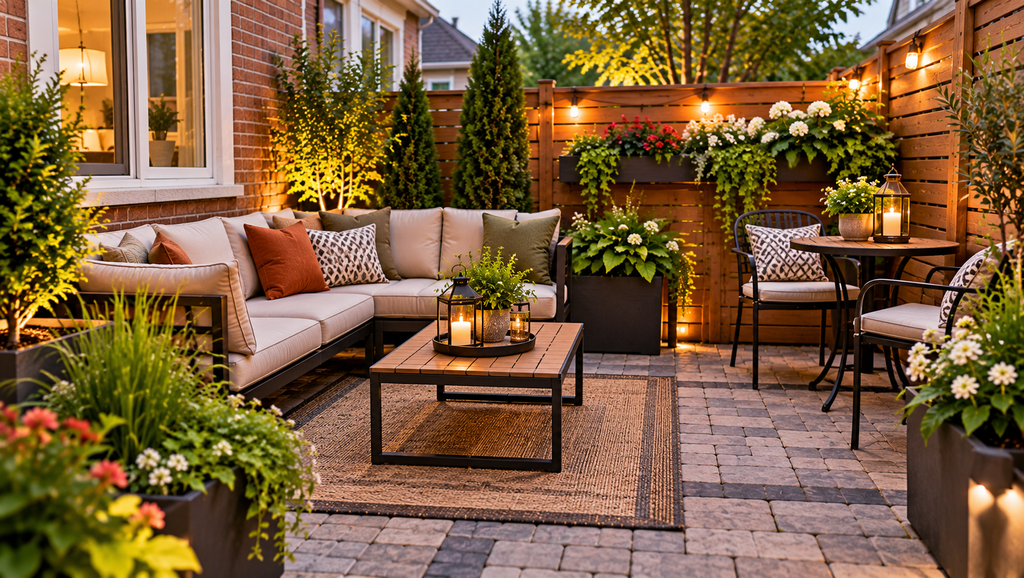
Small patios reward restraint. Pick fewer, better-sized pieces and keep the floor visible.
- Use compact or folding furniture that can be stored.
- Go vertical with wall planters, trellises, or a tiered plant stand.
- Choose a table that fits the space, like a drop-leaf or a bistro table.
- Stick to a simple palette so the patio doesn’t feel busy.
- Leave a clear path from the door to the seating.
Illustrative example (hypothetical, not a completed project). Picture a Queens rowhouse with a 9-by-11-foot paver patio. A few pavers have settled, and one corner holds water after rain. The owners want somewhere to eat and relax.
A workable layout might put a 30-inch bistro table in one corner, with two folding chairs that tuck under it, and a narrow bench along the fence. A tall planter and a trellis on the fence add privacy and greenery without taking up floor space. A 5-by-7-foot outdoor rug sits under the bench area, not the whole patio, so the pavers stay visible.
Before buying any of it, the settled pavers and ponding corner would need to be fixed, because water pooling under furniture gets worse, not better. Then string lights along the fence and one or two low step lights would finish it.
Choosing the Right Patio Pavers and Surface Materials
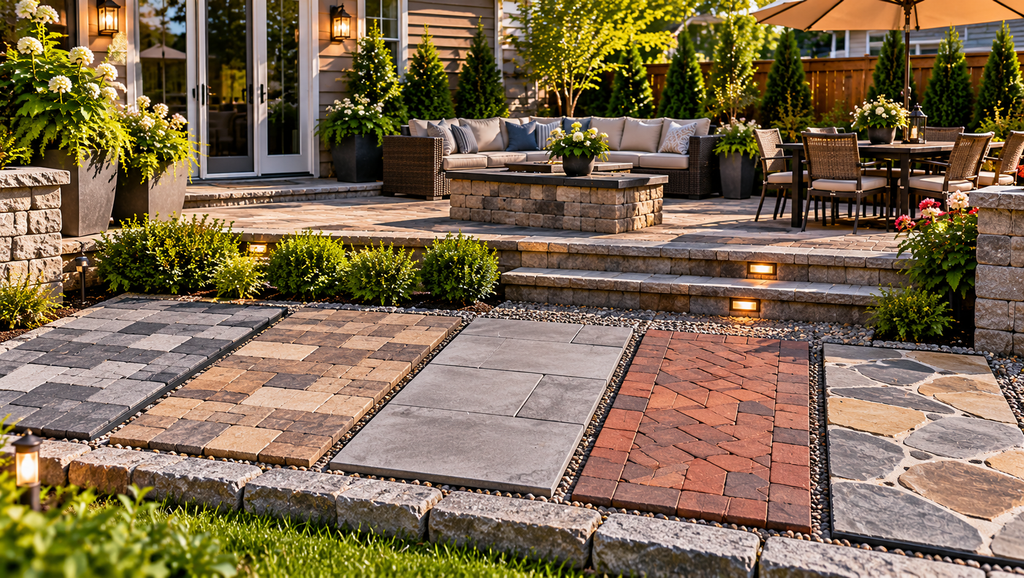
The surface does more of the decorating than most people think. It’s the largest visible element, and it affects safety, drainage, and upkeep.
Concrete pavers come in many colors and shapes, hold up well, and are easy to repair, since individual units can be lifted and replaced.
Brick pavers give a traditional look that suits older New York homes. They can be more sensitive to freeze-thaw damage if the brick isn’t rated for exterior paving.
Natural stone such as bluestone is common in the Northeast. It looks great, but cost, installation, and sealing needs are usually higher.
Whatever you choose, look at three practical things:
- Slip resistance. A textured surface is safer when wet or icy than a polished one.
- Drainage. The patio should slope slightly away from the house, and water shouldn’t collect anywhere.
- Maintenance. Joint sand needs topping up, weeds need pulling, and some surfaces benefit from sealing.
It’s worth asking whether you need decor or repair. Sunken pavers, wide gaps, and wobbly sections can’t be hidden by a rug. Fixing the base is usually cheaper than decorating around a problem you’ll have to redo. Kings Pavers & Concrete handles paver installation and patio repair, including relaying settled areas and correcting grading.
Decorating Your Patio for New York’s Changing Seasons
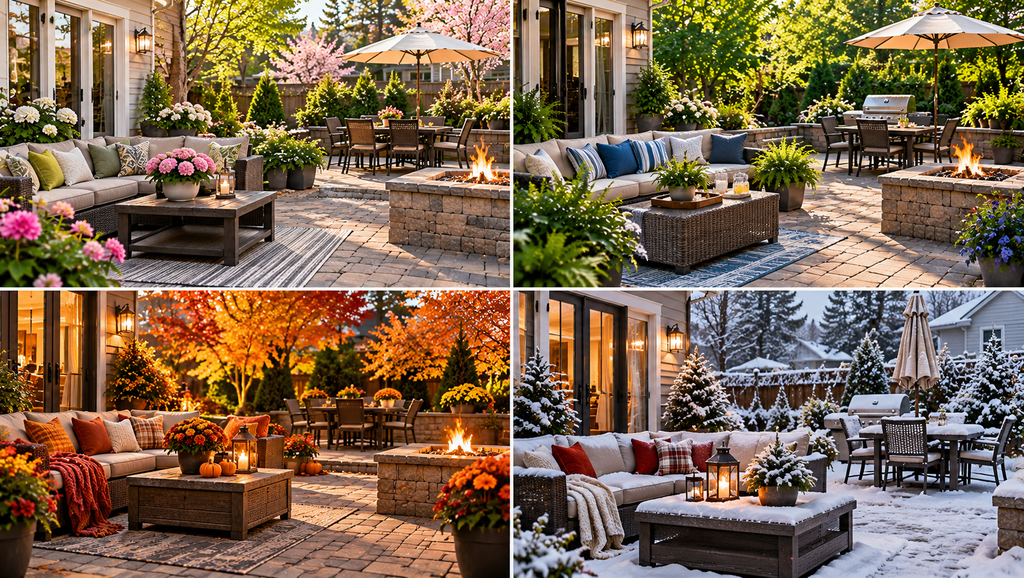
A patio that works in July may not work in November. A little planning keeps it useful for more of the year.
Summer. Shade is the main need. Position seating where afternoon sun won’t hit it directly, or add a sail or umbrella.
Spring and fall rain. Choose furniture that drains and dries. Slatted seats and mesh work better than solid surfaces that hold water.
Autumn. Leaves left on pavers get slick and can stain. Sweep regularly, and check that joints and drains are clear before winter.
Winter. Store cushions, umbrellas, and anything fabric. Use covers on furniture that stays out. Freeze-thaw cycles can heave poorly installed pavers, so watch for water getting under the surface. Shovel with a plastic blade, and be careful with de-icers, since some products can damage pavers and concrete. Check the manufacturer’s guidance for your surface.
Shorter days. The sun can set before 5 p.m. in December. Warm, low lighting along paths and steps makes a patio more usable and safer.
Common Patio Decorating Mistakes to Avoid
Most of these are easy to fix once you spot them.
- Oversized furniture. A big set can swallow a small patio. Measure first, and tape the footprint on the pavers.
- Lighting from only one source. A single bright floodlight feels harsh. Layer a few softer sources instead.
- Ignoring drainage. Furniture and rugs can hide a low spot, but they won’t fix it.
- Unsuitable materials. Indoor cushions, untreated metal, and thin plastic usually look worn after one season.
- Too many accessories. A few good pieces look better than a crowded surface.
- Blocking walkways. Leave clear access to the door, steps, and any gate.
- Skipping maintenance. Even good materials need cleaning and the occasional touch-up.
Step-by-Step Guide to Decorating an Outdoor Patio
- Measure and assess. Note dimensions, sun, door swings, and any damaged areas.
- Decide how the space will be used. Dining, lounging, entertaining, or a mix.
- Choose furniture. Pick sizes that fit and materials that suit outdoor conditions.
- Plan lighting and shade. Decide where light is needed for safety and where shade is needed for comfort.
- Add plants and decorative touches. Use containers, a rug, and a few accessories.
- Check drainage and surfaces. Look for low spots, loose pavers, and slippery areas, and fix them first if they matter.
- Adjust for comfort and access. Sit in each spot, test the paths, and move things until it feels right.
Patio Decorating Ideas for Different Budgets
Prices vary widely across New York depending on location, materials, and contractor, so this table focuses on what each level typically covers. Get current local quotes before you commit to anything larger.
| Budget Level | Decorating Options | Best For |
| Low | Container plants, outdoor cushions, string lights | Small upgrades and quick refreshes |
| Medium | New seating, outdoor rug, shade umbrella or sail | Comfort improvements |
| Higher | Paver upgrades, built-in seating, fire feature, pergola | Larger renovations |
When Should You Hire a Professional Patio Contractor?
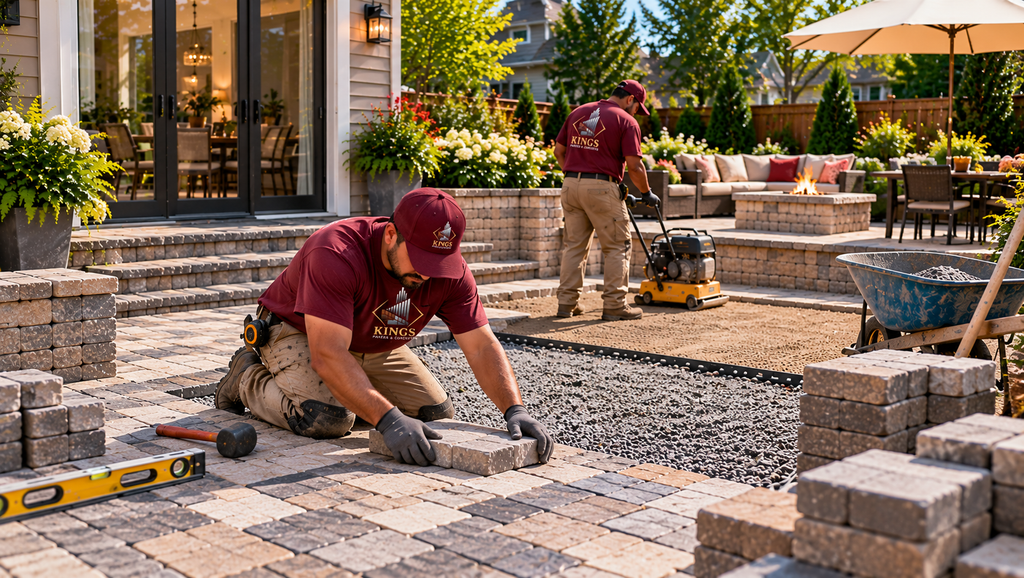
Decorating is something most homeowners can handle. Some problems aren’t.
Call a professional if you have:
- Uneven or sunken pavers
- Water pooling or flowing toward the house
- Cracked or loose sections
- A plan to change the layout or add a new patio
- Concerns about grading, base material, or retaining walls
For installation or repairs, look for a contractor who explains base preparation and drainage and can show you past work. If you’re on Long Island, a patio contractor in Kings Park or a paver company serving Kings County can inspect the surface and give you a clear scope.
Frequently Asked Questions
How do I decorate an outdoor patio on a budget?
Start with lighting, a few container plants, and outdoor cushions. Those make the biggest visual difference for the least money. Add furniture or a rug later.
How can I make my outdoor patio look more attractive?
Define the seating area, add layered lighting, and use plants in varied heights. Make sure the pavers are clean and in good repair, since a worn surface drags down everything else.
What furniture works best for a small patio?
Bistro sets, folding chairs, benches with storage, and drop-leaf tables. Choose pieces that can be moved or stored easily.
How do I decorate a patio for New York weather?
Use weather-resistant materials, bring cushions inside during the winter, and make sure water drains properly. Choose furniture that dries quickly.
What is the best flooring for an outdoor patio?
It depends on budget and style. Concrete and brick pavers are durable and repairable, and natural stone is attractive but costs more. Look for a textured, slip-resistant finish.
How can I make my patio feel more private?
Tall planters, ornamental grasses, lattice, or a slatted screen can block views. Check local rules before building anything fixed, such as a fence or pergola.
Should I repair patio pavers before decorating?
Yes, if they’re sunken, loose, or uneven. Furniture and rugs can’t fix a base problem, and moving everything later is a hassle.
Making Your Outdoor Patio More Comfortable and Practical
The patios that get used the most tend to share a few things. The furniture fits, the lighting is soft but sufficient, there’s some shade, and nothing wobbles underfoot. The rest is personal taste.
If you’d like help with uneven pavers, drainage, or a new patio, Kings Pavers & Concrete can take a look and talk through the options.