
If you’ve received a sidewalk violation in NYC, start by reviewing the notice, confirming the affected sidewalk sections, and arranging the necessary repairs. Property owners generally have 75 days from receiving the notice to complete the required repairs. After the work is finished, a dismissal inspection is necessary to have the violation officially removed when repairs are performed privately.
Receiving an official notice from the New York City Department of Transportation (NYC DOT) can be stressful, especially if you’re unfamiliar with sidewalk repair requirements. However, understanding the process can help you avoid unnecessary delays, unexpected expenses, and complications with your property.
This guide explains how to respond to a sidewalk violation, arrange repairs, understand permit requirements, and complete the dismissal process.
What Is a Sidewalk Violation in NYC?
A sidewalk violation is an official notice issued by NYC DOT when a sidewalk adjoining a property has defects that may create unsafe conditions for pedestrians. These defects can include raised concrete slabs, broken sidewalk sections, improper slopes, and other tripping hazards.
The purpose of the notice is to encourage property owners to correct unsafe conditions and maintain accessible pedestrian walkways.
According to NYC DOT sidewalk guidelines, receiving a violation does not automatically result in a fine. However, failing to complete the required repairs may result in the City arranging the work and billing the property owner.
Understanding the Difference Between Repair and Dismissal
Sidewalk repair and violation dismissal are two separate stages of the process.
- Sidewalk repair involves physically correcting the damaged or defective sidewalk sections.
- Violation dismissal involves officially clearing the violation from municipal records after the necessary requirements have been satisfied.
Completing the concrete work alone does not automatically remove a sidewalk violation. Property owners should follow the appropriate dismissal procedure and confirm that the violation has been cleared.
What to Do Immediately After Receiving a Sidewalk Violation Notice

Taking action early gives you more time to review the notice, compare contractor estimates, and arrange the necessary permits.
1. Read the Violation Notice Carefully
Review the property address, violation number, inspection details, and any accompanying documents.
The notice may include a Preliminary Inspection Report (PIR), which identifies the sidewalk sections requiring attention. Understanding this report helps you determine the scope of the repairs and communicate more effectively with contractors.
Keep the original notice and any correspondence from NYC DOT.
2. Confirm Your 75-Day Repair Deadline
The repair period generally begins on the date you receive the notice through certified mail or the date it is posted at your property if mail delivery is unsuccessful.
Record the relevant date and retain any delivery documentation. Avoid assuming that obtaining a construction permit or hiring a contractor automatically gives you additional time.
Contact NYC 311 if you are uncertain about your deadline.
3. Inspect and Photograph the Sidewalk
Walk along the sidewalk adjoining your property and compare its condition with the defects identified in the inspection report.
Take clear photographs of:
- Cracked or broken concrete
- Raised or sunken sidewalk slabs
- Uneven walking surfaces
- Visible tree root damage
- Damaged areas near driveways or curbs
Documenting the existing conditions helps contractors prepare more accurate estimates and gives you a useful record of the sidewalk before construction begins.
4. Contact a Professional Sidewalk Contractor
Arrange a property assessment as early as possible. Contractor availability, permit processing, weather, and the extent of damage can affect your repair schedule.
A contractor familiar with NYC sidewalk requirements can help you understand the necessary construction work and prepare for the dismissal inspection.
5. Organize Your Documents
Keep your violation notice, photographs, contractor estimates, agreements, permit information, and inspection records together.
Having these documents readily available can simplify communication with your contractor and city agencies throughout the process.
How to Review and Contest an NYC Sidewalk Violation
Not every violation notice accurately reflects the current condition of a sidewalk. Property ownership records may be outdated, or the defects identified in the inspection report may not match what you see outside your property.
Start by checking the property address and comparing the marked sidewalk sections with the actual conditions.
If the defects identified in the Preliminary Inspection Report do not exist, you can contest the violation by requesting a re-inspection through NYC 311. This request must be submitted within 75 days of receiving the notice.
Do not assume that submitting a dispute automatically changes your repair obligations or applicable deadlines. Confirm how your situation will be handled before postponing any necessary work.
If the notice was issued to the wrong property owner, contact NYC 311 for assistance and check whether the Department of Finance’s ownership records need to be updated.
Who Is Responsible for Sidewalk Repairs in NYC?
Property owners are generally responsible for maintaining the sidewalks adjoining their properties. This includes residential homeowners, commercial property owners, landlords, and other property owners.
Sidewalk maintenance responsibilities and potential liability are addressed under Sections 19-152 and 7-210 of the NYC Administrative Code. However, certain exceptions and property-specific circumstances may affect an owner’s obligations.
For example, special considerations may apply when sidewalk damage is caused by City-owned trees, utility companies, or other construction activities.
Maintenance responsibilities and legal liability are not necessarily the same. Property owners with questions about liability should seek qualified legal advice rather than assuming that an exception automatically removes every repair obligation.
Common Sidewalk Defects That Can Lead to a Violation
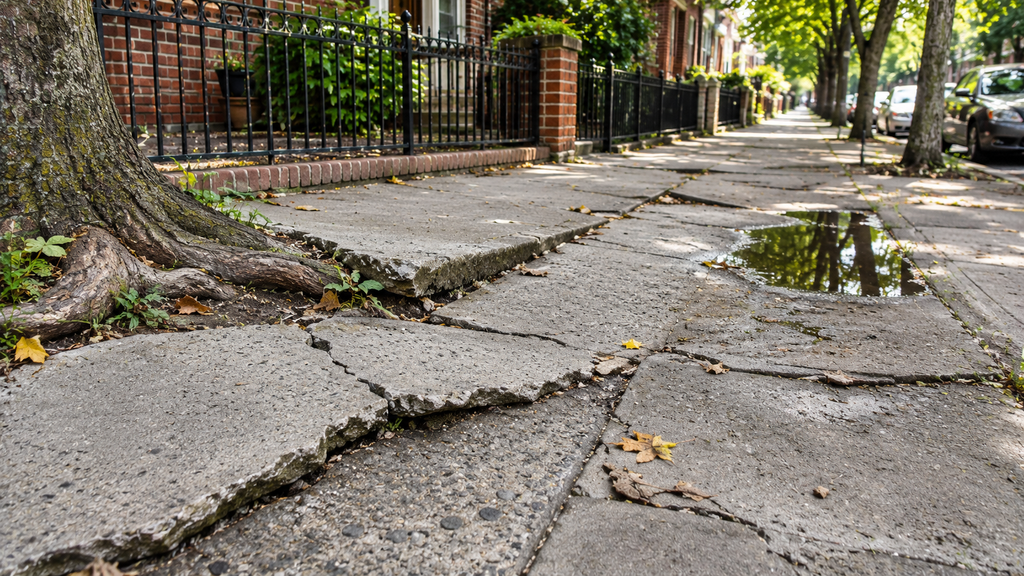
Understanding the type of damage affecting your sidewalk can help you determine what kind of repair may be necessary.
Uneven Concrete Slabs
Uneven sidewalks develop when individual concrete sections rise or sink at different rates. Soil settlement, tree roots, moisture, and seasonal temperature changes can contribute to this problem.
Even relatively small differences in elevation can create tripping hazards for pedestrians.
Cracked or Broken Concrete
Minor surface cracks do not always indicate structural failure. However, extensive cracking, displaced concrete, and broken sidewalk sections can compromise the safety and stability of the walking surface.
A professional assessment can help determine whether localized repairs or complete slab replacement is necessary.
Concrete Spalling and Surface Deterioration
Spalling occurs when the surface of concrete begins to flake, chip, or break apart. Moisture penetration, freeze-thaw cycles, and prolonged exposure to deicing chemicals may contribute to deterioration.
Severe surface damage can create an uneven walking surface and expose the concrete to further deterioration.
Improper Sidewalk Slope
An incorrectly sloped sidewalk can create drainage problems, standing water, and accessibility concerns.
Correcting the slope may require removing and rebuilding affected sidewalk sections rather than simply repairing visible surface damage.
Tree Root Damage
Tree roots growing beneath concrete can lift sidewalk slabs and create significant elevation differences.
Damage caused by City-owned trees is subject to special municipal procedures. Eligible properties may qualify for assistance through the NYC Parks Trees and Sidewalks Program.
City policy provides special protections for one-, two-, and three-family properties where sidewalk damage is caused solely by City trees. Other property types may have different repair responsibilities.
Contact NYC 311 or NYC Parks to confirm your eligibility before arranging repairs involving street trees. City-owned tree roots must not be cut or shaved.
Should You Repair or Replace a Damaged Sidewalk?
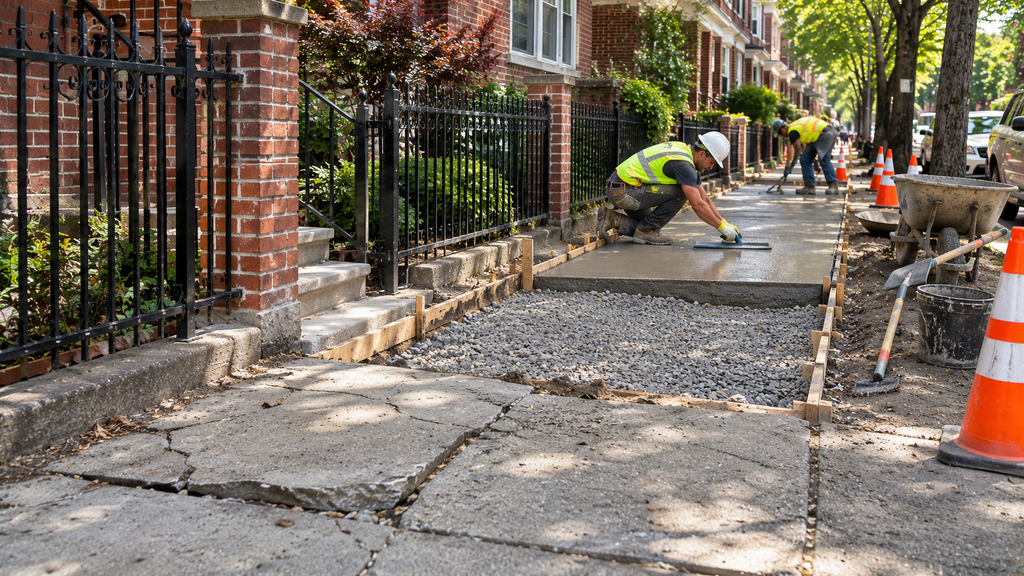
The appropriate solution depends on the inspection report, the severity of the damage, and applicable NYC DOT construction specifications.
Not every damaged sidewalk requires complete replacement. However, a cosmetic repair is not necessarily sufficient to resolve an official violation.
| Sidewalk Condition | Potential Solution |
| Single raised or broken slab | Replace the affected slab |
| Multiple cracked or displaced sections | Replace the affected sidewalk sections |
| Widespread sinking or unstable foundation | Replacement with appropriate base preparation |
| Tree root-related damage | Assess eligibility and coordinate appropriate repairs |
| Minor surface deterioration | Professional evaluation to determine suitable treatment |
| Improper slope or drainage | Correct grading and reconstruct affected sections |
Every numbered sidewalk slab identified for replacement in the Preliminary Inspection Report must be addressed as required by NYC DOT, along with the other recorded defects.
The contractor should also evaluate underlying problems, such as an unstable base or poor drainage. Replacing damaged concrete without addressing the cause may allow similar problems to develop again.
How to Choose a Sidewalk Repair Contractor in NYC
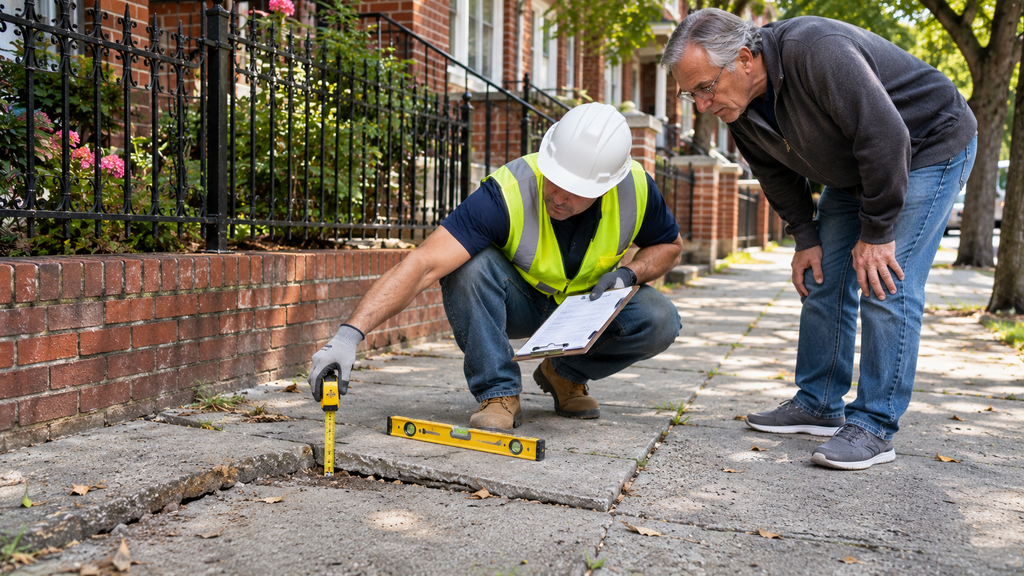
Selecting the right contractor matters because sidewalk violation repairs involve more than removing damaged concrete and installing a new surface.
The completed sidewalk must satisfy applicable construction requirements before the violation can be dismissed.
Verify the Contractor’s License and Insurance
NYC 311 states that sidewalk repair contractors performing work costing more than $200 must hold the appropriate Home Improvement Contractor License.
Check the applicable licensing requirements and verify the contractor’s credentials through the NYC Department of Consumer and Worker Protection (DCWP).
You should also request appropriate insurance documentation before signing a contract.
Ask About NYC DOT Sidewalk Requirements
Choose a contractor familiar with NYC sidewalk construction specifications and violation-related repairs.
Ask how they plan to address the defects identified in your inspection report, including slab replacement, base preparation, drainage, joints, and surface finishing.
Request a Detailed Written Estimate
Your estimate should clearly identify the work included in the project.
Look for information about:
- Sidewalk area requiring replacement
- Demolition and debris removal
- Concrete materials and installation
- Base preparation
- Permit responsibilities
- Estimated project duration
- Dismissal inspection coordination
A clearly defined scope of work makes it easier to compare contractor estimates and understand your responsibilities.
Clarify Who Handles the Dismissal Inspection
Before construction begins, establish who will request the dismissal inspection and what happens if additional corrective work is required.
Discussing these responsibilities beforehand can help prevent confusion after the concrete work is completed.
Property owners looking for professional assistance can explore sidewalk violation removal services from Kings Pavers & Concrete to discuss their repair requirements and obtain a project-specific assessment.
Understanding NYC Sidewalk Repair Permits and Deadlines
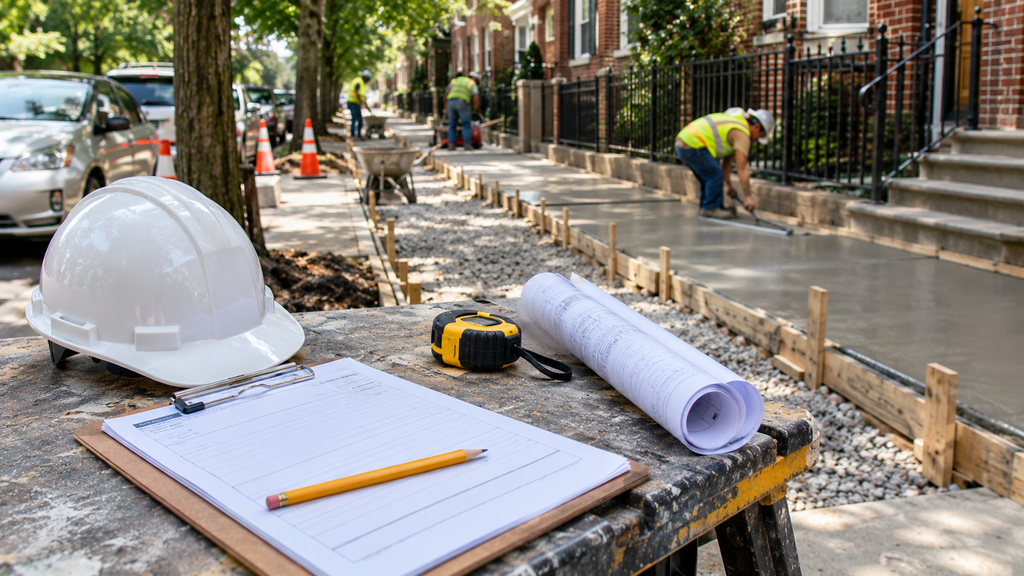
Sidewalk construction in New York City is subject to municipal permit requirements. Make sure the necessary permits are obtained before work begins.
Your contractor will typically help coordinate the permit process for the proposed sidewalk repairs.
How Much Does a Sidewalk Repair Permit Cost in NYC?
NYC DOT lists the sidewalk repair permit fee as $70 per 300 linear feet of sidewalk for an individual property. Depending on the property layout, corner properties and properties with multiple street frontages may require additional permits.
This fee is separate from contractor labor, materials, demolition, and other construction expenses.
Permit fees and administrative procedures can change. Review the latest NYC DOT guidance before starting your project.
Does a Sidewalk Permit Extend the Repair Deadline?
Obtaining a sidewalk construction permit does not automatically extend the repair period.
Schedule the necessary work as early as possible and contact NYC DOT or NYC 311 if unusual circumstances may prevent you from meeting the deadline.
What Happens During Winter?
New York’s cold winter temperatures can affect concrete installation and curing. Freezing conditions may also complicate excavation and construction scheduling.
Although weather can influence when sidewalk repairs are practical, property owners should not assume that winter automatically extends their deadline.
Discuss suitable construction conditions with your contractor and confirm any deadline-related concerns with NYC 311.
How to Remove a Sidewalk Violation in NYC After Repairs
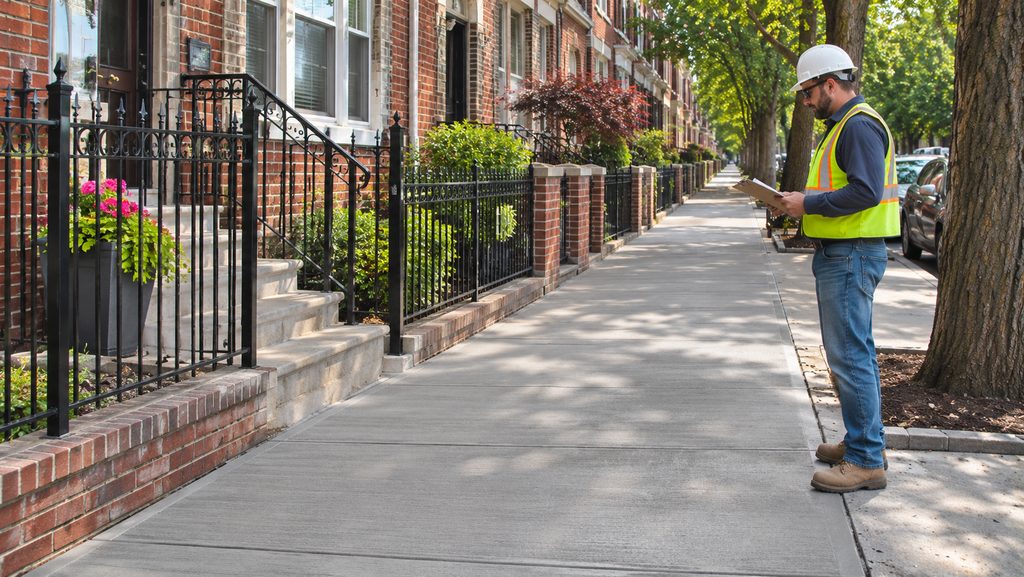
Once the necessary construction work is complete, you must follow the appropriate violation dismissal process.
For privately completed sidewalk repairs, the process typically involves the following steps.
Step 1. Confirm That All Required Repairs Are Complete
Review the original inspection report and ensure that the contractor has addressed the identified defects.
Check that the completed sidewalk is even, stable, and free from obvious hazards.
Step 2. Gather Your Permit and Violation Information
Keep the sidewalk construction permit number, violation number, property address, contractor invoice, and relevant construction documents available.
You may need this information when submitting your dismissal inspection request.
Step 3. Request a Sidewalk Violation Dismissal Inspection
Submit the appropriate request through NYC 311 after completing the repairs.
A NYC DOT inspector will evaluate whether the completed work satisfies the relevant sidewalk requirements.
Keep the sidewalk accessible and visible for inspection. Review the official NYC DOT sidewalk repair checklist to understand the applicable inspection considerations.
Step 4. Address Any Outstanding Issues
If the inspection identifies remaining defects or construction issues, additional corrective work may be required.
Contact your contractor to discuss the necessary adjustments and arrange another inspection when appropriate.
Step 5. Confirm That the Violation Has Been Removed
After the dismissal process, check the violation status through NYC 311.
Keep any confirmation documents with your property records. This is particularly useful if you plan to sell or refinance your property in the future.
What Happens If You Ignore a Sidewalk Violation in NYC?
Ignoring a sidewalk violation can result in unexpected expenses and complications involving your property.
When required repairs remain incomplete, NYC DOT may arrange the construction through its own contractor. The Department of Finance may then bill the property owner for the work.
An unresolved violation can also complicate property transactions, including sales and refinancing. In some circumstances, outstanding repair charges or liens may require additional administrative steps before they can be cleared.
Unsafe sidewalk conditions may also expose property owners to potential liability if someone is injured.
Eligible residential property owners who receive a bill for City-performed sidewalk repairs may qualify for a payment plan. Contact NYC 311 or the Department of Finance for current eligibility requirements.
Addressing the issue early generally gives you greater flexibility when choosing a contractor, planning the repairs, and managing construction expenses.
What Affects the Cost of Sidewalk Violation Repairs in NYC?
Sidewalk repair costs in New York City vary depending on the property, the extent of damage, construction requirements, and site accessibility.
A property-specific assessment is the most reliable way to obtain an accurate estimate.
| Cost Factor | How It Affects the Project |
| Size of the affected sidewalk | Larger repair areas require additional labor and materials |
| Concrete removal | Demolition and debris disposal increase the scope of work |
| Base conditions | An unstable foundation may require additional preparation |
| Tree root damage | May require specialized planning and municipal coordination |
| Site accessibility | Restricted access can increase construction complexity |
| Permit requirements | Multiple frontages may require additional permits |
| Material selection | Specialty sidewalk materials may affect installation costs |
| Drainage and grading | Correcting underlying water problems may require additional work |
How to Compare Sidewalk Repair Estimates
When requesting estimates, provide each contractor with the same inspection report and photographs.
Compare the scope of work rather than focusing exclusively on the final price. A lower estimate may exclude important items such as demolition, base preparation, permit handling, or inspection coordination.
Understanding what each estimate includes can help you make an informed decision and reduce the likelihood of unexpected expenses.
Common Mistakes to Avoid When Resolving a Sidewalk Violation
Property owners can sometimes experience unnecessary delays by overlooking important construction or administrative requirements.
Avoid these common mistakes:
- Waiting until the repair deadline is approaching before contacting contractors.
- Assuming that minor patching will satisfy an official violation.
- Beginning construction without confirming permit requirements.
- Hiring a contractor without checking applicable credentials.
- Accepting an estimate without a clearly defined scope of work.
- Discarding the violation notice or permit documentation.
- Assuming completed construction automatically clears the violation.
- Forgetting to confirm the final violation status.
Careful planning and communication throughout the project can make the repair and dismissal process more manageable.
How to Prevent Future Sidewalk Violations
Regular sidewalk maintenance can help identify developing defects before they become significant safety concerns.
New York property owners should inspect their sidewalks periodically, especially after winter, when freezing temperatures and moisture may have contributed to concrete deterioration.
Watch for developing cracks, uneven slabs, loose concrete, standing water, and signs of settlement.
Address drainage issues promptly, avoid damaging concrete surfaces during snow removal, and arrange professional assessments when structural problems become visible.
If tree roots appear to be lifting the sidewalk, contact the appropriate city agency before attempting repairs that could affect a street tree.
Preventive maintenance cannot eliminate every possibility of sidewalk damage, but it can help reduce avoidable deterioration and support pedestrian safety.
Frequently Asked Questions
How long do you have to fix a sidewalk violation in NYC?
Property owners generally have 75 days after receiving the violation notice to complete the required repairs. Confirm the relevant delivery or posting date, and contact NYC 311 with questions about your deadline.
Is there a fine for receiving a sidewalk violation in NYC?
The sidewalk violation itself does not carry a fine under NYC DOT’s published guidance. However, if the required repairs remain incomplete, the City may arrange the work and bill the property owner.
Can I repair my own sidewalk in NYC?
Homeowners may be able to perform their own sidewalk repairs after obtaining the necessary permits. The completed work must still satisfy applicable construction requirements and inspection procedures. Confirm your eligibility and responsibilities before beginning construction.
How do I check whether my sidewalk violation has been removed?
Contact NYC 311 or submit a violation status inquiry using your sidewalk violation number. Request confirmation that the required dismissal process has been completed and retain the information for your property records.
What if a City-owned tree caused my sidewalk damage?
Properties affected solely by City-owned trees may qualify for special protections or repair assistance. Eligibility depends on the property type and condition. Contact NYC Parks or NYC 311 before arranging work involving tree roots.
Can I sell my property with an open sidewalk violation?
An outstanding sidewalk violation or associated lien may complicate a property sale or refinancing. Consult your real estate attorney or title professional to understand the requirements affecting your transaction.
Do NYC sidewalk violation rules apply in New Hyde Park?
No, not automatically. New Hyde Park is outside New York City, and applicable sidewalk regulations depend on the property’s local jurisdiction. Contact the relevant village or town authority for guidance.
Get Professional Help With Your Sidewalk Violation in NYC
Receiving a sidewalk violation does not have to become an overwhelming experience. Reviewing the notice, arranging the required repairs, obtaining the necessary permits, and completing the dismissal process are essential steps toward resolving the issue.
Kings Pavers & Concrete provides sidewalk repair, concrete work, and paving solutions for residential and commercial property owners across Queens, Brooklyn, Manhattan, the Bronx, and Staten Island.
If you’ve received a sidewalk violation notice or noticed damaged concrete outside your property, our team can help you assess the affected areas and discuss suitable repair options.
Visit our sidewalk violation removal service page or contact us to request a project-specific estimate.