
How to Install Paver Edging Like a Pro in 7 Easy Steps
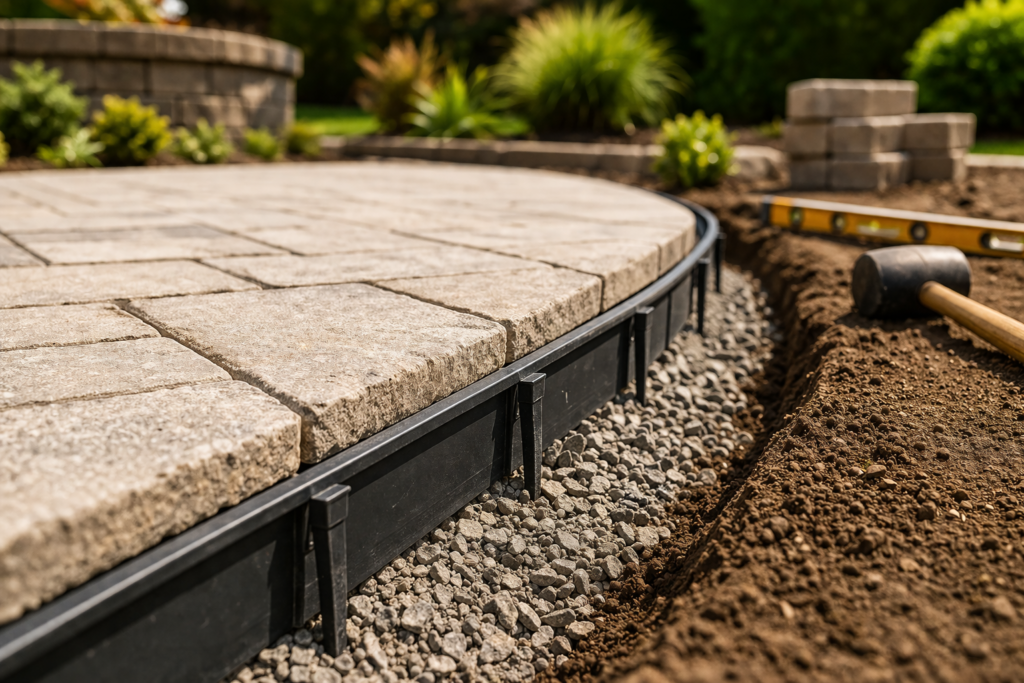
If your pavers are shifting, separating, or sinking after a season or two, the edging is almost always the culprit. Not the pavers themselves. Not the base. The edging or the lack of properly installed edging. Most DIY guides skip straight to “push the spike in, and you’re done.” That’s why so many installations fail. This guide covers every step the right way, including the prep work most people skip, so your paver edging holds for decades instead of seasons. What Actually Goes Wrong With Paver Edging Before the steps, let’s be honest about the failure points because understanding why things go wrong makes each step make sense. Pavers expand and contract with temperature changes. Without a firm perimeter holding them in place, they migrate outward. Once the edge starts to drift, the entire field loses its stability. Joints open up, weeds push through, and eventually you’re redoing the whole job. The three most common mistakes: What You’ll Need Step 1: Mark Your Layout Before You Touch a Shovel This step gets rushed, and it shouldn’t. Spend time here, and every step after it becomes easier. Use stakes and a string line to mark the exact perimeter of your paver field. For straight runs, pull the line tight and stake it at both ends. For curves, use a garden hose or spray paint to mark the radius, then follow that line exactly. Why this matters: Edging installed even an inch off your intended line will force you to cut pavers or leave awkward gaps. Mark it, step back, look at it from multiple angles, then dig. Step 2: Dig the Edging Trench Dig a narrow trench along your marked line. The trench needs to be deep enough so that once the edging is in place, the top lip sits flush with or just slightly below the top surface of your pavers. For most residential paver installations with a 4-inch paver, your trench depth will be around 5 to 6 inches. Width should be just wide enough to set the edging flange flat on the bottom, typically 3 to 4 inches. Keep the interior wall of the trench vertical and tight. A sloppy trench means the edging will wobble before you even spike it. Step 3: Set a Gravel Base in the Trench Add 1 to 2 inches of coarse gravel to the bottom of the trench and compact it with a hand tamper. This is the step most DIYers skip entirely, and it’s why their edging migrates. The gravel does two things: it gives the edging something stable to sit on, and it provides drainage so water doesn’t pool and freeze under the edging in winter. Freeze-thaw cycles are what push edging up and out of position over time in colder climates. Compact the gravel until it doesn’t shift under your foot. Then set the edging in and check the height before moving on. Step 4: Position and Align the Edging Set the edging into the trench and run it along your string line. The top edge should sit at or just slightly below paver height. You’ll fine-tune this as you install. For straight runs, aluminium or steel edging stays true with minimal effort. For curves, heavy plastic edging can be bent to follow gradual curves. For tighter curves (less than a 4-foot radius), score the back of the edging every few inches with a utility knife, so it flexes without kinking. Check your alignment every few feet. Don’t assume the trench will hold the edging true; it won’t. Step 5: Drive the Spikes This is where most of the holding power comes from, so don’t rush it. Drive 10-inch galvanised spikes through the pre-punched holes in the edging flange at a very slight outward angle (away from the paver field), about 5 to 10 degrees off vertical. This angle helps the spike resist the outward pressure pavers exert against the edging over time. Straight-vertical spikes pull straight out. Angled spikes have to fight against the direction of the load. Spacing: 12 inches on straight runs, 8 inches on curves and corners. Use a rubber mallet, not a steel hammer; a steel hammer will deform the spike head, making it harder to drive it flush. Drive each spike until the head sits flat against the edging. No gaps. If a spike bends during driving, pull it and start with a fresh one in a slightly different spot. Step 6: Backfill and Compact Once the edging is spiked in, backfill the trench on the outside with the excavated soil, then compact it firmly with a hand tamper or a plate compactor. This is what locks the system together; the edging can’t move outward if there’s compacted soil pressing back against it from the outside. Work in 2-inch lifts: add a little soil, tamp it, add more, tamp again. Don’t try to compact the entire trench in one pass. Check the edging alignment after compaction. The vibration from a plate compactor can shift things slightly. Make any small corrections now, before the pavers go in. Step 7: Sweep in Joint Sand and Do a Final Check With the edging secured and the paver field complete, sweep polymeric joint sand into all the joints – including the joint between the pavers and the edging itself. Polymeric sand hardens when wet, which adds lateral resistance and blocks weed germination. Sweep, compact with a plate compactor, sweep again, then mist with water to activate the binding agents. Let it cure for 24 hours before heavy foot traffic. Do a final perimeter walk. Push on the edging at several points. It should feel completely solid, no flex, no movement. If any section moves under hand pressure, add spikes before calling the job done. Why Choose Kings Pavers for Paver Edging Choosing the right contractor can make the difference between paver edging that lasts decades and one that fails within a few seasons. At Kings Pavers, every installation is done with proper base preparation, precise alignment,