Common Types of Sidewalk Damage and How to Fix Them in New York
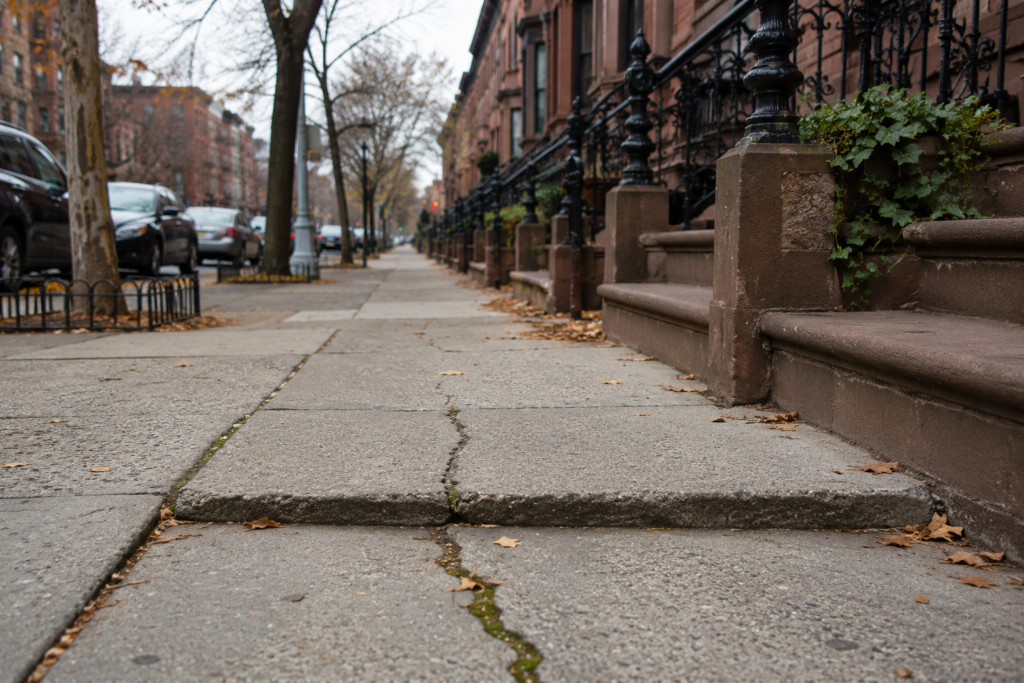
Most property owners don’t notice sidewalk problems until they’ve already been living with them for a while. Maybe it’s a hairline crack near the property line that’s been there since spring. Maybe it’s a corner slab that’s started to crumble at the edge. Or maybe someone tripped over a spot where one slab sits half an inch higher than the next, and now you’re looking at it differently. That’s usually how it starts. A small, easy-to-ignore flaw that sits there quietly getting worse, especially once winter hits. New York’s freeze-thaw cycles, heavy foot traffic, and aging concrete infrastructure mean that sidewalk damage rarely stays the same size for long. What looks minor in October can turn into a real trip hazard and a real liability by the following spring. This guide walks through the sidewalk problems New York property owners run into most, what’s usually behind them, and how to tell the difference between something you can patch and something that needs to come out and be poured again. What Causes Sidewalk Damage in New York? Concrete sidewalks don’t fail for no reason. There’s almost always an underlying cause, and figuring out that cause is half the battle when you’re trying to fix a damaged sidewalk for good instead of patching it every couple of years. Freeze-thaw cycles are probably the single biggest factor in this region. Water gets into small cracks or pores in the concrete, freezes, expands, and pushes the surrounding material apart. It happens again with the next freeze. Over a winter with several freeze-thaw swings, that repeated expansion does real damage, even to concrete that looked fine the previous fall. Water infiltration and poor drainage go hand in hand with that. If water is pooling against a slab instead of running off, it’s sitting there working its way into the concrete every time the temperature drops. A downspout dumping water right next to a sidewalk edge, or a yard that slopes toward the walkway instead of away from it, will accelerate damage in that exact spot year after year. Tree roots are everywhere in New York’s older residential neighborhoods, and they don’t stop growing just because there’s concrete in the way. As roots thicken beneath a slab, they push it upward unevenly, which is why you’ll often see raised sidewalk slabs concentrated near mature street trees. Soil settlement does something similar in reverse. If the base beneath a slab wasn’t compacted properly, or if it shifts over time, sections can sink instead of rise. Heavy loads, delivery trucks parked on a sidewalk apron, dumpsters left in one spot too long, put stress on concrete that wasn’t built for that kind of weight. Deicing salts are worth calling out specifically because so many property owners don’t connect them to the damage they see later. Salt lowers the freezing point of water sitting on the concrete’s surface, which sounds helpful, but the chemical reaction and the extra freeze-thaw cycling it triggers actually accelerate scaling and pitting on the surface. And then there’s simple age. A lot of New York sidewalks are decades old. Concrete has a service life, and once it’s past it, cracking and crumbling become more of a when than an if, especially in sections that got a rushed or poor-quality installation in the first place. Common Types of Sidewalk Damage and How to Fix Them Not all damage is created equal. Some of it is cosmetic. Some of it is a warning sign of something happening below the surface. Here’s how to tell the difference. 1. Hairline and Surface Cracks These are the thin cracks, often less than an eighth of an inch wide, that show up on the surface of a slab. They’re usually caused by normal concrete shrinkage as it cures, minor surface stress, or the early effects of freeze-thaw cycling. In most cases, hairline cracks are cosmetic. They don’t go through the full depth of the slab, and they’re not moving or widening. If a crack has stayed the same size for a year or two and there’s no vertical offset at either edge, it’s usually not urgent. The problem is when a hairline crack starts widening, multiplying, or running toward an edge or joint. That can mean it’s connected to something underneath: settlement, root pressure, or water working into the slab. A simple concrete crack filler or sealant handles the cosmetic version. If it keeps coming back in the same spot, that’s a sign to look deeper rather than just refilling it again. 2. Wide or Deep Cracks Once a crack opens beyond about a quarter inch, or you can see it runs through the full thickness of the slab, it’s a different situation than a surface crack. Wide cracks usually mean the concrete has actually separated, not just shrunk, which points to movement from a root, from settling soil, or from water erosion beneath the slab. Patching a wide crack without addressing its cause tends to be a short-term fix. The patch material bonds to the edges of the existing crack, but if the ground underneath is still shifting, the crack or a new one right next to it comes back within a season or two. For wide or deep cracking, it’s worth having someone check what’s happening below the slab before deciding whether a repair will actually hold. 3. Uneven or Raised Sidewalk Slabs This is one of the most common calls property owners deal with, and it’s almost always caused by one of three things: tree roots pushing up from below, soil settlement causing one slab to sit lower than its neighbor, or general ground movement over time. An uneven sidewalk is also one of the more serious issues from a liability standpoint, because it’s the classic trip-hazard scenario: a raised lip where pedestrians expect a flat surface. Even a half-inch height difference between adjacent slabs is enough to catch a shoe. Repair options here depend on the cause and the severity. If a slab has lifted from