
If you just walked outside and noticed a new crack running across your driveway or patio, take a breath. You’re not alone, and it doesn’t automatically mean something went wrong.
In twenty-plus years of pouring and repairing concrete around New York, I can tell you that cracking is probably the single biggest thing homeowners call me about. More than color, more than finish, more than anything else. Someone sees a line in their slab and immediately pictures a five-figure replacement job.
Most of the time, that’s not where this is headed.
Concrete is a material that’s designed to crack in some form. What matters is where the crack shows up, how wide it is, and what’s causing it. In this article, I’ll walk you through the real reasons concrete cracks the ones I actually see on job sites, not textbook explanations plus what’s normal, what’s a red flag, and how a contractor prevents most of this from happening in the first place.
Is It Normal for Concrete to Crack?
Short answer: yes, to a point.
Concrete shrinks as it cures. That’s just chemistry. As the water in the mix evaporates and the slab hardens, it pulls together slightly, and that tension has to go somewhere. Usually it shows up as a thin hairline crack, sometimes barely visible unless the light hits it right.
I tell people to think of hairline cracks like the fine lines on an old piece of pottery. They’re part of how the material ages. If you can’t slide a coin into the crack, and the two sides of the slab are level with each other, you’re probably looking at cosmetic cracking, not a structural issue.
What crosses the line into “call someone” territory is different. A crack wider than a quarter inch, one side of the slab sitting higher than the other, or cracks that keep spreading over a few months that’s when I’d actually get concerned and want to look at it in person.
So don’t panic over every crack you see. But don’t ignore the ones that are changing shape or letting water underneath, either.
What Causes Concrete to Crack?
There isn’t one single answer here. Concrete cracks for a mix of reasons, and honestly it’s usually more than one factor working together. Let me go through the ones I run into most.
Shrinkage During Curing
This is the most common cause, hands down. As concrete cures, it loses moisture and shrinks slightly across the whole slab. Contractors plan for this by cutting control joints (more on that below), which give the concrete a planned place to crack instead of cracking randomly across your driveway.
Concrete shrinkage cracks usually show up within the first few weeks after a pour, and they’re typically thin and shallow.
Freeze-Thaw Cycles in New York
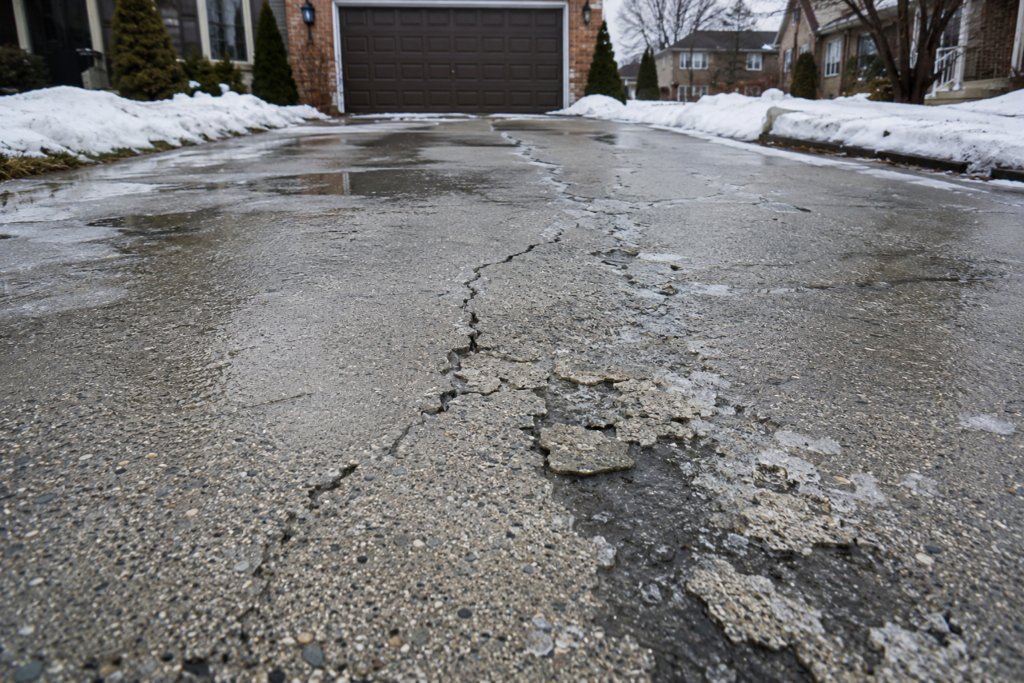
This one is huge for us specifically. New York winters put concrete through repeated freezing and thawing, sometimes several times in a single week. Water gets into tiny pores in the concrete, freezes, expands, and puts pressure on the surface from the inside.
Do this enough winters in a row, and you’ll start seeing surface flaking, called spalling, along with actual cracking. Freeze-thaw damage is one of the top reasons I get called out to driveways that are only five or six years old.
Poor Soil Preparation
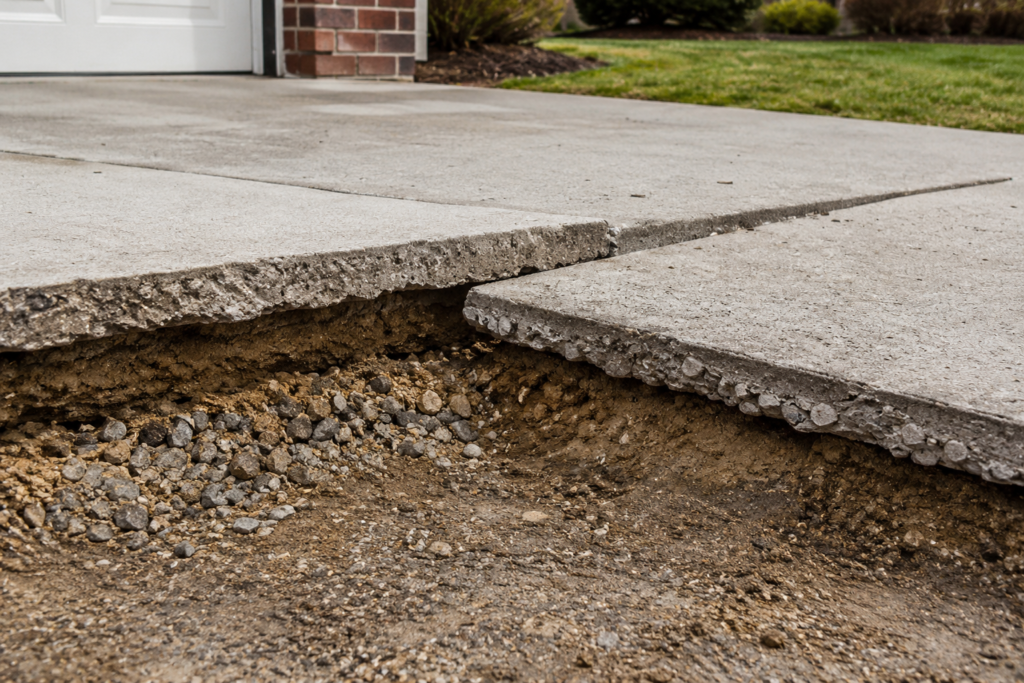
Concrete is only as good as what’s underneath it. If the base wasn’t compacted properly before the pour, or if there’s soft, uneven soil under the slab, that ground is going to shift over time. When the soil moves, the concrete above it has no choice but to crack or settle.
I’d say a good chunk of the “why did this crack so fast” calls I get trace back to a base that wasn’t prepped right, sometimes by a previous contractor, sometimes on an older job before current standards.
Heavy Vehicle Loads
Driveways and garage floors get driven on, obviously. But there’s a difference between a car and a delivery truck, a dumpster, or heavy equipment. Concrete that wasn’t designed or reinforced for heavier loads can develop cracks from that extra weight, especially near the edges of a slab.
If you’re expecting anything heavier than typical vehicles on your driveway, that’s worth mentioning to your contractor before the pour, not after.
Tree Roots
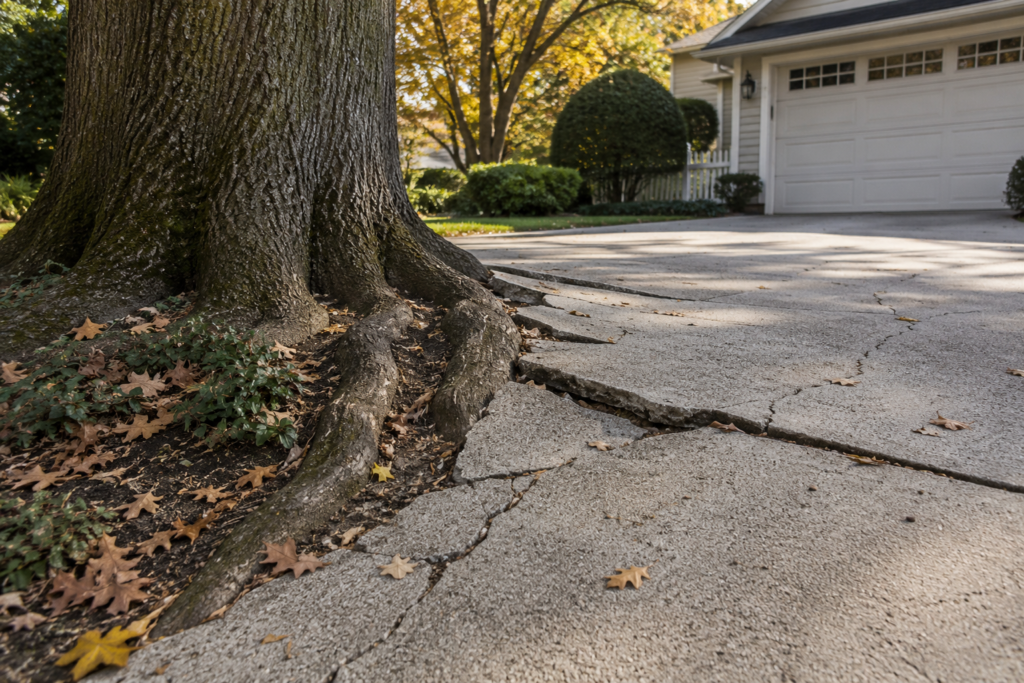
Roots don’t care what’s above them. As trees near a driveway or walkway grow, their root systems can push up against the underside of a slab and lift or crack it from below. This is a slow process, usually taking years, but it’s a common one on older properties with mature trees close to the concrete.
Water Damage
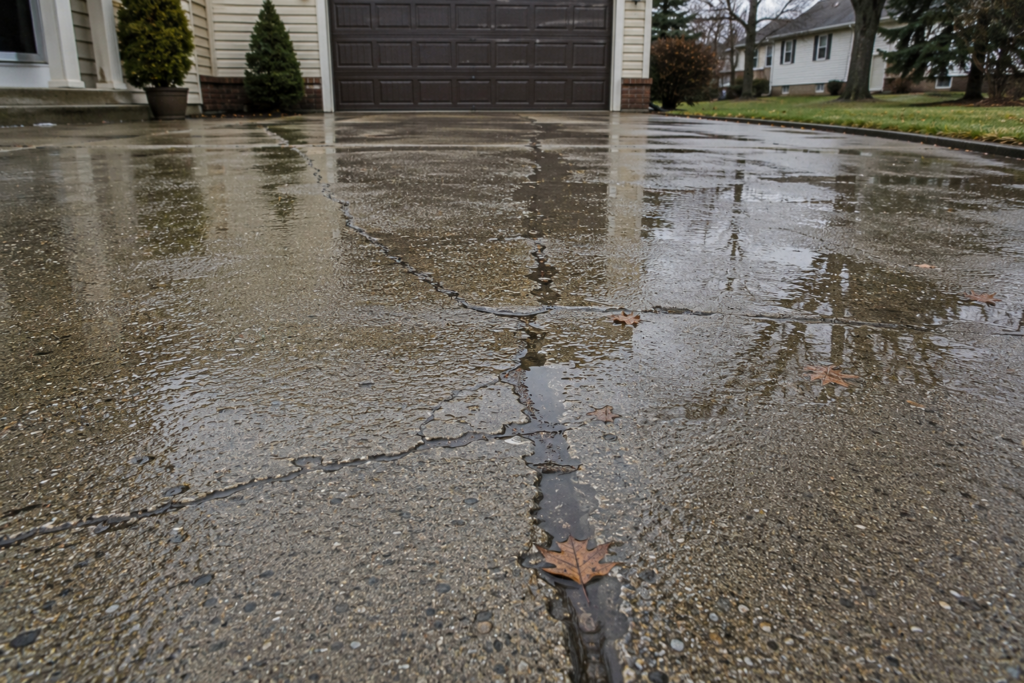
Water is patient, and it’s relentless. Whether it’s from poor grading, a downspout dumping right next to your slab, or water pooling and seeping into small cracks and then freezing, water is behind a lot of the concrete damage I see. It gets into any small opening it can find and makes the problem bigger over time.
Poor Drainage
Related to the above but worth its own mention. If water isn’t draining away from a slab properly, it sits there. Saturated soil underneath concrete shifts more than dry, stable soil, and standing water accelerates freeze-thaw damage in the winter. Good drainage is honestly one of the most underrated parts of a long-lasting concrete installation.
Lack of Control Joints
I mentioned control joints above under shrinkage, but this deserves its own section because it’s such a common mistake. Concrete expansion joints and control joints give a slab planned weak points where it’s supposed to crack, hiding that cracking in a clean, straight line instead of letting it happen randomly across the surface.
If a slab was poured without enough joints, or the joints were spaced too far apart, you’ll often see random cracking running diagonally across the concrete instead of following a joint line.
Improper Concrete Mix
Not all concrete mix is created equal, and mixing it wrong too much water, wrong ratio of cement to aggregate, poor quality materials weakens the finished slab. Too much water in the mix, in particular, is something I see with lower-end contractors trying to make the concrete easier to pour and finish. It also makes it a lot weaker once it cures.
Poor Installation Practices
Sometimes it just comes down to how the job was done. Finishing the surface too early or too late, not curing it properly, pouring in bad weather conditions without adjusting for it all of these can lead to premature cracking, even with good materials.
Comparison Table: Common Causes of Concrete Cracking
| Cause | Severity | Can It Be Prevented? |
| Shrinkage during curing | Low (cosmetic) | Partially, with proper joint spacing |
| Freeze-thaw cycles | Low to Moderate | Yes, with sealing and quality mix |
| Poor soil preparation | Moderate to High | Yes, with proper base compaction |
| Heavy vehicle loads | Moderate | Yes, with correct slab design |
| Tree roots | Moderate | Yes, with root barriers or placement |
| Water damage | Moderate to High | Yes, with sealing and grading |
| Poor drainage | Moderate | Yes, with proper grading and drains |
| Lack of control joints | Moderate | Yes, entirely preventable |
| Improper concrete mix | High | Yes, with quality materials |
| Poor installation practices | High | Yes, with experienced contractors |
How New York Weather Contributes to Concrete Cracking
I can’t talk about cracked concrete in this region without spending real time on weather, because it’s genuinely one of the toughest climates in the country for concrete to hold up in.
Winter freezing.
Every time the temperature drops below freezing, any moisture that’s worked its way into the concrete expands. That constant expanding and contracting stresses the slab from the inside out.
Snow and ice.
Beyond the cold itself, the weight of plowed snow piles and the process of shoveling and chipping ice can physically stress a surface that’s already weakened by moisture.
Road salt.
This is a big one people don’t think about. Salt used for melting ice reacts with concrete and speeds up surface deterioration, especially on driveways near the street or in garages where salt gets tracked in on tires.
Seasonal expansion and contraction.
New York doesn’t just get cold winters; it swings into hot, humid summers too. That back-and-forth between extreme temperatures throughout the year keeps concrete constantly expanding and contracting, and every cycle adds a little more stress to the slab.
How Contractors Prevent Concrete from Cracking
This is where experience actually matters. Anyone can pour concrete. Preventing cracks down the road takes a process, and honestly it starts long before the truck shows up.
Step 1: Proper site preparation.
This means grading the site correctly and making sure water will drain away from the slab, not toward it.
Step 2: Correct base installation.
A properly compacted gravel base gives the concrete a stable foundation that won’t shift underneath it.
Step 3: Quality concrete mix.
Using the right mix design for the specific job, whether it’s a driveway, patio, or foundation, matters more than people realize.
Step 4: Installing control joints.
Cutting joints at the right depth and spacing gives the slab a controlled place to crack instead of cracking randomly.
Step 5: Proper curing.
Keeping the concrete moist and protected for the first several days after the pour lets it cure slowly and evenly, which makes it stronger and less prone to shrinkage cracking.
Step 6: Sealing and maintenance.
A quality sealer keeps water and salt from penetrating the surface, which is especially important going into a New York winter.
Warning Signs That a Crack Needs Professional Attention
Most cracks aren’t emergencies. But here’s what I’d want you to call someone about:
- Wide cracks anything wider than about a quarter inch
- Uneven slabs one side of the crack sitting higher than the other
- Water seepage water actively coming up through or pooling in a crack
- Spalling the surface flaking, chipping, or crumbling away
- Trip hazards any crack or height difference someone could catch a foot on
If you’re seeing any of these, it’s worth getting a professional set of eyes on it before it turns into a bigger repair.
Concrete Crack Prevention Checklist
- Make sure downspouts and gutters direct water away from concrete slabs
- Keep an eye on drainage after heavy rain; water shouldn’t pool near your driveway or patio
- Seal concrete every two to three years, especially before winter
- Avoid parking heavy vehicles or equipment on driveways not designed for that weight
- Watch tree roots near walkways and driveways, and consider root barriers for new plantings
- Clean salt residue off concrete surfaces when possible during winter
- Address hairline cracks early with a basic sealant to keep water out
- Have a contractor inspect any crack that changes width, height, or length over time
Frequently Asked Questions
What causes concrete to crack?
Concrete cracks from a combination of shrinkage during curing, freeze-thaw cycles, poor soil preparation, water damage, heavy loads, and installation issues like missing control joints or a weak concrete mix.
Is it normal for new concrete to crack?
Yes. Thin hairline cracks from shrinkage are common in new concrete and usually appear within the first few weeks of curing. They’re generally cosmetic and not a structural concern.
Can cracked concrete be repaired?
In most cases, yes. Smaller cracks can be filled and sealed, while larger or structural cracks may require cutting out and repouring a section of the slab.
How do you stop concrete from cracking?
Proper site preparation, a well-compacted base, correctly spaced control joints, good drainage, and regular sealing all go a long way toward preventing cracks.
When should cracked concrete be replaced?
Concrete typically needs replacing when cracks are widespread, slabs have shifted significantly, or the surface has extensive spalling that repair can’t reasonably fix.
Does cold weather cause concrete to crack?
Yes, cold weather is a major factor. Freeze-thaw cycles push moisture inside the concrete to expand and contract repeatedly, which stresses the surface and can lead to cracking and spalling over time.
Conclusion
Cracked concrete is one of those things that looks a lot scarier than it usually is. Most of the time, you’re dealing with normal shrinkage cracking or minor weather-related wear, not a sign that your driveway is falling apart.
That said, the causes worth watching for poor soil prep, bad drainage, missing control joints, or a weak original installation are almost all preventable with the right process from the start, and often fixable without a full replacement if you catch them early.
If you’ve got a crack that’s bothering you, don’t wait until it turns into standing water, a trip hazard, or a much bigger repair bill. A quick inspection now can save you a lot of money and hassle later.
CTA
If you’ve noticed cracking in your driveway, patio, or foundation and aren’t sure whether it’s normal wear or something that needs attention, we’re happy to take a look. Schedule a professional concrete inspection or request a free estimate for repairs, and we’ll give you an honest read on what’s going on and what it’ll take to fix it right.