
Most people call me after they’ve already picked out their pavers.
They know what kind of driveway they want. They know the color, the layout, maybe even the contractor they’d like to use. Then somewhere in that first phone call, I ask if they’ve looked into their curb cut, and I get silence.
It’s one of those terms nobody thinks about until they need one. But if you’re planning a new driveway, adding vehicle access to a commercial lot, or trying to figure out why your neighbor’s project got flagged by an inspector, understanding curb cuts will save you time, money, and a lot of frustration.
I’ve been installing curb cuts across New York for over twenty years: homes in Queens, retail lots in Westchester, warehouse entrances on Long Island. I’ve seen what happens when property owners skip the permit step, and I’ve seen how smooth a project goes when they don’t. This guide covers what a curb cut actually is, when you need one, how the process works, and what tends to trip people up.
What Is a Curb Cut?
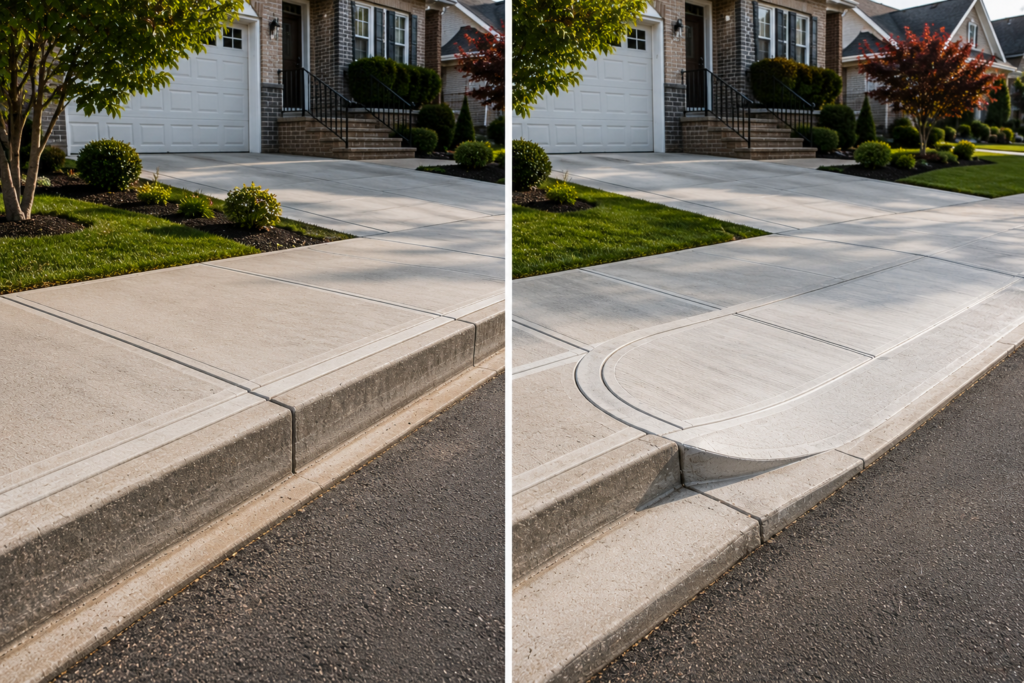
A curb cut is a section of the raised curb along a street that’s been lowered, or removed entirely, to let vehicles cross the sidewalk and reach a driveway, parking area, or loading zone.
Think of the curb as a small wall separating the street from the sidewalk. A curb cut opens a gap in that wall, reconstructed with a gentle slope so a car can drive from the roadway, across the sidewalk, and onto private property without scraping the undercarriage or damaging the concrete.
You’ll see curb cuts everywhere once you start noticing them: in front of driveways, at the entrances to parking lots, outside loading docks, and at street corners where they double as pedestrian ramps.
Here’s where people get confused: a curb cut and a driveway aren’t the same thing.
| Feature | Curb Cut | Driveway |
| Location | Public sidewalk and curb | Private property |
| Ownership | City/municipal right-of-way | Owned by the property owner |
| Purpose | Allows vehicles to cross the sidewalk | Provides parking or vehicle storage |
| Permit required | Almost always | Sometimes, depending on scope |
| Who installs it | Licensed, DOT-approved contractor | Any qualified paving contractor |
| Regulated by | NYC DOT or local municipality | Local zoning and building codes |
Your driveway is yours. The curb cut connecting it to the street is not; it sits in the public right-of-way, which is exactly why the city has a say in how it’s built.
Why Do Property Owners Need a Curb Cut?
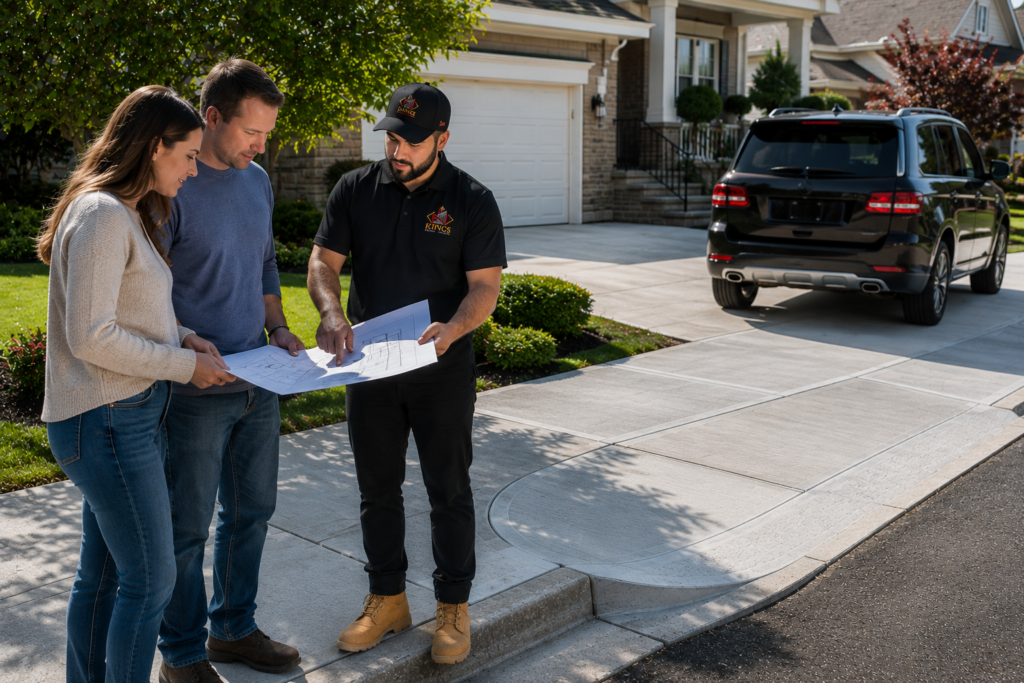
A curb cut isn’t just a convenience. It does real work.
Safe vehicle access. Without a proper curb cut, drivers end up bumping over a raised curb edge every time they pull in or out. That’s hard on tires, suspension, and eventually the sidewalk itself.
Protecting the sidewalk. Sidewalks aren’t built to handle repeated vehicle weight. A curb cut is reinforced and sloped specifically to hold up under that load, so you’re not cracking city concrete every time you leave for work.
Meeting local regulations. New York doesn’t let property owners cut into a public curb without approval. Skip this step, and you’re looking at fines, forced removal, or a headache when you go to sell the property.
Improving property functionality. I’ve worked with business owners who lost customers simply because there was no clear, legal way to pull into their lot. A well-placed curb cut fixes that.
Increasing convenience. For homeowners, it’s the difference between parking on the street every day and pulling straight into your own driveway.
I did a job in Queens a few years back for a homeowner who’d been parking on the street for a decade because she assumed getting a curb cut would be a nightmare. The whole process, start to finish, took about six weeks. She still talks about how she wishes she’d done it sooner.
How Does a Curb Cut Work?
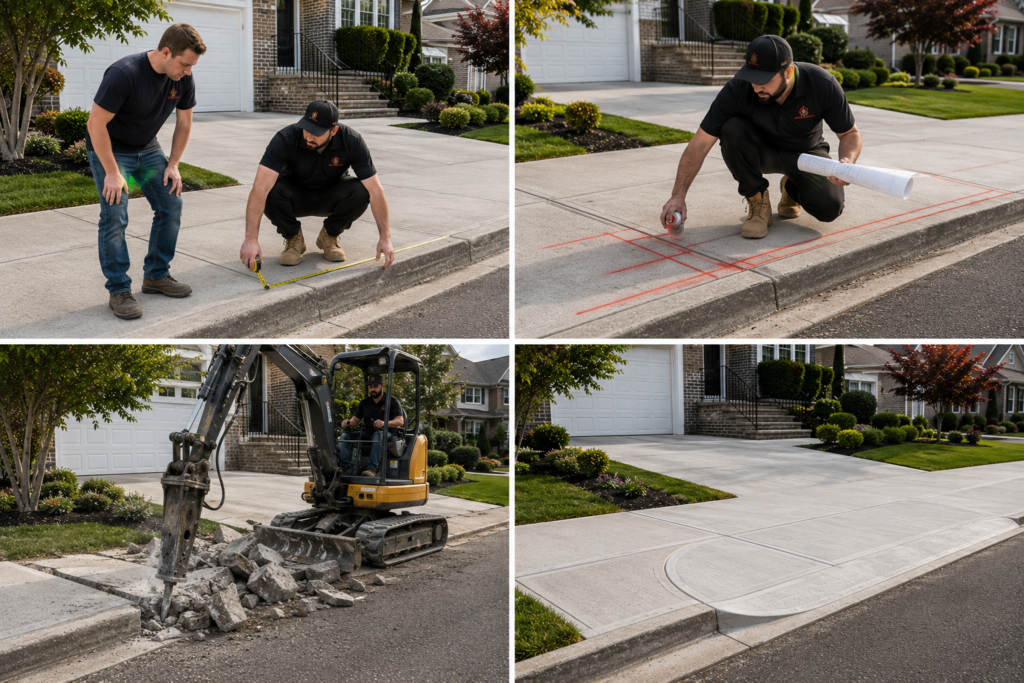
The process is more structured than most people expect, but it’s not complicated once you know the order of operations.
Site inspection. A contractor looks at your curb, sidewalk width, property line, and the slope of the street to figure out what’s actually possible.
Design. We map out the width, the slope, and how the new curb cut will tie into your driveway. Location matters: proximity to fire hydrants, trees, and utility lines all factor in.
Permits. Before any concrete gets touched, you need approval from the city or local municipality. This is the step people most often try to skip, and it’s the one that causes the most problems later.
Cutting and reconstruction. The old curb section gets removed, the sidewalk is cut and reformed with a proper slope, and everything is poured to code.
Final inspection. Most municipalities require a sign-off confirming the work meets DOT curb cut standards before it’s considered complete.
Do You Need a Permit for a Curb Cut in New York?
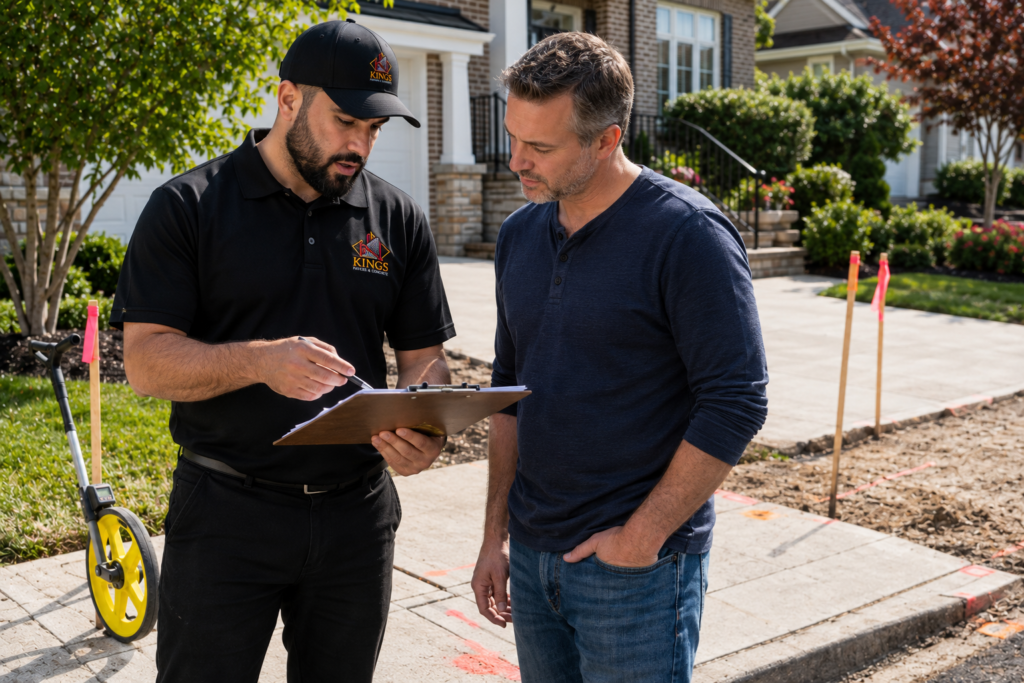
In almost every case, yes.
Because a curb cut alters public property, the curb and sidewalk it typically requires approval from the NYC Department of Transportation or your local municipal authority, depending on where you’re located. The DOT reviews factors such as driveway width, spacing from intersections, and impact on street parking before signing off.
Requirements shift depending on your borough, whether you’re in a historic district, and whether your property is residential or commercial. I always tell clients: don’t assume your situation matches your neighbor’s. Two houses on the same block can have different requirements based on lot size or zoning.
This isn’t legal advice, and permit rules do change, so it’s worth confirming current requirements with your local DOT office or building department before you start planning. A reputable curb cut contractor should already be familiar with the process in your area and can walk you through what’s needed.
Permits matter for a simple reason: they protect you. An unpermitted curb cut can be flagged during a property sale, cited by inspectors, or ordered removed at your expense.
Residential vs Commercial Curb Cuts
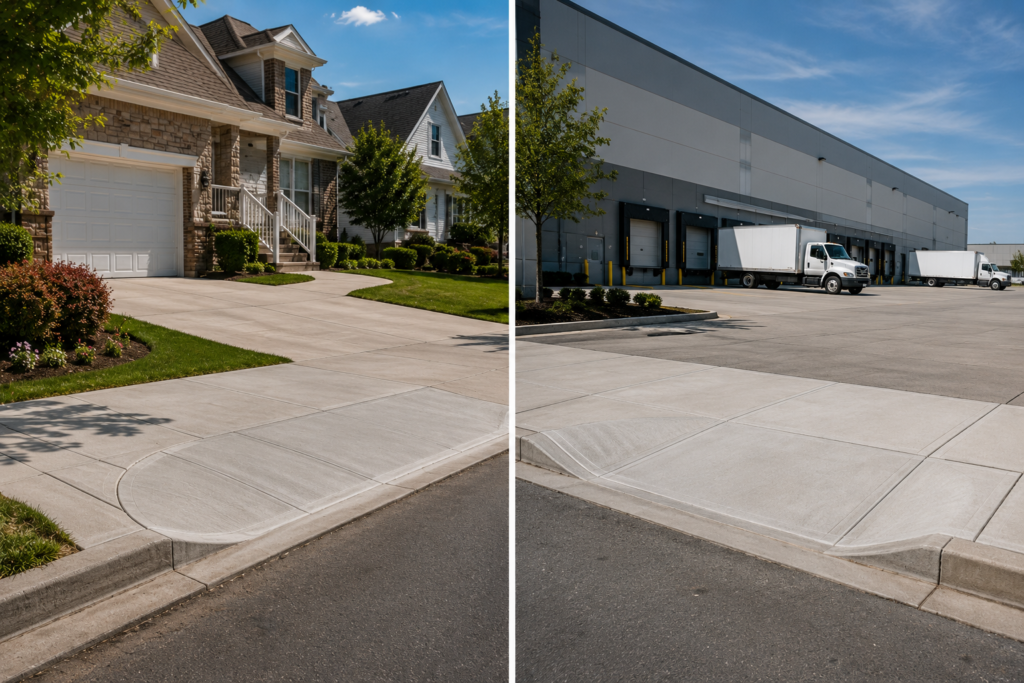
Not every curb cut is built the same way, and residential vs commercial projects come with different considerations.
| Factor | Residential | Commercial |
| Typical width | 10–12 feet | 20–35 feet or more |
| Vehicle traffic | Occasional, personal vehicles | Frequent, includes trucks and delivery vehicles |
| Permit considerations | Generally more straightforward | Often requires traffic and drainage review |
| Construction requirements | Standard concrete depth | Reinforced concrete for heavier loads |
| Approval timeline | Usually faster | Can take longer due to added review |
A homeowner’s curb cut just needs to handle a car or two, a few times a day. A commercial curb cut for a warehouse or retail lot has to withstand delivery trucks pulling in daily, which changes the concrete specs and the width the city will approve.
Common Reasons Property Owners Install Curb Cuts
- New driveway installation the most common reason I get calls, especially from homeowners tired of street parking.
- Property redevelopment: converting a lot or adding a structure often requires new vehicle access.
- Business access: retail and commercial properties need clear entry points for customers and deliveries.
- Parking improvements: adding or expanding a parking area usually means adding a curb cut to match.
- Accessibility improvements: some projects add or modify curb cuts to improve access for pedestrians and vehicles alike.
Step-by-Step Guide to Installing a Curb Cut
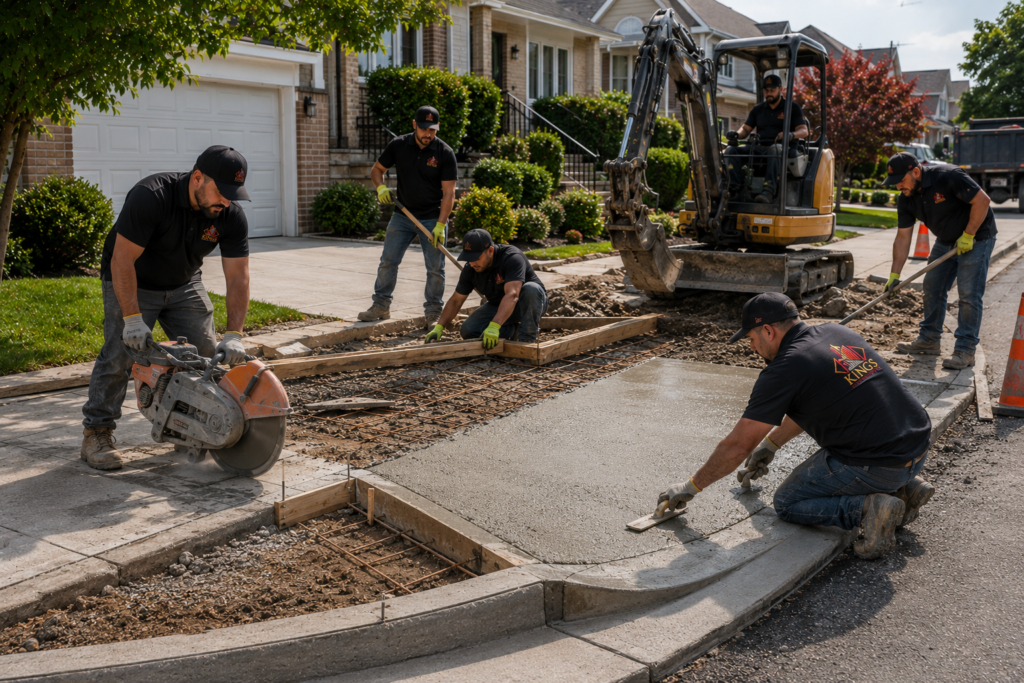
Step 1: Property evaluation. A contractor assesses your curb, sidewalk, and driveway plans on-site.
Step 2: Confirm local requirements. Rules vary by borough and municipality, so this step gets nailed down early.
Step 3: Apply for permits. Your contractor typically handles the DOT curb cut permit application on your behalf.
Step 4: Hire an experienced contractor. Not every paving company is approved to do this type of public right-of-way work; more on that below.
Step 5: Construction. The actual cutting, forming, and pouring of the new curb cut and sidewalk section.
Step 6: Final inspection. The city confirms the work meets code before the project is officially closed out.
Common Mistakes to Avoid
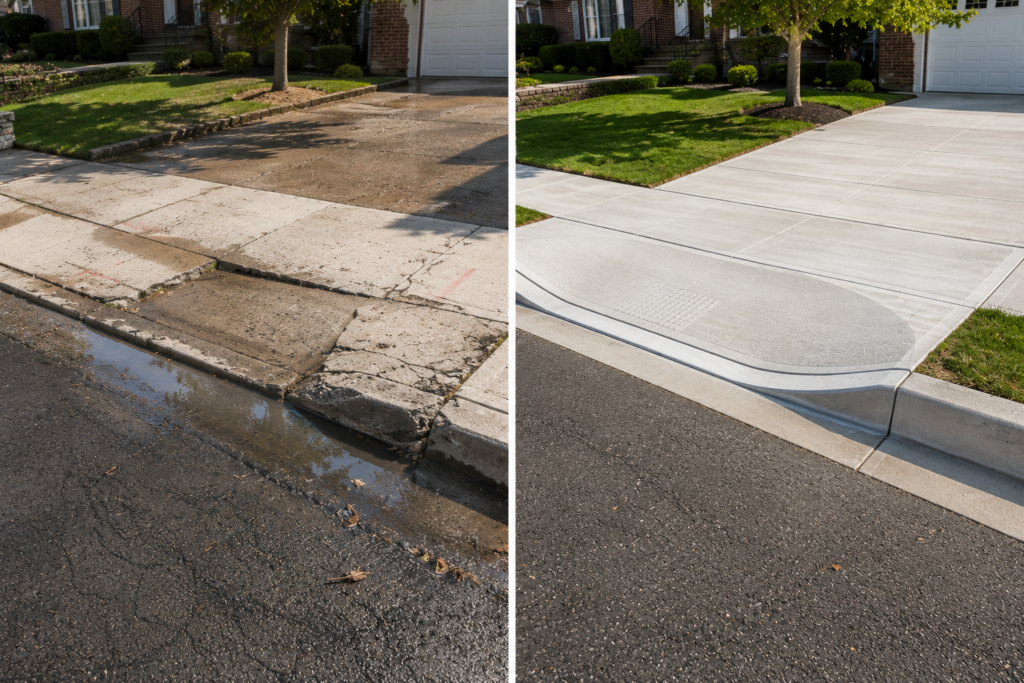
Starting work without permits. This is the big one. I’ve been called in to fix curb cuts that were poured without approval, and it always costs more to redo them than it would have to properly permit them the first time.
Hiring inexperienced contractors. Curb cut installation isn’t the same as pouring a patio. It involves public property, city inspections, and specific slope and drainage standards. Not every general contractor has done this work before.
Ignoring drainage. A curb cut poured at the wrong slope can send rainwater straight into a garage or basement. I’ve seen this cause real damage.
Choosing the cheapest estimate. A curb cut that fails inspection or crumbles in two years costs more than the money it saved upfront.
Not planning for future vehicle needs. If you’re adding a second car, a boat, or a work vehicle down the line, it’s worth accounting for that width now instead of redoing the cut later.
How Much Does a Curb Cut Cost?
There’s no single flat rate for a curb cut; pricing depends on several site-specific factors.
| Project Type | Typical Cost Factors |
| Residential curb cut | Width, sidewalk material, permit fees, distance from utilities |
| Commercial curb cut | Wider spans, reinforced concrete, traffic/drainage review, longer permitting |
| Curb cut with sidewalk replacement | Additional concrete removal and pour, matching existing grade |
| Curb cut near utilities or trees | Extra coordination, possible relocation or protection costs |
Rather than quote a fixed number, I always tell property owners to get a site visit. Sidewalk material, curb height, existing drainage, and permit complexity all move the price. A straightforward residential job in an easy-access location is going to cost less than a commercial curb cut requiring reinforced concrete and DOT traffic review.
Case Study
A homeowner in Staten Island called me last spring. She’d just bought a house with a detached garage but no driveway connecting it to the street; the previous owner had always parked on the road.
She assumed she could just pour a driveway from her garage to the curb and call it done. During our initial site visit, I explained that the section connecting her property to the street ran through public right-of-way, which meant she needed a curb cut permit before any concrete work could start.
We handled the permit application with the local DOT office, which took a few weeks for approval. Once approved, our crew cut the existing curb, reformed the sidewalk section with the correct slope, and reconstructed the driveway entrance to meet code.
From first call to final inspection, the whole project took about seven weeks, most of that waiting on permit approval. She now parks in her own driveway every day, and the work passed inspection on the first try because we didn’t skip a step.
Expert Insight
“The biggest misconception homeowners have is thinking a curb cut is just concrete work,” says one longtime New York curb cut contractor. “It’s public property. You’re not just pouring a slab; you’re working within city standards for slope, drainage, and inspection. Skip the permit, and you’re not saving time; you’re just moving the problem to later.”
Frequently Asked Questions
What is a curb cut?
A curb cut is a lowered or removed section of curb that allows vehicles to cross the sidewalk and access a driveway, parking lot, or loading area from the street.
Why do I need a curb cut?
If your property doesn’t already have legal vehicle access from the street, you need a curb cut to connect your driveway to the road without damaging the sidewalk or curb.
Do I need a permit for a curb cut in New York?
In most cases, yes. Curb cuts affect public right-of-way, so they typically require approval from the NYC DOT or your local municipal authority. Requirements vary by location, so check with your local building or transportation department.
How long does curb cut installation take?
The construction itself usually takes a few days, but the full timeline, including permit approval, often runs several weeks depending on your municipality.
Can any contractor install a curb cut?
Not necessarily. Because the work involves public property, it’s best handled by a contractor experienced with DOT curb cut standards and local permitting.
What affects the cost of a curb cut?
Width, sidewalk material, distance from utilities or trees, whether it’s residential or commercial, and any required sidewalk replacement all affect the final cost.
Conclusion
A curb cut might seem like a small detail in a bigger driveway or paving project, but it’s the piece that connects your property to the street legally and safely. Skipping the permit process, or hiring someone unfamiliar with local requirements, tends to cost more in the long run than doing it right the first time.
If you’re planning a new driveway, redeveloping a commercial lot, or just tired of parking on the street, start with the curb cut. Get the permit squared away, work with a contractor who’s done this before, and the rest of the project falls into place a lot easier.
Ready to talk through your driveway access options? Reach out for a curb cut consultation and estimate, and we’ll walk your property with you before anything gets planned.