Most homeowners start with the same question: how much will a new paver driveway cost?
The cost of installing a paver driveway varies with the driveway’s size, material choice, site conditions, and installation requirements. A professional estimate is the most reliable way to understand the cost of your specific project.
No two driveways are exactly alike. Driveway paver costs in New Hyde Park depend on your driveway’s size and shape, the condition of the ground underneath, drainage requirements, and the materials you choose.
Understanding those factors makes it easier to plan your budget and compare contractor estimates. Here’s what to look for before you make a decision.
What Does a Paver Driveway Cost?
National pricing guides provide a starting point, but they cannot tell you exactly what your New Hyde Park driveway will cost.
Driveway size is one of the main factors affecting installation costs. Smaller driveways generally require fewer materials and less labor, while larger driveways or those with complex layouts may require more extensive preparation and installation work.
Your actual estimate may be higher or lower depending on excavation, base preparation, material selection, drainage, site access, and the amount of existing pavement that needs to be removed.
What Affects Your Driveway Paver Estimate?
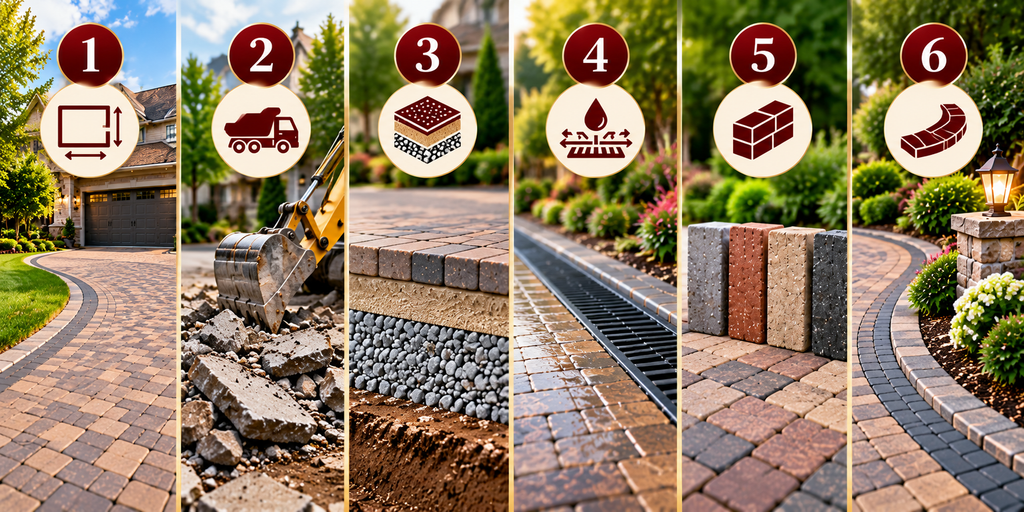
A per-square-foot price combines several parts of the installation. Understanding each one helps explain why two contractors may quote different amounts for the same driveway.
Driveway Size and Shape
Square footage has a direct impact on the total price. A larger driveway needs more pavers, base material, excavation, and labor.
The shape of your driveway also affects installation costs.
A straight rectangular driveway is generally easier to install than one with curves, angled corners, or a turnaround. Complex layouts require more measuring, cutting, and fitting.
When comparing estimates, make sure each contractor is using the same measurements and layout.
Removing the Existing Driveway
Removing an existing concrete or asphalt driveway can add to the overall project cost. The amount depends on pavement thickness, equipment access, disposal requirements, and the condition of the existing surface.
Some contractors include demolition and hauling in their installation price. Others list them separately.
Ask whether your estimate covers breaking up the old surface, removing debris, and disposing of the material.
Excavation, Base Preparation, and Soil Conditions
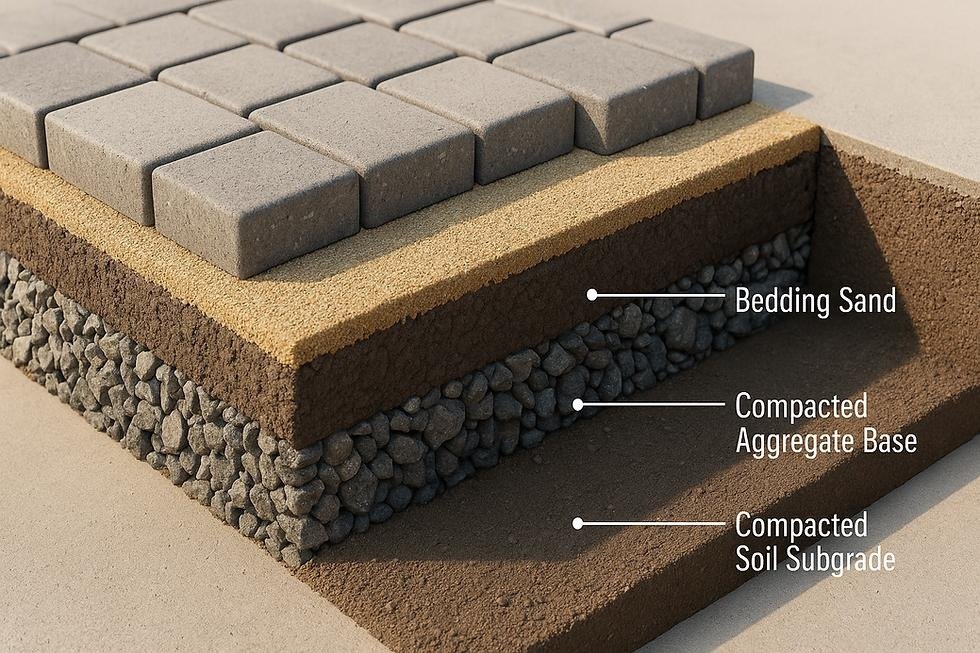
The base underneath your driveway is one of the most important parts of the installation.
Before laying pavers, crews typically excavate the area, prepare the underlying soil, and install compacted aggregate in layers. This foundation helps the finished surface support vehicle traffic.
Industry guidance from the Concrete Masonry & Hardscapes Association (CMHA) describes a compacted aggregate base of at least 6 inches for residential driveways on well-drained soil. Some projects require more preparation depending on soil strength, drainage, frost conditions, and expected vehicle loads.
For example, soft or wet soil may require additional excavation or stabilization.
If delivery trucks, dumpsters, trailers, or heavy equipment will regularly use your driveway, mention that before installation. The expected loads can affect the design and cost.
Ask your contractor to specify the proposed base material, compacted depth, and preparation method in writing.
Drainage and Grading
A driveway needs to direct water away from the house, garage, and other areas where pooling could cause problems.
If your existing driveway slopes toward the garage or collects water after heavy rain, the project may require additional grading or drainage improvements.
Depending on the site, those improvements could include adjusting the driveway’s slope or installing a drainage system.
The cost of drainage improvements depends on the type of solution required, site conditions, and where water can legally and safely discharge.
Before requesting an estimate, note where water collects on your property. Photos taken after rainfall can help explain the problem.
Paver Material, Thickness, and Pattern
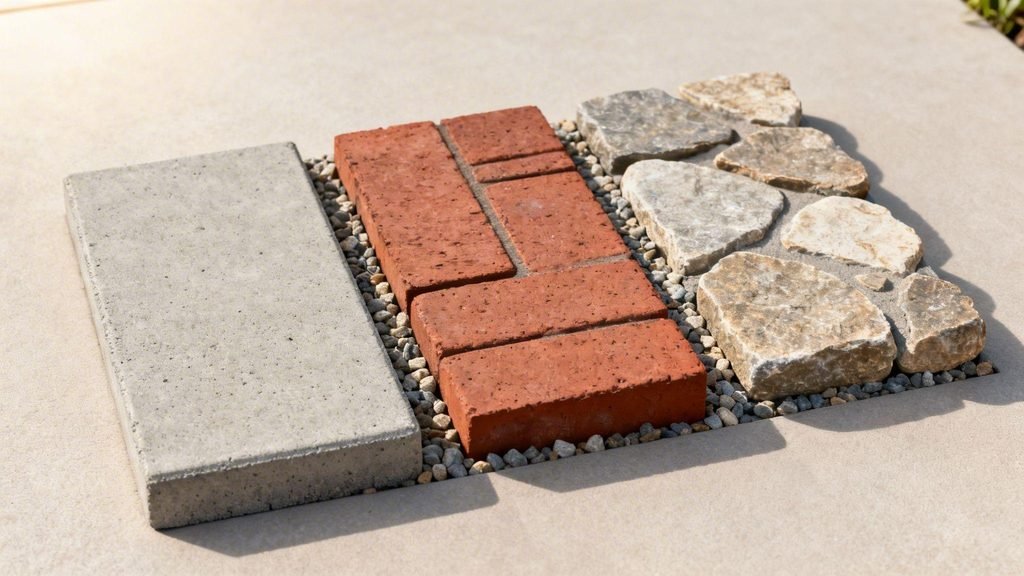
The material you select affects both the appearance and the cost of your driveway.
Concrete pavers are a popular option because they offer a range of colors, shapes, and finishes.
Clay brick pavers provide a traditional appearance and may cost more depending on the product.
Natural stone pavers can create a distinctive finish, but material and installation costs are often higher.
Not every paver is suitable for vehicle traffic. Your contractor should recommend a product with the appropriate thickness and specifications for driveway use.
A simple layout may require less cutting than a decorative design with multiple borders or intricate shapes. Herringbone is a common interlocking pattern for driveways, but its installation requirements depend on the layout and product.
For more information about available options, explore our paver installation services.
Borders, Edge Restraints, and Additional Features
Edge restraints help keep the paver surface stable along its perimeter.
They should not be confused with decorative borders. Edge restraints serve a structural purpose, while decorative borders are primarily a design choice.
Adding contrasting colors, inlays, lighting, or other custom details can increase the cost through additional materials and installation time.
When reviewing a quote, check whether structural edge restraints are included and whether decorative upgrades are priced separately.
Labor and Site Access
Installing a paver driveway involves excavation, material handling, base compaction, layout, cutting, and finishing.
Labor costs vary based on the complexity of the work and local market conditions.
Access can also make a difference. A narrow driveway, steep slope, limited staging area, or restricted equipment access may require more time and manual work.
Two driveways with the same square footage can therefore have different installation costs.
Permits, Aprons, and Curb Work
Some driveway projects involve more than replacing the surface within your property.
Work affecting the driveway apron, curb, sidewalk, or public right-of-way may require municipal approval.
The Incorporated Village of New Hyde Park publishes a permit application covering sidewalk, curb, apron, and driveway work. However, not every property with a New Hyde Park mailing address falls within the village.
Before scheduling work, confirm which municipality governs your address and whether permits or inspections are required.
Also ask your contractor who is responsible for applications, fees, and inspection scheduling.
What Makes New Hyde Park Driveway Projects Different?
Local conditions can affect both installation planning and the final estimate.
Freeze-Thaw Weather
New Hyde Park experiences winter freezing and thawing.
When water collects beneath a poorly prepared surface, freezing conditions can contribute to movement and uneven areas.
Proper base preparation, compaction, and drainage help reduce these risks.
The right base design should reflect your property’s soil conditions and expected vehicle use rather than relying on a single depth for every driveway.
Drainage Around Existing Homes
Your garage entrance, walkway, lawn, and neighboring property can limit how the driveway is graded.
A contractor needs to consider where water currently flows and where it will go after installation.
A drainage solution should address the actual site rather than simply moving water from one problem area to another.
Different Municipal Requirements
A New Hyde Park address does not automatically mean the property is inside the Incorporated Village of New Hyde Park.
Depending on the location, different municipal rules may apply.
This is especially important when the project includes curb or apron work.
You can learn more about our local service coverage on the New Hyde Park service area page.
Why Two Driveway Paver Estimates Can Vary
Imagine two contractors quoting the same 600-square-foot driveway.
The first estimate has a lower total. However, it does not clearly mention removing the old asphalt, the proposed base depth, edge restraints, or drainage.
The second estimate costs more but includes demolition, debris removal, a defined base specification, edge restraints, and a plan for handling drainage.
This is why comparing only the final number can be misleading.
Before choosing a contractor, make sure both estimates describe the same materials, preparation, and installation scope.
How to Read a Paver Driveway Estimate
A detailed written estimate makes it easier to understand what you are paying for.
Use this checklist when reviewing quotes.
| Estimate item | What it covers | What to check |
| Removal and disposal | Existing asphalt or concrete removal | Is hauling included? |
| Excavation | Digging to the required depth | What depth is proposed? |
| Base preparation | Aggregate and compaction | What material and compacted depth? |
| Drainage and grading | Water management | Where will runoff go? |
| Pavers | Main driveway surface | Which product, thickness, and color? |
| Installation pattern | Layout and cutting | Is the chosen pattern included? |
| Edge restraints | Perimeter stability | Which restraint system is specified? |
| Joint material | Filling paver joints | What type is included? |
| Decorative additions | Borders, inlays, or lighting | Are these optional costs? |
| Permits | Required municipal approvals | Who applies and pays? |
| Cleanup | Debris and excess material removal | Is final cleanup included? |
Ask what the quote excludes as well.
Unexpected conditions such as soft soil, buried obstacles, or drainage problems can affect the work once excavation begins.
Before approving a project, discuss how additional work will be documented and priced.
Paver Driveways vs. Concrete and Asphalt: What About Cost?
Paver driveways generally have a higher upfront installation cost than basic asphalt or poured concrete.
However, the materials differ in appearance, installation methods, and repair options.
| Driveway material | General cost position | One consideration |
| Asphalt | Often lower upfront cost | May require periodic maintenance |
| Poured concrete | Often lower upfront cost than pavers | Repairs can involve visible patches |
| Interlocking pavers | Often higher upfront cost | Individual units can frequently be lifted and replaced |
These are general comparisons, not a guarantee that one material will always cost more on every property.
Pavers may appeal to homeowners who want more design choices and the ability to repair individual sections.
Asphalt or concrete may be a better fit for other budgets and priorities.
The right choice depends on your goals, the property’s conditions, and the estimates you receive.
How to Prepare for Your Driveway Estimate
A little preparation can make your consultation more productive.
- Measure the driveway. Record its approximate length and width, including any turnaround or widening.
- Take photos. Capture the existing surface, garage entrance, driveway apron, and damaged areas.
- Identify drainage issues. Note where water collects after rain.
- List your vehicles. Mention trucks, trailers, or other heavy equipment that will use the driveway.
- Consider material preferences. Think about colors, patterns, and whether decorative borders matter to you.
- Ask about permits. Confirm whether municipal approvals may be needed.
You do not need to know every technical detail before contacting a contractor.
The goal is to provide enough information to discuss the project clearly and understand what the written estimate should include.
Ways to Manage Cost Without Sacrificing Quality
You can often control the budget through design choices rather than reducing essential installation work.
Consider choosing standard paver colors and shapes, keeping the layout simple, and limiting decorative borders or inlays.
You can also ask contractors to price optional features separately. That makes it easier to decide which upgrades fit your budget.
Avoid choosing a lower price simply because it leaves out proper base preparation, drainage, compaction, or edge restraints.
Those elements contribute to the driveway’s long-term performance.
Frequently Asked Questions
How much do driveway pavers cost per square foot in New Hyde Park?
The cost per square foot varies based on the type of pavers, driveway size, excavation requirements, drainage, and site conditions. For an accurate estimate in New Hyde Park, request a quote based on your property’s specific requirements.
Why do paver driveways cost more than asphalt or concrete?
Paver installation typically involves preparing a compacted base and individually placing the paving units. Material selection, cutting, and finishing can also increase labor. One benefit is that individual pavers can often be removed and replaced when repairs are necessary.
Does removing my existing driveway cost extra?
It can. Removing an existing concrete or asphalt driveway may involve additional labor, equipment, and disposal costs. Some contractors include removal in their installation estimate, while others charge separately. Confirm what your quote includes.
How deep should the base be for a paver driveway?
The required depth depends on soil conditions, drainage, climate, and vehicle loads. Industry guidance commonly describes a minimum 6-inch compacted aggregate base for residential driveways on well-drained soil, but some projects require more. Ask your contractor to explain the proposed base design.
Do I need a permit to replace my driveway in New Hyde Park?
It depends on your property’s jurisdiction and the scope of work. Work involving the curb, sidewalk, or driveway apron may require approval. Check with the municipality responsible for your address before starting.
How can I lower the cost of a paver driveway?
Choose standard pavers, use a simpler layout, limit decorative features, and compare detailed estimates. Do not reduce essential base preparation or drainage work simply to lower the initial price.
What should a driveway paver estimate include?
A written estimate should clearly describe removal, excavation, base preparation, drainage, paver materials, installation pattern, edge restraints, permits, and cleanup. It should also explain how unexpected work will be handled.
Get a Driveway Paver Estimate for Your New Hyde Park Home
Online cost guides can help you plan a general budget, but the condition of your driveway and the work required beneath the surface will influence the actual project price.
At Kings Pavers & Concrete, we help homeowners explore driveway paving options and understand the work involved.
If you are planning a new driveway in New Hyde Park, contact Kings Pavers & Concrete to discuss your project and request an estimate.
One Response