If you’ve been collecting quotes for a driveway, patio, or foundation repair, you’ve probably noticed something. Some bids come from general contractors. Others come from companies that only pour concrete. And you’re left wondering if it even matters.
I’ve been pouring concrete in New York for over twenty years: driveways in Westchester, sidewalks in Queens, garage floors in the Hudson Valley, commercial slabs for warehouses on Long Island. I’ve also seen plenty of general contractor jobs, some good, some that ended up costing homeowners twice what they expected once the cracking started.
So can a general contractor do concrete work? Yes, in many cases. But whether they should handle your specific project is a different question, and it depends a lot on the size, complexity, and purpose of what you’re building. A small sidewalk patch is nothing like a structural foundation or a stamped decorative patio.
In this article, I’ll walk you through what general contractors are actually licensed and equipped to do, what separates them from a dedicated concrete contractor, and how to figure out which one is right for your project. No sales pitch, just what I’d tell a neighbor asking me this same question over the fence.
Can a General Contractor Do Concrete Work?
Here’s the direct answer: yes, a general contractor can legally perform concrete work in New York, as long as they hold the appropriate home improvement or construction license for their jurisdiction and the work falls within what that license covers. General contractors are trained to manage all kinds of construction tasks, and concrete is often part of that scope, especially for smaller jobs like a walkway repair or a small footing.
But here’s what a lot of homeowners don’t realize. Licensing tells you a contractor is allowed to do the work. It doesn’t tell you whether they’ve done it enough times to do it well. Concrete is unforgiving. Get the subgrade wrong, skip proper control joints, or pour in the wrong weather conditions, and you won’t see the problem for months. By the time you do, it’s cracked, heaved, or spalling, and it’s expensive to fix.
General contractors are generalists by design. They’re excellent at coordinating a full renovation: framing, electrical, plumbing, drywall, concrete, all under one roof. For a project where concrete is a small piece of a bigger job, like a new garage addition that needs a slab poured as part of the build, a general contractor is often perfectly qualified, especially if they have an experienced concrete crew or a reliable sub they use regularly.
Where it gets riskier is when concrete is the whole job, or when the work is structural, decorative, or large in scale. That’s when years of concrete-specific experience start to matter more than a general license.
Comparison Table: Project Type vs Contractor Type
| Project Type | General Contractor | Concrete Specialist | Best Choice |
| Small sidewalk repair | Capable | Capable | Either |
| Standard driveway (single pour) | Sometimes capable | Highly experienced | Concrete Specialist |
| Large or long driveway | Limited experience | Highly experienced | Concrete Specialist |
| Structural foundation | Manages, may sub out | Direct expertise | Concrete Specialist |
| Garage floor slab | Capable if part of larger build | Highly experienced | Depends on scope |
| Stamped or decorative concrete | Rarely specialized | Highly experienced | Concrete Specialist |
| Retaining wall | Limited experience | Highly experienced | Concrete Specialist |
| Commercial slab | Manages, subcontracts | Direct expertise | Concrete Specialist |
| Patio (basic, small) | Capable | Capable | Either |
What Does a Concrete Contractor Do?
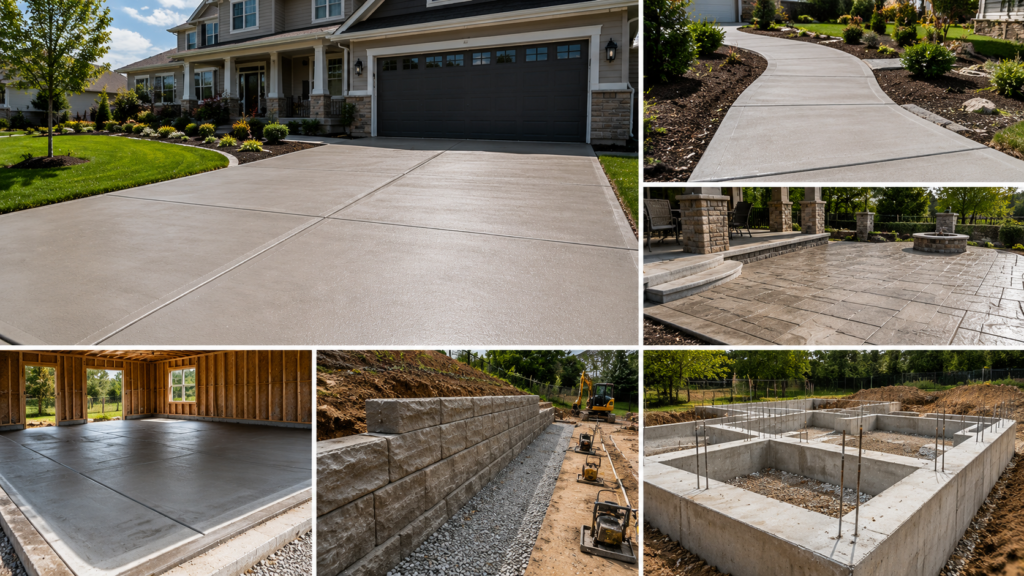
A residential concrete contractor or commercial concrete contractor focuses on one trade, day in and day out. That specialization shows up in the details. Here’s what that work typically covers.
Driveways. A concrete driveway contractor understands base compaction, drainage slope, and how New York’s freeze-thaw cycles affect a slab over time. Get the base wrong here, and you’ll see cracking within a couple winters.
Sidewalks. A concrete sidewalk contractor knows the local municipal codes for public walkways, including slope requirements for accessibility and the permitting process, which varies by city and county.
Patios. Concrete patio installation involves more design flexibility: broom finish, stamped patterns, exposed aggregate, and getting the finish right takes practiced technique, not just a mixer and a float.
Foundations. A concrete foundation contractor works with structural engineers, understands rebar placement, footing depth below the frost line, and load-bearing requirements. This is not an area to learn on the job.
Garage Floors. These need proper thickness, reinforcement, and often a moisture barrier, especially if the garage will be heated or finished.
Retaining Walls. These carry soil pressure and drainage demands that require engineering knowledge most generalists don’t deal with regularly.
Commercial Concrete. A commercial concrete contractor works with tighter timelines, heavier load requirements, and often larger pour volumes that need coordinated scheduling with ready-mix suppliers.
General Contractor vs Concrete Contractor
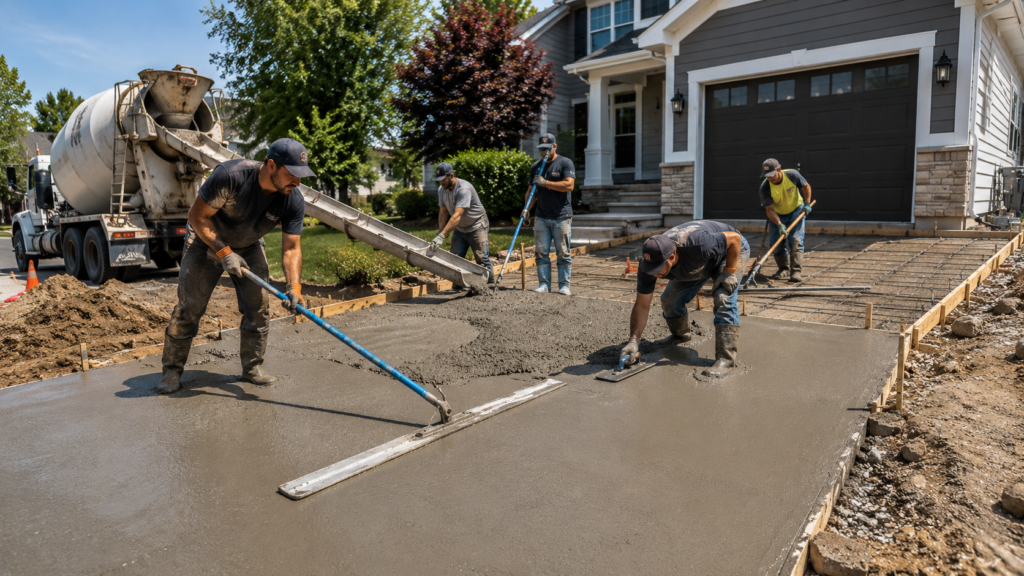
I get asked this comparison constantly, so let’s break it down honestly.
Training. A general contractor’s training is broad; they know a bit about everything. A concrete contractor’s training is narrow and deep, focused entirely on mix design, curing, finishing, and structural behavior of concrete.
Equipment. Concrete-specific companies typically own or regularly use screeds, power trowels, vibrating equipment, and saws for control joints. General contractors sometimes rent this equipment only when a concrete job comes up, which can affect finish quality.
Crew Experience. A concrete crew that pours daily develops a feel for timing when the mix is ready to finish, how weather affects set time, and when to cut joints. That instinct doesn’t come from doing a few pours a year.
Project Management. General contractors excel here when concrete is one piece of a larger renovation. They’re good at scheduling trades and keeping a big project moving.
Quality Control. Specialists tend to catch problems earlier because they know exactly what a good pour looks and feels like at every stage.
Long-Term Durability. This is where the difference shows up years later. Improperly compacted base, wrong concrete mix for the climate, or skipped joints often don’t fail immediately. They fail in year two or three, which is long after the contractor is off the job.
Comparison Table: General Contractor vs Concrete Contractor
| Category | General Contractor | Concrete Contractor |
| Scope of expertise | Broad, multi-trade | Narrow, concrete-focused |
| Equipment ownership | Often limited or rented | Dedicated concrete equipment |
| Crew pour frequency | Occasional | Daily or weekly |
| Best suited for | Multi-trade renovations | Concrete-specific projects |
| Climate-specific mix knowledge | Variable | Strong, NY-specific |
| Long-term durability track record | Variable | Typically stronger |
When Hiring a Concrete Specialist Makes More Sense
Some projects are worth the extra step of hiring a licensed concrete contractor who does nothing but concrete. Here’s where I’d tell a homeowner to prioritize a specialist, based on what I’ve seen go wrong.
Large driveways. The bigger the pour, the more that base prep and joint placement matter. I’ve replaced more than one driveway that cracked within two years because the base wasn’t compacted properly.
Structural foundations. This connects directly to the integrity of the whole building. Not the place to save money on experience.
Decorative concrete. Stamped concrete, in particular, requires precise timing between the pour and the stamping process. Miss the window and the pattern won’t set right.
Stamped concrete. Worth repeating separately because it’s one of the most commonly botched finishes I see from non-specialists. The color release, stamping pressure, and sealing steps all take practice.
Commercial slabs. These involve tighter tolerances, heavier loads, and often inspection requirements that a dedicated commercial concrete contractor handles routinely.
Retaining walls. Drainage design behind the wall is just as important as the wall itself. Get it wrong, and you’ll see bowing or failure within a few seasons.
Step-by-Step Guide to Choosing the Right Contractor
Step 1: Define your project. Is concrete the entire job, or one part of a bigger renovation? This alone often answers the general contractor vs concrete contractor question.
Step 2: Check licensing and insurance. Ask for their New York home improvement license number and proof of liability insurance. A licensed concrete contractor should hand this over without hesitation.
Step 3: Ask about similar projects. Don’t just ask if they “do concrete.” Ask how many driveways, patios, or foundations they’ve completed in the last year, specifically like yours.
Step 4: Review previous work. Photos are fine, but if possible, ask to see a completed project in person, especially one that’s a few years old. That tells you how it’s holding up, not just how it looked on day one.
Step 5: Compare written estimates. A vague verbal number isn’t enough. You want thickness specs, base prep details, reinforcement, and finish type spelled out in writing.
Step 6: Ask about warranties. Reputable concrete contractors stand behind their work. Ask what’s covered, for how long, and what would void it.
Common Mistakes Homeowners Make
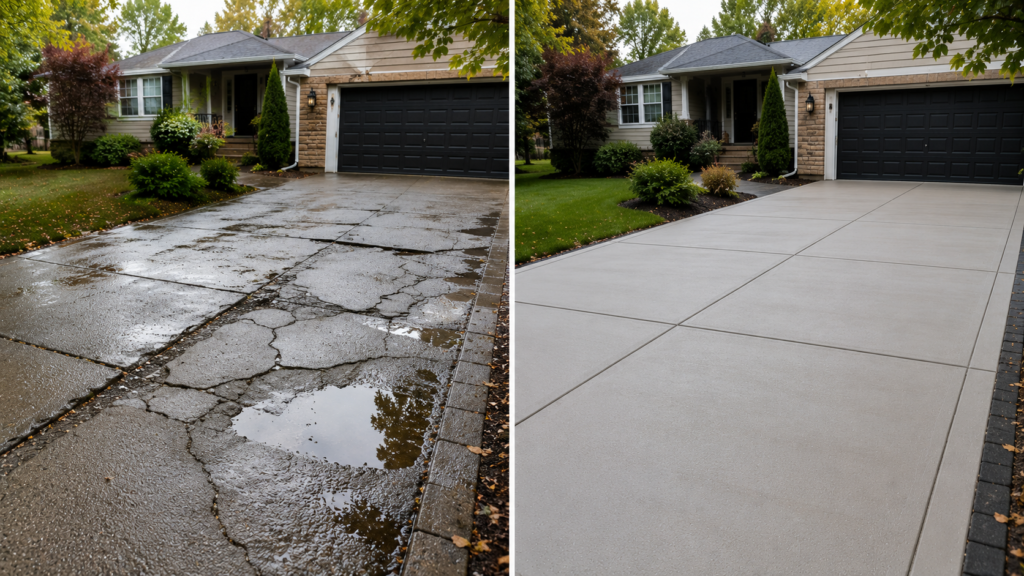
Choosing the lowest bid. I understand the appeal, but concrete pricing differences usually come from somewhere: thinner slabs, skipped rebar, less base material. Cheap concrete work often becomes expensive concrete repair.
Hiring without checking references. A quick phone call to a past client can save you from a bad outcome. Most contractors worth hiring will provide references without pushback.
Ignoring experience. Years in business matters less than years of relevant, hands-on concrete experience. Ask directly how much concrete work they’ve personally overseen.
Accepting verbal estimates. Get everything in writing, including specifications, not just price. Verbal agreements leave too much room for misunderstanding when problems come up later.
Each of these mistakes tends to lead to the same outcome: a slab that looks fine for a season or two, then starts cracking, settling, or pooling water, and now you’re paying for a repair or full replacement.
Expert Insight
“People assume concrete is simple because it looks like you’re just pouring gray mud into a shape,” says a longtime concrete contractor based in the Hudson Valley. “But the work that actually protects a homeowner happens before the truck even shows up: the base prep, the drainage plan, the reinforcement. Skip steps there and no amount of nice finishing on top will save it long-term.”
Frequently Asked Questions
Can a general contractor do concrete work? Yes, if they hold the proper license for the scope of work. Many general contractors handle smaller concrete tasks well, especially as part of a larger renovation project.
Should I hire a concrete contractor instead? For larger, structural, or decorative concrete projects, a dedicated concrete contractor typically brings more relevant hands-on experience and equipment.
Is concrete work considered specialty construction? In many respects, yes. While it falls under general construction licensing, concrete work involves specialized knowledge of mix design, reinforcement, and curing that goes beyond general building skills.
Does concrete work require permits in New York? Often, yes, particularly for driveways, foundations, and any structural work. Requirements vary by municipality, so it’s worth checking with your local building department before work begins.
How do I know if a contractor is qualified? Ask for their license number, proof of insurance, examples of similar completed projects, and references you can actually call.
What questions should I ask before hiring? Ask about their specific concrete experience, how they handle base preparation, what warranty they offer, and request a detailed written estimate rather than a verbal number.
Conclusion
A general contractor can legally do concrete work in New York, and for smaller projects folded into a larger renovation, that’s often a reasonable choice. But for driveways, foundations, decorative finishes, retaining walls, and commercial slabs, the hands-on experience of a dedicated concrete contractor tends to make the difference between a project that lasts decades and one that needs repair in a couple of years.
The right choice comes down to the size and purpose of your project, and how comfortable you are with the contractor’s specific concrete experience, not just their general license.
Call to Action
If you’re weighing your options for an upcoming concrete project, it’s worth getting a second opinion from someone who works with concrete every day. Reach out for a straightforward consultation or estimate, no pressure involved, just an honest look at what your project actually needs.