
If you’ve been putting off a driveway, patio, or foundation project because winter is coming or already here, you’re not alone. I hear this from property owners all the time. “Can we even do this in the cold?” or “My last contractor told me to wait until spring.”
Here’s what I tell them: winter doesn’t have to shut down your concrete project. It just means we need to be smarter about how we approach it.
I’ve been pouring concrete across New York for over 20 years. I’ve done driveways in January, foundations in February, and commercial slabs when there was frost on the ground. Winter concrete work is absolutely doable, but it requires preparation, experience, and respect for what the cold can do to fresh concrete if you’re not careful.
Can Concrete Really Be Poured in Winter?
The short answer is yes, with conditions.
The American Concrete Institute (ACI) defines “cold weather concreting” as any period when the air temperature drops below 40°F for more than three consecutive days. That covers a big chunk of the New York calendar from late November through March.
The key issue isn’t the pouring itself; it’s the curing. Fresh concrete needs time and warmth to gain strength. When temperatures drop too low, that chemical process slows down dramatically. Below 27°F, water inside the mix can freeze, and if that happens before the concrete has cured, you’re looking at a compromised slab cracking, scaling, and structural weakness.
That said, experienced contractors know how to manage all of this. We’ve been doing it for decades.
| Temperature Range | Can Concrete Be Poured? | Special Precautions Required |
| 40°F – 60°F | Yes | Standard cold weather protocols; insulating blankets recommended |
| 27°F – 39°F | Yes, with preparation | Heated materials, ground warming, and insulated curing blankets are essential |
| Below 27°F | Not recommended | Extreme risk; requires enclosures, heaters, and high added cost |
| Below 10°F | Generally avoided | Risk too high; most reputable contractors will reschedule |
Why Cold Weather Affects Concrete
To understand winter concrete, you need to understand what actually happens when concrete cures.
When you mix cement, water, sand, and aggregate together, you’re kicking off a chemical reaction called hydration. That reaction is what makes concrete hard and strong, and it generates its own heat in the process. The problem is, cold temperatures slow that reaction way down. Below freezing, it can stop altogether.
Fresh concrete that freezes before it reaches adequate strength, typically around 500 psi, can lose up to 50% of its potential strength. That’s not a recoverable situation. You’d be looking at tearing it out and starting over.
On top of that, frozen ground creates its own headaches. If you pour on ground that’s heaved or frost-hardened, the slab can shift and crack as the ground thaws in spring. I’ve seen beautiful driveways installed by well-meaning contractors get destroyed by April because nobody accounted for what was happening six inches below the surface.
The risks are real, but they’re also manageable. That’s the part most people don’t hear.
How Contractors Successfully Pour Concrete in Winter
When I take on a winter concrete project, my approach is methodical. Here’s what the process actually looks like on a job site.
Step 1: Monitor Weather Forecasts
We don’t just check the morning of. I’m watching extended forecasts for at least a week before the pour and planning around the best window. Ideally, I want temperatures to stay above 40°F during the pour and for at least 48 hours after. A good pour day followed by a hard freeze the next night is a problem. Timing matters enormously.
Step 2: Prepare the Ground
Ground preparation in winter takes extra work. If the ground is frozen, we use heating blankets or propane heaters to thaw it out, sometimes for 24 to 48 hours before we pour. The subbase needs to be thawed and stable. Skipping this step is one of the biggest mistakes I see other contractors make.
Step 3: Use Heated Materials When Necessary
In colder conditions, we adjust the concrete mix. Hot water is used in the mixing process to bring the concrete temperature up, typically between 55°F and 75°F at delivery. Sometimes we’ll use accelerating admixtures that speed up the hydration process. Ready-mix plants in New York are accustomed to these requests; it’s not unusual at all.
Step 4: Protect Fresh Concrete
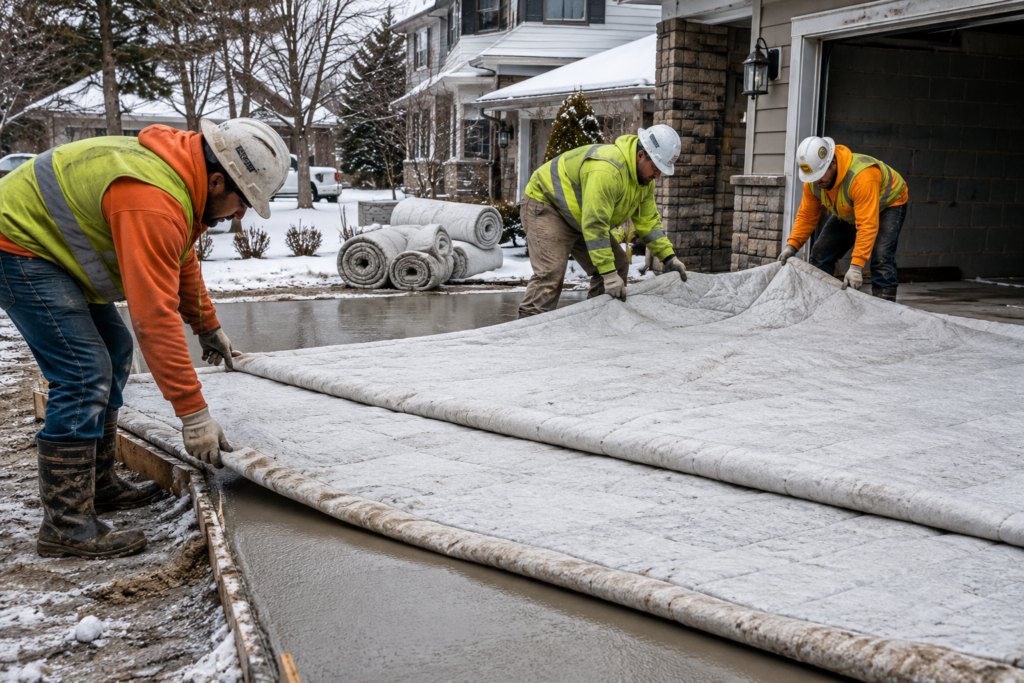
This is where most of the work happens after the pour. We cover the slab with insulating curing blankets almost immediately after finishing. In more severe cold, we set up temporary enclosures around the work area and use propane or electric heaters to maintain the temperature. The goal is to keep the concrete above 50°F for at least 48 to 72 hours longer under harsher conditions.
Step 5: Monitor Curing Conditions
We don’t just walk away. We check the site the next morning, monitor temperatures, and adjust coverage as needed. If temperatures drop more than expected overnight, we add more insulation. The curing phase is where winter concrete either succeeds or fails.
Benefits of Winter Concrete Projects
Here’s something most property owners don’t think about: winter can actually be a great time to get concrete work done.
Contractor Availability. Winter is slower for most concrete crews. That means you’re not fighting for a spot on someone’s schedule. Projects that would take weeks to get started in the summer can often begin within days in January.
Early Spring Readiness. If you pour a driveway or patio in January or February and cure it properly, it’s fully hardened and ready to use by the time spring arrives. No waiting through mud season while your neighbors are still scheduling their projects.
Potentially Faster Project Completion. Fewer competing jobs mean your crew isn’t splitting time across multiple sites. Your project often gets more focused attention.
No Heat-Related Curing Issues. Extreme summer heat has its own challenges for concrete curing. In moderate winter temperatures (say, 35°F to 45°F), with proper protection, the slower cure can actually produce a denser, stronger slab.
Common Winter Concrete Mistakes
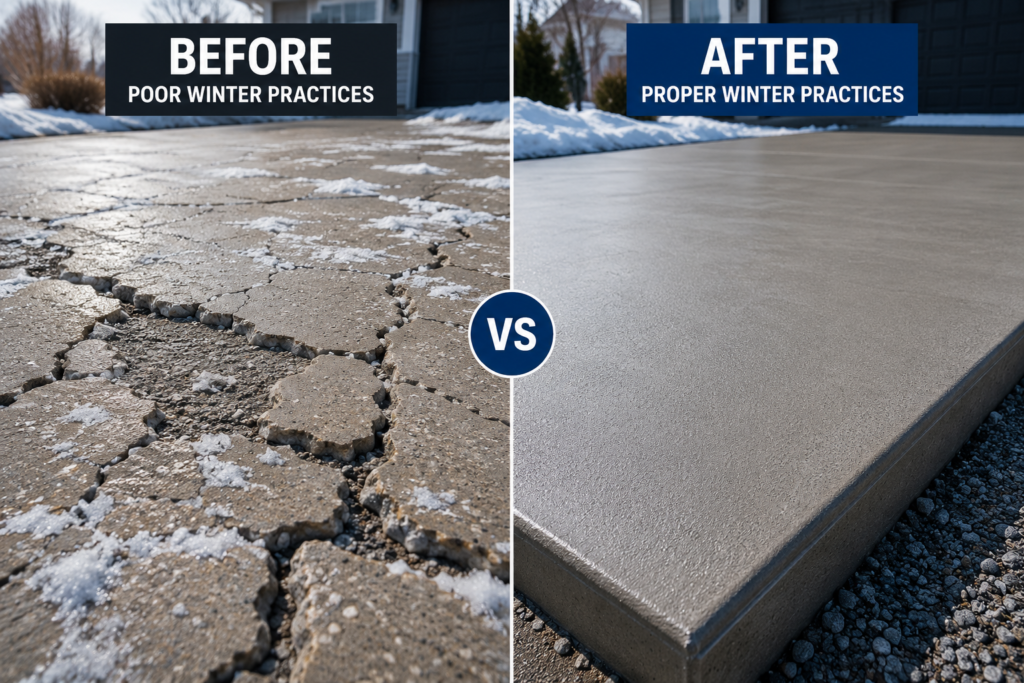
I’ve seen what goes wrong when winter concrete is handled carelessly. A few patterns show up again and again.
Pouring in Extreme Cold Without Proper Enclosures. I once went out to assess a concrete driveway in Queens that an unlicensed contractor poured during a stretch of 20°F nights. The surface looked fine for a week. By spring, it was scaling and flaking badly. The concrete never cured properly; it froze during the critical early hours. That homeowner had to pay twice.
Removing Protection Too Early. Blankets and enclosures are pulled too soon because someone wants to get the equipment off-site. If you expose fresh concrete to freezing temperatures within the first 24 to 48 hours, you can undo all the work that went into the pour. The money saved on blanket rentals doesn’t cover the cost of a failed slab.
Ignoring the Subbase. Pouring on frozen or frost-heaved ground is asking for trouble. The concrete might look fine in February. But when the ground starts shifting and thawing in March and April, cracks follow. I always take the time to properly prepare the ground, even when it adds time to the job.
Using the Wrong Mix. A standard concrete mix designed for summer conditions doesn’t perform the same way in cold weather. Water-to-cement ratio adjustments and admixtures need to be part of the conversation with your ready-mix supplier.
Which Concrete Projects Can Be Done During Winter?

Not all projects carry the same risk in cold weather. Here’s a practical breakdown.
| Project Type | Winter-Friendly? | Special Considerations |
| Driveway | Yes | Ground prep critical; requires curing blankets |
| Sidewalk | Yes | Thinner slabs cure faster but lose heat quickly; good insulation is essential |
| Patio | Yes | Best done in mild winter windows above 35°F |
| Foundation | Yes, with care | Often enclosed anyway; heating is easier to manage |
| Garage Floor | Yes | Interior work means easier temperature control |
| Commercial Slab | Yes | Larger mass retains heat better; temporary enclosures are practical |
Foundations and garage floors are actually some of the more forgiving winter pours because you have structure around the work area. A patio or driveway exposed to open air requires more active management.
Expert Insight
“The biggest misconception I run into is that cold-weather concrete is inherently riskier than summer concrete. In some ways, it’s actually easier to manage. Summer heat creates its own problems: rapid evaporation, plastic shrinkage cracking, and fighting with set times. In winter, if you control the temperature properly, you can slow things down in a way that actually helps. The real risk isn’t the cold itself. It’s doing it without the right preparation and protection. That’s where corners get cut, and slabs get ruined.”
Mike R., Concrete Contractor, 24 Years of Experience, serving New York Metro
How Long Does Concrete Take to Cure in Cold Weather?
There’s an important distinction between setting and curing that property owners need to understand.
Setting is when concrete becomes hard enough to walk on, typically 24 to 48 hours under normal conditions. In cold weather, this can extend to 48 to 72 hours or longer, depending on temperature.
Curing is the long-term strengthening process. Concrete reaches about 70% of its design strength in 28 days under ideal conditions. In cold weather, that timeline stretches. At 50°F, you might be looking at 40 to 50 days to hit the same strength milestone you’d reach in 28 days at 70°F. Below 40°F, the process slows even further.
Here’s what this means practically:
- Foot traffic: 48 to 72 hours minimum in cold weather
- Vehicle traffic: 7 days minimum; 10 to 14 days is safer in cold conditions
- Full cure: 28 to 60 days, depending on sustained temperatures
- Sealing: Wait for full cure before applying a sealer. Don’t rush this
Keeping the concrete protected and above 50°F for as long as possible in those first few days makes a significant difference in the outcome.
Tips for Property Owners Planning Winter Concrete Work
If you’re thinking about a winter project, here’s what I’d tell you as a property owner.
Book early. Even in winter, good contractors fill up. If you want a February pour, reach out in December or early January. Waiting until the week before limits your options.
Watch a longer forecast, not just tomorrow. The day of the pour matters less than the days after. A nice pour day followed by a hard freeze is worse than a cold pour day with stable overnight temperatures.
Ask your contractor the right questions. Specifically: How will you prepare the subbase? What mix are you ordering? How long will insulating blankets stay on? What’s your plan if temperatures drop unexpectedly overnight? If they can’t answer these clearly, that’s your answer.
Plan for slightly higher costs. Heated materials, insulating blankets, and extended monitoring add to project costs. Not dramatically, but winter concrete typically runs 10% to 20% higher than the same job in summer. That’s normal and legitimate. Be skeptical of a winter bid that’s the same price as a summer one; something is probably being skipped.
Prepare your property. Clear snow and ice from the work area. Make sure the contractor has clear access. If there’s a dumpster or other equipment needed, coordinate that ahead of the pour date so there are no delays.
Frequently Asked Questions
Can concrete be poured in winter?
Yes. Concrete can be poured successfully during winter months, including in New York’s cold climate, provided contractors take proper precautions, including ground preparation, heated concrete mixes, and insulated curing protection. The critical factor is maintaining an adequate temperature during the curing process.
What temperature is too cold to pour concrete?
Most contractors follow ACI guidelines, which consider conditions below 40°F to be cold weather concrete work. Pouring is generally not recommended when temperatures fall below 27°F without significant protective measures like enclosures and active heating. Below 10°F, most reputable contractors will advise rescheduling.
Will concrete crack if poured in cold weather?
Improperly handled cold-weather concrete can crack, specifically if it freezes before reaching adequate early strength (around 500 psi). However, with proper mix design, ground preparation, and curing protection, cold-weather pours are no more prone to cracking than summer pours.
How do contractors protect concrete in winter?
Insulating curing blankets, temporary heated enclosures, propane or electric heaters, hot water in the mix, and accelerating admixtures are the primary tools. The protection stays in place for a minimum of 48 to 72 hours, often longer depending on temperatures.
Is winter concrete work more expensive?
Generally, yes, by about 10% to 20% compared to the same work done in summer. The added cost comes from heated materials, insulating blankets, extended monitoring, and ground preparation. It’s a legitimate cost, and any bid that doesn’t account for it deserves scrutiny.
How long does winter concrete take to cure?
Setting time (walkable surface) extends to 48 to 72 hours in cold conditions. Full cure, meaning the 28-day strength milestone, can take 40 to 60 days in cold weather. Vehicle traffic should be avoided for at least 7 to 14 days. Sealing should wait until full cure is complete.
Don’t Let Winter Put Your Project on Hold
Winter concrete work isn’t a gamble, not when it’s done by someone who’s been through enough New York winters to know exactly what the cold demands.
The right mix, the right preparation, the right protection, and the right team make the difference between a slab that lasts decades and one you’re replacing by summer. I’ve poured concrete in January in New York and watched those slabs hold up through twenty subsequent winters without a crack.
If you’ve been waiting for spring to start your driveway, sidewalk, patio, or foundation project, you may not need to wait as long as you think.
Ready to Get Started? Request Your Winter Concrete Estimate
If you have a concrete project you’ve been putting off, let’s talk. I’ll give you an honest assessment of what your project involves in winter conditions, what precautions we’d take, and what you can realistically expect for timing and cost.
No pressure, no hard sell, just straight answers from a contractor who’s done this work through every kind of New York winter.