If you’re weighing options for a new driveway, you’ve probably already noticed there’s no shortage of opinions on what’s “best.” Some people swear by natural stone. Others won’t consider anything but concrete pavers because of the price. The honest answer is that the right choice depends on your driveway’s size, how it’s used day to day, and how well it’s installed, not just which material looks nicest in a showroom.
For homeowners and property managers in New Hyde Park, there’s an added layer to think about: winters here aren’t gentle. Between freeze-thaw cycles, road salt, and driveways that see everything from a single sedan to a contractor’s truck, picking driveway pavers in New Hyde Park means balancing looks with how a surface actually performs over years of Long Island weather.
This guide walks through the materials, styles, and practical considerations that matter most, so you can go into a conversation with a contractor already knowing what questions to ask.
What Makes a Good Driveway Paver for New Hyde Park?
Appearance matters, obviously. It’s the first thing anyone notices pulling into a driveway. But a paver that looks great in July and starts heaving or cracking by February isn’t doing its job.
A few things separate a driveway that ages well from one that becomes a headache:
- Strength under vehicle load. Driveways carry more weight than patios or walkways, so the paver and the base beneath it need to be rated for that.
- Weather resistance. Water gets into every small crack when temperatures drop below freezing, then expands as ice. Pavers with low water absorption handle this better than porous, low-quality materials.
- Traction. A smooth, glossy finish might photograph well, but it can turn into a skating rink after an ice storm. Textured or tumbled finishes tend to grip better.
- Drainage. Water needs somewhere to go. A driveway that pools water in a low spot is going to have problems long before the pavers themselves wear out.
- Repairability. One of the real advantages of a paver driveway over a poured slab is that individual units can be lifted and replaced if one cracks or settles, without redoing the whole surface.
- Compatibility with the home. A driveway that clashes with the architecture of the house can actually hurt curb appeal rather than help it, no matter how well it’s built.
None of these factors work in isolation. A beautiful stone paver installed on a poorly compacted base will still shift and settle. A budget concrete paver, installed correctly with proper drainage, can outperform expectations for a long time.
Best Driveway Paver Materials
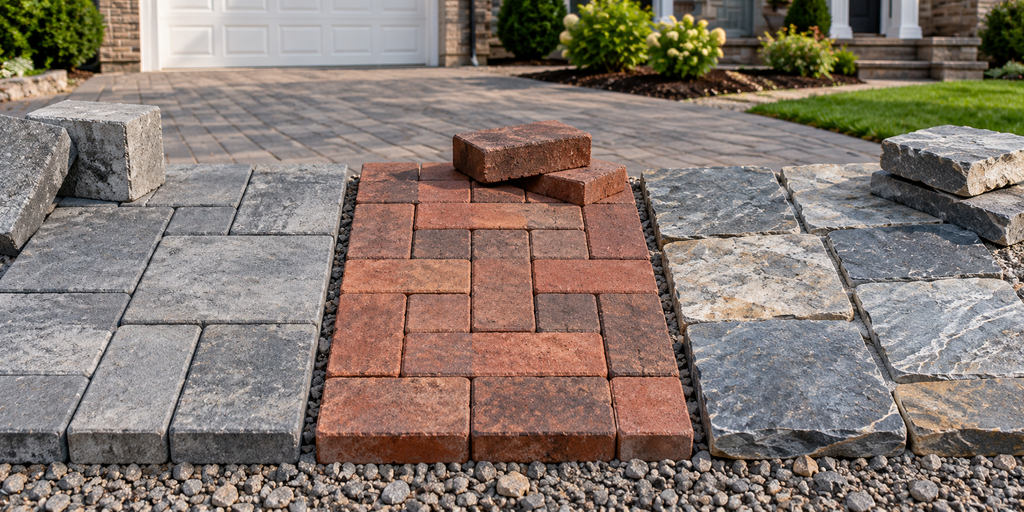
There are three material categories most homeowners end up comparing: concrete, brick, and natural stone. Each has a different personality, and each fits a different kind of property.
Concrete pavers are the most common choice for residential driveways, and for good reason. Manufacturers produce them in a huge range of colors, textures, and shapes, which makes it easier to match a specific look without a custom budget. They’re manufactured under controlled conditions, so quality tends to be consistent from paver to paver. On the downside, some lower-end concrete pavers can fade over time with UV exposure, and color consistency across a large driveway depends on ordering enough material from the same production run.
Brick pavers bring a classic, traditional look that suits a lot of the colonial and cape-style homes common around Long Island. Clay brick holds its color well since the color runs through the entire paver rather than sitting on the surface, so fading is less of a concern. Brick can be more brittle than concrete under heavy point loads, though, and it tends to cost more per square foot.
Natural stone pavers, things like granite, bluestone, or travertine, offer a look that’s hard to replicate with manufactured materials. Every piece is unique, which some homeowners love, and others find inconsistent. Stone is generally very durable, but it’s also the most expensive option, and certain stone types need periodic sealing to resist staining, especially from oil or road salt residue.
| Material | Appearance | Maintenance | Durability Considerations | Best For |
| Concrete Pavers | Wide range of colors, textures, and patterns; consistent look | Moderate; occasional cleaning and joint sand refresh | Strong under vehicle loads when properly installed; some fading possible over time with lower-grade products | Homeowners wanting flexibility in design at a moderate budget |
| Brick Pavers | Classic, traditional, warm tones that hold color well | Low to moderate; color doesn’t fade like surface coatings | Can be more prone to cracking under heavy point loads than concrete | Colonial, cape, or traditional-style homes |
| Natural Stone Pavers | Unique, high-end, varied texture and color | Higher; sealing often recommended, more careful cleaning | Very durable material, but individual pieces can vary in thickness and finish | Homeowners prioritizing a custom, premium look |
Popular Driveway Paver Styles for New Hyde Park Homes
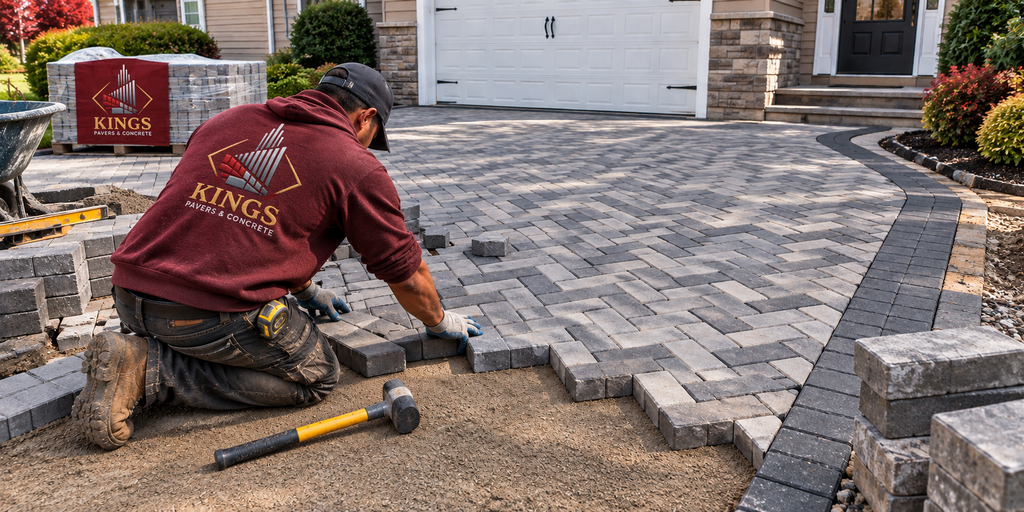
The pattern you choose changes the personality of a driveway almost as much as the material does. A few patterns come up again and again in this area:
Herringbone is popular because the interlocking angles genuinely add strength under vehicle traffic, not just visual interest. It’s a common recommendation for driveways specifically because of how well it distributes weight.
Running bond is a simpler, brick-like layout where each row is offset from the one before it. It’s clean, doesn’t compete visually with the house, and works well on more traditional properties.
Basketweave creates a woven look using pairs of rectangular pavers. It reads as more formal and can suit a home with symmetrical architecture, though it’s used less often on driveways than on patios since it doesn’t lock together quite as tightly under load.
Large-format contemporary pavers are gaining ground with newer or renovated homes that lean modern. Fewer joints, cleaner lines, a more minimal look overall.
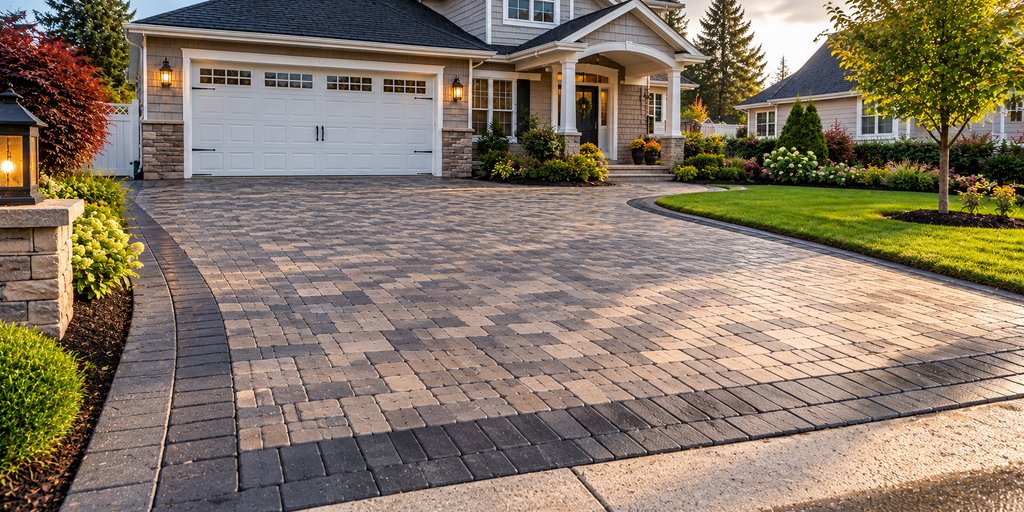
Contrasting borders are less about pattern and more about framing. A darker border paver around a lighter field, or vice versa, can define the edges of a driveway and make it look more intentional, especially on properties with a long or wide apron.
The driveway’s dimensions matter here too. A tight, straight driveway on a smaller lot can look busy with an intricate pattern, while a wide, curved driveway often has enough visual space to support something like herringbone with a border. Take a look at your home’s roofline, window trim, and any existing hardscaping like walkways or a front step. Matching those tones, even loosely, ties the whole property together instead of making the driveway look like it was added as an afterthought.
Which Pavers Handle New York Weather Well?
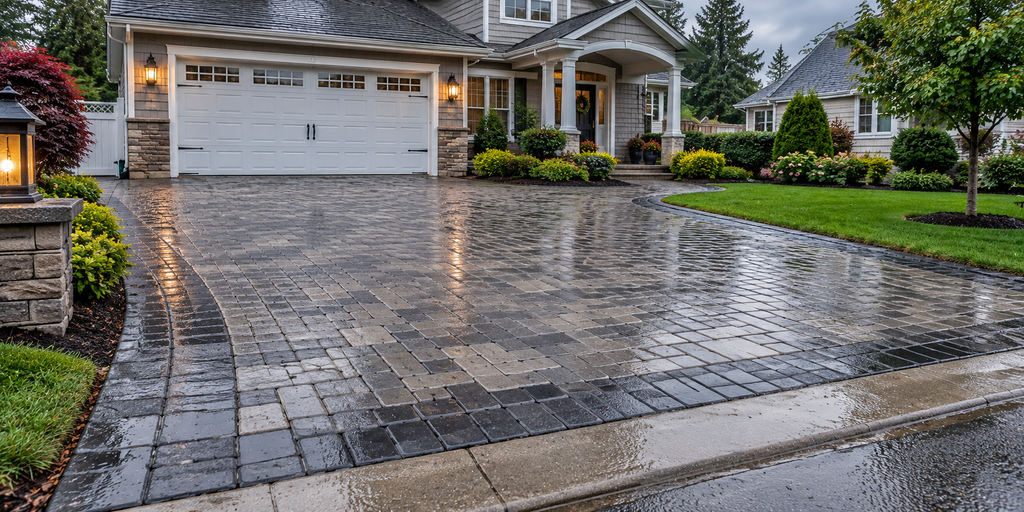
New Hyde Park sits in a climate zone that goes through real freeze-thaw cycles most winters. Water gets into tiny gaps in a surface, freezes, expands, and repeats that cycle dozens of times over a season. Over years, that process is what causes cracking, heaving, and surface flaking in materials that aren’t suited for it.
Denser, low-absorption pavers generally hold up better against this kind of cyclical freezing. That’s one reason properly manufactured concrete and clay brick pavers are common choices here; they’re produced to standards that account for northern climates.
Deicing salt is another factor worth thinking about, even though it’s more about maintenance than material choice. Some sealed stone surfaces can be more sensitive to salt staining than concrete or brick, so if you’re leaning toward a sealed natural stone driveway, ask your contractor about salt-safe deicing alternatives like calcium magnesium acetate instead of standard rock salt.
Here’s the part that gets overlooked constantly: the paver itself is only half the equation. A high-end paver installed over a shallow, poorly compacted base will still shift, sink, and crack faster than a mid-range paver installed correctly. Installation quality and material quality need to work together. Neither one compensates for the other.
Why Base Preparation Matters
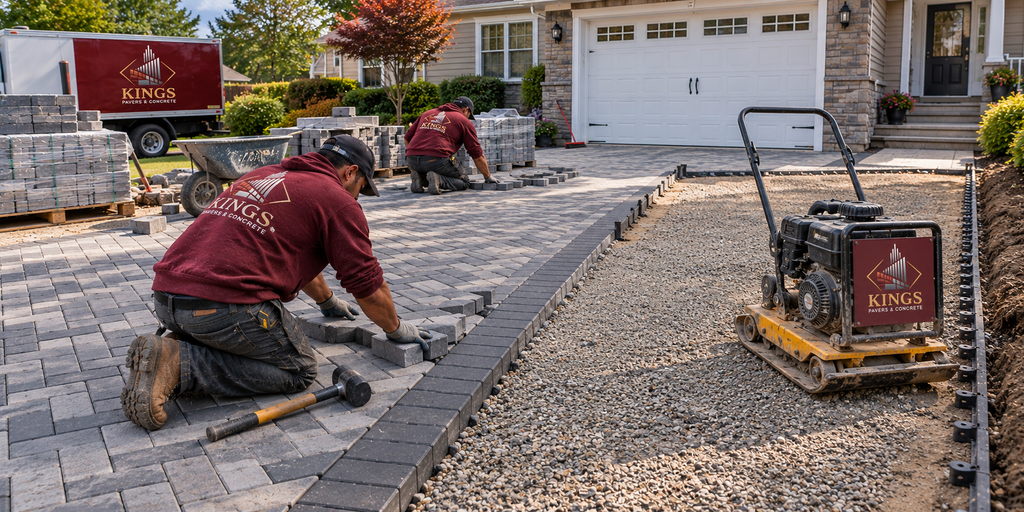
This is the part of a driveway project nobody sees once it’s finished, and it’s also the part that determines whether the driveway lasts. Everything visible sits on top of it.
A proper installation starts with excavating the area to the correct depth, usually deeper than most homeowners expect, since the base layer needs to be substantial enough to support vehicle weight and resist frost movement. That excavated area gets filled with a compactable base material, typically crushed stone, placed in layers and compacted with mechanical equipment rather than just dumped and leveled by hand.
Grading matters just as much as compaction. The base and the finished surface both need a slight slope so water moves away from the house and off the driveway instead of pooling or running toward the foundation.
Edge restraints, the material installed along the perimeter of the driveway, keep the outer pavers from creeping outward under the pressure of vehicles turning and braking. Without them, even a well-built field of pavers can slowly spread apart at the edges over a few seasons.
Finally, joint material, usually polymeric sand, gets swept into the gaps between pavers and locks them together, which helps resist shifting and also cuts down on weed growth between joints.
Skip or rush any one of these steps, and it shows up later, sometimes within the first year, sometimes not until after a few winters. It’s genuinely one of the more important conversations to have with a contractor before work starts.
How to Choose Driveway Pavers Step by Step
Step 1: Consider how the driveway will be used. A single-family sedan and a household with two SUVs and the occasional delivery truck put very different demands on a driveway. Be honest about actual daily use, not just what fits in the garage.
Step 2: Look at the home’s architectural style. Pavers that suit a modern renovation can look out of place on a traditional colonial, and the reverse is true too. Walking your own property with fresh eyes helps.
Step 3: Compare suitable materials. Weigh concrete, brick, and natural stone against your budget, maintenance tolerance, and the look you’re after, using the comparison above as a starting point.
Step 4: Choose colors and patterns. This is where personal taste comes in, but keep the surrounding landscaping and exterior finishes in mind so the driveway doesn’t feel disconnected from the rest of the property.
Step 5: Think about maintenance. Some materials ask more of you than others, whether that’s periodic sealing, more careful salt use, or replacing joint sand every few years. Pick something that matches how much upkeep you’re actually willing to do.
Step 6: Consider drainage and site conditions. Slope, existing water flow, and how close the driveway sits to the foundation all affect the installation plan, sometimes more than the material choice itself.
Step 7: Discuss installation requirements with a qualified contractor. Even with the right material picked out, base depth, compaction method, and edge restraint choices should be discussed directly rather than assumed.
Common Mistakes to Avoid
A few patterns show up again and again in driveway projects that don’t go as planned:
- Choosing a paver purely because of how it looked in a photo, without considering how it performs under vehicle traffic or winter conditions
- Ignoring drainage until water is already pooling near the garage or foundation
- Accepting a shallow or poorly compacted base to save time or money upfront
- Selecting a decorative paver that isn’t rated for the vehicle loads it will actually see
- Forgetting that winter maintenance, plowing, salting, and ice melt are part of owning a paver driveway, not an afterthought
- Picking an intricate pattern that overwhelms a small or narrow driveway
- Focusing entirely on the lowest upfront price without factoring in long-term repair and replacement costs
None of these mistakes are dramatic on their own. They tend to compound quietly over a few seasons until the driveway needs work much sooner than it should have.
Realistic Case Study
The following is a hypothetical example for illustration purposes only.
Consider a homeowner in New Hyde Park with a two-car garage, a mid-size colonial home, and a driveway that slopes gently toward the street. They’re replacing a cracked asphalt driveway and want something that looks more finished without ballooning the budget.
Their contractor walks through three options: a premium natural stone paver, a clay brick paver, and a standard concrete paver in a warm gray tone.
Natural stone would look striking but sits well above their budget, and the homeowner isn’t interested in the periodic sealing it would require. Brick pairs nicely with the home’s colonial trim, but the cost per square foot pushes the project past what they’d planned to spend, especially across a driveway of that size.
They land on a textured concrete paver in a herringbone pattern with a contrasting soldier-course border, a combination that fits the home’s style, stays within budget, and offers the structural benefits of herringbone under the driveway’s regular use.
During installation, the existing slope becomes useful. Rather than fighting it, the contractor uses the natural grade to help direct water toward the street instead of adding a more involved drainage system. The base is excavated to an appropriate depth for the region’s frost conditions and compacted in stages before the pavers go down.
For upkeep, the homeowner is advised to sweep the joints periodically, refresh polymeric sand every couple of years, and use a calcium-based ice melt rather than standard rock salt near the driveway’s edges to protect the color of the pavers over time.
Expert Insight
There isn’t a single “best” driveway paver that applies to every property. What actually determines success is how well the material matches the site: the soil conditions, the slope, how the driveway gets used, local weather patterns, and whether the installation itself follows sound base preparation and drainage practices. Two identical pavers can perform completely differently depending on those factors. A qualified contractor should be evaluating your specific property, not just recommending whatever material they install most often.
Maintenance Considerations
Paver driveways aren’t maintenance-free, but the upkeep is generally manageable:
- Routine cleaning. A regular sweep or occasional rinse keeps dirt and organic debris from building up in the joints.
- Joint sand. Polymeric sand between pavers can wear down over time from water flow and traffic, and typically needs refreshing every few years.
- Weed management. Properly installed and sanded joints resist weed growth, but some maintenance is still normal over time.
- Stain removal. Oil drips or rust stains are usually treatable with the right cleaner rather than requiring paver replacement.
- Snow and ice care. Plastic shovels are gentler on paver surfaces than metal ones, and salt-safe deicers help protect color and surface finish.
- Sealing when appropriate. Not every paver needs sealing, but for materials that benefit from it, resealing every few years helps resist staining and fading.
- Repairing individual pavers. If a paver cracks or settles, it can typically be lifted and replaced without disturbing the rest of the driveway, which is one of the practical advantages of paver systems over poured concrete or asphalt.
FAQs
What are the best driveway pavers for New Hyde Park homes?
There isn’t one universal answer. Concrete pavers tend to offer the best balance of cost, durability, and design flexibility for most homes, while brick and natural stone suit specific architectural styles and higher budgets. The right choice depends on your home’s style, budget, and how you use the driveway.
Are concrete pavers good for New York driveways?
Yes, when manufactured to appropriate standards and installed with proper base preparation, concrete pavers generally hold up well to freeze-thaw cycles and vehicle traffic common in this region.
Do driveway pavers crack in winter?
Individual pavers can crack, usually from a manufacturing defect, an impact, or a poorly supported base beneath them rather than the cold alone. A properly compacted base and quality material significantly reduce the risk.
What paver pattern is best for a driveway?
Herringbone is often recommended for driveways because its interlocking angles help distribute vehicle weight more evenly than simpler patterns like running bond.
Are paver driveways difficult to maintain?
Not particularly. Routine cleaning, occasional joint sand refreshing, and reasonable snow and salt practices cover most of what’s needed.
How long can driveway pavers last?
Lifespan varies significantly based on material quality, installation, climate, and traffic, so it’s best discussed directly with a contractor rather than relying on a general figure.
Can individual driveway pavers be replaced?
Yes. One practical benefit of a paver driveway is that you can usually lift and replace a single cracked or settled paver without redoing the surrounding surface.
What should I consider before installing a paver driveway?
Vehicle use, home architecture, budget, maintenance tolerance, drainage, and the quality of base preparation all factor into a successful installation.
Ready to Upgrade Your New Hyde Park Driveway?
Choosing the right pavers starts with understanding your property, drainage, vehicle use, and design preferences. Kings Pavers & Concrete can help you explore the best driveway paver options for your New Hyde Park property and plan an installation built around your specific needs.
Call today for a free estimate and discuss your driveway project with our team.
One Response