
You’ve got a brand new driveway. Smooth, dark, no cracks, no potholes it’s tempting to pull the car right up and admire it from the front seat.
Don’t do that yet.
I’ve been installing asphalt driveways across New York for over 20 years, and this is one of the most common calls I get right after a job wraps up. Someone parked too soon, and now there’s a dip, a set of tire tracks pressed into the surface, or a soft spot that wasn’t there the day before. It’s an easy mistake to make because fresh asphalt looks ready long before it actually is.
The short answer: give it at least 2 to 3 days for regular passenger vehicles, and up to a week for anything heavier. But there’s more to it than a flat number, and understanding why will help you protect what you just paid for.
How Long Should You Wait Before Parking on a New Asphalt Driveway?
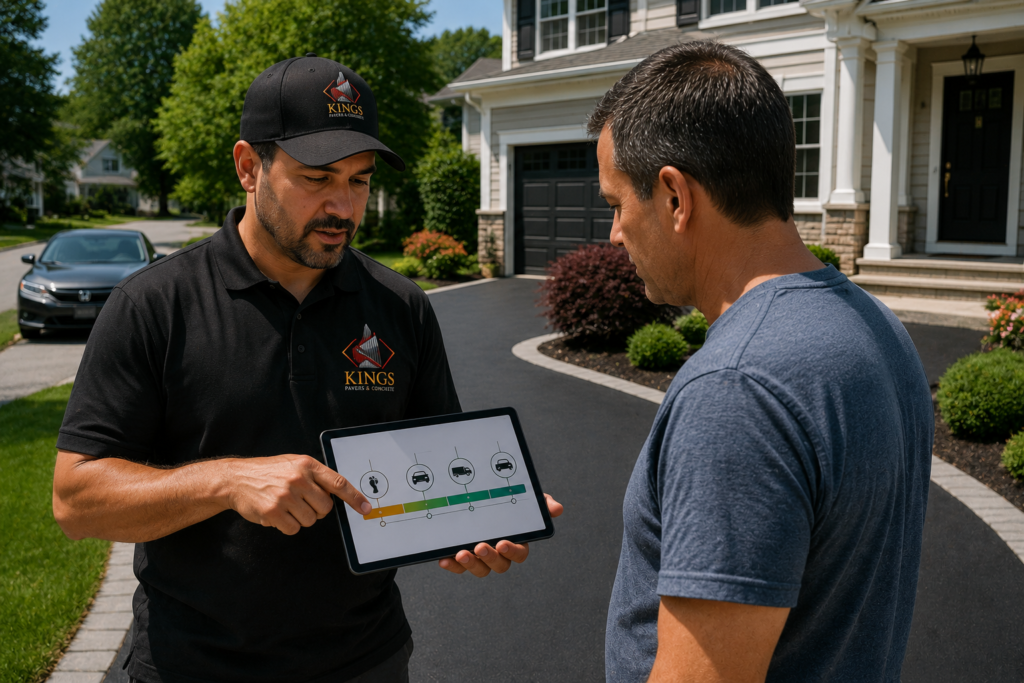
The waiting period depends on a few things, but here’s the general range I give homeowners.
Passenger vehicles, cars, and small SUVs typically need a minimum of 2 to 3 days before they should sit on new asphalt. In cooler weather, I usually push that closer to 4 or 5 days just to be safe.
Heavier vehicles, like pickup trucks, vans, or anything towing a trailer, need more time. I tell people to wait at least a week, sometimes longer depending on the weather during installation.
Weather changes everything. Hot, sunny days can actually work against you here; the surface might look and feel set, but the asphalt underneath is still soft. Cooler, cloudy conditions slow the process down even further.
Every contractor sets their own guidance based on the mix used and conditions on install day, so always ask whoever did your paving what they recommend for your specific driveway. I’d rather a homeowner call and ask than guess.
| Vehicle Type | Recommended Waiting Time | Notes |
| Passenger car / small SUV | 2–3 days | Extend to 4–5 days in cooler weather |
| Pickup truck/van | 5–7 days | Heavier weight needs more cure time |
| Vehicle with trailer | 7+ days | Concentrated weight on tires increases risk |
| Motorcycle | 3–5 days | Kickstand can still puncture the surface; use a support pad |
| RV or heavy equipment | 2+ weeks | Best to avoid until fully cured if possible |
Why Asphalt Needs Time to Cure
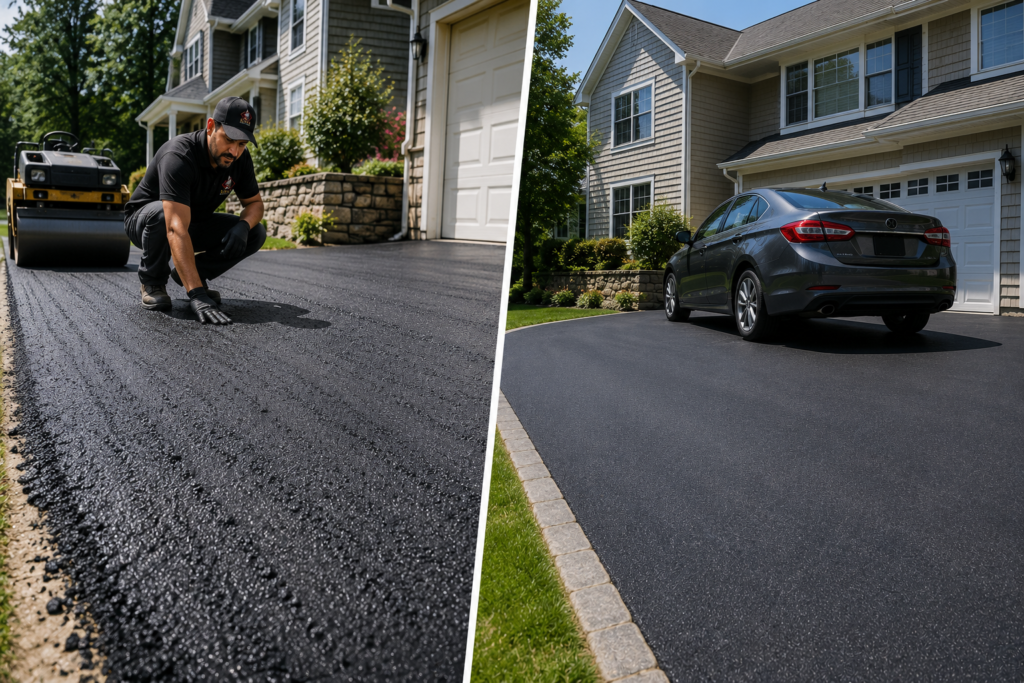
Here’s something a lot of homeowners don’t realize: drying and curing aren’t the same thing.
Asphalt “dries” pretty quickly within a day or two; it looks solid and feels firm to the touch. But curing is a longer process. It’s the asphalt gradually losing the oils used to keep the mix workable during installation, and slowly hardening as it settles into its final, stable state.
Fresh asphalt stays somewhat flexible for a while after it’s laid. That flexibility is actually useful early on, but it also means the surface can still be reshaped by weight before it’s had time to firm up. A tire sitting in one spot too long, especially during a hot afternoon, can leave an impression that doesn’t go away.
The truth is, curing continues for months after installation, not just days. The first few days matter most for avoiding visible damage, but the asphalt continues to harden and stabilize for a good while after that.
Factors That Affect Asphalt Curing Time
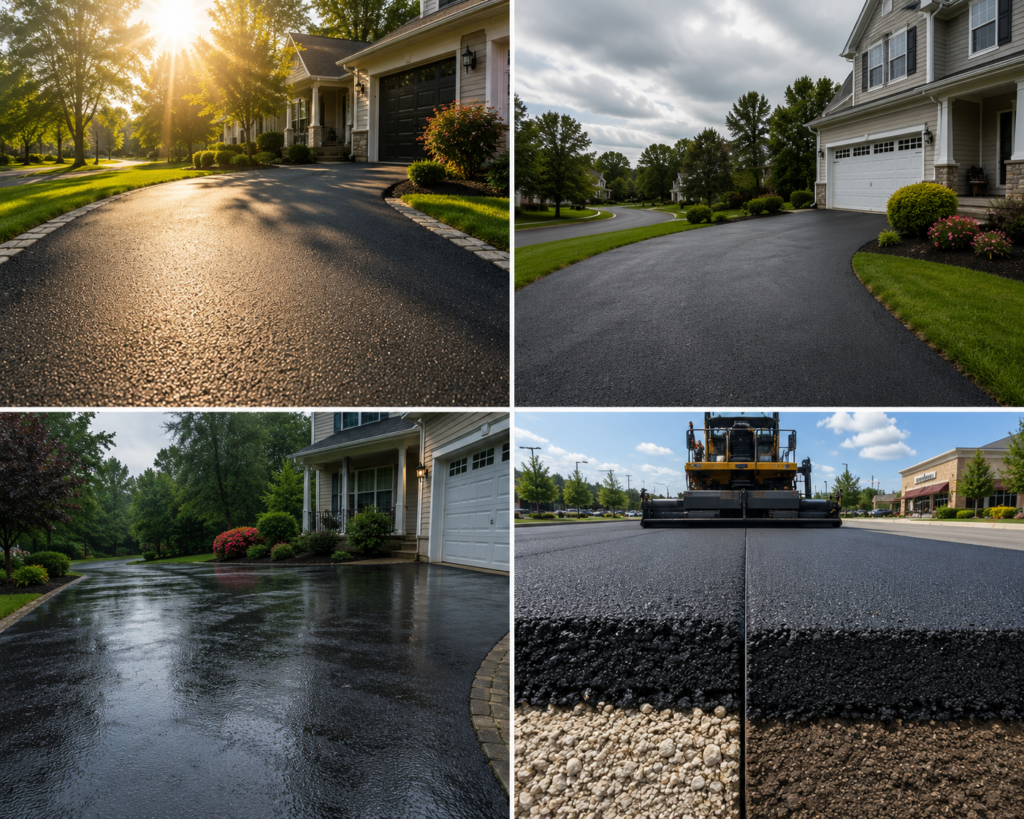
Not every driveway cures at the same pace. A few things shift the timeline.
Temperature plays a big role. Warmer temperatures help the initial set but can also soften the surface temporarily during peak heat, which is why I tell people to avoid parking during the hottest part of the day even once the general waiting period has passed.
Humidity slows curing down. Moisture in the air keeps the surface from hardening as quickly as it would on a dry day.
Sun exposure actually speeds up surface hardening but doesn’t do much for the layers underneath, which is part of why a driveway can look ready before it really is.
Asphalt thickness matters too. A standard residential driveway cures differently than a thicker commercial application built for heavier loads.
Traffic, obviously, sets back curing if it starts too early. Every early use adds a little more risk while the mix is still settling.
Seasonal installation changes the picture significantly. A driveway paved in July cures on a different timeline than one paved in October, when cooler nights slow the process. In New York, I generally build in extra waiting time for anything installed in fall.
New York’s climate in general, humid summers and cold snaps in the shoulder seasons, means local curing times often run a bit longer than what you’d see in a drier, more consistent climate.
Step-by-Step Guide After Your Driveway Is Installed
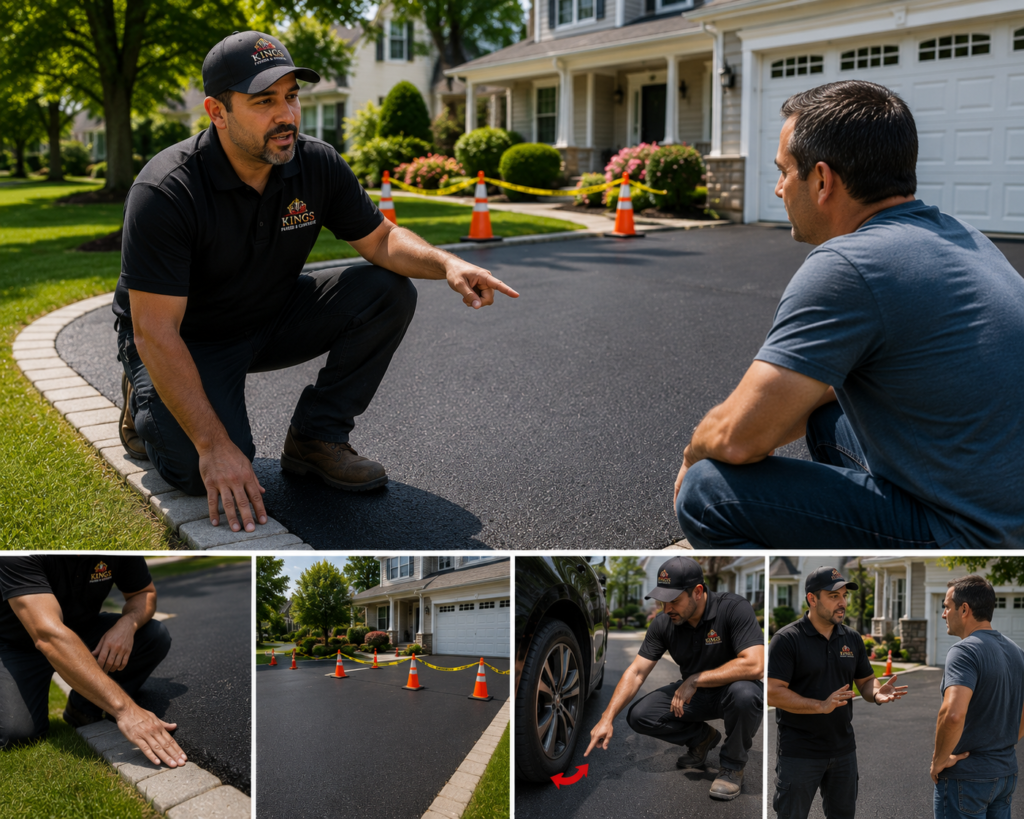
Step 1: Stay off the driveway initially. For the first 24 to 48 hours, avoid walking or driving on it entirely if you can. This is when the surface is most vulnerable.
Step 2: Walk only when advised. Once your contractor gives the go-ahead, light foot traffic is usually fine. Avoid narrow heels or anything that concentrates weight into a small point.
Step 3: Wait before parking. Follow the guidance above based on your vehicle type, and lean toward waiting longer rather than shorter if you’re unsure.
Step 4: Avoid turning the steering wheel while stationary. This is a big one. Turning your wheels while the car isn’t moving twists and scuffs the surface, and it’s one of the most common ways fresh asphalt gets damaged, even weeks after installation.
Step 5: Keep heavy equipment off. Dumpsters, construction equipment, and anything with concentrated point loads should stay off the new surface for as long as possible, ideally a few weeks.
Step 6: Protect edges. The edges of a new driveway are more vulnerable than the center. Avoid driving right up to the border or repeatedly rolling tires over the same edge line while things are still settling.
Step 7: Maintain the surface during the first year. New asphalt should get its first seal coat sometime between 6 and 12 months after installation, once the curing process has substantially finished.
Common Mistakes That Damage New Asphalt
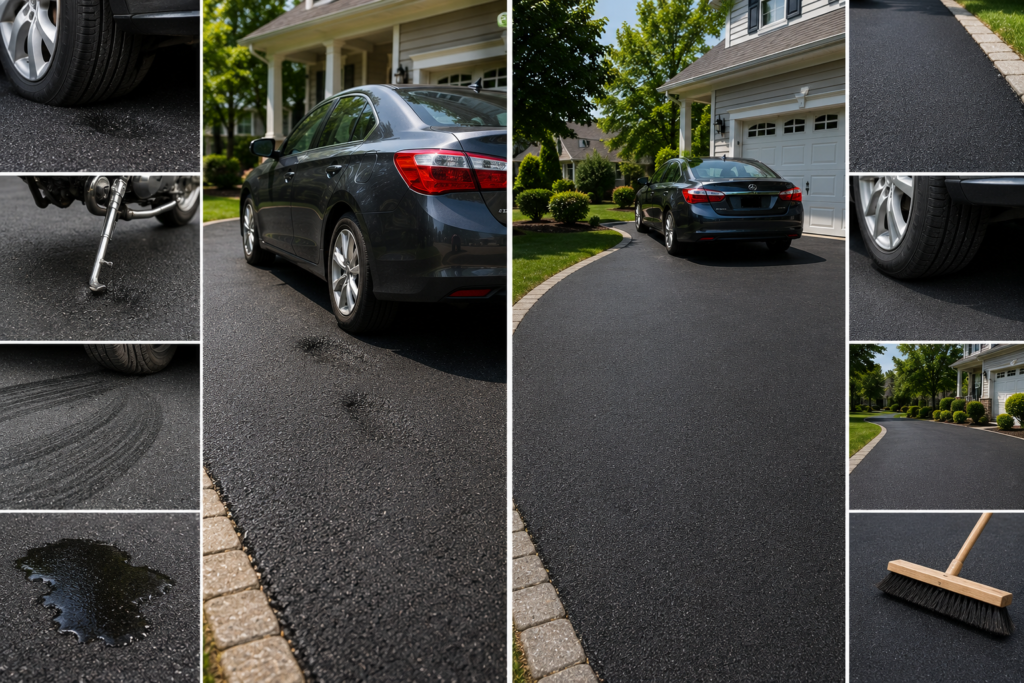
I’ve seen the same handful of mistakes show up again and again over the years.
Parking too early. This is the number one issue. Even a day or two too soon can leave a permanent impression from tire weight.
Motorcycle kickstands. A kickstand concentrates a lot of weight into a tiny point of contact. On fresh asphalt, especially on a warm day, it can sink right in.
Dumpsters. These get dropped off during renovations more often than people think about ahead of time, and they sit in one spot for days with enormous point-load weight.
Sharp turns. Cranking the wheel while stopped twists the surface layer and can create visible scuff marks or even loosen material.
Heavy trucks. Delivery trucks, moving trucks, anything beyond a standard passenger vehicle needs extra curing time before it’s safe to have on the surface.
Fuel spills. Gasoline and oil break down asphalt binder. A spill on new asphalt, before it’s fully cured, causes more damage than the same spill would on an older, harder surface.
Parking in the same spot repeatedly. Even after the driveway is technically cured, always parking in the same spot puts uneven, concentrated wear on one area over time.
How to Extend the Life of Your Asphalt Driveway
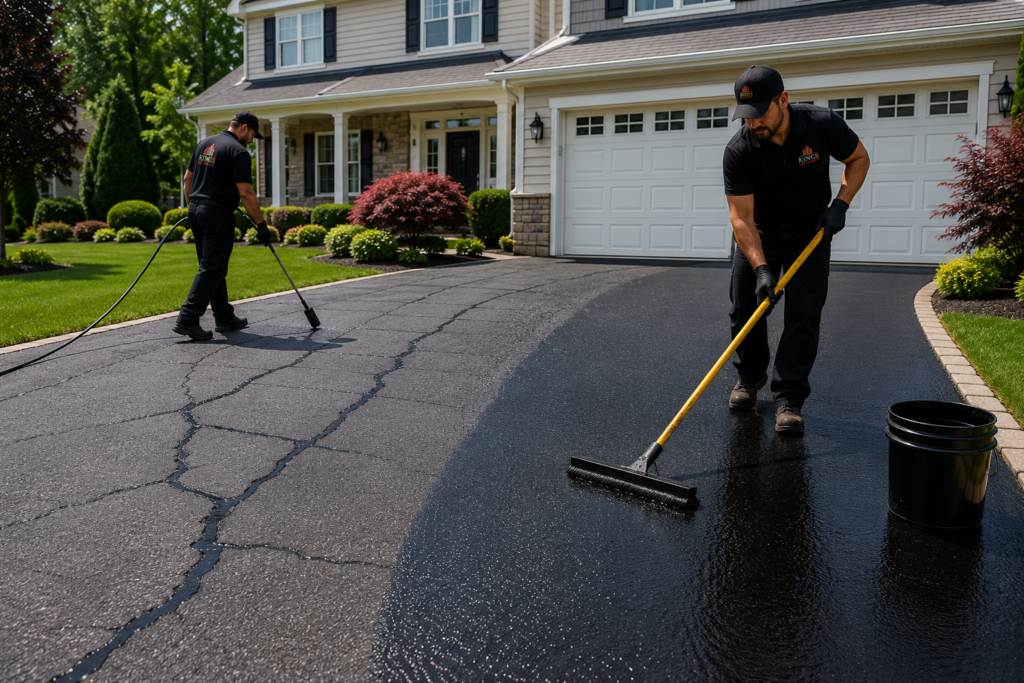
A little maintenance goes a long way with asphalt.
Cleaning. Sweep debris and rinse off dirt and organic material regularly, since trapped moisture speeds up wear.
Sealcoating. Apply the first seal coat within the first year, then every 2–3 years after that, to protect against UV and water damage.
Crack filling. Address small cracks as soon as you notice them, before water gets in and makes the problem bigger.
Drainage. Make sure water runs off the driveway instead of pooling anywhere on the surface.
Snow removal. Use a plow blade set slightly above the surface or a plastic shovel to avoid gouging the asphalt, especially during the first winter.
Oil stain prevention. Address drips and spills quickly, and consider a mat or tray under a vehicle that’s known to leak.
Case Study
A homeowner in Nassau County had a new driveway installed on a Thursday in late June. By Saturday afternoon, temperatures were pushing into the high 80s, and he needed to run an errand. Figuring two days was close enough to the guidance he vaguely remembered hearing, he pulled his SUV onto the driveway and parked it in direct sun for about three hours while he was out.
When he got back, there were two clear depressions where the front tires had been sitting. The heat had softened the surface more than he expected, and the weight of the vehicle, combined with it sitting still for that long, left an impression that wasn’t going away on its own.
He called us the following week. Because the damage was limited to two small areas and caught early, we were able to heat and re-level those sections rather than repave the whole driveway. It wasn’t a huge fix, but it was an avoidable one, and it did cost him more than doing nothing would have.
The lesson: the calendar isn’t the only thing that matters. Two days in cool weather is a different situation than two days during a summer heat wave. When in doubt, wait a little longer, especially if it’s hot out.
Frequently Asked Questions
How long before parking on a new asphalt driveway?
Wait at least 2 to 3 days for passenger vehicles, and closer to a week for heavier vehicles like trucks or vans. Extend that in cooler or more humid weather.
Can I walk on fresh asphalt?
Light foot traffic is usually fine after the first 24 to 48 hours, but avoid concentrated weight like high heels or dragging heavy objects across the surface.
What happens if I park too early?
The tires can leave permanent depressions or tracks in the surface, since the asphalt is still soft enough to be reshaped by weight.
Does hot weather affect curing?
Yes. Heat can make the surface look and feel ready sooner, but it also softens asphalt temporarily, which actually increases the risk of damage from parked vehicles.
Can heavy trucks use a new driveway?
Not right away. Heavier vehicles need more curing time, generally 5 to 7 days minimum, sometimes longer depending on conditions.
When should I seal a new asphalt driveway?
Typically between 6 and 12 months after installation, once the asphalt has had enough time to cure and settle.
Conclusion
A new asphalt driveway is worth being patient with. The waiting period feels inconvenient in the moment, but it’s a small window compared to how long the driveway should last if it’s treated right from the start. Give it the time it needs, avoid the common mistakes that cause lasting damage, and keep up with basic maintenance once it’s cured.
A driveway installed and cared for properly should give you well over a decade of solid use. It’s worth the extra few days of patience up front.
If you’re planning a new driveway installation or want guidance on caring for one you just had done, reach out for an inspection or consultation. A quick conversation now can save you a repair later.