If you’re thinking about installing a new patio, driveway, or walkway, one of the first questions you probably have is: how long do pavers last? It’s a fair question; pavers aren’t cheap, and you want to know you’re making a smart long-term investment.
The short answer? Pavers can last anywhere from 25 years to over 100 years, depending on the material, how well they’re installed, and how much care you give them. But that’s a wide range, and the details really matter, especially here in New York, where brutal winters, freeze-thaw cycles, and heavy foot and vehicle traffic can be hard on outdoor surfaces.
In this guide, we’ll break down everything you need to know about paver lifespan, from material differences to maintenance strategies to the real-world factors that determine how long your pavers hold up. Whether you’re planning a backyard patio, a front walkway, a pool deck, or a commercial parking area, this guide has you covered.
How Long Do Pavers Last on Average?
Most quality paver installations last 25 to 30 years with basic maintenance. But the realistic ceiling is much higher than that.
Here’s the thing: pavers were actually designed to last a very long time. Unlike poured concrete slabs, which can crack and require full replacement, individual pavers can be swapped out one at a time. That means even if a few pavers chip or crack over the years, you don’t have to redo the whole surface.
When properly installed and maintained, many paver installations outlive the homeowners who put them in. It’s not unusual to see 50-year-old brick pavers in older New York neighborhoods that still look great with a little cleaning and re-sanding.
That said, not all pavers are created equal. The material you choose plays a major role in how long your pavers last.
Average Lifespan by Paver Type
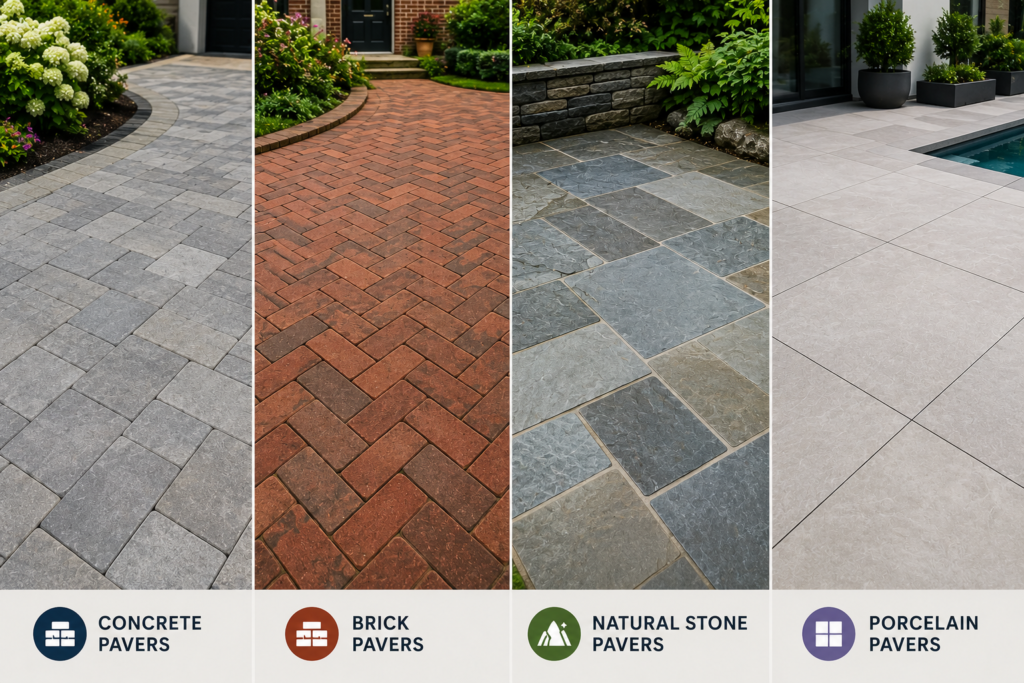
Concrete Pavers
Concrete pavers are one of the most popular choices for residential driveways, patios, and walkways in New York. They’re durable, affordable, and come in a huge range of colors and styles.
Average lifespan: 25–50 years
Concrete pavers are manufactured under controlled conditions to achieve high compressive strength, making them tougher than poured concrete slabs. They handle heavy loads well, making them a solid choice for driveways. Over time, they can fade slightly in color, but structurally, they hold up very well.
Brick Pavers
Brick pavers have a classic look that works beautifully in both traditional and modern settings. They’re made from fired clay, which gives them a natural durability that’s hard to beat.
Average lifespan: 50–100 years
Brick pavers are extremely long-lasting. In fact, many historic New York streets are still paved with original clay bricks from the 19th and early 20th centuries. They’re naturally resistant to fading and can look even better as they age. The main vulnerability with brick is that it can be slightly more porous than concrete, which means sealing is important in freeze-thaw climates.
Natural Stone Pavers
Natural stone, such as bluestone, granite, travertine, slate, and flagstone, is the premium option. These pavers are quarried directly from the earth and, when properly maintained, can literally last for centuries.
Average lifespan: 50–100+ years
Granite pavers, for example, are virtually indestructible under normal use. Bluestone is extremely popular in New York for patios and walkways because it handles the climate well and has that timeless look. Travertine and slate are more porous and require more attention, but they’re still exceptional performers over the long run.
Porcelain Pavers
Porcelain pavers are a newer option that has been gaining popularity fast, especially for pool decks and modern outdoor spaces.
Average lifespan: 30–50+ years
Porcelain is incredibly dense, non-porous, and resistant to staining, fading, and frost damage. They’re a great choice for low-maintenance applications, though they can be more challenging to repair if cracked, since matching exact tiles later can be difficult.
Factors That Affect Paver Longevity
Knowing the average lifespan is just the starting point. The actual lifespan of your pavers depends on several key factors. Let’s walk through each one.
1. Installation Quality
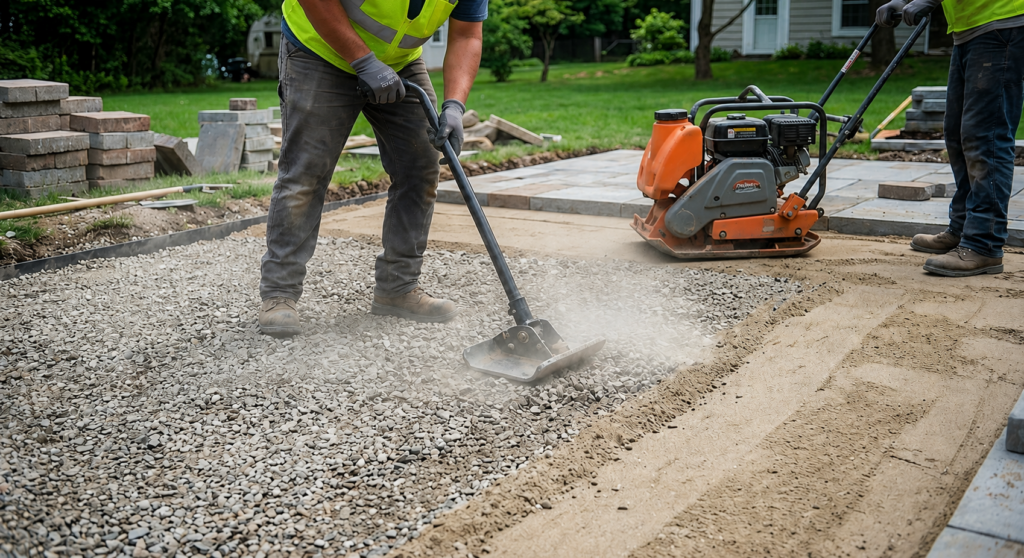
This is the single biggest factor, and it’s one that many homeowners underestimate.
Even the best pavers will fail prematurely if they’re not installed correctly. Proper installation involves:
- Excavating to the right depth, usually 6 to 12 inches, depending on the application
- Compacting a solid base, typically crushed stone or gravel, well compacted in layers
- Laying a bedding sand layer, usually 1 inch of coarse sand, screeded level
- Proper edge restraints to prevent the pavers from spreading or shifting over time
- Correct joint sand to lock pavers in place and resist weed growth
When any of these steps are rushed or skipped, you’ll see problems within 5 to 10 years, settling, heaving, cracking, and water pooling. A quality installation by an experienced hardscaping contractor is always worth the investment.
“The lifespan of pavers comes down to three things: the base, the base, and the base. Get the foundation right, and the pavers on top will take care of themselves for decades.” Mike Ferrara, Master Hardscape Installer with 25+ years of experience in the New York tri-state area
2. Drainage
Poor drainage is the silent killer of paver installations. When water pools beneath or around pavers, especially in a freeze-thaw climate like New York, it causes the base to shift, heave, and crack.
Good drainage means the surface is sloped slightly (typically 1/8 to 1/4 inch per foot) away from structures, and that the base material allows water to percolate through or redirect it safely away.
3. Traffic and Load
A residential patio sees very different wear than a commercial driveway or a loading dock. Pavers for high-traffic or heavy-load applications need a deeper base and potentially a thicker paver to handle the stress.
For driveways specifically, look for pavers rated for vehicular traffic, typically at least 2 3/8 inches thick for concrete pavers, and with a base depth of 8 to 12 inches of compacted aggregate.
4. Sealing
Sealing your pavers protects them from moisture penetration, UV fading, staining, and the freeze-thaw cycle. It’s one of the most cost-effective things you can do to extend paver lifespan.
Most pavers benefit from sealing every 3 to 5 years, depending on the product and the level of exposure.
5. Maintenance Habits
Regular sweeping, occasional cleaning, and prompt attention to any settling or cracking all add years to a paver installation. Pavers that are neglected for years on end, with weeds growing through joints, stains left untreated, and cracked pieces ignored, will deteriorate much faster.
How New York Weather Impacts Pavers
Living in New York comes with some very specific challenges for outdoor hardscaping. The climate here isn’t exactly forgiving.
The Freeze-Thaw Cycle
This is the big one. New York typically experiences dozens of freeze-thaw cycles every winter, days or weeks where temperatures drop below freezing at night and rise above it during the day. Water that has infiltrated cracks or pores in the pavers expands when it freezes, creating internal pressure that can chip, crack, or pop pavers out of place.
This is why:
- Sealing is critical in New York (it reduces moisture absorption)
- Proper drainage is non-negotiable
- High-quality base installation matters even more here than in warmer climates
Salt and De-Icing Chemicals
Sodium chloride (rock salt) and many commercial de-icers can be harsh on concrete pavers specifically, causing surface spalling and deterioration over time. If you use de-icers on your driveway or walkway, opt for paver-safe products, such as magnesium chloride and calcium magnesium acetate (CMA), which are gentler options. Sand is also a good non-damaging traction alternative.
Natural stone and brick pavers tend to handle salt slightly better than concrete, but sealing still helps protect them all.
Summer Heat and UV
New York summers can be hot and sunny, and prolonged UV exposure will fade the color of concrete pavers over time. Sealing with a UV-protective sealer helps preserve the original appearance longer.
Heavy Rain and Runoff
Spring rains and summer storms can be intense in the New York area. Without proper drainage, this water can erode joint sand, undermine the base, and cause pavers to shift or settle unevenly.
Signs Your Pavers Need Repair or Replacement
Knowing when to act is important. Catch problems early, and a simple repair is all you need. Wait too long, and you’re looking at a full reinstallation.
Watch for these warning signs:
Minor issues (repair now):
- Weeds growing through paver joints
- Sand washing out from between pavers
- A few individual pavers are cracking or chipping
- Surface staining that won’t clean off
- Slight color fading
Moderate issues (address soon):
- Multiple pavers settling or becoming uneven
- Visible heaving in sections of the surface
- Water pools on the surface after rain
- Large cracks or breaks in several pavers
Major issues (consider full reinstallation):
- Widespread heaving, settling, or unevenness across the surface
- The base has clearly failed, pavers rock when you step on them
- Structural damage from root intrusion
- Installation over 30+ years old with years of deferred maintenance
If you’re seeing any of the moderate or major signs, it’s worth calling a professional hardscaping contractor for an assessment. (See our guide on paver repair vs. replacement to help you decide.)
Step-by-Step Guide to Extend Paver Lifespan
Whether your pavers are brand new or a few years old, these steps will help you get maximum life out of your investment.
Step 1: Inspect Your Pavers at Least Once a Year
Walk your paved surfaces each spring after the winter thaw. Look for:
- Cracked or broken pavers
- Settled or uneven sections
- Gaps where joint sand has washed out
- Weeds are starting to grow through the joints
- Stains or discoloration
Early detection means easy, inexpensive fixes.
Step 2: Clean Your Pavers Regularly
At a minimum, sweep your pavers regularly to remove debris, leaves, and dirt. Organic material left sitting on pavers can cause staining and encourage moss and algae growth.
For deeper cleaning, use a garden hose or a gentle pressure washer. Avoid high-pressure settings that can erode joint sand. For stubborn stains, oil, rust, or organic use cleaners specifically formulated for pavers. Never use bleach or harsh acid-based cleaners, as they can damage the sealer and discolor the pavers.
Step 3: Re-Sand the Joints
Over time, joint sand gets washed out by rain or eroded by foot traffic. This is normal and easy to fix.
Use polymeric sand to refill the joints. Unlike regular sand, polymeric sand contains a binding agent that activates when wet, locking the sand in place and resisting weed growth and ant invasion. This is one of the most impactful maintenance steps you can take.
To re-sand:
- Sweep the surface clean
- Pour polymeric sand over the pavers
- Sweep it into the joints until they’re filled to just below the chamfered edge
- Blow off excess sand with a leaf blower
- Mist with water to activate the binding agent
Step 4: Replace Damaged Pavers Promptly
Don’t let cracked or broken pavers sit. A single cracked paver doesn’t look like a big deal, but water can infiltrate through the crack and damage the base beneath it, leading to further settling and more damage around it.
The beauty of pavers is that individual pieces can be removed and replaced without disturbing the rest of the surface. Keep a few extra pavers from your original installation (ideally, same lot number for color matching) for easy future repairs.
Step 5: Apply a Quality Paver Sealer
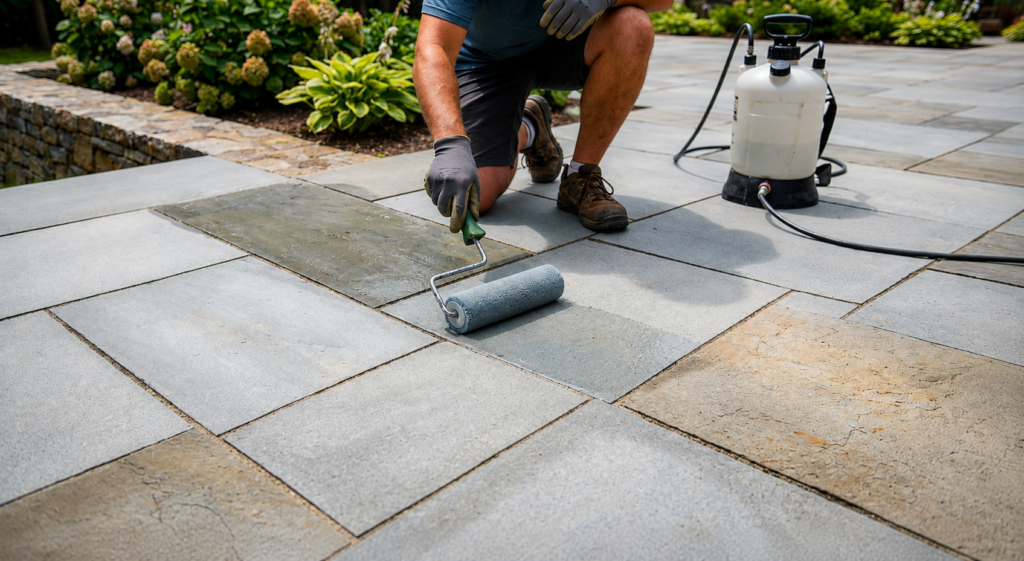
Sealing is one of the smartest investments you can make in your pavers’ longevity. A good sealer:
- Reduces moisture absorption (critical for freeze-thaw protection)
- Protects against staining from oil, grease, and organic matter
- Slows UV fading
- Helps lock polymeric joint sand in place
- Makes future cleaning much easier
Sealing schedule:
- New pavers: Wait 30–90 days after installation (to allow the pavers to cure and the joint sand to fully set)
- After that: Reseal every 2–5 years, or when water stops beading on the surface
Choose a sealer appropriate for your paver type. There are different formulas for concrete, natural stone, and porcelain. Matte and wet-look finishes are both popular, so pick the look you prefer. (Check out our paver sealing guide for a full product comparison.)
Step 6: Manage Drainage and Water Flow
Check that your paved surface still drains properly. If you’re seeing puddles forming on the surface after rain, something has changed; either the surface has settled and lost its slope, or the drainage pathway is blocked.
Clear any clogged drains or channels. If the surface itself has settled, it may need to be lifted, the base re-leveled, and re-laid to restore proper drainage.
Step 7: Control Weeds Before They Take Over
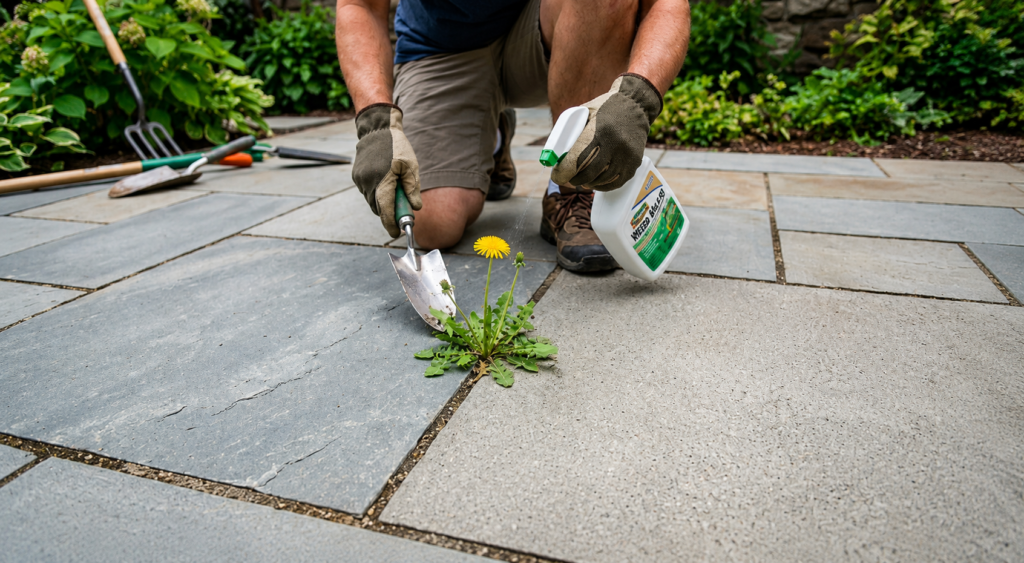
Weeds are more than an aesthetic problem; their roots can work their way under pavers, causing lifting and cracking. Address weeds early.
Options include:
- Polymeric sand in the joints (first line of defense)
- Spot treatments with a weed killer (use carefully around pavers, spray on a calm day to avoid runoff)
- Hand pulling when weeds are young
Avoid using a pick or screwdriver to dig out weeds, as you can displace the joint sand and scratch the paver surface.
Maintenance Best Practices at a Glance
| Task | Frequency | Notes |
| Sweeping | Weekly or as needed | Remove debris and organic material |
| Light washing | Monthly or seasonally | Garden hose or gentle pressure wash |
| Deep cleaning | 1–2x per year | Use paver-appropriate cleaners |
| Inspect for damage | Every spring | Look for cracks, settling, and weed growth |
| Re-sand joints | As needed (every 2–5 years) | Use polymeric sand |
| Seal pavers | Every 2–5 years | After cleaning and joint repair |
| Replace broken pavers | As soon as noticed | Prevents base damage from spreading |
| Check drainage | Every spring and fall | Clear blockages promptly |
How long do pavers last on a patio?
Patio pavers typically last 25 to 50 years for concrete and 50 to 100+ years for brick or natural stone, assuming proper installation and regular maintenance. With the right care, cleaning, sealing, and upkeep, many paver patios outlast the structures they surround.
How long do concrete pavers last?
Concrete pavers last an average of 25 to 50 years. High-quality concrete pavers with a solid base, proper drainage, and regular sealing can reach the upper end of that range and beyond. Freeze-thaw cycles in New York can reduce the lifespan of the pavers if they are not sealed.
How long do brick pavers last?
Brick pavers made from fired clay can last 50 to 100 years or more. Historic examples of clay brick paving throughout New York City attest to their exceptional longevity. They do best when sealed and when joints are maintained with polymeric sand.
How long do natural stone pavers last?
Natural stone pavers like granite can last 100 years or more. Softer stones like travertine and slate have a more modest lifespan of 30 to 50 years, but can exceed that with diligent maintenance and protective sealing.
Do pavers last longer than concrete?
Yes, in most cases, pavers last significantly longer than poured concrete slabs. Poured concrete typically lasts 20 to 30 years before needing major repair or replacement. Pavers last 25 to 100+ years, depending on material, and damaged sections can be replaced individually rather than requiring full reinstallation.
Final Thoughts
So, how long do pavers last? The honest answer is: longer than almost any other outdoor paving option if you choose the right material, invest in quality installation, and stay on top of basic maintenance.
In New York’s demanding climate, that maintenance piece matters more than anywhere. Sealing your pavers before winter, replacing joint sand when it erodes, and catching small problems before they become big ones are all habits that can double or even triple the effective lifespan of your paved surfaces.
Pavers aren’t just a surface. They’re an investment in your property’s curb appeal, functionality, and long-term value. With the right care, a paver patio or driveway installed today can easily still be going strong when your grandchildren are using the backyard.
Ready to Install Pavers That Last for Decades?
Don’t leave your paver installation to chance. Whether you’re planning a new patio, driveway, pool deck, or commercial hardscape project in the New York area, our team of professional hardscaping experts is here to help.
We specialize in:
- Residential and commercial paver installation
- Paver repair and restoration
- Professional paver sealing and maintenance
- Complete hardscaping design and construction
We’ve been serving homeowners and commercial property owners throughout New York, including Westchester, Long Island, Nassau County, and the five boroughs with quality hardscaping work that’s built to last.
Call us today for a free estimate or fill out our online contact form, and one of our hardscaping specialists will be in touch within 24 hours.
Don’t settle for surfaces that crack, fade, and fail. Invest in pavers done right and enjoy them for a lifetime.