How Long Does Concrete Take to Cure? A New York Contractor Explains
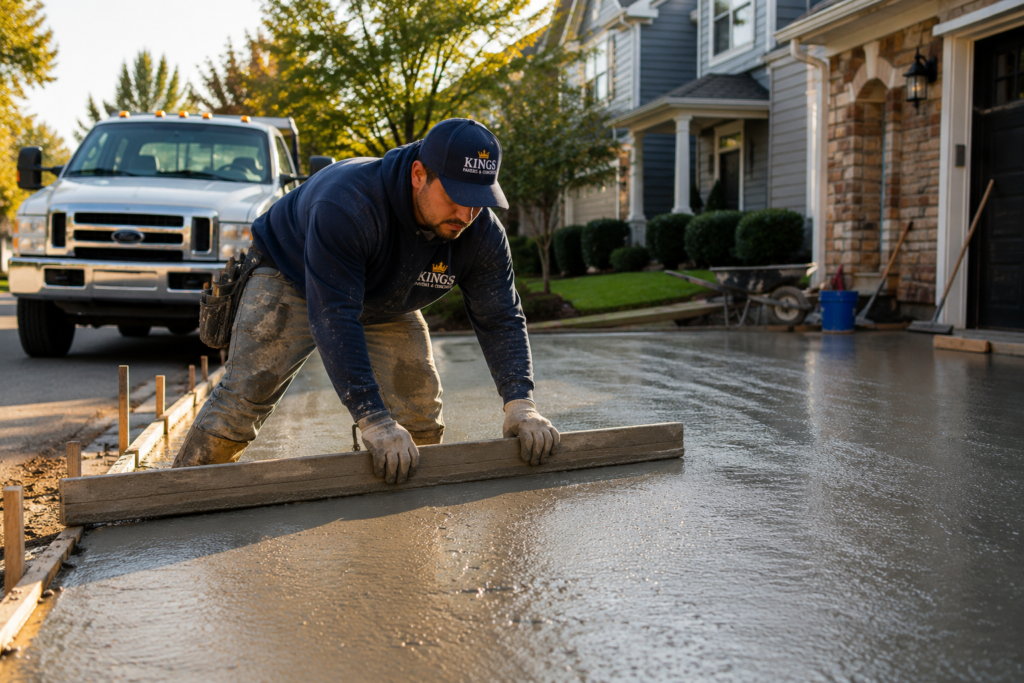
Every single customer I’ve ever worked with asks the same question the moment we finish a pour: “So when can I use it?” I get it. You’ve just invested real money into a new driveway, patio, or sidewalk, and you want to start enjoying it. But rushing the curing process is one of the most common and most damaging mistakes a homeowner can make. After more than 20 years pouring concrete across New York, I’ve seen what happens when people ignore this part. Cracked driveways. Tire ruts—completely avoidable surface damage. And I’ve also watched plenty of homeowners do it right and end up with a slab that lasts for decades. So let me walk you through exactly how long concrete takes to cure, what the milestones mean, and what you should and shouldn’t do at each stage. How Long Does Concrete Take to Cure? The short answer: concrete reaches about 70% of its full strength within 7 days and hits its full design strength at 28 days. But it doesn’t just stop there; concrete actually continues to gain strength very slowly for years after that. That said, “full strength” at 28 days is what engineers and contractors design for. That’s the number on the spec sheet, and it’s the threshold that matters for practical purposes. Here’s a breakdown of what’s happening at each stage: Time After Pour Concrete Strength What Happens Recommended Use 24 Hours ~16% Surface firms up No foot or vehicle traffic 48 Hours ~25% Slab holds a light load Light foot traffic only, carefully 7 Days ~70% Most strength reached Normal foot traffic; avoid heavy loads 14 Days ~85% Nearing full strength Light vehicles OK on residential 28 Days ~99% Full design strength All normal traffic and loads One thing I always tell customers: the 24-hour mark feels like a long time when you’re waiting, but it’s nothing compared to what happens if you drive on it too soon. I’ve seen a delivery truck park on a 4-day-old driveway and leave ruts that didn’t come out. The homeowner had to rip it up and start over. Concrete Drying vs Concrete Curing This is the part most people get wrong, and it’s worth taking a minute to explain. Drying and curing are not the same thing. Drying means the water is evaporating out of the mix. Curing is a completely different process; it’s a chemical reaction called hydration, where the water actually bonds with the cement particles to create a hard, strong material. Here’s the confusing part: you actually need moisture to cure properly. If concrete dries out too fast, it doesn’t finish curing, and you end up with a weaker slab. I always use this analogy with customers: imagine trying to bake a cake, but the oven turns off halfway through. The outside might look done, but the inside isn’t. That’s what happens when concrete dries too fast without curing. Concrete can look and feel dry on the surface within 24 to 48 hours. A lot of people see that and think it’s ready. It’s not. The chemical process happening below the surface takes weeks, and that’s what actually gives the concrete its strength. What Affects Concrete Curing Time? Not every pour cures the same way. New York weather throws all kinds of variables at us: brutal winters, humid summers, and everything in between. Here are the main factors that will affect how quickly (or slowly) your concrete cures. Factor Speeds Up Curing Slows Down Curing Temperature Warm (70–80°F ideal) Cold below 50°F or heat above 90°F Humidity Moderate humidity Very low humidity (dries too fast) Wind None High wind (pulls moisture out) Mix Design Normal water-cement ratio Too much water was added on-site Slab Thickness Thinner slabs cure faster Thick slabs take longer throughout Temperature: Ideal curing happens between 50°F and 85°F. Once you drop below 40°F, the hydration process slows dramatically. Below 32°F, it can stop entirely or, worse, the water in the mix can freeze and cause permanent damage before the concrete has a chance to gain strength. Summer heat above 90°F creates the opposite problem: the surface can dry out too fast before curing finishes. Humidity: High humidity is actually your friend during curing. Low humidity, especially combined with wind, pulls moisture out of the surface faster than the concrete can handle. Wind: Wind is a concrete contractor’s enemy during a pour and during the early curing phase. I’ve seen hot, dry, windy days in New York cause more surface cracking than anything else. We take wind speed seriously when we plan a pour. Mix Design: The water-to-cement ratio in the mix matters enormously. Sometimes workers on a job site add water to make the mix easier to work with. Every extra gallon of water reduces the final strength. I don’t allow that on my jobs. Slab Thickness: A 4-inch driveway slab cures differently than a 12-inch foundation wall. Thinner slabs lose moisture faster from both surfaces. Thicker sections retain heat from the hydration reaction longer, which affects curing throughout. When Can You Walk on New Concrete? For most sidewalks, patios, and residential slabs, you can walk on new concrete after 24 to 48 hours but carefully. No running, no dragging heavy items, and definitely no high heels. I’m serious about the heels. They concentrate incredible pressure on a small point and can leave marks in concrete that hasn’t fully set. For commercial jobs or anywhere with heavier foot traffic, I recommend waiting the full 7 days. It’s not just about whether the surface holds; it’s about whether you might be causing micro-damage that shows up months later. With patios, I also tell people to wait before setting up furniture. A patio table dragged across uncured concrete can scratch the surface finish permanently. And if you’re adding any kind of sealer or stain, wait the full 28 days. Applying a sealer too early traps moisture inside and can cause a host of problems. When Can You Drive on New Concrete? This is