Every single customer I’ve ever worked with asks the same question the moment we finish a pour: “So when can I use it?”
I get it. You’ve just invested real money into a new driveway, patio, or sidewalk, and you want to start enjoying it. But rushing the curing process is one of the most common and most damaging mistakes a homeowner can make.
After more than 20 years pouring concrete across New York, I’ve seen what happens when people ignore this part. Cracked driveways. Tire ruts—completely avoidable surface damage. And I’ve also watched plenty of homeowners do it right and end up with a slab that lasts for decades.
So let me walk you through exactly how long concrete takes to cure, what the milestones mean, and what you should and shouldn’t do at each stage.
How Long Does Concrete Take to Cure?
The short answer: concrete reaches about 70% of its full strength within 7 days and hits its full design strength at 28 days. But it doesn’t just stop there; concrete actually continues to gain strength very slowly for years after that.
That said, “full strength” at 28 days is what engineers and contractors design for. That’s the number on the spec sheet, and it’s the threshold that matters for practical purposes.
Here’s a breakdown of what’s happening at each stage:
| Time After Pour | Concrete Strength | What Happens | Recommended Use |
| 24 Hours | ~16% | Surface firms up | No foot or vehicle traffic |
| 48 Hours | ~25% | Slab holds a light load | Light foot traffic only, carefully |
| 7 Days | ~70% | Most strength reached | Normal foot traffic; avoid heavy loads |
| 14 Days | ~85% | Nearing full strength | Light vehicles OK on residential |
| 28 Days | ~99% | Full design strength | All normal traffic and loads |
One thing I always tell customers: the 24-hour mark feels like a long time when you’re waiting, but it’s nothing compared to what happens if you drive on it too soon. I’ve seen a delivery truck park on a 4-day-old driveway and leave ruts that didn’t come out. The homeowner had to rip it up and start over.
Concrete Drying vs Concrete Curing
This is the part most people get wrong, and it’s worth taking a minute to explain.
Drying and curing are not the same thing. Drying means the water is evaporating out of the mix. Curing is a completely different process; it’s a chemical reaction called hydration, where the water actually bonds with the cement particles to create a hard, strong material.
Here’s the confusing part: you actually need moisture to cure properly. If concrete dries out too fast, it doesn’t finish curing, and you end up with a weaker slab.
I always use this analogy with customers: imagine trying to bake a cake, but the oven turns off halfway through. The outside might look done, but the inside isn’t. That’s what happens when concrete dries too fast without curing.
Concrete can look and feel dry on the surface within 24 to 48 hours. A lot of people see that and think it’s ready. It’s not. The chemical process happening below the surface takes weeks, and that’s what actually gives the concrete its strength.
What Affects Concrete Curing Time?
Not every pour cures the same way. New York weather throws all kinds of variables at us: brutal winters, humid summers, and everything in between. Here are the main factors that will affect how quickly (or slowly) your concrete cures.
| Factor | Speeds Up Curing | Slows Down Curing |
| Temperature | Warm (70–80°F ideal) | Cold below 50°F or heat above 90°F |
| Humidity | Moderate humidity | Very low humidity (dries too fast) |
| Wind | None | High wind (pulls moisture out) |
| Mix Design | Normal water-cement ratio | Too much water was added on-site |
| Slab Thickness | Thinner slabs cure faster | Thick slabs take longer throughout |
Temperature: Ideal curing happens between 50°F and 85°F. Once you drop below 40°F, the hydration process slows dramatically. Below 32°F, it can stop entirely or, worse, the water in the mix can freeze and cause permanent damage before the concrete has a chance to gain strength. Summer heat above 90°F creates the opposite problem: the surface can dry out too fast before curing finishes.
Humidity: High humidity is actually your friend during curing. Low humidity, especially combined with wind, pulls moisture out of the surface faster than the concrete can handle.
Wind: Wind is a concrete contractor’s enemy during a pour and during the early curing phase. I’ve seen hot, dry, windy days in New York cause more surface cracking than anything else. We take wind speed seriously when we plan a pour.
Mix Design: The water-to-cement ratio in the mix matters enormously. Sometimes workers on a job site add water to make the mix easier to work with. Every extra gallon of water reduces the final strength. I don’t allow that on my jobs.
Slab Thickness: A 4-inch driveway slab cures differently than a 12-inch foundation wall. Thinner slabs lose moisture faster from both surfaces. Thicker sections retain heat from the hydration reaction longer, which affects curing throughout.
When Can You Walk on New Concrete?
For most sidewalks, patios, and residential slabs, you can walk on new concrete after 24 to 48 hours but carefully. No running, no dragging heavy items, and definitely no high heels. I’m serious about the heels. They concentrate incredible pressure on a small point and can leave marks in concrete that hasn’t fully set.
For commercial jobs or anywhere with heavier foot traffic, I recommend waiting the full 7 days. It’s not just about whether the surface holds; it’s about whether you might be causing micro-damage that shows up months later.
With patios, I also tell people to wait before setting up furniture. A patio table dragged across uncured concrete can scratch the surface finish permanently. And if you’re adding any kind of sealer or stain, wait the full 28 days. Applying a sealer too early traps moisture inside and can cause a host of problems.
When Can You Drive on New Concrete?
This is where I get the most pushback from customers, so let me be direct: do not drive on new concrete for at least 7 days. Ideally, wait the full 14 days before light vehicles, and 28 days before parking heavy trucks, RVs, or anything with significant weight.
Residential passenger cars can typically go on a driveway at the 7-day mark, but I always recommend 10 to 14 days if the schedule allows. Heavy pickups, SUVs, or work vehicles should wait the full 28 days.
Commercial parking areas are a different story. Those are designed to handle repeated heavy loads, and we engineer the mix, thickness, and reinforcement accordingly. Still, you don’t put commercial traffic on new concrete before 28 days. Full stop.
One thing people don’t think about: it’s not just the weight of the vehicle; it’s the turning radius. When a car turns on a concrete surface, it creates shear stress. That kind of lateral force on uncured concrete is worse than the weight alone. Try to drive straight on new concrete for the first several weeks, especially when entering and exiting a driveway.
Step-by-Step Guide to Proper Concrete Curing
Step 1: Protect the Surface
Right after the pour is finished and the bleed water evaporates, the surface needs protection. We typically apply a curing compound or cover the slab with curing blankets or wet burlap. The goal is to keep the surface from drying out too quickly.
In hot or windy weather, this step is non-negotiable. I’ve seen bare concrete surfaces crack within hours of a pour when nobody protected the surface.
Step 2: Maintain Moisture
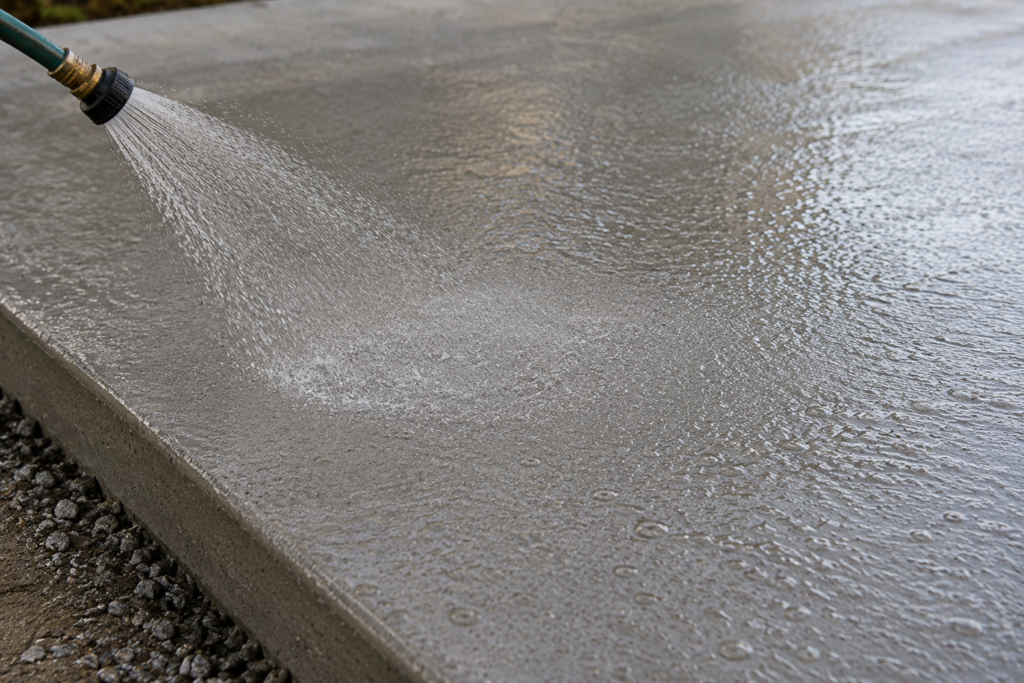
For the first 7 days, the surface should stay moist. If we’re not using a curing compound, we recommend light misting, not soaking, just keeping it damp. In dry New York summers, this matters a lot.
Never let the concrete dry out, and then wet it again repeatedly. Consistent moisture is the goal, not cycles of wet and dry.
Step 3: Avoid Premature Traffic
Keep people, pets, and vehicles off the slab according to the timelines above. Put up barriers, cones, or rope if you have to. I once had a customer’s dog run across a freshly poured patio. We could see the paw prints for the life of that slab. Cute? Sure. But not what anyone paid for.
Step 4: Monitor Weather Conditions
Keep an eye on the forecast for at least the first week. If temperatures are going to drop below 40°F, you need to protect the concrete with insulating blankets. If a heavy rainstorm is coming within the first 24 hours, cover the surface. Heavy rain on fresh concrete can wash out the surface material and create pitting.
Step 5: Follow Contractor Recommendations
Your contractor may have specific guidance based on the mix design, time of year, and site conditions. If they tell you something different from the general guidelines, listen to them. They know what went into that pour.
Common Concrete Curing Mistakes
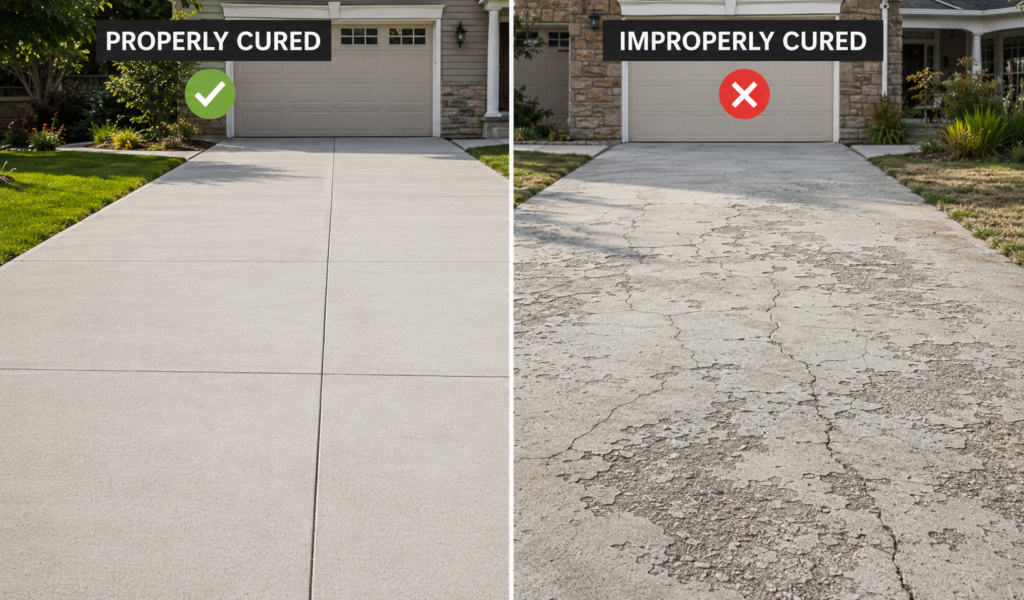
In 20 years, I’ve seen these same mistakes over and over. They’re all avoidable.
Driving Too Soon: A customer of mine called me three days after a driveway install to say her husband “just had to get his pickup truck in the garage.” When I went to look, there were visible ruts from the rear wheels. We ended up resurfacing that section at their expense.
Ignoring the Weather: I once had a homeowner tell me he’d been hosing down his new patio every morning to “keep it wet.” That’s actually not bad in concept, but he was doing it in October in New York, and the runoff was pooling on the surface overnight and freezing. The surface got scaling damage in the first winter.
Failing to Maintain Moisture: The opposite of the above: people who do nothing after the pour. In July heat with a dry breeze, your concrete can develop surface cracks within hours if nobody’s protecting it. A simple spray-on curing compound costs almost nothing and prevents this entirely.
Removing Protection Early: Curing blankets are sometimes removed on day three or four because the homeowner wants to see the finished slab. Understandable, but those extra days of protection make a real difference, especially in cold or windy weather.
Letting Workers Add Water to the Mix: This one happens before the pour, not after, but the effect shows up during curing. Excess water weakens the final product, and there’s no fixing it after it’s poured. I’ve heard stories of some crews doing this to make screeding easier. It’s not something I allow.
How New York Weather Impacts Concrete Curing
New York is genuinely one of the more challenging places to pour concrete, and I mean that in the best way it keeps you sharp. Let me break down what we deal with across the seasons.
Summer Conditions (June–August)
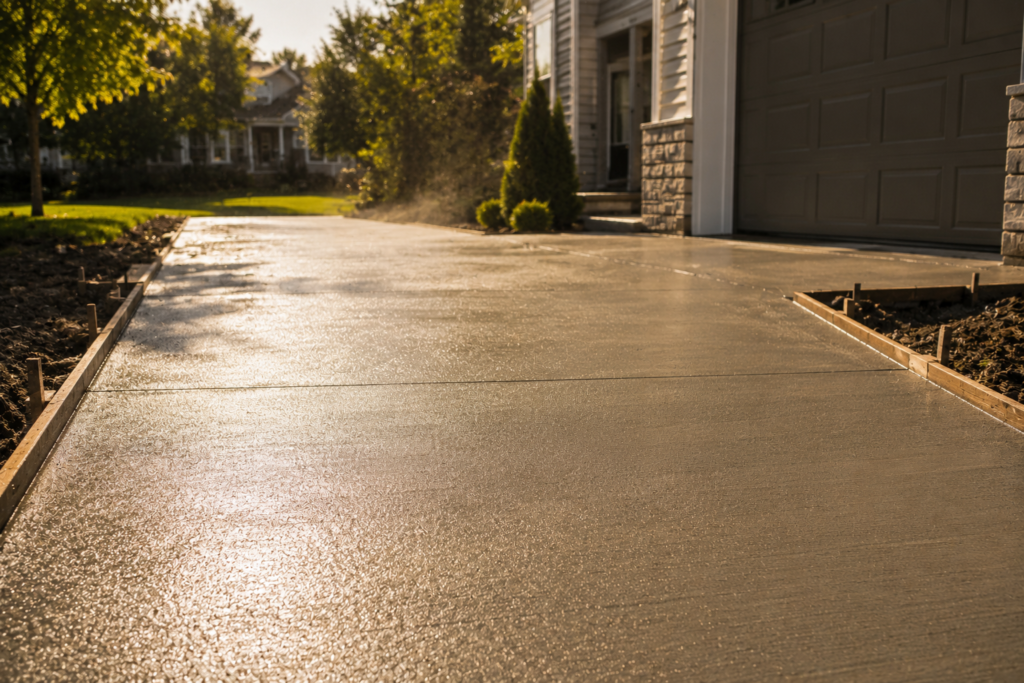
Heat and direct sun are your main enemies. When air temps hit the high 80s or 90s, the surface can dry out before the concrete even finishes bleeding. We sometimes pour very early in the morning to avoid peak afternoon heat, and we always have curing compounds and water on hand.
Humidity actually helps in summer. A muggy New York August slows evaporation, which gives the surface more time to cure properly. The real problem is when you get that combination of heat and low humidity with a breeze; that’s when you have to be on your toes.
Winter Conditions (November–March)
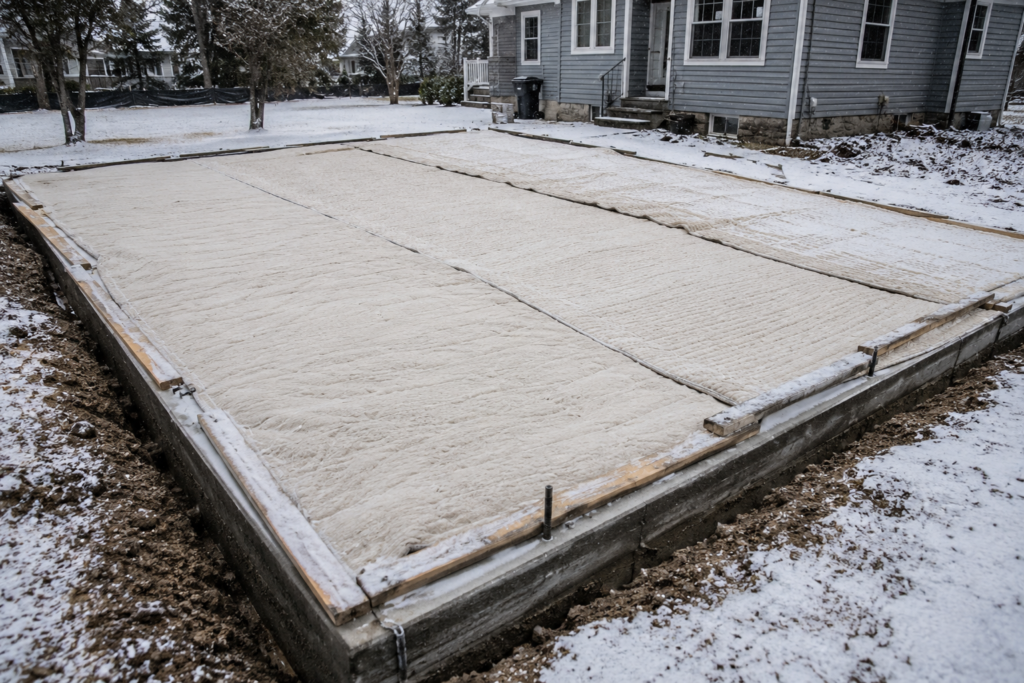
Cold-weather concrete work requires planning. We use heated enclosures, insulating blankets, and sometimes accelerators in the mix to keep the curing process moving. Below 40°F, hydration slows to a crawl. Below freezing, freshly poured concrete is genuinely at risk.
We also deal with chloride exposure in winter; road salt, sidewalk salt, and deicers can attack concrete surfaces. We use air-entrained mixes and surface sealers to fight this, but the curing still needs to be protected.
Rain Concerns
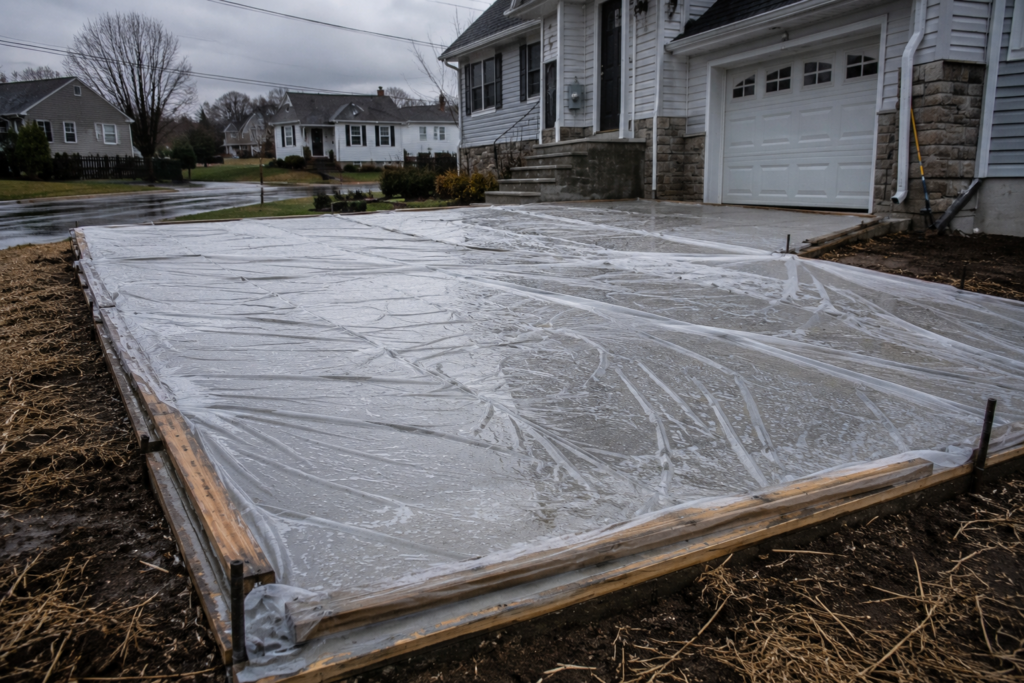
A light rain after the concrete has set (past the initial surface hardening phase) is usually fine. Heavy rain in the first 24 hours is a problem. It can wash out the surface paste and leave a pitted, weakened finish. If rain is in the forecast, we cover the slab with plastic sheeting immediately after finishing.
Freeze-Thaw Challenges
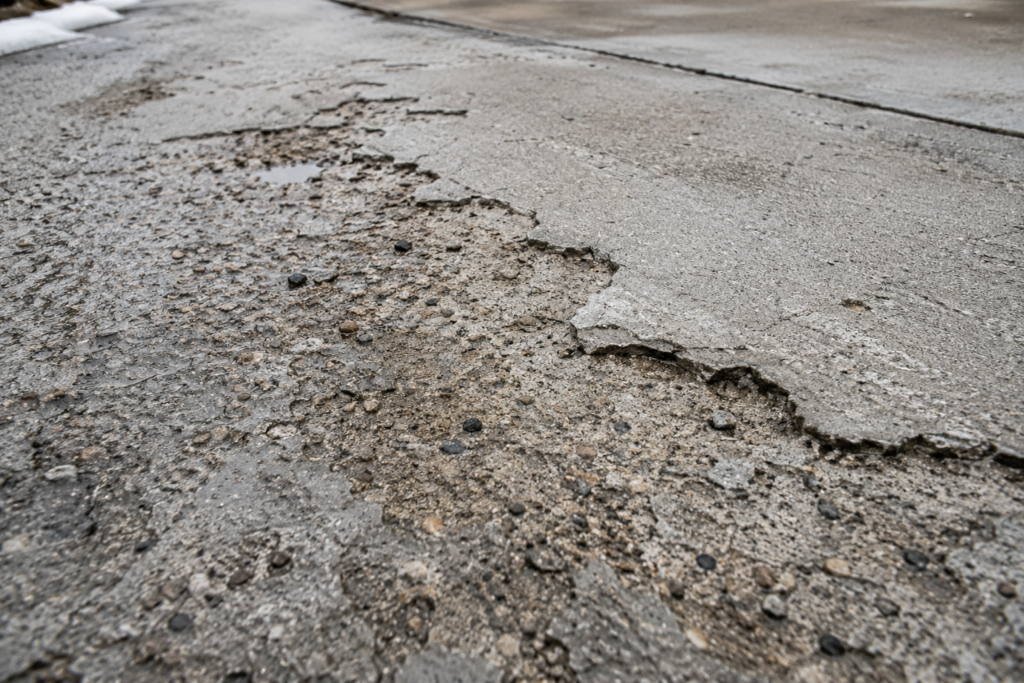
New York’s freeze-thaw cycles are brutal on concrete that wasn’t cured properly. Water gets into microscopic pores, freezes, expands, and causes spalling, the flaking and pitting you see on old driveways and sidewalks. Proper curing and sealing before winter are the best defenses.
Expert Insight
“The biggest mistake I see after a pour is impatience. People think the concrete is done because it looks solid. But the chemistry inside that slab is still working, and if you put stress on it before it’s ready, you’re weakening the final product in ways you might not see for months or even years. Curing isn’t a waiting game; it’s an active part of the installation. The decisions you make in the first 28 days determine how long that slab lasts.”
Senior Concrete Contractor, New York (20+ years of experience)
How to Tell If Concrete Is Properly Cured
You can’t always tell just by looking, but here are some signs you can watch for.
Visual Signs
• Uniform color across the surface (no dark, wet-looking patches)
• No visible shrinkage cracks from rapid drying
• Surface texture is consistent, with no dusting, pitting, or scaling
Surface Condition
• Surface resists scratching from a key or coin (past 7 days)
• No give or flex underfoot when walking across it
• No powdering when you rub the surface
Performance Indicators
• Surface holds up to typical foot traffic without marking
• Vehicle traffic at 28 days leaves no ruts or impressions
• No surface disintegration after the first winter freeze-thaw cycle
Frequently Asked Questions
How long does concrete take to cure?
Concrete reaches about 70% of its full strength at 7 days and its full design strength at 28 days. It technically continues to gain minor strength beyond 28 days, but that’s the practical milestone contractors design around.
Can concrete cure in cold weather?
Yes, but it takes longer and requires extra precautions. Below 40°F, hydration slows significantly. Below 32°F, it can stop, or the mix can freeze before curing. We use insulated blankets, heated enclosures, and cold-weather concrete mixes to manage this. Cold-weather concrete installation should only be done by an experienced contractor.
How long before I can walk on the new concrete?
Wait at least 24 to 48 hours before light foot traffic. For commercial settings or high-traffic areas, wait 7 days. Always avoid dragging items, wearing heels, or anything that concentrates pressure on the surface.
How long before I can park a car on a concrete driveway?
Passenger vehicles: wait at least 7 days, ideally 10 to 14 days. Heavy trucks, SUVs, and work vehicles: wait the full 28 days. Never allow heavy vehicles on concrete earlier than this, regardless of how solid it looks.
Is drying the same as curing?
No. Drying is the evaporation of water from the surface. Curing is a chemical reaction, hydration, that creates the bonds giving concrete its strength. Concrete can appear dry on the surface while still actively curing below. This distinction is why you need to protect concrete from drying out too fast in the first week.
Does rain affect concrete curing?
Heavy rain in the first 24 hours can damage the surface finish by washing out the cement paste. Light rain after the initial set has hardened is generally harmless. If rain is forecasted immediately after a pour, a good contractor will cover the slab with plastic sheeting.
Patience Is Part of the Job
I know waiting is frustrating. You’ve just spent real money on an installation, and you want to use it. But concrete curing is one of those things where patience genuinely pays off, not metaphorically, but in actual years added to the life of the slab.
The first 28 days set the foundation (literally) for everything that follows. Protect the surface, keep it moist, stay off it on schedule, and watch the weather. Do those things, and you’ll have concrete that lasts a generation.
Skip those steps, and you’ll be calling a contractor back a lot sooner than you planned.
If you’re unsure about your specific project, your mix design, or what your local weather means for your curing timeline, ask your contractor. That’s what we’re here for.
Ready to Install Concrete the Right Way?
Whether you’re planning a new driveway, patio, sidewalk, or commercial concrete project in New York, our team brings over 20 years of hands-on experience to every pour. We don’t cut corners on the mix, the finishing, or the curing process because we know the difference shows up years down the road.
Contact us today to schedule a free consultation or get an estimate for your concrete installation project. We serve homeowners, property managers, and commercial clients throughout the New York area.