How to Fix Uneven Sidewalks Safely and Permanently
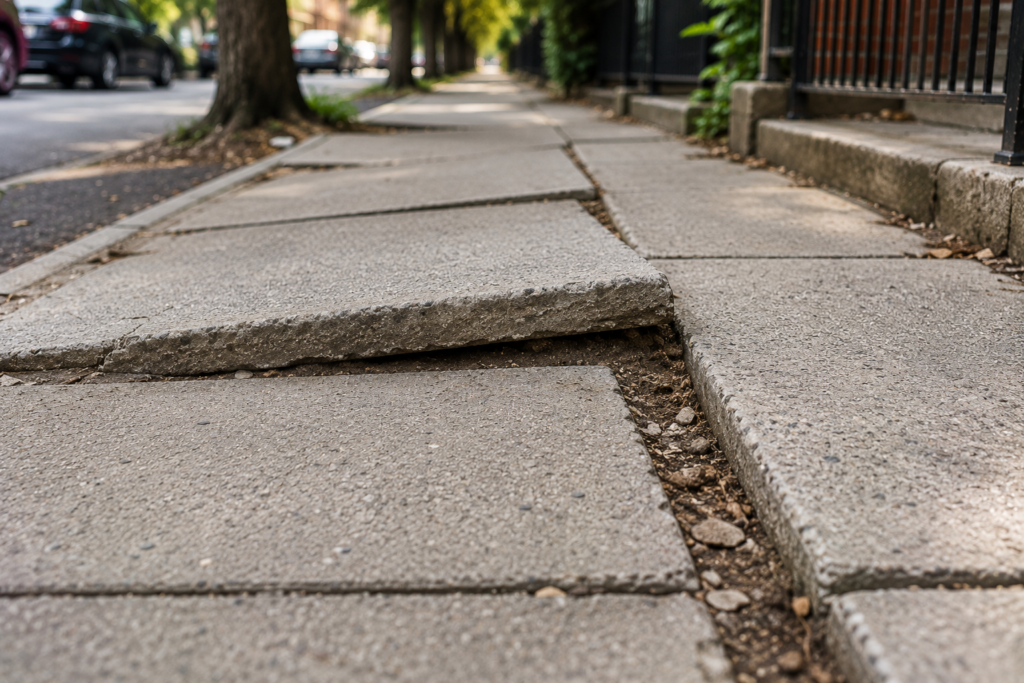
If you’ve ever caught your toe on a raised sidewalk slab or watched someone else nearly take a fall, you already know how dangerous an uneven sidewalk can be. In New York City, this isn’t just a safety concern. It’s a legal one. As a property owner, you’re responsible for the sidewalk in front of your building. That means if someone trips and gets hurt, you could be facing a lawsuit, a DOT violation, or both. And the longer you ignore it, the more expensive the problem gets. The good news? Fixing an uneven sidewalk doesn’t always mean tearing everything up and starting from scratch. In many cases, the right repair method is faster, more affordable, and longer-lasting than you might expect. This guide breaks it all down, what causes uneven sidewalks, how to fix them, and when to call in a professional. What Causes Sidewalks to Become Uneven? Sidewalks don’t just heave and crack for no reason. There’s almost always an underlying cause, and understanding it matters because the right fix depends on what’s driving the problem. Tree roots are the most common culprit in New York City. As roots grow, they push up under the concrete, lifting slabs out of alignment. You’ll often see this in front of older brownstones with large street trees nearby. Soil erosion and settling happen when the ground beneath the slab compresses or washes away over time. This leaves the concrete unsupported and causes it to sink, crack, or tilt. Freeze-thaw cycles are brutal in New York winters. Water seeps into cracks, freezes, expands, and pushes the concrete apart. Do this a few hundred times over the years, and even well-installed sidewalks will start to shift. Poor original installation plays a role, too. If the base wasn’t properly compacted or the concrete mix was substandard, you’ll see premature cracking and movement. Underground utility work, such as water mains, gas lines, and sewers, can disturb the soil and destabilize the slabs above, especially in older neighborhoods. Once you know the cause, you can choose a repair strategy that actually addresses it not just covers it up. The Real Risk: Safety Hazards and New York City Liability An uneven sidewalk isn’t just an eyesore. A half-inch rise between two slabs is enough to catch a foot and send someone to the ground. For elderly pedestrians or people with mobility issues, a fall can mean serious injury. In New York City, property owners are legally responsible for maintaining the sidewalk adjacent to their property under New York City Administrative Code §7-210. If someone trips on a defective sidewalk in front of your building, you can be held liable for their injuries even if the damage was caused by a city tree. The New York City Department of Transportation (DOT) also actively inspects sidewalks and issues violations. If you receive a DOT sidewalk violation, you have a limited window to make repairs, typically 75 days before the city steps in, does the work, and bills you at a premium. Pro Tip: Don’t wait for a violation notice. If you can see a raised edge, a wide crack, or a slab that rocks when you step on it, have it inspected now. Early intervention is almost always cheaper than emergency repair. Step-by-Step Methods for Fixing an Uneven Sidewalk There’s no one-size-fits-all approach to uneven sidewalk repair. The right method depends on how bad the damage is, what’s causing it, and whether you’re looking for a quick fix or a permanent solution. Step 1: Assess the Damage Walk the full sidewalk and look for: Minor issues (small cracks, slight unevenness) can often be repaired. Severe structural damage, deep cracking, significant sinking, and crumbling edges usually mean replacement. Step 2: Identify the Root Cause If tree roots are the problem, simply grinding down the concrete won’t solve anything. The roots will keep growing. You may need to work with the city’s parks department or install root barriers as part of the fix. If the issue is soil erosion, the void underneath needs to be filled before the surface is repaired. Step 3: Choose the Right Repair Method Here are the main options: Concrete Grinding / Trip Hazard Grinding: Best for minor elevation differences (under 1½ inches). A diamond grinder is used to shave down the raised edge, creating a smooth, flush transition between slabs. Fast, affordable, and effective for trip hazard removal, but it doesn’t fix the underlying issue. Slab Jacking / Mudjacking A slurry of cement, soil, and water is pumped beneath a sunken slab to lift it back into position. Works well for slabs that have sunk due to soil erosion. Less invasive than full replacement, but the material can shrink or wash out over time. Polyurethane Foam Lifting: A newer alternative to mudjacking. Expanding foam is injected under the slab to raise it. Lighter, faster-curing, and more durable than traditional slurry. Increasingly popular for commercial properties and high-traffic areas. Full Slab Replacement When a slab is severely cracked, crumbling, or structurally compromised, replacement is the right call. Old concrete is removed, the base is properly prepared, and new concrete is poured. This is the most permanent solution available. Step 4: Repair Cracks and Seal the Surface After leveling, any remaining cracks should be filled with a flexible polyurethane sealant. This prevents water intrusion, which is one of the main causes of future damage. A concrete sealer applied over the surface adds another layer of protection. Step 5: Address the Root Cause Patch the surface, yes, but also deal with what caused the problem. Install root barriers. Improve drainage. Make sure the base is properly compacted. This is what separates a permanent repair from a temporary one. When Is Replacement Better Than Repair? This is one of the most common questions we get. Here’s a simple rule of thumb: Repair makes sense when: Replacement is the better choice when: Trying to patch a slab that’s past its service life is like putting new paint on a rotting