What Is Stamped Concrete? Benefits, Costs, and Is It Worth It?
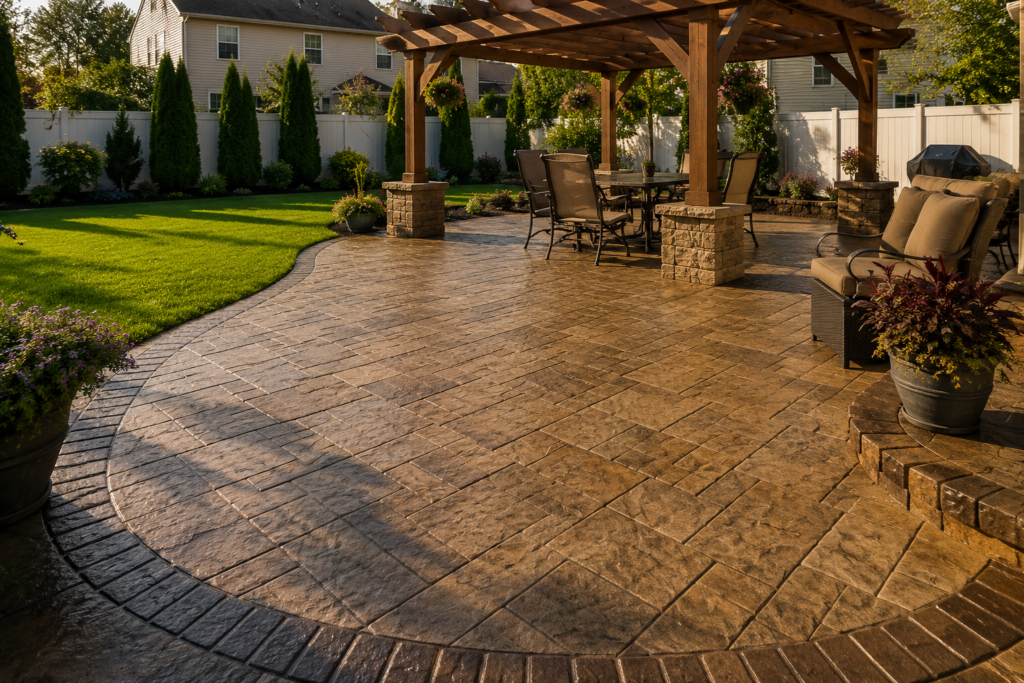
I’ve been pouring and stamping concrete in New York for over twenty years. In that time, I’ve worked on everything from small backyard patios in Queens to sprawling pool decks on Long Island estates. And one question comes up more than almost any other: “What exactly is stamped concrete, and is it worth the money?” It’s a fair question. There’s a lot of information floating around online, some of it accurate, a lot of it not. So let me break it down the way I would if you were standing in my driveway asking me directly. What Is Stamped Concrete? Stamped concrete is regular concrete that’s been textured and colored to look like brick, stone, slate, wood, or other natural materials. The “stamping” part refers to large rubber or polyurethane molds called stamps that get pressed into freshly poured concrete before it hardens. The result is a surface that mimics the look of more expensive materials at a fraction of the cost. It goes by a few other names: decorative concrete, textured concrete, patterned concrete. They all mean the same thing. How It’s Made The process starts with standard concrete, the same stuff used for sidewalks and foundations. What makes stamped concrete different is what happens during and after the pour. Coloring comes first. There are two main ways to add color: Then comes stamping. Once the concrete reaches the right consistency, firm enough to hold an impression but soft enough to stamp, the crew lays the stamp mats across the surface and presses them in using body weight or a tamper. They work fast because timing is everything. If the concrete sets too much, the stamps won’t leave a clean impression. After it cures, the surface gets sealed, a critical step that protects the color, brings out the texture, and keeps moisture from getting in. Common Stamped Concrete Patterns There are dozens of stamp patterns available. Here are the ones I install most often in the New York area: Pattern Type Appearance Best For Ashlar Slate Large, irregular stone tiles Patios, pool decks, walkways Cobblestone Small, rounded stones in a grid Driveways, entryways Brick Classic running bond brick pattern Driveways, walkways, borders Wood Plank Realistic wood grain and boards Covered patios, porches Flagstone Irregular natural stone shapes Patios, garden paths Natural Stone Fieldstone or random rock patterns Patios, retaining walls, steps Herringbone Interlocking diagonal brick pattern Driveways, courtyard areas You can also mix patterns, for example, a flagstone field with a brick border. That’s a popular combination around here, especially on larger patios. Where Can Stamped Concrete Be Used? Stamped concrete works on most horizontal surfaces. Here’s where I see it used most often: Driveways: A stamped concrete driveway instantly changes the look of a home’s exterior. Cobblestone and ashlar slate patterns are popular because they give a high-end look without the cost of real stone or pavers. Just make sure your contractor accounts for expansion joints, driveways experience more stress from vehicle weight and temperature swings than any other surface. Patios. This is probably the most common stamped concrete application. A well-done stamped concrete patio can look like a professionally laid stone patio, but it costs less and has no gaps for weeds to grow through. Walkways, front walkways, and garden paths are great candidates for stamped concrete. A brick or flagstone pattern adds character to what would otherwise be a plain gray slab. Pool Decks Stamped concrete is a good fit around pools because it can be finished with a texture that reduces slip risk. You can also keep the color cooler underfoot than some alternatives. If you’re in New York and you have a pool, this is worth a serious look. Outdoor Kitchens and Entertainment Areas. More homeowners are building outdoor kitchen spaces, and stamped concrete is a natural fit. It handles heat, weather, and foot traffic without issues. Commercial Entrances and Plazas: I’ve done a lot of work on restaurant entrances, retail storefronts, and office building walkways here in New York. Stamped concrete holds up to heavy foot traffic, and it photographs well, which is important for any business that cares about its curb appeal. Benefits of Stamped Concrete Here’s what I tell homeowners when they ask me why they should consider stamped concrete: It looks good. That’s the obvious one. Done right, stamped concrete genuinely does look like natural stone or brick, especially from a normal viewing distance. Visitors often can’t tell the difference until they get close. It costs significantly less than the real thing. Natural bluestone, genuine cobblestone, or high-end pavers can cost two to three times more than a stamped concrete installation. For most homeowners, that difference matters. You have real design flexibility. You’re not limited by what’s available at a stone yard. You can choose your pattern, your color, and your border style. You can match your home’s exterior, your landscaping, or whatever look you’re going for. It’s durable. Concrete is one of the toughest paving materials there is. A properly installed and sealed stamped concrete surface holds up well to New York winters, vehicle traffic, and years of foot traffic. Maintenance is manageable. You’re mainly looking at resealing every two to three years and periodic cleaning. There are no individual pavers to settle and shift, no joints to re-sand every season. It can increase your property’s value. I’ve had homeowners tell me their Realtor noticed the patio or driveway during a listing. An attractive outdoor surface does make an impression on buyers. One thing I always tell people: the benefits only hold if the installation is done correctly. Rushed work, wrong timing during the pour, cheap sealers, any of those things can undermine even the best-looking project. That’s why choosing an experienced stamped concrete contractor matters as much as choosing the right pattern. Stamped Concrete vs Other Materials This comes up constantly, so let me give you a straight comparison. Material Appearance Cost (NY Estimate) Maintenance Lifespan Stamped Concrete Mimics stone, brick, wood $12–$22/sq ft Reseal every 2–3