I’ve been pouring and stamping concrete in New York for over twenty years. In that time, I’ve worked on everything from small backyard patios in Queens to sprawling pool decks on Long Island estates. And one question comes up more than almost any other:
“What exactly is stamped concrete, and is it worth the money?”
It’s a fair question. There’s a lot of information floating around online, some of it accurate, a lot of it not. So let me break it down the way I would if you were standing in my driveway asking me directly.
What Is Stamped Concrete?
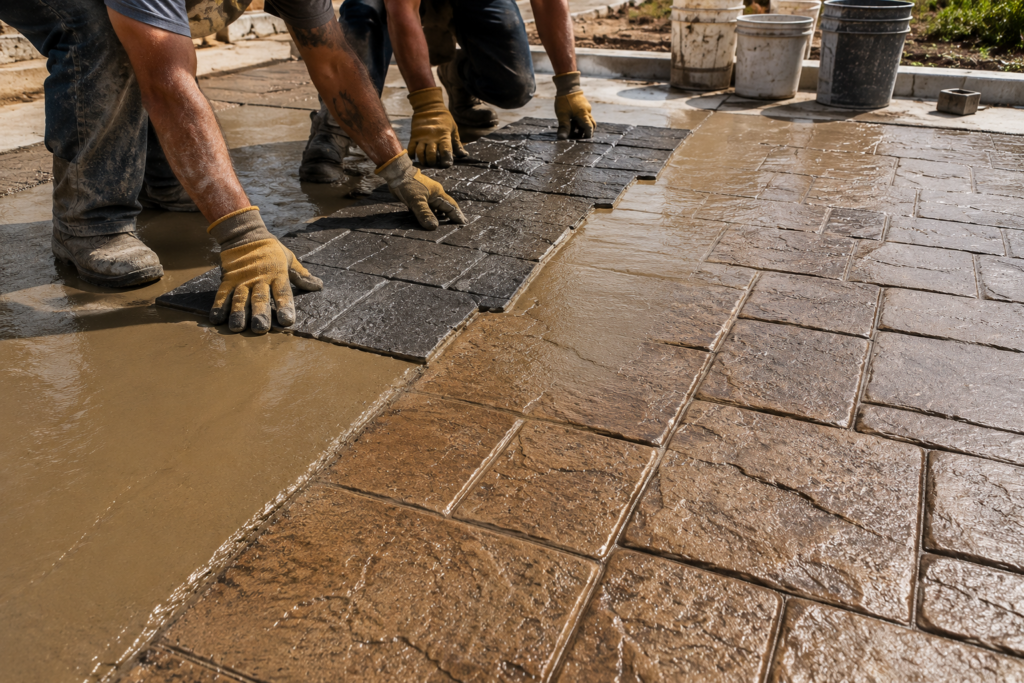
Stamped concrete is regular concrete that’s been textured and colored to look like brick, stone, slate, wood, or other natural materials. The “stamping” part refers to large rubber or polyurethane molds called stamps that get pressed into freshly poured concrete before it hardens. The result is a surface that mimics the look of more expensive materials at a fraction of the cost.
It goes by a few other names: decorative concrete, textured concrete, patterned concrete. They all mean the same thing.
How It’s Made
The process starts with standard concrete, the same stuff used for sidewalks and foundations. What makes stamped concrete different is what happens during and after the pour.
Coloring comes first. There are two main ways to add color:
- Integral color pigment is mixed directly into the concrete before it’s poured. The color runs all the way through, so chips and scratches are less noticeable.
- Color hardener, a powdered pigment, is broadcast across the surface of fresh concrete and worked in. This gives a richer, more vivid color and actually strengthens the top layer. Most contractors use color hardener as the primary color and a separate release agent (a powdered or liquid colorant) to create contrast and depth in the stamp pattern.
Then comes stamping. Once the concrete reaches the right consistency, firm enough to hold an impression but soft enough to stamp, the crew lays the stamp mats across the surface and presses them in using body weight or a tamper. They work fast because timing is everything. If the concrete sets too much, the stamps won’t leave a clean impression.
After it cures, the surface gets sealed, a critical step that protects the color, brings out the texture, and keeps moisture from getting in.
Common Stamped Concrete Patterns
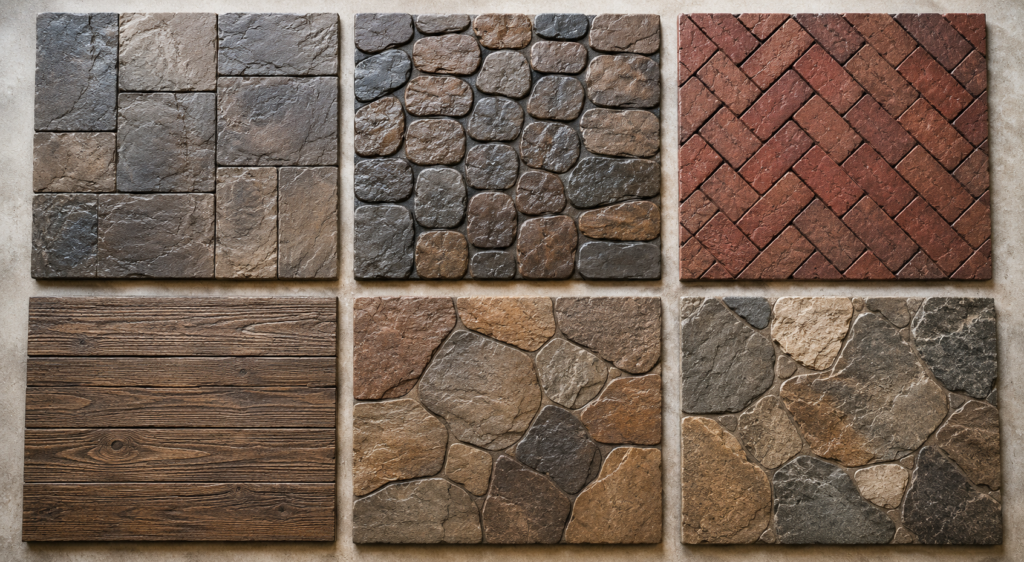
There are dozens of stamp patterns available. Here are the ones I install most often in the New York area:
| Pattern Type | Appearance | Best For |
| Ashlar Slate | Large, irregular stone tiles | Patios, pool decks, walkways |
| Cobblestone | Small, rounded stones in a grid | Driveways, entryways |
| Brick | Classic running bond brick pattern | Driveways, walkways, borders |
| Wood Plank | Realistic wood grain and boards | Covered patios, porches |
| Flagstone | Irregular natural stone shapes | Patios, garden paths |
| Natural Stone | Fieldstone or random rock patterns | Patios, retaining walls, steps |
| Herringbone | Interlocking diagonal brick pattern | Driveways, courtyard areas |
You can also mix patterns, for example, a flagstone field with a brick border. That’s a popular combination around here, especially on larger patios.
Where Can Stamped Concrete Be Used?
Stamped concrete works on most horizontal surfaces. Here’s where I see it used most often:
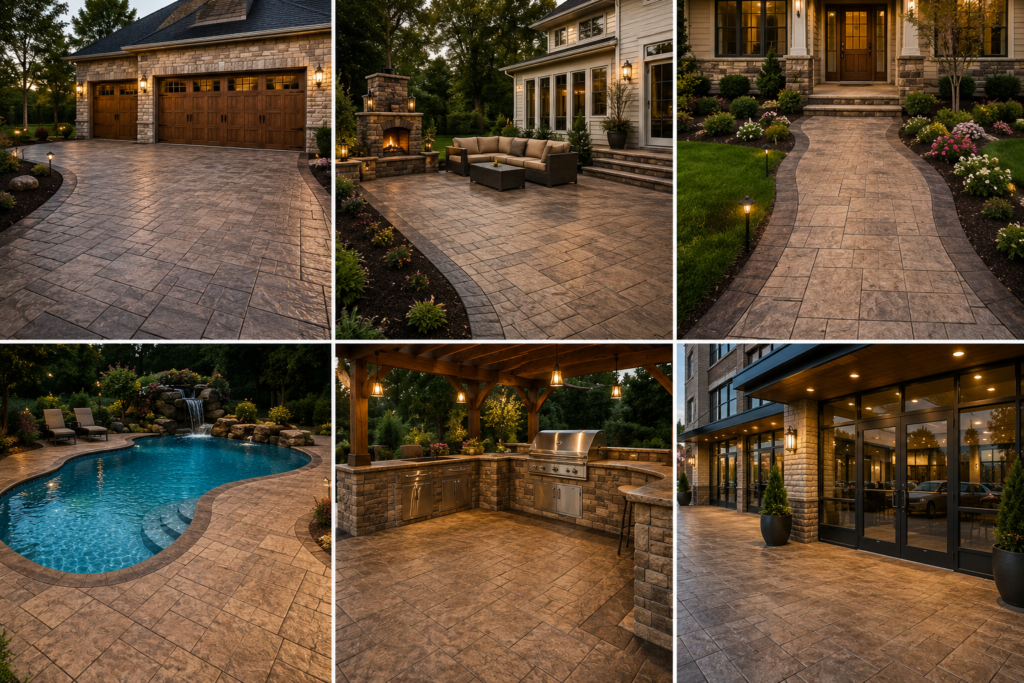
Driveways: A stamped concrete driveway instantly changes the look of a home’s exterior. Cobblestone and ashlar slate patterns are popular because they give a high-end look without the cost of real stone or pavers. Just make sure your contractor accounts for expansion joints, driveways experience more stress from vehicle weight and temperature swings than any other surface.
Patios. This is probably the most common stamped concrete application. A well-done stamped concrete patio can look like a professionally laid stone patio, but it costs less and has no gaps for weeds to grow through.
Walkways, front walkways, and garden paths are great candidates for stamped concrete. A brick or flagstone pattern adds character to what would otherwise be a plain gray slab.
Pool Decks Stamped concrete is a good fit around pools because it can be finished with a texture that reduces slip risk. You can also keep the color cooler underfoot than some alternatives. If you’re in New York and you have a pool, this is worth a serious look.
Outdoor Kitchens and Entertainment Areas. More homeowners are building outdoor kitchen spaces, and stamped concrete is a natural fit. It handles heat, weather, and foot traffic without issues.
Commercial Entrances and Plazas: I’ve done a lot of work on restaurant entrances, retail storefronts, and office building walkways here in New York. Stamped concrete holds up to heavy foot traffic, and it photographs well, which is important for any business that cares about its curb appeal.
Benefits of Stamped Concrete
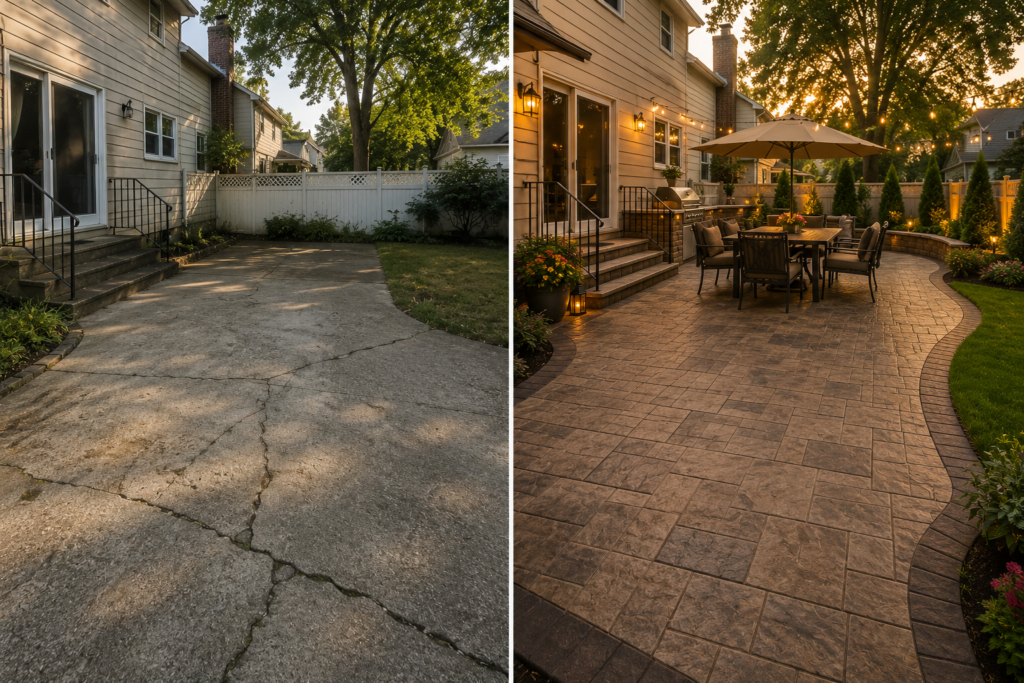
Here’s what I tell homeowners when they ask me why they should consider stamped concrete:
It looks good. That’s the obvious one. Done right, stamped concrete genuinely does look like natural stone or brick, especially from a normal viewing distance. Visitors often can’t tell the difference until they get close.
It costs significantly less than the real thing. Natural bluestone, genuine cobblestone, or high-end pavers can cost two to three times more than a stamped concrete installation. For most homeowners, that difference matters.
You have real design flexibility. You’re not limited by what’s available at a stone yard. You can choose your pattern, your color, and your border style. You can match your home’s exterior, your landscaping, or whatever look you’re going for.
It’s durable. Concrete is one of the toughest paving materials there is. A properly installed and sealed stamped concrete surface holds up well to New York winters, vehicle traffic, and years of foot traffic.
Maintenance is manageable. You’re mainly looking at resealing every two to three years and periodic cleaning. There are no individual pavers to settle and shift, no joints to re-sand every season.
It can increase your property’s value. I’ve had homeowners tell me their Realtor noticed the patio or driveway during a listing. An attractive outdoor surface does make an impression on buyers.
One thing I always tell people: the benefits only hold if the installation is done correctly. Rushed work, wrong timing during the pour, cheap sealers, any of those things can undermine even the best-looking project. That’s why choosing an experienced stamped concrete contractor matters as much as choosing the right pattern.
Stamped Concrete vs Other Materials
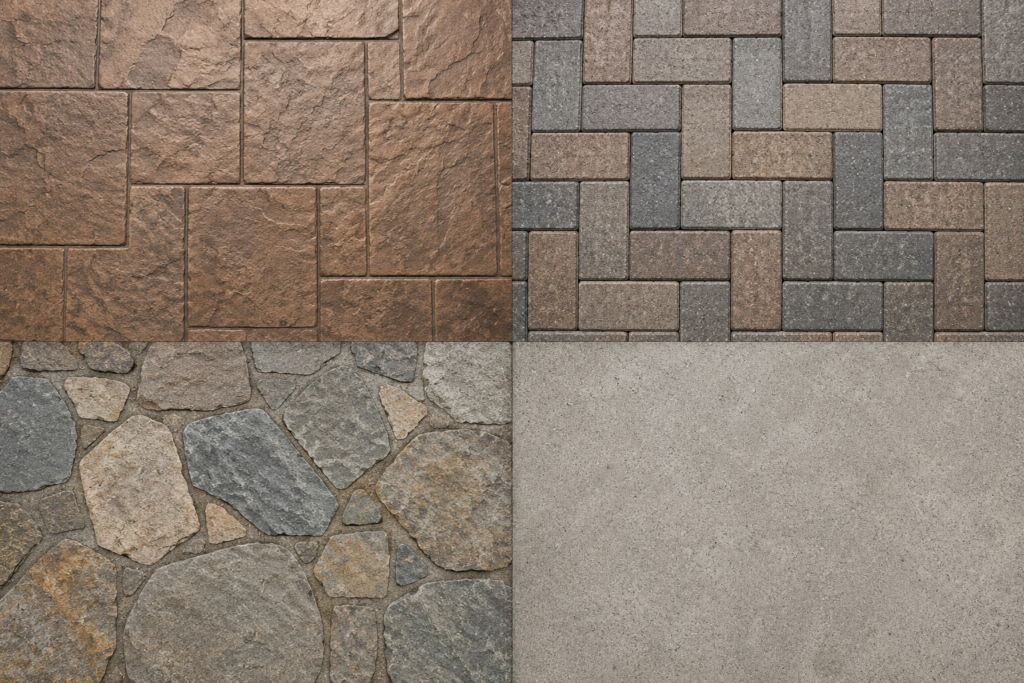
This comes up constantly, so let me give you a straight comparison.
| Material | Appearance | Cost (NY Estimate) | Maintenance | Lifespan |
| Stamped Concrete | Mimics stone, brick, wood | $12–$22/sq ft | Reseal every 2–3 years | 25–30+ years |
| Pavers | Individual units, modular look | $18–$35/sq ft installed | Re-sanding, resetting | 30–50 years |
| Natural Stone | Authentic, unique | $30–$60+/sq ft | Sealing, weed control | 50+ years |
| Standard Concrete | Plain gray finish | $6–$10/sq ft | Minimal | 25–30 years |
| Asphalt | Dark, utilitarian | $4–$8/sq ft | Seal every 3–5 years | 15–20 years |
Stamped Concrete vs Pavers
This is the comparison I get asked about most. Pavers are individual units of brick, concrete, or stone set in a sand or mortar base. They look great. The downside? They shift. Especially in New York, where freeze-thaw cycles are brutal. Roots grow under them, edges heave, and you end up resetting sections every few years.
Stamped concrete is a single continuous slab. It won’t shift. The tradeoff is that if it cracks and any concrete can crack, repairs are more visible than with pavers, where you can swap out individual units.
Stamped Concrete vs Natural Stone
Natural stone is beautiful and extremely durable. It’s also expensive. For a large patio or driveway, the cost difference can be $15,000 to $30,000 or more on a decent-sized project. Stamped concrete gives you a very similar look at a fraction of the cost.
Stamped Concrete vs Standard Concrete
This one’s easy. Same base material, very different result. Standard concrete is gray and plain. Stamped concrete has color, texture, and character. The cost difference is usually $6 to $12 more per square foot for stamped, and most homeowners find it’s worth it.
How Much Does Stamped Concrete Cost?
Pricing varies depending on where you are and what you’re asking for. In New York, costs run higher than national averages. Labor is more expensive here, material delivery costs more, and permitting in some municipalities adds time and fees.
Here’s a realistic breakdown of what affects the final price:
- Project size: Larger projects have lower per-square-foot costs because setup, mobilization, and equipment costs get spread out.
- Pattern complexity: A simple single-stamp pattern costs less than a multi-pattern design with custom borders.
- Color choices: Integral color or a single color hardener is straightforward. Multi-tone coloring with custom accent work costs more.
- Site preparation, removing an existing driveway or patio, grading, or dealing with drainage issues adds cost.
- Subbase work in New York’s freeze-thaw climate, a proper gravel subbase is non-negotiable. If the site needs significant excavation and base preparation, that adds to the total.
- Labor Stamping concrete requires a skilled crew working fast. You’re paying for experience, not just time.
- Sealing is always included in a reputable contractor’s quote. Don’t let anyone talk you into skipping it.
Typical New York Stamped Concrete Pricing
| Project Type | Size | Estimated Cost Range |
| Basic patio (single pattern, 1 color) | 200–400 sq ft | $2,400–$7,000 |
| Mid-range patio (multi-pattern, 2 colors) | 400–600 sq ft | $6,000–$13,200 |
| Large patio or pool deck | 600–1,000 sq ft | $10,000–$22,000 |
| Standard driveway (single car) | 400–500 sq ft | $5,500–$10,000 |
| Large driveway (multi-car) | 800–1,200 sq ft | $12,000–$26,000 |
| Walkway | 100–200 sq ft | $1,500–$4,000 |
Prices are estimates for the New York metro area and surrounding region. Final costs depend on site conditions, design choices, and the contractor.
One thing to watch: if a quote comes in dramatically lower than the range above, ask why. It usually means corners are being cut somewhere, such as thinner concrete, no subbase, bargain sealer, or a crew that’s not experienced with stamped work.
How Stamped Concrete Is Installed
Here’s how the process works from start to finish, in plain English:
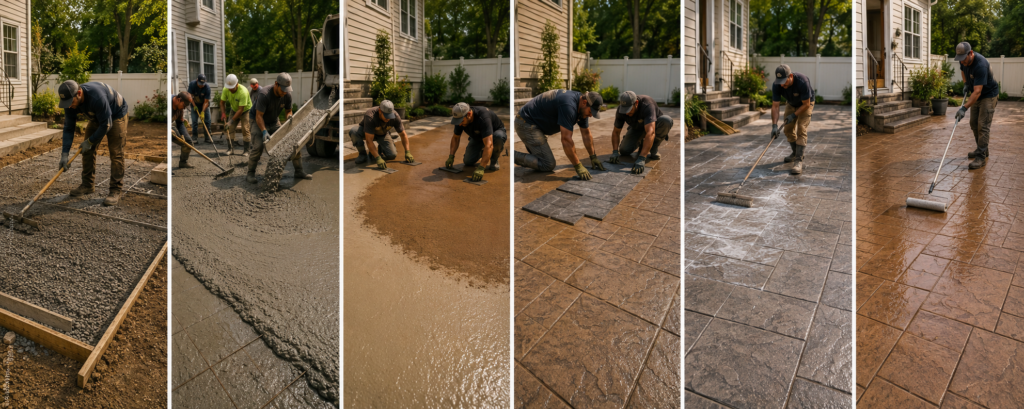
Step 1: Site Preparation We start by removing whatever’s there: old concrete, asphalt, soil. Then we excavate to the right depth, which in New York means going deep enough to lay a solid gravel base that handles freeze-thaw cycles. This step matters more than most people realize. A bad base is the number one reason concrete fails.
Step 2: Formwork Wood or metal forms are set up to define the edges and shape of the slab. This is also when we plan where the control joints go, the lines cut into concrete to control where cracking happens. You want those joints in the right spots, not random cracks across the middle of your patio.
Step 3: Concrete Placement The concrete is poured and spread to an even depth, typically 4 inches for patios and walkways, 5 to 6 inches for driveways that’ll carry vehicle weight. Reinforcement (wire mesh or rebar) gets embedded in the slab at this stage.
Step 4: Coloring. While the surface is still workable, the color hardener is broadcast across it and worked in. Then the release agent, a contrasting powder or liquid, gets applied. The release agent does double duty: it adds the antique, two-tone look that makes stamped concrete look realistic, and it keeps the stamps from sticking to the surface.
Step 5: Stamping. This is the part that looks impressive but requires real skill. The crew lays stamp mats across the surface and presses them in systematically, working across the slab in a pattern so the texture aligns correctly. Everything needs to happen within a narrow window, typically one to two hours, depending on weather conditions. Too early, and the stamps sink too deep. Too late, and you can’t get a clean impression at all. Experienced crews know how to read the concrete.
Step 6: Curing. After stamping, the concrete needs time to cure. We typically wait 24 to 48 hours before doing any finishing work. Depending on the project, curing can take up to 28 days for full strength, though the surface will be walkable within a day or two.
Step 7: Sealing Once the surface is cured, we apply a concrete sealer. This is what brings out the color, locks in the texture, and protects against moisture, staining, and freeze-thaw damage. This step is not optional. Stamped concrete without sealer is stamped concrete waiting to deteriorate.
Common Mistakes Homeowners Make
I’ve seen a lot of stamped concrete projects over the years, including plenty of jobs I got called in to fix after someone else made a mess of things. Here are the mistakes that come up most often:
Choosing the cheapest contractor. I understand budget pressure. But stamped concrete is a skilled trade. The timing during the pour, the pattern alignment, the color consistency, these things take experience to get right. I’ve re-poured jobs that cost homeowners double because the first contractor didn’t know what they were doing.
Skipping the sealer or using the wrong one. Some contractors apply a cheap acrylic sealer that looks great for a season and then turns white and peels. You want a quality solvent-based or water-based penetrating sealer, applied correctly. And you want to reseal every two to three years. I’ve seen beautiful stamped concrete patios turn dull and gray because nobody touched them for ten years.
Poor drainage planning. Water has to go somewhere. If a patio or driveway isn’t properly sloped, water pools, gets under the slab, and causes damage, especially in winter when it freezes. Always make sure your contractor addresses drainage before a single yard of concrete gets poured.
Waiting too long to repair cracks. Small cracks happen. Concrete expands and contracts with temperature. The mistake is ignoring a hairline crack until it becomes a half-inch gap. Catching cracks early and sealing them with a quality concrete repair product costs almost nothing. Waiting until water gets in and damages the subbase? That’s a full replacement conversation.
Choosing a pattern that doesn’t fit the setting. A fine ashlar pattern with a subtle color might look elegant on a Long Island estate. The same pattern on a Brooklyn rowhouse with a 200-square-foot front stoop can look out of place. A good contractor should help you pick a design that fits your property, not just show you the fanciest option in the catalog.
How to Maintain Stamped Concrete
Once it’s installed, stamped concrete doesn’t ask for much. But it does ask for something.
Regular Cleaning: A garden hose and a soft-bristle brush handle most dirt and debris. For tougher stains, a mild concrete cleaner works well. Avoid pressure washers on high settings; they can strip the sealer if you’re not careful.
Resealing. This is the single most important maintenance task. Plan to reseal every two to three years, or when the surface starts to look dull or lose its sheen. In New York, I usually recommend erring toward the two-year end of that range because of our harsh winters. A fresh coat of quality sealer takes a few hours and costs a few hundred dollars, well worth it to protect a multi-thousand-dollar investment.
Winter Care Snow removal is fine with a plastic shovel or a rubber-bladed snowplow. Steel blades can scratch the surface, especially if the sealer is thin. The same goes for snowblowers with metal paddles.
De-Icing Products: Be Careful. This is a big one in New York. Rock salt (sodium chloride) is cheap and widely available, but it’s hard on concrete. It can accelerate surface scaling and degrade the sealer over time. If you need to use a de-icer, look for sand-based traction products or magnesium chloride, which is gentler than rock salt. Calcium chloride is also less aggressive than sodium chloride.
The first winter after installation is the most important time to be careful with. Let the new concrete fully cure before exposing it to any de-icing chemicals, typically 30 days at minimum, but longer is better.
Frequently Asked Questions
What is stamped concrete?
Stamped concrete is concrete that’s been colored and textured with rubber stamp mats to mimic the appearance of materials like brick, stone, slate, or wood. It’s used for patios, driveways, walkways, pool decks, and commercial surfaces.
Is stamped concrete cheaper than pavers?
Generally, yes. Stamped concrete typically costs $12 to $22 per square foot in New York, while pavers run $18 to $35 per square foot or more, depending on the material. The cost difference widens significantly when you’re comparing stamped concrete to natural stone.
How long does stamped concrete last?
A well-installed stamped concrete surface, properly sealed and maintained, typically lasts 25 to 30 years or more. Subbase quality and sealing consistency are the biggest factors in longevity.
Does stamped concrete crack?
All concrete can crack. The goal of a good installation is to control where cracking happens through properly placed control joints, and to minimize the risk through proper subbase preparation and mix design. Stamped concrete is no more prone to cracking than standard concrete and sometimes less so, because decorative contractors tend to be more careful overall.
Can stamped concrete be repaired?
Yes. Cracks can be filled with concrete repair caulk or epoxy. Resealing covers many minor surface issues. Color can be refreshed with concrete stains and dyes. Major structural damage, like a section that’s heaved due to a failed subbase, may require removal and replacement of that area.
Does stamped concrete require sealing?
Absolutely. Sealing is what protects the color, locks in the texture, and prevents water intrusion. Unsealed stamped concrete will fade, stain easily, and deteriorate faster, especially in New York winters. Plan to reseal every two to three years.
Is stamped concrete slippery?
It can be if the sealer is applied too heavily, particularly when wet. Most contractors add an anti-slip additive to the sealer for pool decks and other surfaces where traction matters. A textured stamp pattern also helps. Ask your contractor about slip resistance before they seal the surface.
Is stamped concrete worth the investment?
For most homeowners, yes, particularly when comparing it to natural stone or high-end pavers. You get a similar look at a meaningfully lower cost, with durability that holds up well over time if the installation is done properly. The key is finding a contractor who knows what they’re doing.
Wrapping Up
Stamped concrete isn’t magic. It’s a well-understood product with genuine strengths and real limitations. It costs less than natural stone and pavers. It looks better than plain concrete. It holds up well in New York’s climate when it’s installed correctly and maintained over time.
If you’re thinking about a new patio, driveway, walkway, or pool deck and you want something that looks attractive without the cost of premium materials, stamped concrete deserves a serious look.
The biggest variable isn’t the material. It’s the contractor. A skilled stamped concrete contractor who’s done hundreds of projects in your region will produce a result that looks great and lasts for decades. A contractor who cuts corners on the subbase or rushes the stamping process will produce something that looks fine on day one and causes headaches within a few years.
If you’re in New York and you’re ready to move forward, choose someone with real experience in decorative concrete, not just a general concrete contractor who’s done a few stamped jobs on the side.
Ready to Get Started?
If you’re considering a stamped concrete driveway, patio, pool deck, or walkway in New York, I’d be glad to take a look at your project and give you an honest assessment.
Schedule a Free Consultation or Request a Stamped Concrete Estimate, no pressure, no obligation. I’ll walk you through the options, explain what makes sense for your property, and give you a straightforward quote.