
How to Fix Sunken Pavers in New York and Prevent Them From Sinking Again
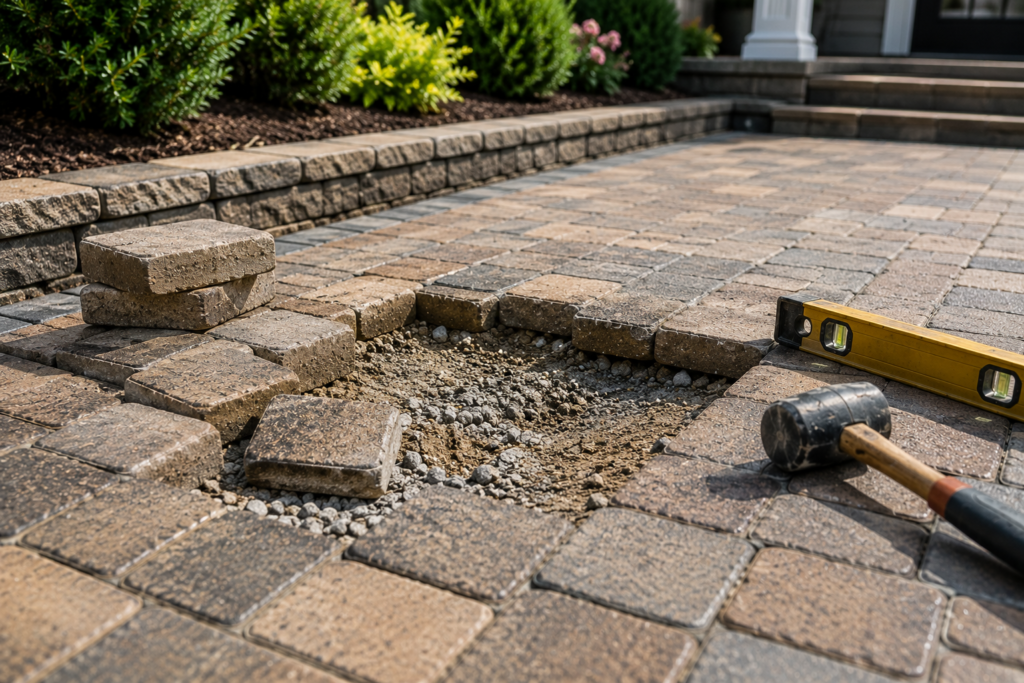
You step onto your patio and one paver rocks under your foot. Or maybe it’s the driveway: there’s a low spot near the garage that fills with water every time it rains, even though the rest of the surface drains fine. If you’ve noticed pavers that have dropped, tilted, or created a dip you can feel when you walk over them, you’re dealing with a settlement problem. It’s worth understanding what’s actually going on underneath before you decide how to fix it. This happens on driveways, patios, and walkways all over New York, and it’s rarely random. Something changed beneath those pavers, and the sunken section is just where it first became visible. Why Pavers Sink in the First Place Pavers themselves are just the surface layer. What holds them in place and what fails when they sink is almost always the material underneath: the compacted base, the bedding sand, and the drainage that’s supposed to move water away from that base instead of through it. A few things cause most of the settlement we see: Here’s the distinction that matters most: the sunken paver is a symptom. The problem is what happened to the material underneath it. Fix the paver without addressing that, and you’re just delaying the same repair. Can Sunken Pavers Be Fixed? In most cases, yes, a single paver or a small cluster that’s dropped can usually be lifted, the base corrected, and the section reset so it sits flush again. This is a normal, expected repair for interlocking pavers, which is part of why they’re used in the first place. Unlike poured concrete, individual units can come out and go back in without redoing the whole surface. Where it gets more complicated is widespread settlement multiple areas sinking, a whole section of driveway that’s gone wavy, or the same spot sinking again after a previous repair. That usually points to a larger drainage or base issue that a bag of polymeric sand isn’t going to solve. In those situations, patching the visible symptom without figuring out the underlying cause tends to be a short-term fix at best. How to Fix Sunken Pavers The general process is the same whether you’re dealing with a patio corner or a driveway low spot, though the scope obviously changes with the size of the problem. Site conditions vary a lot: soil type, how deep the original base was built, what’s causing the water problem, and how large the affected area is all change what the repair actually involves. Severe settlement, standing water that won’t drain, large uneven areas, or anything near a retaining wall or structure is worth having a professional look at before you start digging. Common DIY Mistake: Adding Sand on Top This is probably the most common shortcut, and, understandably, a low paver is annoying, and a bag of sand seems like an easy fix. Spreading sand over a sunken paver, or repeatedly topping off the joints, can make the surface look level again for a little while. It doesn’t touch the actual problem underneath. If the base has a void or the drainage issue that caused the settlement is still there, the same spot will typically sink again, sometimes worse than before, because the added material can wash out along with everything else. If you’ve topped off the same low spot more than once, that’s usually a sign the base needs to be opened up and looked at rather than covered again. How to Prevent Pavers From Sinking Again Prevention mostly comes down to getting the things that failed the first time right, plus paying attention afterward. New York Weather and Paver Settlement New York’s freeze-thaw cycle is a real factor in paver settlement, but it’s not the whole story it tends to make an existing weak spot worse rather than create the problem on its own. Water that’s already gotten into the base from poor drainage or eroded material freezes in winter, expands, and shifts things around. When it thaws, the material doesn’t always settle back evenly, which is why a lot of settlement problems seem to show up or get worse in spring. Heavy spring rainfall adds to this by moving more water through any weak points that opened up over winter. That’s part of why so many settlement calls come in during the first few weeks of warmer weather: the underlying issue was there already, and winter just made it visible. Repair or Reinstall? Condition Likely Approach Why One or two low pavers Localized lift-and-reset Usually an isolated base issue that doesn’t require touching the surrounding area Small, contained depression Lift-and-reset with base correction The affected area is limited, so the fix can stay localized Repeated sinking in the same spot Base and drainage investigation Recurrence usually means the original cause was never addressed Large uneven area Reinstall of that section Widespread movement often points to base failure across the whole area, not just individual pavers Standing water on the surface Drainage correction, then repair Fixing the pavers without addressing water flow tends to repeat the problem Loose or spreading edges Edge restraint repair or replacement Pavers without proper containment shift laterally, which affects everything nearby These are general patterns, not a substitute for someone actually looking at the site. Two driveways with similar-looking sinking can have very different causes underneath. Illustrative Case Example Here’s a scenario that reflects the kind of thing property owners commonly run into. This is a representative example, not a specific past project. A homeowner in a New York suburb notices three pavers near the base of a downspout gradually dropping over the course of a summer. From the surface, it looks like a simple settling issue. Once the pavers are lifted, though, it becomes clear that the downspout has been discharging directly onto the base for years, and the runoff has slowly washed material out from underneath, leaving a shallow void. A repair limited to resetting those three pavers would likely sink again within a