A lot of property owners in New York City are surprised when they find out the city isn’t the one responsible for fixing the sidewalk in front of their building. That confusion is completely understandable. The sidewalk is a public walkway, maintained for public use, but the legal burden of keeping it in good shape falls on you, the property owner.
I’ve been doing sidewalk work in New York City for over 20 years, and the calls I get most often start the same way: “I got a notice in the mail. What does this mean? Do I really have to pay for this?” The answer is almost always yes, and the sooner you deal with it, the better.
This guide walks you through everything you need to know about NYC sidewalk repair: who’s responsible, what violations mean, what it costs, and how to get through the process without it turning into a bigger headache than it needs to be.
Who Is Legally Responsible for Sidewalk Repair in NYC?
Under NYC Administrative Code Section 7-210, the responsibility for maintaining and repairing sidewalks in safe condition falls on the owner of the adjacent property. That’s been the law since 2003, and it applies to most properties across the five boroughs.
What that means in plain terms: if someone trips on cracked or uneven concrete in front of your building, you can be held liable, not the city. And if the NYC Department of Transportation (DOT) inspects your sidewalk and finds defects, it can issue you a violation and require you to fix it within a set timeframe.
Residential vs. Commercial Properties
The rules apply a bit differently depending on your property type. One-to-three family homes that are owner-occupied have some additional protections under the law when it comes to civil liability, but they’re still responsible for making repairs. Commercial properties, apartment buildings, and mixed-use properties carry full responsibility.
Here’s a quick breakdown:
| Property Type | Responsible Party | Common Situations |
| 1–3 family owner-occupied home | Property owner (limited civil liability) | Tree root damage, cracked slabs, frost heaving |
| Multi-family residential | Property owner (full liability) | Settlement, heavy foot traffic wear, and drainage issues |
| Commercial property | Property owner (full liability) | High foot traffic, loading zone damage, utility cuts |
| City-owned property | NYC DOT | Sidewalks adjacent to parks, city buildings |
| Vacant city-owned lots | NYC DOT | Varies by situation |
The one real exception worth knowing: if a city utility company or the NYC DOT itself cuts into your sidewalk for repairs and doesn’t restore it properly, you can potentially get that addressed by filing a complaint with 311. But that’s the exception, not the rule.
Why Sidewalk Repairs Matter
The obvious reason is safety. Cracked or raised concrete is a genuine trip hazard, and New York City sidewalks see a lot of foot traffic. People get hurt.
But beyond the safety issue, there are real financial risks for property owners who let sidewalk damage go unaddressed.
Liability exposure. If someone trips and falls on your damaged sidewalk and files a personal injury claim, you could be looking at high legal costs even if the case is eventually dismissed. Judgments in trip-and-fall cases in NYC can run into six figures.
DOT violations and fines. If the DOT inspects your sidewalk and issues a violation, you’re on the clock to fix it. Ignoring it doesn’t make it go away; it can result in additional penalties and eventually the city doing the work itself and billing you for it (often at a rate much higher than what a private contractor would charge).
Property sales. A sidewalk violation on record can complicate or delay a real estate transaction. Buyers’ attorneys look for open violations during due diligence, and some lenders won’t close until violations are cleared.
Common Sidewalk Problems That Require Repair
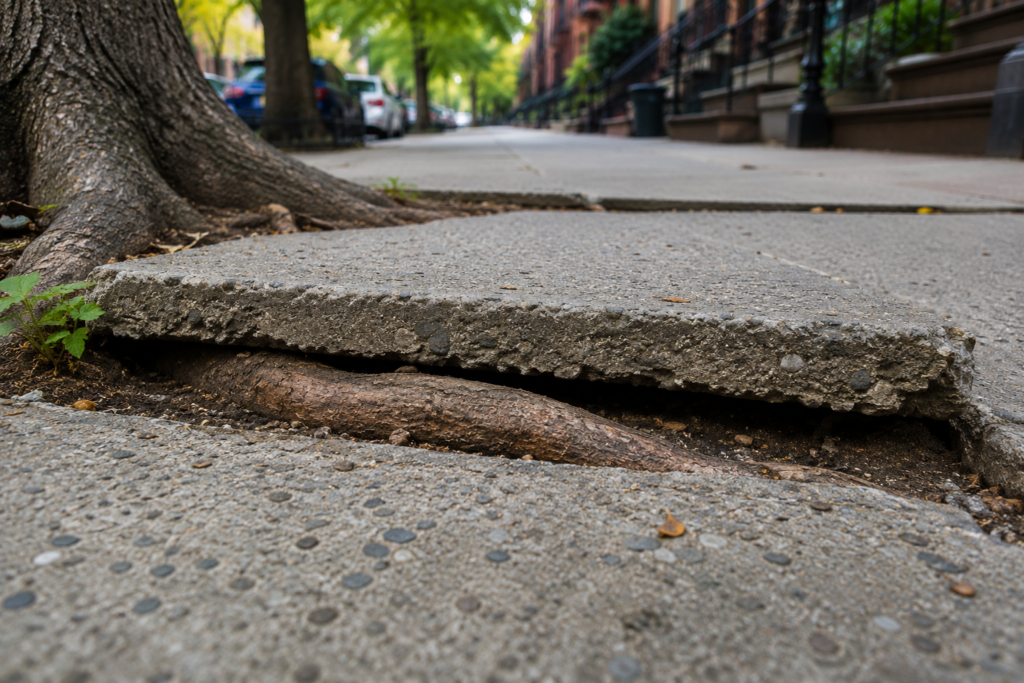
Here’s what I see out in the field regularly:
Cracked concrete. This is the most common issue. Concrete cracks over time from freeze-thaw cycles, settling soil, and normal wear. Minor surface cracks might not trigger a violation right away, but deep or wide cracks that create a trip hazard will.
Uneven slabs. When one slab shifts up or down relative to the next, you get a lip that people can catch their foot on. Even a quarter-inch difference can create a tripping risk, and the DOT takes those seriously.
Tree root damage. This is a big one in neighborhoods with older street trees. The roots push up under the concrete and lift the slabs, sometimes dramatically. Fixing this involves cutting back the roots (carefully, to preserve the tree) and either patching or replacing the affected flags.
Spalling. That’s when the surface layer of the concrete flakes off, leaving a rough, pitted surface. It can happen from salt exposure, age, or poor original pour quality.
Settlement. When the soil under the sidewalk shifts, which happens a lot in areas with older infrastructure, slabs can sink unevenly and create drainage problems or height differences.
Cracks near curb cuts or driveways. High vehicle traffic across these transition points accelerates wear and cracking.
What Happens If You Ignore Sidewalk Damage?
Let me give you a realistic picture of what the process looks like when sidewalk damage gets ignored.
The DOT Violation Scenario
Say you’re a homeowner in Woodside, Queens. You’ve noticed a couple of raised slabs on your sidewalk for a few years, but you kept putting off dealing with them. Then one spring you get a notice in the mail: an NYC DOT violation citing “broken or defective” sidewalk flags. You’ve got 75 days to make repairs.
You ignore it, thinking maybe nothing will happen. A few months later, you get a second notice, this time with a fine attached. Now the DOT schedules a city-contracted repair job on your sidewalk. The work gets done, and then you receive a bill typically well above what a private contractor would have charged. Now there’s also a lien on your property.
Meanwhile, a woman who tripped on that sidewalk six months ago has filed a personal injury claim. Your homeowner’s insurance gets involved, but your rates go up.
None of that is hypothetical. I’ve seen this play out more times than I can count. The original repair would have cost a fraction of what it eventually ended up costing.
Other risks include:
- Open violations appearing in property searches
- Difficulty selling or refinancing
- Compounding fines over time
How the NYC Sidewalk Violation Process Works
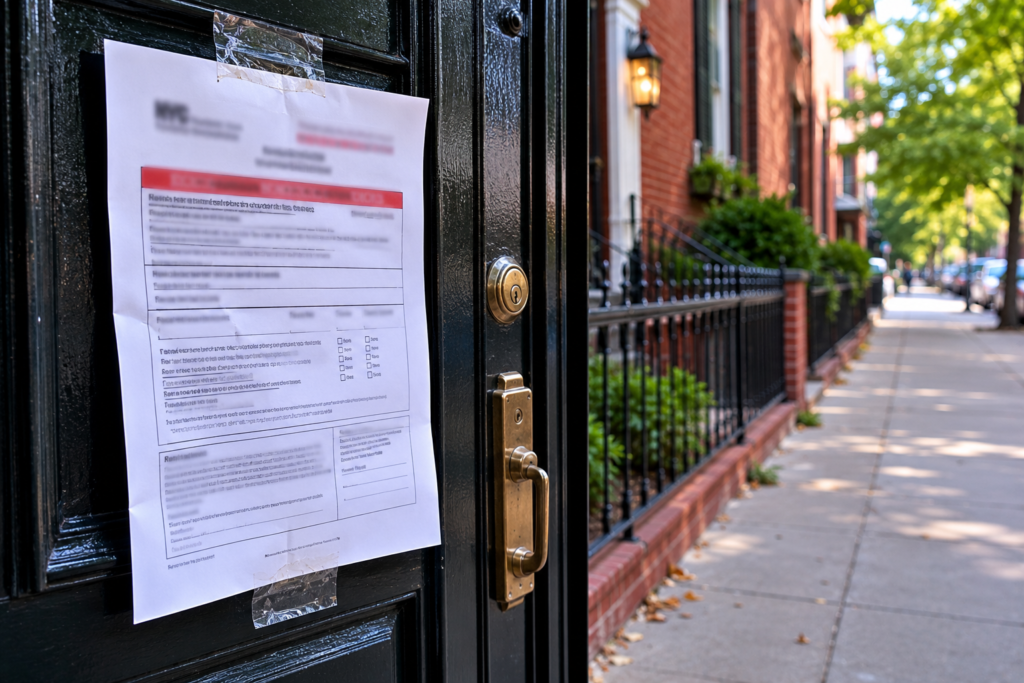
Here’s how it typically goes from start to finish:
Step 1: Inspection The DOT conducts sidewalk inspections citywide, sometimes in response to a 311 complaint, sometimes as part of a systematic area-by-area inspection program. An inspector walks the block, notes any defective flags, and records the location.
Step 2: Violation Notice If defects are found, a violation notice is mailed to the property owner of record. It describes the condition, assigns a violation number, and gives a deadline, usually 75 days to complete repairs.
Step 3: Contractor Estimate. This is where you call a licensed NYC sidewalk contractor to come out and assess the scope of work. A good contractor will review the violation notice, measure the affected area, and give you a written estimate. Make sure whoever you hire is familiar with DOT requirements; the work has to meet specific specs to pass reinspection.
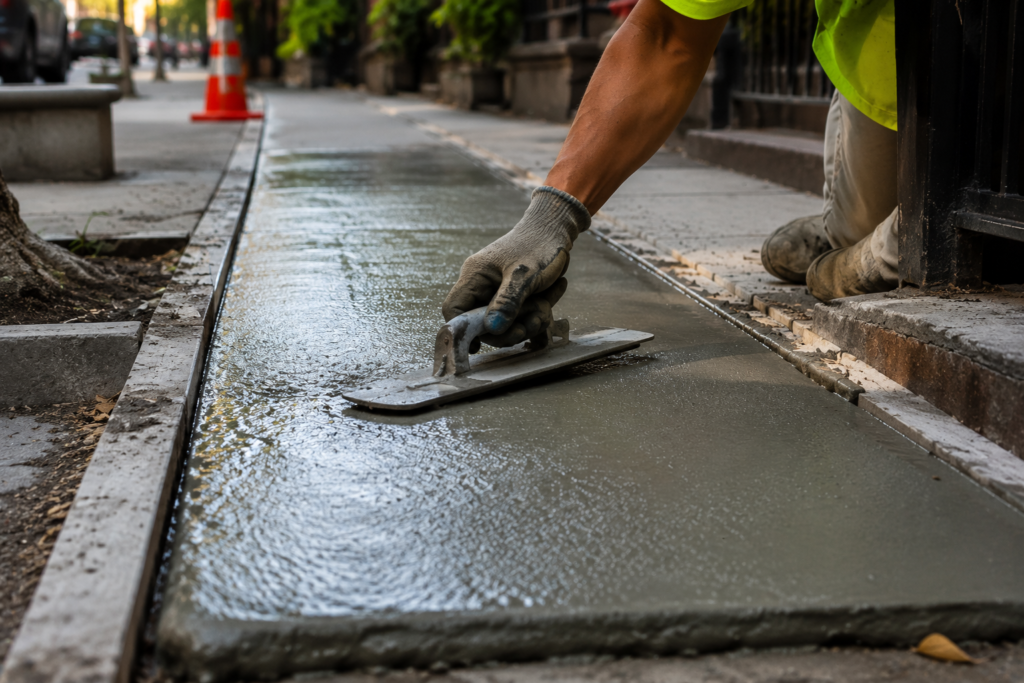
Step 4: Repair Process The contractor removes the damaged concrete, addresses any underlying issues (like cutting back roots or adding fill), pours new concrete using the correct mix and thickness for NYC DOT compliance, and finishes the surface. Depending on the scope, the work usually takes one day for residential properties.
Step 5: DOT Reinspection After repairs are complete, the DOT will reinspect the area. If the work passes, the violation is cleared. If something doesn’t meet their standards, wrong finish, wrong thickness, improper slope, you’ll need to correct it. This is why hiring someone with real DOT experience matters.
How Much Does NYC Sidewalk Repair Cost?
Costs vary depending on how many flags need to be replaced, whether there’s root work involved, and what borough you’re in (labor and material costs differ across the city). Here’s a general range based on what I see in the current market:
| Repair Type | Typical Cost Range in NYC |
| Single flag replacement (approx. 5 sq ft) | $300–$600 |
| Small job (2–4 flags) | $800–$1,800 |
| Medium job (5–10 flags) | $2,000–$5,000 |
| Tree root damage with root pruning | $1,500–$4,500+ |
| Full violation correction (varies widely) | $1,500–$10,000+ |
| City-performed work (if you don’t act) | Often 2–3x private contractor rates |
These are estimates. Every job is a little different. Get at least two written quotes from licensed contractors before committing.
Case Study: How One Brooklyn Property Owner Handled a DOT Violation
In the spring of 2023, a property owner in Park Slope received an NYC DOT violation notice citing three defective sidewalk flags in front of their brownstone. The flags had been lifted by a large street tree’s roots and had a height differential of over an inch, a clear trip hazard.
Getting estimates: The owner contacted two contractors. The first gave a verbal estimate over the phone without visiting the site, a red flag. The second came out, measured the affected area, examined the root damage, and provided a detailed written estimate covering root pruning, flag removal, sub-base repair, and new concrete installation: $2,400 total.
The repair: Work was scheduled within two weeks of signing the contract. The crew arrived in the morning, removed the three damaged flags, carefully pruned the offending roots without cutting the primary root structure (to protect the tree), added clean fill, and poured new concrete meeting DOT thickness and finish specifications. The site was done by early afternoon.
Reinspection: The DOT re-inspected approximately three weeks later. The flags passed. The violation was cleared within 30 days of the repair being completed.
Total cost: $2,400 compared to the $6,000+ the city would have charged had the owner not acted within the violation window.
Expert Insight
“The biggest mistake I see property owners make is waiting too long after getting a violation notice. A lot of people assume it’s like a parking ticket, maybe it goes away, maybe they can deal with it later. But the DOT violation process has real deadlines, and once the city schedules its own repair crew, you’ve lost control of the cost, and you’re going to pay a premium. I’ve had homeowners call me after the city already did the work, and there’s nothing I can do for them at that point. Call a contractor the week you get that notice, not the month before the deadline.”
Experienced NYC Sidewalk Contractor, 20+ years in the five boroughs
How to Choose a Sidewalk Repair Contractor in NYC
Not every concrete contractor is equipped to handle DOT-compliant sidewalk work. Here’s what to look for:
Verify insurance. The contractor should carry general liability and workers’ compensation insurance. Ask for certificates; a reputable contractor won’t hesitate to provide them.
Check DOT experience. Ask directly: have they done DOT violation work before? Do they understand the required concrete mix, thickness, and finish specs? Have they had a work pass DOT reinspection? These are fair questions, and the answers tell you a lot.
Review references. Ask for references from recent sidewalk jobs in NYC, ideally violation correction work. If they can’t provide any, move on.
Request a written estimate. Never agree to sidewalk work based on a verbal quote. A written estimate should detail the scope of work, materials, price, and timeline.
Be cautious of unusually low bids. If someone’s price is dramatically lower than everyone else’s, find out why. Cutting corners on concrete thickness or skipping proper sub-base prep will result in failed inspections and do-overs.
Frequently Asked Questions
Who is responsible for sidewalk repair in NYC?
In most cases, the adjacent property owner is responsible for maintaining and repairing sidewalks under NYC law.
Does NYC pay for sidewalk repairs?
Generally, no. Most repairs are the responsibility of the property owner, although certain exceptions may apply.
What happens if I ignore a sidewalk violation?
Ignoring a violation can lead to continued liability exposure, repair delays, and potential complications during property transactions.
How much does sidewalk repair cost in NYC?
Costs typically range from several hundred dollars for a single sidewalk flag replacement to several thousand dollars for larger projects.
Can tree roots make the city responsible?
Tree-related cases can be complicated. Responsibility depends on specific circumstances and city policies. A professional evaluation is often necessary.
How long does sidewalk repair take?
Many standard repair projects can be completed within a few days once permits and approvals are in place.
Tips to Prevent Future Sidewalk Damage
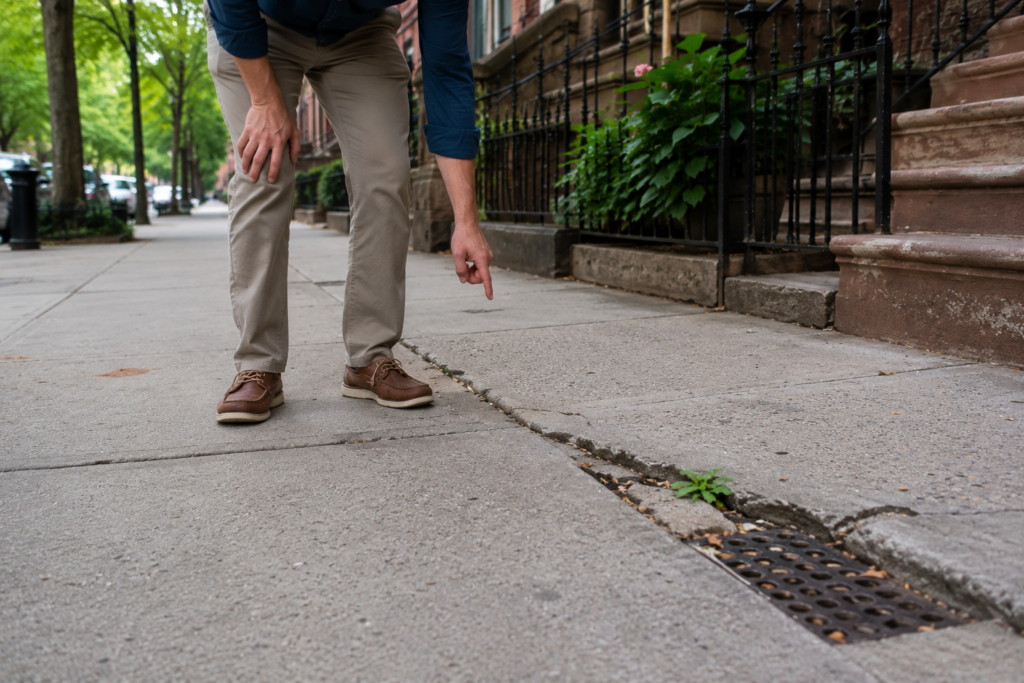
The best NYC sidewalk repair is the one you don’t have to make urgently. A little proactive attention goes a long way.
Walk your sidewalk once a year. Look for cracks, height differences between flags, drainage pooling, or signs of root pressure. Catching a small issue early is almost always cheaper than fixing a violation.
Address drainage problems. Water that pools on or around the sidewalk flags accelerates damage. Make sure downspouts aren’t directing water toward the sidewalk, and that the grade is sloping water toward the street, not toward your foundation or sidewalk.
Manage tree roots early. If you have a large street tree and you’re seeing early signs of root pressure, concrete starting to crack or lift slightly, talk to a contractor about targeted root pruning before it becomes a major repair.
Fix small cracks before they grow. A surface crack that’s less than a quarter inch wide isn’t an emergency, but it will get worse over time. Sealing it or patching it early is much cheaper than replacing the whole flag later.
Conclusion
When it comes to NYC sidewalk repair, the responsibility lands on the property owner full stop. The city maintains the right-of-way, but the maintenance obligation is yours. Understanding that, and staying ahead of it, is one of the simpler ways to protect both your property and your finances.
Violation notices feel overwhelming when they arrive, but the process is manageable if you act quickly, work with a contractor who knows DOT requirements, and don’t wait until the deadline is right on top of you.
If you take away one thing from this, don’t ignore sidewalk damage. It doesn’t fix itself, and the longer you wait, the more expensive and complicated it becomes.
Get a Free Sidewalk Inspection
If you’ve received a DOT violation notice, noticed cracking or raised flags, or just want to know where your sidewalk stands before there’s a problem, reach out for a free on-site inspection and written estimate. We’ve handled NYC sidewalk violations across all five boroughs for over 20 years, and we know exactly what the DOT looks for. Call us or fill out our contact form; we’ll come out, assess the situation honestly, and give you a clear picture of what needs to be done and what it’ll cost.