How to Repair a Concrete Sidewalk: A Step-by-Step Guide for New York Property Owners
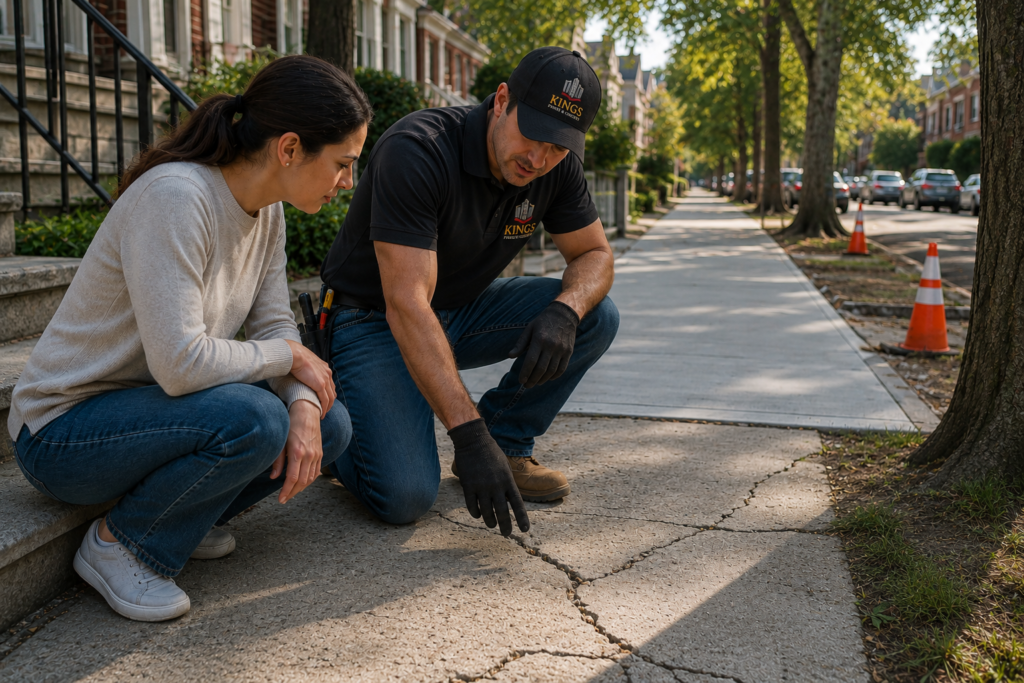
I’ve been patching, replacing, and arguing with New York sidewalks for over twenty years now. And if there’s one thing I’ve learned, it’s that concrete doesn’t crack for no reason. Something is always going on underneath it. Most homeowners call me after they’ve tripped over their own sidewalk, or worse, after a neighbor or a mail carrier has. By then the crack has usually been sitting there for a year or two, slowly getting worse every winter. Sidewalks crack because the ground under them moves. New York winters freeze and thaw the soil over and over, tree roots push up from below, water finds its way underneath the slab, and eventually something has to give. Add in decades of foot traffic, delivery carts, and the occasional car pulling onto the curb, and it’s honestly surprising sidewalks last as long as they do. Here’s the part that actually matters to you as a property owner: in New York City, the sidewalk in front of your building is your responsibility, not the city’s. If someone gets hurt on a cracked or uneven section, you can be held liable. The Department of Transportation also issues violations for sidewalk defects, and those fines add up fast if you ignore them. The good news is that most sidewalk damage can be repaired without a full replacement, as long as you catch it early. This guide walks through how that repair process actually works, based on jobs I’ve done, not textbook theory. What Causes Concrete Sidewalk Damage? Every sidewalk crack has a story behind it. After enough jobs, you start recognizing the pattern before you even get out of the truck. Freeze-thaw cycles. Water gets into tiny pores in the concrete, freezes, expands, and pushes the surface apart. This is the number one cause of sidewalk crack repair calls I get every spring. Heavy foot and cart traffic. Sidewalks in front of commercial buildings and busy residential blocks take a beating. Repeated weight on a slab that’s already settling unevenly speeds up cracking. Tree roots. This one’s huge in New York. Street trees look great, but their roots grow shallow and wide, and they will lift a slab right off its base. I’ve pulled up sections where a root as thick as my arm was sitting directly under the crack. Water infiltration. Poor drainage lets water pool against or under the slab. Over time, that softens the base material and the concrete loses its support. Soil settlement. Some parts of New York sit on fill soil that was never compacted properly decades ago. It settles slowly, and the sidewalk settles with it. Poor original installation. Not every sidewalk was poured correctly. Thin slabs, no rebar or mesh, poor base prep. I still see it on properties built forty or fifty years ago. Age. Concrete has a lifespan. Most sidewalks are good for 25 to 30 years before general wear starts showing up as surface cracking and spalling. Cause Common Symptoms Recommended Repair Freeze-thaw cycles Surface cracking, flaking, spalling Crack sealing, surface patching Heavy traffic Wearing, hairline cracks, edge chipping Resurfacing, patching Tree roots Raised or tilted slabs, trip hazards Slab lifting, root barrier, partial replacement Water infiltration Soft spots, staining, undermining Drainage correction, mudjacking, sealing Soil settlement Sunken or sloped slabs Slab leveling, base stabilization Poor installation Early cracking, thin or crumbling slabs Full slab replacement Aging concrete Widespread surface wear, discoloration Resurfacing or replacement depending on condition Can Every Concrete Sidewalk Be Repaired? Not always, and I’ll tell you that straight rather than sell you a repair that won’t hold. Minor cracks under a quarter inch wide are usually a simple fix. Clean it, fill it, seal it, done. Surface spalling, where the top layer is flaking or pitting, can often be resurfaced if the slab underneath is still structurally sound. Uneven slabs are trickier. If one slab has sunk or lifted less than an inch or two relative to the next, I can often level it without replacing anything. Trip hazards: anything with a height difference of half an inch or more between slabs needs to be addressed one way or another, either by grinding down the high edge, lifting the low one, or replacing the section. This is also the type of defect that gets flagged in a DOT sidewalk inspection. Severe structural damage, meaning the slab is broken into multiple pieces, badly undermined, or shifted at an angle, usually means replacement is the more honest answer. Patching a broken slab is a temporary fix at best, and I’d rather tell a client that upfront than have them call me back in eight months. Repair Replacement Lower upfront cost Higher upfront cost, longer-lasting fix Good for isolated cracks or minor unevenness Necessary for broken, shifted, or undermined slabs Faster turnaround, less disruption Requires demolition, forms, and full cure time Best when the base and drainage are still sound Often needed when the underlying base has failed May need to be revisited in future years Resets the clock on the sidewalk’s lifespan How to Repair a Concrete Sidewalk (Step-by-Step) This is the process I actually use on job sites, not the version you’d find in a manual. Step 1: Inspect the damage Before anything gets touched, I walk the whole section and check what’s really going on. Is it just surface-level, or is there movement underneath? I’ll tap the slab, check for hollow sounds, and look at how water has been draining across it. This step decides whether you’re looking at a repair or a replacement, so don’t skip it or guess. Step 2: Clean the repair area Dirt, loose debris, and old sealant all need to come out before new material goes in. I usually use a wire brush or a pressure washer depending on how much buildup there is. Repair material won’t bond properly to a dirty surface, and that’s one of the most common reasons DIY patches fail within a season. Step 3: Remove loose concrete Any concrete that’s crumbling,
Who Is Responsible for Sidewalk Repair in NYC? A Property Owner’s Guide
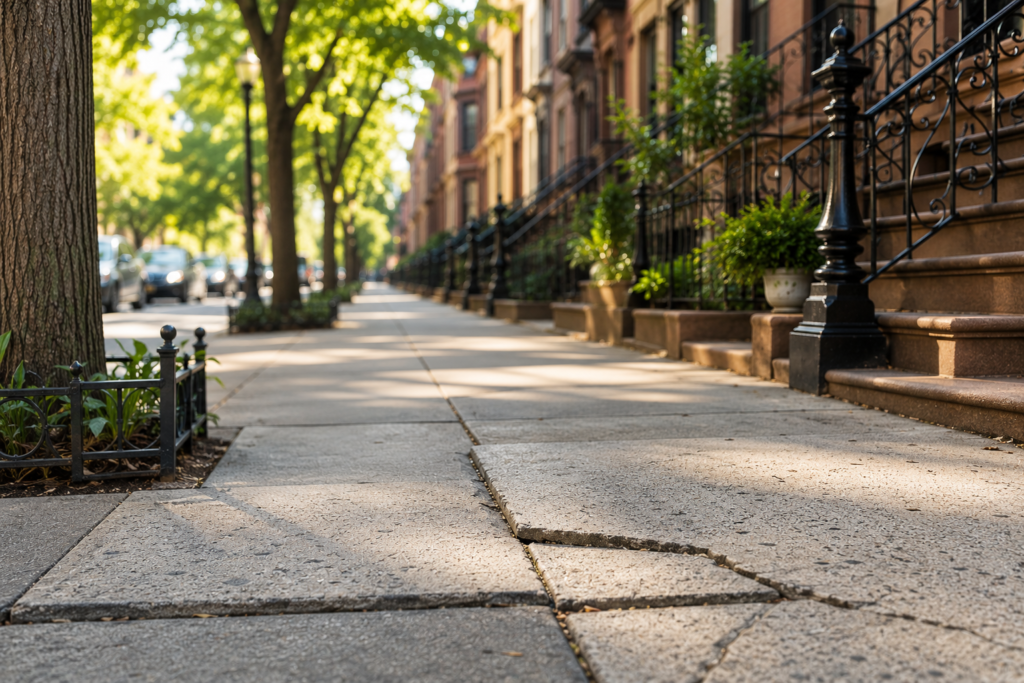
A lot of property owners in New York City are surprised when they find out the city isn’t the one responsible for fixing the sidewalk in front of their building. That confusion is completely understandable. The sidewalk is a public walkway, maintained for public use, but the legal burden of keeping it in good shape falls on you, the property owner. I’ve been doing sidewalk work in New York City for over 20 years, and the calls I get most often start the same way: “I got a notice in the mail. What does this mean? Do I really have to pay for this?” The answer is almost always yes, and the sooner you deal with it, the better. This guide walks you through everything you need to know about NYC sidewalk repair: who’s responsible, what violations mean, what it costs, and how to get through the process without it turning into a bigger headache than it needs to be. Who Is Legally Responsible for Sidewalk Repair in NYC? Under NYC Administrative Code Section 7-210, the responsibility for maintaining and repairing sidewalks in safe condition falls on the owner of the adjacent property. That’s been the law since 2003, and it applies to most properties across the five boroughs. What that means in plain terms: if someone trips on cracked or uneven concrete in front of your building, you can be held liable, not the city. And if the NYC Department of Transportation (DOT) inspects your sidewalk and finds defects, it can issue you a violation and require you to fix it within a set timeframe. Residential vs. Commercial Properties The rules apply a bit differently depending on your property type. One-to-three family homes that are owner-occupied have some additional protections under the law when it comes to civil liability, but they’re still responsible for making repairs. Commercial properties, apartment buildings, and mixed-use properties carry full responsibility. Here’s a quick breakdown: Property Type Responsible Party Common Situations 1–3 family owner-occupied home Property owner (limited civil liability) Tree root damage, cracked slabs, frost heaving Multi-family residential Property owner (full liability) Settlement, heavy foot traffic wear, and drainage issues Commercial property Property owner (full liability) High foot traffic, loading zone damage, utility cuts City-owned property NYC DOT Sidewalks adjacent to parks, city buildings Vacant city-owned lots NYC DOT Varies by situation The one real exception worth knowing: if a city utility company or the NYC DOT itself cuts into your sidewalk for repairs and doesn’t restore it properly, you can potentially get that addressed by filing a complaint with 311. But that’s the exception, not the rule. Why Sidewalk Repairs Matter The obvious reason is safety. Cracked or raised concrete is a genuine trip hazard, and New York City sidewalks see a lot of foot traffic. People get hurt. But beyond the safety issue, there are real financial risks for property owners who let sidewalk damage go unaddressed. Liability exposure. If someone trips and falls on your damaged sidewalk and files a personal injury claim, you could be looking at high legal costs even if the case is eventually dismissed. Judgments in trip-and-fall cases in NYC can run into six figures. DOT violations and fines. If the DOT inspects your sidewalk and issues a violation, you’re on the clock to fix it. Ignoring it doesn’t make it go away; it can result in additional penalties and eventually the city doing the work itself and billing you for it (often at a rate much higher than what a private contractor would charge). Property sales. A sidewalk violation on record can complicate or delay a real estate transaction. Buyers’ attorneys look for open violations during due diligence, and some lenders won’t close until violations are cleared. Common Sidewalk Problems That Require Repair Here’s what I see out in the field regularly: Cracked concrete. This is the most common issue. Concrete cracks over time from freeze-thaw cycles, settling soil, and normal wear. Minor surface cracks might not trigger a violation right away, but deep or wide cracks that create a trip hazard will. Uneven slabs. When one slab shifts up or down relative to the next, you get a lip that people can catch their foot on. Even a quarter-inch difference can create a tripping risk, and the DOT takes those seriously. Tree root damage. This is a big one in neighborhoods with older street trees. The roots push up under the concrete and lift the slabs, sometimes dramatically. Fixing this involves cutting back the roots (carefully, to preserve the tree) and either patching or replacing the affected flags. Spalling. That’s when the surface layer of the concrete flakes off, leaving a rough, pitted surface. It can happen from salt exposure, age, or poor original pour quality. Settlement. When the soil under the sidewalk shifts, which happens a lot in areas with older infrastructure, slabs can sink unevenly and create drainage problems or height differences. Cracks near curb cuts or driveways. High vehicle traffic across these transition points accelerates wear and cracking. What Happens If You Ignore Sidewalk Damage? Let me give you a realistic picture of what the process looks like when sidewalk damage gets ignored. The DOT Violation Scenario Say you’re a homeowner in Woodside, Queens. You’ve noticed a couple of raised slabs on your sidewalk for a few years, but you kept putting off dealing with them. Then one spring you get a notice in the mail: an NYC DOT violation citing “broken or defective” sidewalk flags. You’ve got 75 days to make repairs. You ignore it, thinking maybe nothing will happen. A few months later, you get a second notice, this time with a fine attached. Now the DOT schedules a city-contracted repair job on your sidewalk. The work gets done, and then you receive a bill typically well above what a private contractor would have charged. Now there’s also a lien on your property. Meanwhile, a woman who tripped on that sidewalk six months ago has filed a personal