
Cracks in a concrete driveway are more than just an aesthetic blemish on your property’s curb appeal; they are early warning signs of structural fatigue. For most homeowners, a driveway is one of the most expensive components of their exterior landscape. Yet, it is often the most neglected.
The primary enemy of concrete isn’t actually the weight of its water. When a crack opens, even a hairline one, it creates a direct highway for moisture to reach the sub-base. Once that moisture enters, the clock starts ticking on a “domino effect” of damage that can lead to thousands of dollars in replacement costs. In this guide, we provide the most comprehensive look at how to fix cracks in concrete driveway slabs to ensure your home remains safe and valuable.
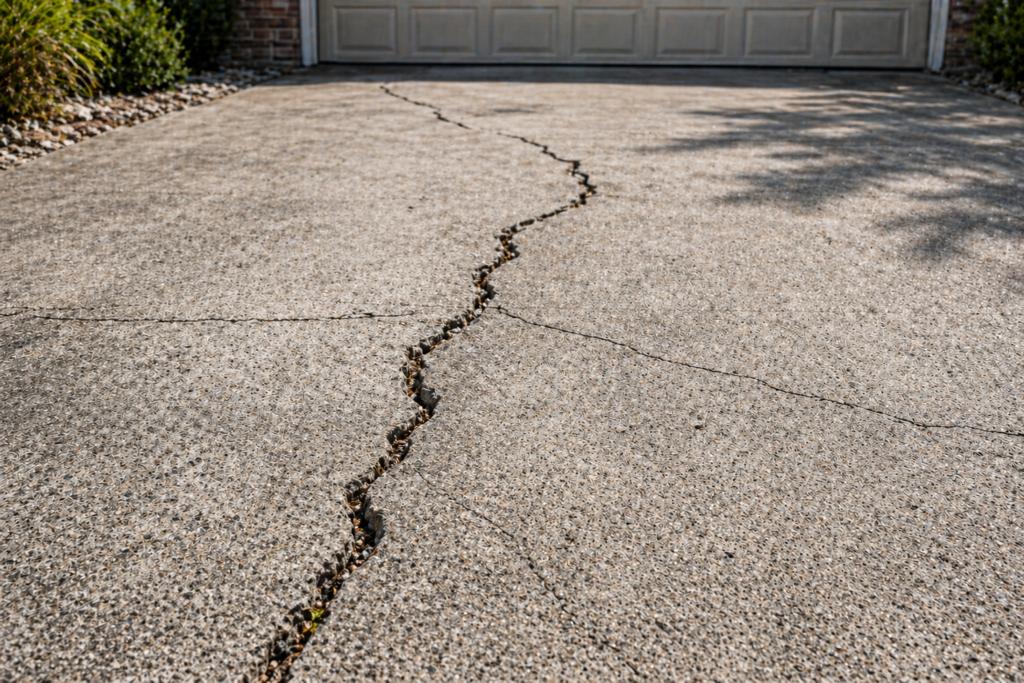
1. The Science of Concrete Failure: Why Driveways Break
Before you can master how to fix cracks in concrete driveway issues, you must understand the material itself. Concrete is essentially a rigid sponge. It is incredibly strong under compression but very weak under tension.
Thermal Expansion and Contraction
Concrete is a “living” material that breathes. On a hot summer day, a 50-foot driveway can expand by as much as half an inch. Without proper expansion joints, the internal pressure becomes so great that the concrete must “relieve” itself by cracking.
Sub-Base Erosion
If the soil underneath your driveway was not compacted properly or if water has washed away the sand bedding, the concrete slab is essentially “bridging” a vacuum. When a 4,000-pound SUV drives over that bridge, the concrete snaps. This is why learning how to fix cracks in concrete driveway early is vital; it prevents the water from reaching that sub-base in the first place.
The PSI Limit
Most residential driveways are poured to a strength of 3,000 to 4,000 PSI (Pounds per Square Inch). While this is plenty for a standard car, heavy delivery trucks or construction machinery can easily exceed this limit, causing immediate structural failure.
2. The Danger Zone: What Happens If You Ignore Cracks?
Many homeowners wait until a crack is wide enough to trip over before researching how to fix cracks in concrete driveway. By then, the damage is often irreversible.
The Freeze-Thaw Exploder
In regions where temperatures drop below freezing, water enters the crack, turns to ice, and expands by approximately 9%. This exerts thousands of pounds of pressure against the walls of the crack, forcing it wider every single night.
Hydrostatic Pressure
Water trapped under the slab can push upward (heaving), especially during heavy monsoon seasons or rapid snowmelts. This pressure can tilt entire slabs, creating dangerous trip hazards.
Vegetation Sabotage
Wind-blown dirt fills open cracks, creating a perfect seedbed for weeds. As roots grow, they act like biological wedges, slowly prying the concrete apart from the inside out. Knowing how to fix cracks in concrete driveway gaps prevents this “biological weathering.”
3. Material Science: Choosing the Right Sealant
Stop using cheap “hardware store” mortar. If you want to know how to fix cracks in concrete driveway permanently, you need to understand polymers.
Polyurethane Sealants (The Gold Standard)
Polyurethane is a reactive polymer that stays flexible once cured. Since driveways move, you need a material that can stretch and compress. Polyurethane bonds chemically to the concrete walls, creating a waterproof seal.
Epoxy Resins
If the crack is on a vertical surface or requires structural “gluing,” epoxy is the answer. It is stronger than the concrete itself once cured, though it lacks the flexibility of polyurethane.
Self-Leveling vs. Non-Sag
- Self-Leveling: Liquid-like consistency. It flows into the crack and levels itself out. Perfect for horizontal driveways.
- Non-Sag: Thick, like peanut butter. Necessary if your driveway is on a steep incline.
4. The Professional Tool Kit
Gather these items before you begin. Having the right tools is 50% of the battle when learning how to fix cracks in concrete driveway.
- Safety Gear: Safety glasses and heavy-duty gloves.
- Angle Grinder or Chisel: For the critical “Undercutting” stage.
- Wire Wheel Brush: To remove oxidation and old paint.
- Vacuum or Leaf Blower: To ensure the crack is 100% dust-free.
- Backer Rod: Foam piping used to save on sealant costs.
- Caulking Gun: A high-ratio gun makes applying thick sealants much easier.
5. Step-by-Step Restoration: How to Fix Cracks in Concrete Driveway
Step 1: Deep Cleaning and Preparation
Start by scrubbing the crack with a wire brush. If there is moss or deep-seated dirt, use a pressure washer.
Important: If you use water, you must wait at least 24–48 hours for the concrete to be bone-dry. Most sealants will not bond to a damp surface.
Step 2: The Undercutting Technique (The Pro Secret)
Most DIYers just pour filler into a thin crack. To truly understand how to fix cracks in concrete driveway, you must use the “Undercut.” Use a hammer and chisel to widen the crack slightly, creating an inverted “V” shape (wider at the bottom than the top).
- Why? This creates a mechanical lock. Even if the sealant loses a bit of its bond over time, it physically cannot pop out.
Step 3: Removing the Dust
After chiseling, the crack will be full of fine white powder. This powder acts like a “release agent” that prevents the sealant from touching the concrete. Use a shop vac to get the crack perfectly clean.
Step 4: Installing the Backer Rod
If your crack is deeper than 1/2 inch, do not fill it entirely with sealant. Press a foam backer rod into the crack until it sits about 1/4 inch below the surface. This ensures “two-point” bonding (the sealant sticks to the two side walls but doesn’t get sucked into the bottom of the crack).
Step 5: Applying the Sealant
Apply your chosen polyurethane filler. Start at the highest point of the driveway and work down. Let the material flow and settle. Following this professional process is the most effective way for how to fix cracks in concrete driveway permanently.
Step 6: The Texture Match
Fresh sealant is often shiny. While the sealant is still tacky, you can lightly sprinkle a bit of fine sand over it or brush it with a stiff-bristled broom to match the surrounding rough texture.
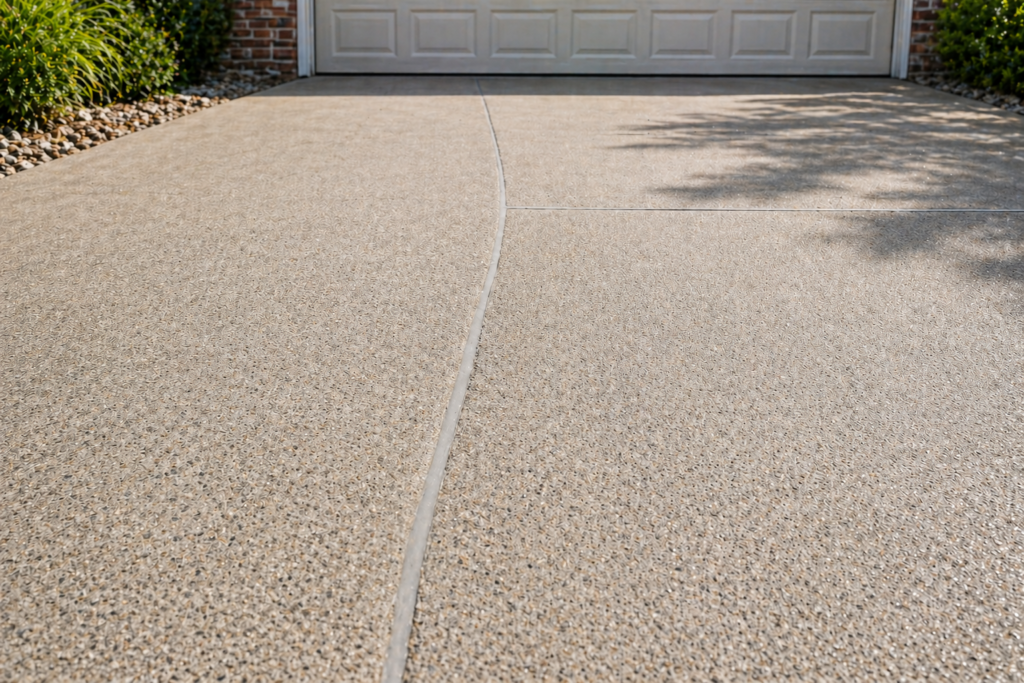
6. Comprehensive Troubleshooting Guide
Even with a guide on how to fix cracks in concrete driveway, issues can arise.
My Filler is Bubbling
This usually happens if the concrete was damp or if the temperature was too high during application. The “outgassing” of the concrete creates air pockets in the sealant.
The Sealant is Sinking
You likely skipped the backer rod. Without a solid base, the liquid sealant will continue to sink into the sub-grade until it cures, leaving a dip in the surface.
The Patch is Peeling
This is almost always due to poor cleaning. If there is even a fine layer of dust, the sealant will bond to the dust, not the concrete.
7. The 10°C (50°F) Rule and Weather Variables
Temperature is the silent killer of driveway repair.
- The Cold Problem: Below 10°C, the chemical molecules in sealants move too slowly to bond.
- The Rain Problem: Moisture during the first 12 hours of curing will turn most polyurethane sealants into a cloudy, weak mess.
8. Preventive Maintenance: Ensuring the Repair Lasts
Once you know how to fix cracks in concrete driveway slabs, you must protect that work.
- Driveway Sealing: Every 2–3 years, apply a high-quality topical sealer. This acts like “sunscreen” for your concrete.
- Drainage Management: Ensure your gutters aren’t dumping water right at the edge of the driveway.
- Weight Limits: Avoid parking heavy trailers on the edges of your slabs.
Conclusion
A well-maintained driveway can last 50 years, while a neglected one may crumble in 10. By following this guide on how to fix cracks in concrete driveway surfaces, you are protecting your home’s foundation and value.
Need a Professional Inspection?
While small and medium cracks are an excellent weekend project, structural shifts require industrial expertise. Not sure if your driveway is a safety hazard?
9. Frequently Asked Questions (FAQ)
What is the best way to fix cracks in concrete driveway?
The most durable method involves cleaning the crack, using the undercut technique to widen the base, and filling it with a flexible polyurethane sealant over a backer rod.
Can I use regular cement to fix a crack?
No. Regular cement does not have bonding agents and will shrink as it dries, causing it to pop out within weeks.
When should I call a professional?
If you notice “alligator cracking” (many small cracks in one area) or if one side of the crack is significantly higher than the other, this indicates a sub-base failure.