Picking a concrete contractor sounds simple enough. You get a few estimates, check out some photos, and go with the one who seems most trustworthy. But I’ve been in this business for over 20 years working on driveways, patios, foundations, commercial slabs, and sidewalks all across New York and I can tell you that the hiring process is where most projects go wrong before the first bag of cement is even opened.
Most homeowners don’t know what to ask. They focus on the price and the pictures, and they skip the questions that would actually tell them whether a contractor is qualified, insured, and serious about doing the job right. By the time they find out something’s wrong, the contractor has cashed the check and the concrete is already poured.
This guide gives you the questions to ask any concrete contractor before you sign anything and what their answers actually mean.
Why You Should Never Hire a Contractor Based on Price Alone
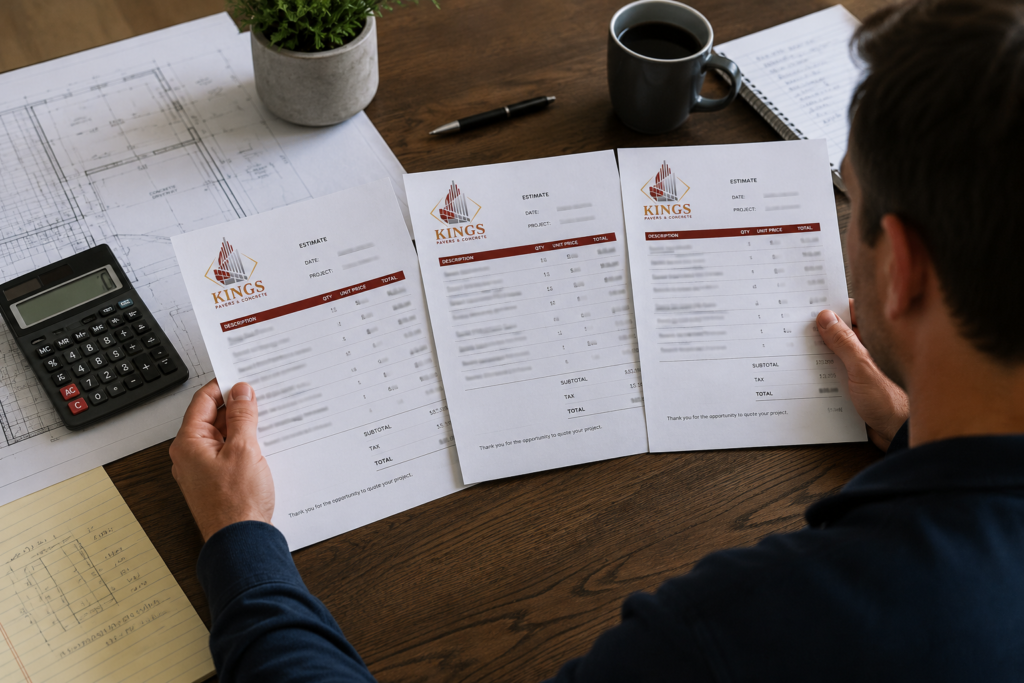
I get it. When you’re looking at three estimates and one comes in $2,000 lower than the others, it’s hard not to be tempted. But that low bid almost always means something is getting cut and it’s usually something you won’t notice until after the job is done.
Here’s what cheap concrete work often looks like in practice:
• Thinner slabs that crack faster, especially in New York winters
• Skipping the proper sub-base, so the concrete settles and heaves
• Using a lower concrete mix than specified saves money upfront, costs you later
• No expansion joints, which leads to cracking as the concrete shifts
• No permits pulled, leaving you with unpermitted work that causes problems when you sell
I’ve seen homeowners in Queens and Long Island spend more fixing cheap concrete than they would have spent hiring a reputable contractor the first time. A driveway replacement that should have cost $8,000 ended up costing $14,000 after the shoddy work had to be torn out and redone.
The lowest bid is not the best deal. The best deal is the contractor who does the job right the first time.
The Most Important Questions to Ask a Concrete Contractor
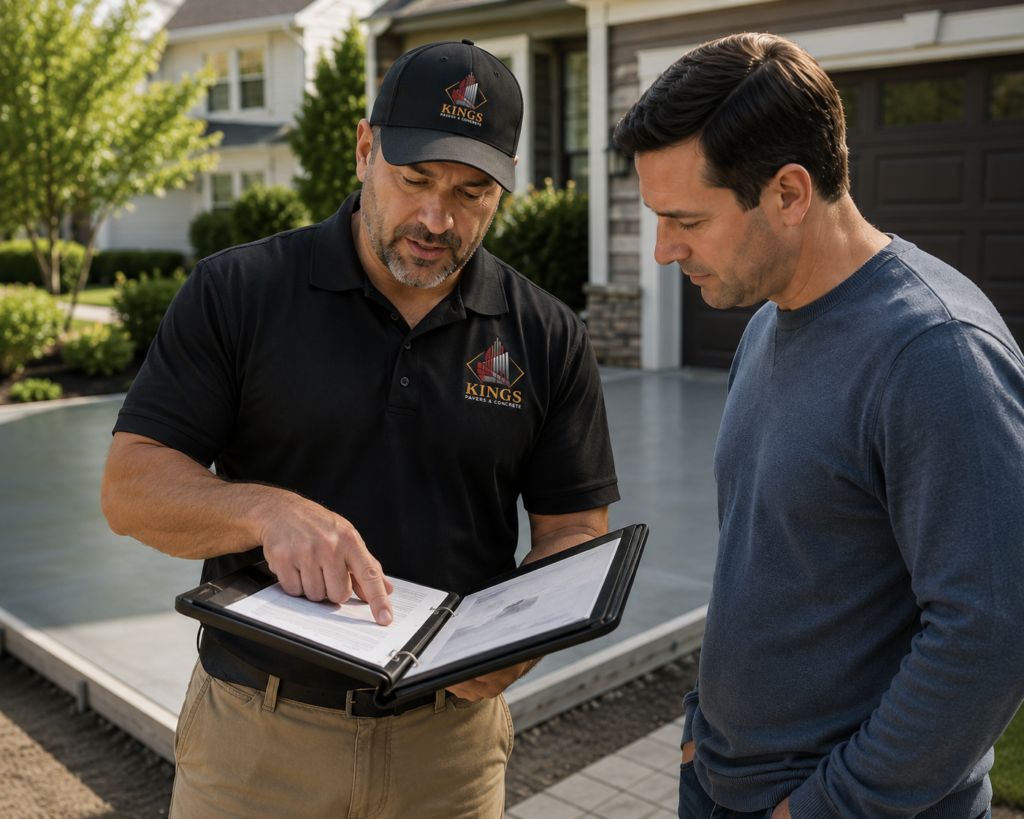
Here’s a breakdown of what to ask, and what to look for in the answers:
| Question | Why It Matters | What to Listen For |
| Are you licensed and insured? | Protects you if something goes wrong on your property | They should name their insurer and offer to send a certificate. Vague answers are a warning sign. |
| How long have you been in business? | Experience matters especially with New York’s freeze-thaw conditions | Look for at least 5 years of active local work. A long track record is a good sign. |
| Can I see recent projects similar to mine? | Photos prove they can handle your scope of work | They should have local references ready. Reluctance to share them is a red flag. |
| Do you provide a written contract? | A verbal agreement won’t protect you if anything goes wrong | Any reputable contractor works from a written contract. No contract, no deal. |
| What is included in the estimate? | Avoids surprise charges once work begins | The estimate should itemize labor, materials, prep work, permits, and cleanup. |
| Who handles permits? | Concrete work often requires permits in New York municipalities | A good contractor pulls the permits. If they’re asking you to, walk away. |
| What warranty do you offer? | Tells you how confident they are in their own work | Look for at least a 1-year workmanship warranty. Material warranties vary by product. |
| What is your project timeline? | Helps you plan around the work | A specific start and end date is reasonable to request. Vague timelines cause delays. |
| How will weather affect the project? | Concrete is sensitive to temperature extremes critical in New York | They should explain their cold or hot weather procedures. Generic answers aren’t enough. |
| How do you handle unexpected issues? | Problems come up. You want to know how they respond. | Look for clear communication, written change order procedures, and a reasonable tone. |
Step-by-Step Contractor Vetting Process
Don’t just call the first name that comes up in a search. Here’s how to actually vet a concrete contractor before you invite them onto your property.
Step 1: Research Local Contractors
Start with a search for concrete contractors in your specific area, not just “New York,” but your borough or county. Look for companies with a real local presence and actual project history in your area. A contractor who works all over the state but has no local references should raise questions.
Step 2: Read Reviews
Check Google, Yelp, and the Better Business Bureau. Don’t just look at the star ratingread what people actually say. Pay attention to reviews that mention communication, timelines, and how problems were handled. One or two bad reviews aren’t necessarily a dealbreaker, but a pattern is.
Step 3: Verify Credentials
In New York, contractors working on certain projects need to be licensed through the city or state. Ask for their license number and verify it yourself. Ask for a certificate of insurance and call the insurance company to confirm it’s active. This step alone eliminates a lot of risk.
Step 4: Request Multiple Estimates
Get at least three estimates. Not just for price comparison to see how different contractors approach the same job. If one estimate is dramatically lower, ask why. If one is dramatically higher, ask what justifies it. The differences reveal a lot about how each contractor plans to do the work.
Step 5: Interview Contractors
Use the questions in the table above. Pay attention not just to the answers but to how they answer. A contractor who gets defensive when you ask about insurance, or who brushes off questions about permits, is telling you something about how they’ll communicate once the job is underway.
Step 6: Review Contracts Carefully
Before you sign anything, read the entire contract. Make sure it matches what was discussed. Confirm that scope, materials, timeline, payment schedule, and warranty are all in writing. If something is missing, ask for it to be added before you sign, not after.
Red Flags That Should Make You Walk Away
Over the years, I’ve heard the same stories from homeowners who got burned. In almost every case, they ignored at least one of these warning signs:
No Insurance
If a contractor can’t provide proof of liability and workers’ compensation insurance, you are taking on all the risk. If a worker gets hurt on your property, or if something gets damaged, you could be liable. This is non-negotiable.
Cash-Only Requests
A contractor who insists on cash payment is a contractor who doesn’t want a paper trail. That should tell you everything. Reputable companies accept checks or credit cards and provide receipts.
No Written Agreement
A handshake deal is not a deal you can enforce. If a contractor won’t put it in writing, don’t hire them. Period.
Extremely Low Estimates
As we covered earlier when the price is unusually low, something is being cut. The question is just what, and when you’ll find out.
Pressure Tactics
Any contractor who tells you the price is only good if you sign today, or that he has another job lined up and can’t hold your spot, is using pressure sales tactics. Good contractors have consistent pricing and don’t need to rush you.
Lack of References
If a contractor can’t give you at least two or three references from recent similar projects, ask yourself why. In this business, your work speaks for itself or it doesn’t.
Understanding a Concrete Contract
A good contract protects both parties. Here’s what it should include and why each element matters:
| Contract Item | Why It Matters |
| Scope of Work | Defines exactly what is being done dimensions, areas, type of work. Prevents disputes about what was agreed. |
| Materials | Specifies the concrete mix, PSI rating, reinforcement, and any additives. Keeps the contractor from substituting cheaper materials. |
| Payment Schedule | Ties payments to project milestones, not just dates. Never pay more than 10–20% upfront. |
| Change Orders | Documents any changes to scope or cost in writing. Prevents surprise charges at the end of the job. |
| Warranty Terms | States exactly what is covered, for how long, and how to make a claim. Get it in writing. |
| Cleanup Responsibilities | Clarifies who removes debris, old concrete, and materials when the job is done. Don’t assume/confirm. |
Questions Commercial Property Owners Should Ask
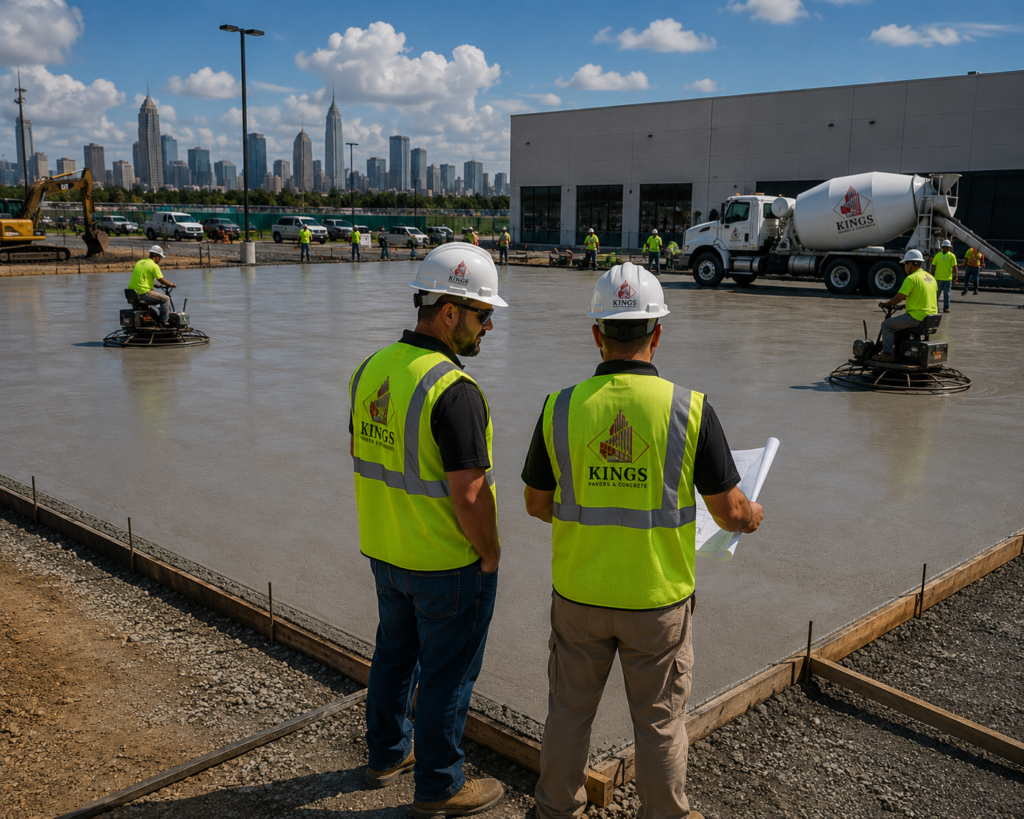
Hiring a concrete contractor for a commercial project comes with its own set of considerations. The stakes are higher, the timelines are tighter, and the compliance requirements are more involved.
Experience With Large-Scale Projects
Commercial slabs, parking lots, and loading docks require different equipment and planning than residential work. Ask specifically about their experience with projects of your size and type and ask for references from those jobs.
Scheduling Flexibility
Commercial work often needs to happen during off-hours to minimize business disruption. Ask how the contractor handles night work, weekend pours, and phased scheduling.
Safety Procedures
On any commercial site, safety compliance is mandatory. Ask for their safety plan, how they handle site access, and how they coordinate with other trades if applicable.
Insurance Limits
Commercial projects typically require higher coverage limits than residential work. Confirm that the contractor’s policy meets the minimums required by your lease, your lender, or your general contractor.
Compliance Requirements
Depending on the project, ADA compliance, municipal codes, and DOT requirements may apply. Make sure the contractor is familiar with the specific regulations in your New York municipality.
Frequently Asked Questions
What questions should I ask a concrete contractor?
Ask about licensing, insurance, project timeline, what’s included in the estimate, who handles permits, what warranty they offer, and how they handle unexpected issues. The answers and how they’re delivered will tell you a lot about how the contractor operates.
How do I know if a concrete contractor is reputable?
Check their online reviews on Google and the BBB. Verify their license through your state or city’s licensing board. Ask for local references and actually call them. A reputable contractor will have no problem with any of this.
Should a concrete contractor provide a written contract?
Yes. Every time, without exception. A written contract is the only thing that protects you if there’s a dispute. It should detail the scope of work, materials, payment schedule, timeline, and warranty terms. If a contractor won’t put it in writing, don’t hire them.
How many estimates should I get?
At least three. Not only does this give you a price range, it also shows you how different contractors plan to approach the same job. The variation between estimates often reveals who’s cutting corners and who’s doing the work properly.
What insurance should a concrete contractor have?
At minimum, they should carry general liability insurance and workers’ compensation insurance. For commercial projects, higher coverage limits may be required. Ask for a certificate of insurance and verify its current status by contacting the insurer directly.
What should be included in a concrete estimate?
A proper estimate should include labor, materials (with mix specifications), site preparation, permits, disposal of existing concrete if applicable, and cleanup. Any estimate that doesn’t break these out is leaving room for surprise charges later.
Take Your TimeIt’s Worth It
Concrete is permanent. Once it’s poured and cured, you’re living with it for decades. The time you spend asking the right questions before hiring a contractor is nothing compared to the time and money you’ll spend dealing with cracked slabs, failed driveways, or unpermitted work down the road.
The best contractors in New York want you to ask questions. They want you to verify their credentials. They welcome the scrutiny because they have nothing to hide. If a contractor gets annoyed when you ask about insurance, or seems put off when you request a written contract, take that as your answer.
Ready to Start Your Concrete Project?
If you’re planning a concrete driveway, patio, sidewalk repair, or commercial slab in the New York area, we’d be glad to walk you through the process and give you a detailed, no-pressure estimate. We pull permits, carry full insurance, and put everything in writing because that’s how it should be done. Contact us today to schedule a free consultation.