What to Look for in a Concrete Contractor Before Hiring in New York
I’ve been pouring concrete in New York for over twenty years, and if there’s one thing I’ve learned, it’s this: the contractor you hire matters more than the concrete itself. I’ve fixed enough driveways, patios, and foundations that were done wrong the first time to know that a bad hire doesn’t just waste money; it costs you sleep. Most homeowners calling me for the first time have the same worry. They don’t know who to trust. They’ve heard stories about a neighbor’s driveway cracking within a year, or a patio that pooled water every time it rained. They want to avoid becoming the next cautionary tale. That’s really what this comes down to. Concrete work looks simple from the outside: pour it, smooth it, let it cure. But the difference between a slab that lasts thirty years and one that’s crumbling in five almost always traces back to who did the work and how. So let’s walk through exactly what to look for in a concrete contractor, based on what I’ve actually seen go right and wrong on job sites across this state. Why Choosing the Right Concrete Contractor Matters I once got called out to look at a driveway that was only two years old. Cracks running across it like a spiderweb, edges crumbling, the whole thing tilting slightly toward the garage instead of away from it. The homeowner had gone with the lowest bid. Saved maybe eight hundred dollars up front. Ended up paying nearly triple that to have it torn out and redone. That’s the real cost of hiring the wrong person. It’s rarely about the concrete mix going bad. It’s almost always about shortcuts, skipping proper base prep, pouring in the wrong weather conditions, using too much water in the mix to make it easier to work with. Small decisions that don’t show up until months later. Here’s what’s actually on the line when you hire a concrete contractor: Work quality: A rushed job shows itself in uneven surfaces, poor finishing, and joints placed in the wrong spots. Long-term durability: Concrete that’s properly reinforced and cured can handle New York winters for decades. Concrete that isn’t will flake, crack, and heave within a few seasons. Safety: Uneven walkways and driveways aren’t just an eyesore; they’re a liability, especially once ice shows up. Property value: Cracked or sinking concrete is one of the first things a buyer’s inspector will flag. Warranty protection: A contractor who stands behind their work will fix problems. One who doesn’t will disappear the moment you call. None of this is meant to scare you off the idea of getting concrete work done. It’s meant to explain why the selection process is worth taking seriously. What to Look for in a Concrete Contractor This is the part homeowners ask me about most, so I’ll go through it the way I’d walk a friend through it over coffee. Proper Licensing New York requires contractors to carry the appropriate licensing depending on the municipality you’re in. A licensed concrete contractor has met minimum standards and can be held accountable if something goes wrong. Ask for the license number and actually look it up; it takes five minutes, and it’s worth it. Insurance Coverage This one gets overlooked constantly. An insured concrete contractor protects you if a worker gets hurt on your property or if something gets damaged during the job. Without insurance, you could be the one holding the bill. Always ask to see a current certificate of insurance, not just a verbal assurance. Years of Experience There’s no substitute for having seen a lot of dirt. A contractor who’s been doing residential concrete work in New York for years has already made the mistakes new companies are still making on your project. Experience shows up in how they handle drainage, frost lines, and soil conditions specific to this region. Portfolio of Completed Work Ask to see photos of recent jobs, not just the finished product, but the prep work too. A contractor who’s proud of their process will happily show you the forms, the rebar, the base compaction. If they’re cagey about the details, that tells you something. Customer Reviews Concrete contractor reviews are one of the most honest windows into how a company actually operates. Look past the star rating and read what people say about communication, cleanup, and whether the work held up over time. References A good contractor won’t hesitate to connect you with past clients. Call two or three. Ask specifically how the project went a year or two later, not just right after it was finished. Written Estimates Concrete contractor estimates should be detailed: materials, labor, timeline, and what’s included. A vague one-line quote is a warning sign in itself. Communication Pay attention to how quickly they respond and how clearly they explain things during the estimate process. That’s usually a preview of how the whole project will go. Knowledge of New York Weather This one is specific to us. Concrete behaves differently depending on temperature and humidity, and New York’s freeze-thaw cycles are brutal on anything poured or cured incorrectly. A contractor who understands local weather will know when to pour, when to hold off, and how to protect fresh concrete from an early frost. Material Quality Ask what mix they use and why. Cheaper mixes with less cement content might save a few dollars per yard but won’t hold up the same way over twenty New York winters. Warranty Ask what’s covered, for how long, and what would void it. A contractor confident in their work will put this in writing without hesitation. Cleanup Process It sounds minor until you’re the one left with leftover concrete chunks and tire ruts in your lawn. Ask upfront what cleanup looks like when the job wraps. Quality Contractor vs. Warning Signs to Avoid Quality Contractor Warning Signs to Avoid Licensed and insured, documentation provided without hesitation Reluctant or vague about licensing and insurance Detailed written estimate with clear scope
Questions to Ask a Concrete Contractor Before Signing a Contract
Picking a concrete contractor sounds simple enough. You get a few estimates, check out some photos, and go with the one who seems most trustworthy. But I’ve been in this business for over 20 years working on driveways, patios, foundations, commercial slabs, and sidewalks all across New York and I can tell you that the hiring process is where most projects go wrong before the first bag of cement is even opened. Most homeowners don’t know what to ask. They focus on the price and the pictures, and they skip the questions that would actually tell them whether a contractor is qualified, insured, and serious about doing the job right. By the time they find out something’s wrong, the contractor has cashed the check and the concrete is already poured. This guide gives you the questions to ask any concrete contractor before you sign anything and what their answers actually mean. Why You Should Never Hire a Contractor Based on Price Alone I get it. When you’re looking at three estimates and one comes in $2,000 lower than the others, it’s hard not to be tempted. But that low bid almost always means something is getting cut and it’s usually something you won’t notice until after the job is done. Here’s what cheap concrete work often looks like in practice: • Thinner slabs that crack faster, especially in New York winters • Skipping the proper sub-base, so the concrete settles and heaves • Using a lower concrete mix than specified saves money upfront, costs you later • No expansion joints, which leads to cracking as the concrete shifts • No permits pulled, leaving you with unpermitted work that causes problems when you sell I’ve seen homeowners in Queens and Long Island spend more fixing cheap concrete than they would have spent hiring a reputable contractor the first time. A driveway replacement that should have cost $8,000 ended up costing $14,000 after the shoddy work had to be torn out and redone. The lowest bid is not the best deal. The best deal is the contractor who does the job right the first time. The Most Important Questions to Ask a Concrete Contractor Here’s a breakdown of what to ask, and what to look for in the answers: Question Why It Matters What to Listen For Are you licensed and insured? Protects you if something goes wrong on your property They should name their insurer and offer to send a certificate. Vague answers are a warning sign. How long have you been in business? Experience matters especially with New York’s freeze-thaw conditions Look for at least 5 years of active local work. A long track record is a good sign. Can I see recent projects similar to mine? Photos prove they can handle your scope of work They should have local references ready. Reluctance to share them is a red flag. Do you provide a written contract? A verbal agreement won’t protect you if anything goes wrong Any reputable contractor works from a written contract. No contract, no deal. What is included in the estimate? Avoids surprise charges once work begins The estimate should itemize labor, materials, prep work, permits, and cleanup. Who handles permits? Concrete work often requires permits in New York municipalities A good contractor pulls the permits. If they’re asking you to, walk away. What warranty do you offer? Tells you how confident they are in their own work Look for at least a 1-year workmanship warranty. Material warranties vary by product. What is your project timeline? Helps you plan around the work A specific start and end date is reasonable to request. Vague timelines cause delays. How will weather affect the project? Concrete is sensitive to temperature extremes critical in New York They should explain their cold or hot weather procedures. Generic answers aren’t enough. How do you handle unexpected issues? Problems come up. You want to know how they respond. Look for clear communication, written change order procedures, and a reasonable tone. Step-by-Step Contractor Vetting Process Don’t just call the first name that comes up in a search. Here’s how to actually vet a concrete contractor before you invite them onto your property. Step 1: Research Local Contractors Start with a search for concrete contractors in your specific area, not just “New York,” but your borough or county. Look for companies with a real local presence and actual project history in your area. A contractor who works all over the state but has no local references should raise questions. Step 2: Read Reviews Check Google, Yelp, and the Better Business Bureau. Don’t just look at the star ratingread what people actually say. Pay attention to reviews that mention communication, timelines, and how problems were handled. One or two bad reviews aren’t necessarily a dealbreaker, but a pattern is. Step 3: Verify Credentials In New York, contractors working on certain projects need to be licensed through the city or state. Ask for their license number and verify it yourself. Ask for a certificate of insurance and call the insurance company to confirm it’s active. This step alone eliminates a lot of risk. Step 4: Request Multiple Estimates Get at least three estimates. Not just for price comparison to see how different contractors approach the same job. If one estimate is dramatically lower, ask why. If one is dramatically higher, ask what justifies it. The differences reveal a lot about how each contractor plans to do the work. Step 5: Interview Contractors Use the questions in the table above. Pay attention not just to the answers but to how they answer. A contractor who gets defensive when you ask about insurance, or who brushes off questions about permits, is telling you something about how they’ll communicate once the job is underway. Step 6: Review Contracts Carefully Before you sign anything, read the entire contract. Make sure it matches what was discussed. Confirm that scope, materials, timeline, payment schedule, and warranty are all
How Much Do Concrete Contractors Charge Per Hour in New York? Complete Cost Guide
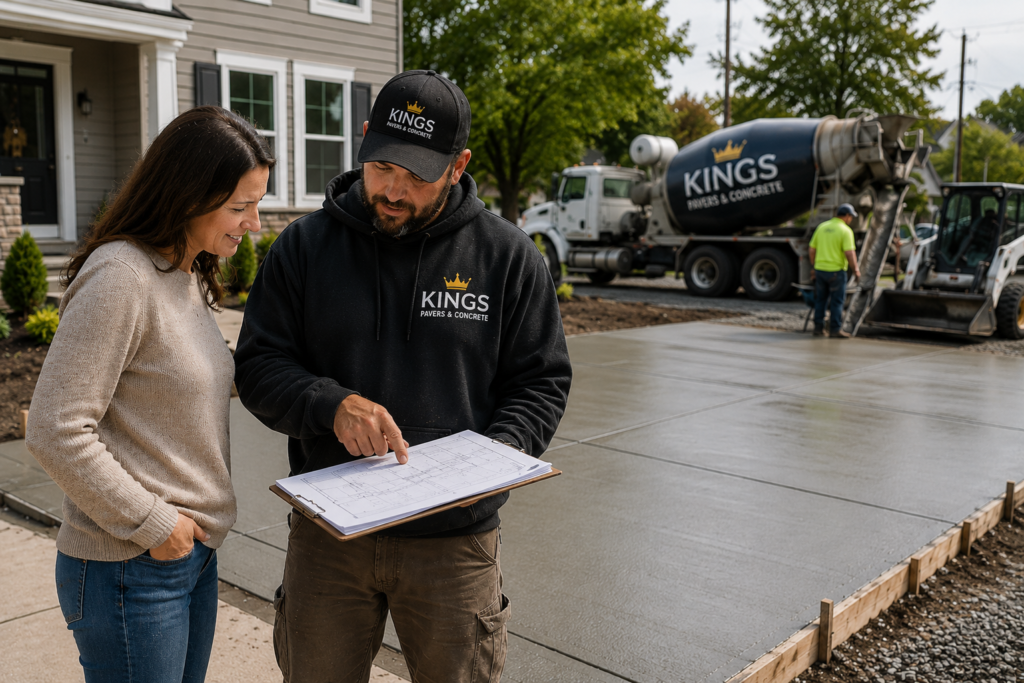
If you’ve ever called a concrete contractor for an estimate and nearly fell out of your chair when you heard the number, you’re not alone. I’ve been doing concrete work in New York for over 20 years, and the conversation about pricing is one I have almost every day. Here’s the thing: concrete work looks simple from the outside. You pour some gray stuff, it hardens, done. But the reality is a lot more complicated and a lot more expensive than most people expect. Labor, materials, site prep, permits, equipment, and New York’s cost of living all stack up fast. This guide breaks down what you’re actually paying for when you hire a concrete contractor here, what typical projects cost, and how to make sure you’re getting fair value for your money. What Does a Concrete Contractor Actually Charge Per Hour? Let’s get to the number people always ask first. In New York, most concrete contractors charge somewhere between $65 and $150 per hour for labor, depending on the type of work and the crew involved. That range is wide, and it’s wide for a reason: skilled finishing work costs more than basic labor. A laborer helping with excavation or cleanup might be on the lower end. An experienced finisher who knows how to work concrete in cold weather, match an existing surface, or pour a level foundation? That person commands a premium. For commercial projects, rates often run higher, typically $90 to $160+ per hour, because the work usually involves tighter tolerances, more inspection requirements, and larger crews. Service Type Typical Hourly Rate Project Examples General concrete labor $65–$85/hr Site prep, cleanup, basic forming Residential finishing $80–$120/hr Driveways, patios, walkways Structural / foundation work $100–$140/hr Foundations, retaining walls Commercial concrete $110–$160+/hr Commercial slabs, parking structures Decorative / specialty concrete $120–$175/hr Stamped, stained, and polished surfaces Most contractors don’t actually bill strictly by the hour on larger jobs; they give you a project price. But that project price is based on an internal estimate of the number of labor hours involved, so understanding the hourly rate helps you evaluate whether a quote makes sense. Factors That Affect Concrete Contractor Pricing When someone asks me how much a concrete contractor costs for their specific project, my honest answer is: it depends. Here are the things that genuinely move the price up or down. Project Size Larger projects generally cost less per square foot than small ones. Mobilizing a crew, renting equipment, and ordering materials all have fixed costs. If you’re pouring a 1,000 sq ft driveway instead of a 200 sq ft pad, those fixed costs get spread out. Don’t expect that logic to work in reverse. Small jobs often cost more per square foot precisely because the overhead doesn’t shrink. Location Within New York Manhattan and the other boroughs carry significantly higher costs than upstate. Parking fees, permits, tight access, and simply the cost of doing business in the city all factor in. A patio in Brooklyn will almost always cost more than the same patio in Albany, sometimes 30–50% more. Material Costs Concrete pricing fluctuates with supply chains. In recent years, we’ve seen material costs swing considerably. Ready-mix concrete in New York currently runs roughly $130 to $160 per cubic yard, not including delivery, pumping, or additives such as fiber reinforcement or accelerators for cold-weather pours. Site Preparation This one surprises people. If there’s an existing concrete slab to demo and haul away, or if the ground needs significant grading, expect that to add real money. Demolition alone can run $2–$6 per square foot depending on thickness and access. I’ve had jobs where the demo cost more than the new pour. Accessibility Can a concrete truck get close to the work area? If not, we’re pumping, and pump rentals run $500 to $1,500+ depending on the setup. Tight gates, stairs, or landscaping that has to be protected all add time and cost. Labor Complexity A broom-finished walkway and a decorative stamped patio might use the same concrete mix, but the stamped patio takes two to three times as long. Rebar installation, custom forming, or unusual shapes all add to the labor clock. Permits and Inspections In New York, certain projects, especially anything structural, require permits. Permit costs vary by municipality, but budget $200–$800 for residential permits in most areas, and potentially more in NYC. Inspections can also add to the timeline, which affects labor costs if the crew is waiting. Average Cost of Common Concrete Projects in New York Here’s what real projects actually cost in New York. These are ranges based on typical residential work; commercial projects usually run higher. Project Type Typical Cost Range Concrete driveway (standard, 2-car) $5,000–$12,000 Concrete patio (400–600 sq ft) $4,500–$10,000 Concrete sidewalk (50 linear ft) $1,500–$3,500 Foundation (small residential) $12,000–$35,000+ Garage floor (standard 2-car) $3,000–$7,000 Commercial slab (2,000 sq ft) $18,000–$40,000+ Decorative/stamped patio $8,000–$18,000 Concrete steps (exterior, 4–6 steps) $1,500–$4,000 Crack repair/resurfacing $500–$3,500 A few things worth noting: these numbers assume reasonable site conditions and standard finishes. Add decorative elements, difficult access, or major demo work, and prices climb. Why the Cheapest Quote Isn’t Always the Best Choice I’ll be straightforward here, because I’ve seen homeowners go with the low bid and end up spending more in the long run than they would have with a fair-priced contractor. The most common shortcuts I’ve seen from low-bidding contractors: Here’s a real example. A homeowner in Westchester called me after a contractor they’d hired, one they chose because his quote was about $2,000 lower than mine, poured their driveway. Within 18 months, cracks had appeared throughout, and by year three, a full section had heaved and broken apart. The repair and replacement ended up costing more than my original quote would have. I’m not saying every low bid is a red flag. Some contractors are just more efficient. But when a quote is 30–40% below everyone else, there’s usually a reason. Step-by-Step Guide to Hiring a Concrete Contractor Step 1: Define the Project
What to Look for in a Concrete Contractor: A Complete Guide
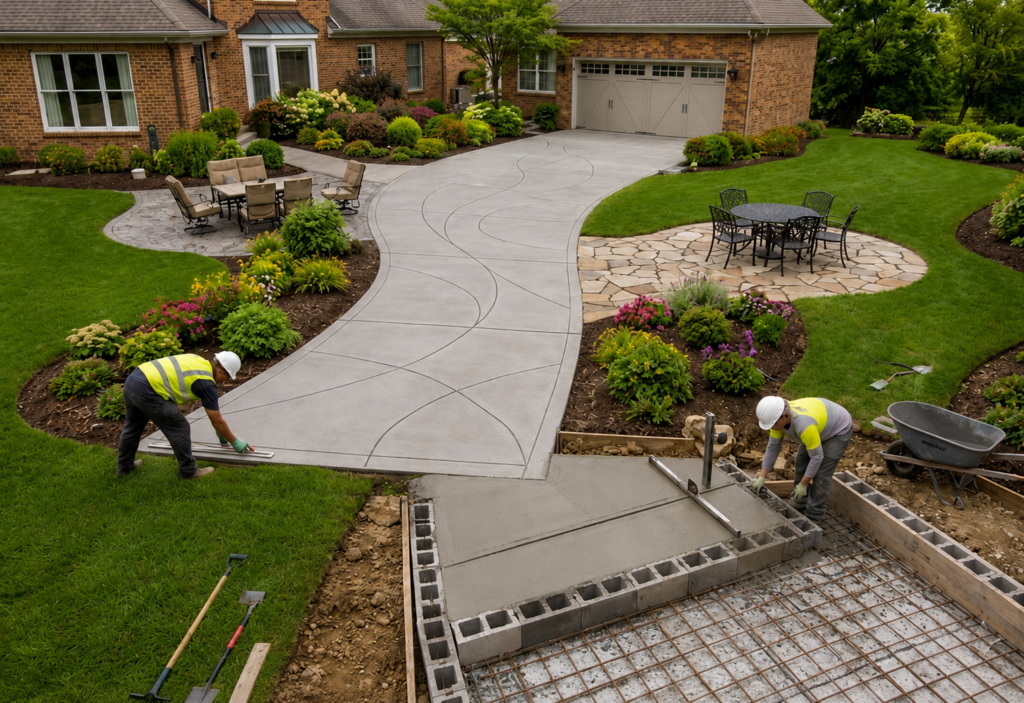
Concrete is a permanent decision. Unlike almost any other home improvement project, a concrete pour involves a chemical reaction that, once started, cannot be easily undone. It is a structural element that becomes a literal part of your property’s foundation and long-term equity. Hiring a contractor is not merely about finding someone with a truck and the physical strength to move wet material; it is about finding a technician who understands the chemistry of hydration and the physics of load-bearing. This guide is your roadmap to identifying a partner who values structural integrity as much as aesthetic beauty. 2. The Science of the Subgrade: The Invisible Foundation The most common mistake in the industry is focusing entirely on the top surface while ignoring what lies beneath. A concrete slab is only as stable as the ground supporting it. Soil Analysis and Site Preparation A master contractor begins with the dirt. They must analyze the soil composition of your specific lot. In many regions, expansive clays or loose sandy loams require different preparation strategies. The Aggregate Base The use of a dedicated stone base is non-negotiable for high-quality work. This layer acts as a “buffer” between the earth and the concrete. It provides essential drainage, ensuring that moisture does not sit directly beneath the slab, which is the primary cause of “heaving” during seasonal temperature shifts. 3. Concrete Mix Design: Understanding the “Recipe” Think of concrete like a sophisticated chemical cocktail. Every project requires a specific “mix design” tailored to its intended use. You need to know that your contractor is ordering a high-quality product from a reputable ready-mix plant. Strength and Durability Instead of looking for the cheapest mix, a pro looks for the densest mix. A higher-strength mix is less permeable, meaning it resists the penetration of water, oils, and environmental chemicals that cause internal degradation over time. Environmental Admixtures In regions that experience frost or heavy moisture, the mix must include specific “admixtures.” The most important of these is Air Entrainment. This process adds billions of microscopic bubbles to the wet concrete. These bubbles act as tiny pressure-relief valves. When trapped moisture freezes and expands, it moves into these bubbles instead of shattering the internal structure of your concrete. 4. Reinforcement: The Skeleton of the Slab Concrete has incredible “crush” strength but very low “tensile” or pulling strength. Reinforcement provides the “muscle” that holds the slab together when the ground inevitably shifts. Rebar Mastery While some use thin wire mesh, a master contractor utilizes structural steel rebar. 5. The “Liability Shield”: Credentials that Matter In the professional world, a “handshake” is a liability. You must protect your home from legal and financial risks. 6. The Logistics of “Pour Day” A professional pour is a synchronized performance. Knowing what happens allows you to spot errors while they can still be corrected. 7. Curing vs. Drying: The Chemical Secret Concrete does not “dry” like a puddle; it “cures” through a chemical reaction called Hydration. 8. Red Flags: When to Walk Away 9. Frequently Asked Questions 10. The Ultimate Hiring Checklist 11. Conclusion: Choose Value Over Price In the world of concrete, the lowest bid is almost always a warning sign. By looking for a contractor who prioritizes technical specifications, subgrade physics, and proper chemical curing, you are ensuring that your investment stands the test of time. A master contractor is not just a laborer they are the guardian of your property’s foundation.