I get asked this question almost every week, usually while I’m standing in someone’s driveway pointing out cracks in twenty-year-old asphalt. “Is this actually worth it, or am I just throwing money at my driveway?”
Fair question. You’re not just paying for stone. You’re deciding whether to put real money into your property, and you want to know it’s going to pay off.
Here’s the honest answer: value isn’t only about what your house sells for someday. It’s also about how much you enjoy the space while you live there, how little you have to fuss with repairs, and how your home compares to the one next door when a buyer is deciding between the two.
In this guide, I’ll walk you through what I’ve actually seen after installing driveways, patios, walkways, and pool decks across New York for over two decades: what adds value, what buyers respond to, and where homeowners sometimes waste money.
Do Pavers Really Increase Home Value?
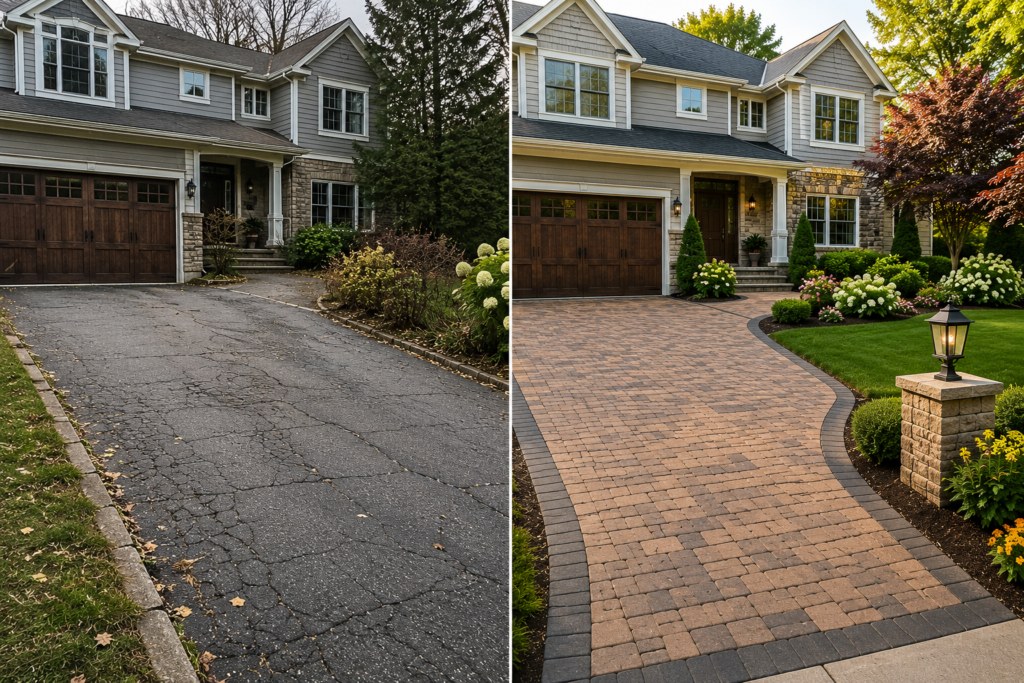
Yes, in most cases, a professionally installed paver driveway, patio, or walkway increases home value by improving curb appeal, functionality, and buyer perception, while offering better long-term durability than poured concrete or asphalt. Actual ROI depends on installation quality, material choice, and your local market.
A few things drive that value:
Curb appeal. The driveway and front walkway are the first things a buyer sees, often before they even get out of the car. A clean, well-laid paver surface signals that the home has been cared for.
Functionality. Pavers hold up to New York’s freeze-thaw cycles better than most surfaces when installed with proper base preparation and drainage. That matters here more than almost anywhere else in the country.
Buyer perception. Buyers tend to associate pavers with a “finished,” upgraded property rather than a fixer-upper.
Durability. A well-installed paver surface can be repaired section by section instead of being torn out entirely, which matters over a decade or two of ownership.
Potential ROI. Outdoor hardscape projects are consistently cited by real estate and remodeling industry sources as among the better-performing home improvements for resale value, though exact returns vary widely by region and project.
Here’s how paver driveways generally stack up against other common driveway materials I install or replace:
| Outdoor Upgrade | Estimated ROI | Impact on Curb Appeal | Maintenance Level |
| Paver Driveway | Strong, varies by region | High | Low to moderate |
| Concrete Driveway | Moderate | Moderate | Low |
| Asphalt Driveway | Lower | Low to moderate | Moderate (resealing needed) |
| Decorative Concrete | Moderate to strong | Moderate to high | Moderate |
I want to be upfront: I’m not going to hand you a specific percentage return, because anyone who does without seeing your property, your neighborhood, and your market is guessing. What I can tell you is which projects tend to perform well and why.
Why Buyers Prefer Homes with Pavers
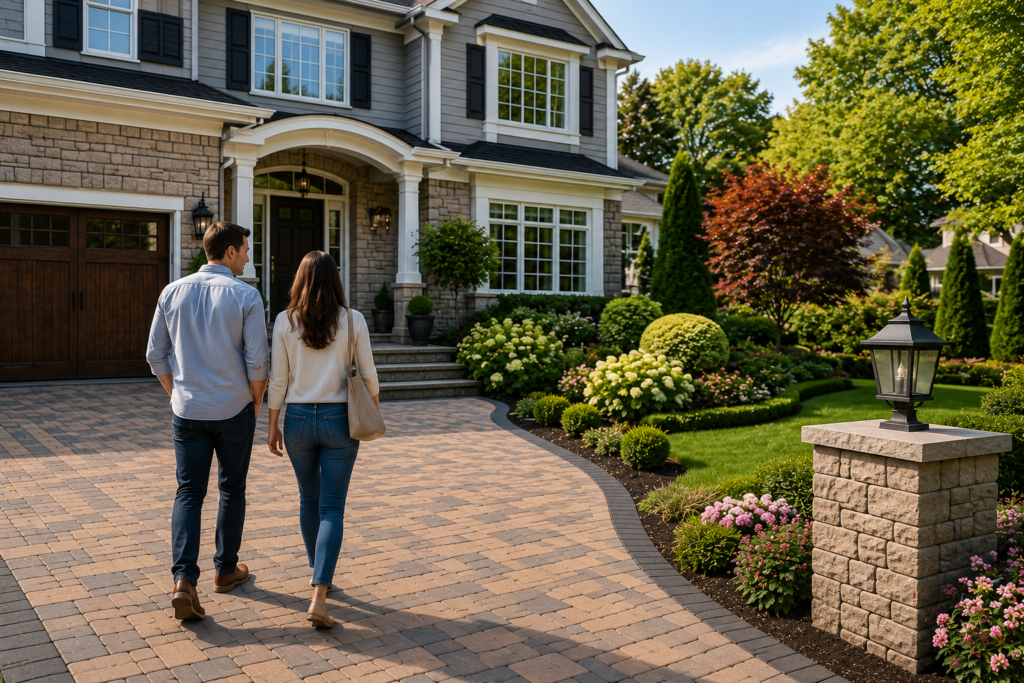
I’ve walked through a lot of open houses over the years, sometimes as a favor to past clients who wanted my opinion before listing. The homes with paver driveways and patios almost always get a comment from buyers, even ones who don’t know a paver from poured concrete.
Premium appearance. Pavers come in enough colors, textures, and patterns that a driveway or patio can actually look designed, not just installed.
Low maintenance. No large slabs to crack, no annual sealcoating like asphalt requires. A quick rinse and occasional joint sand top-up is usually all it takes.
Durability. Individual pavers can be lifted and reset if something shifts, instead of jackhammering out an entire section like you would with concrete.
Design flexibility. Borders, patterns, and material blends let a driveway or patio match the architecture of the house instead of looking like an afterthought.
Outdoor entertaining spaces. A paver patio extends living space outside. I’ve had clients tell me their patio became the room they use most in the summer.
One homeowner in Westchester told me her real estate agent specifically mentioned the paver walkway and front patio in the listing photos before anything else about the house. That’s not something I hear about every project, but it happens often enough that I pay attention to it.
Which Paver Projects Add the Most Value?
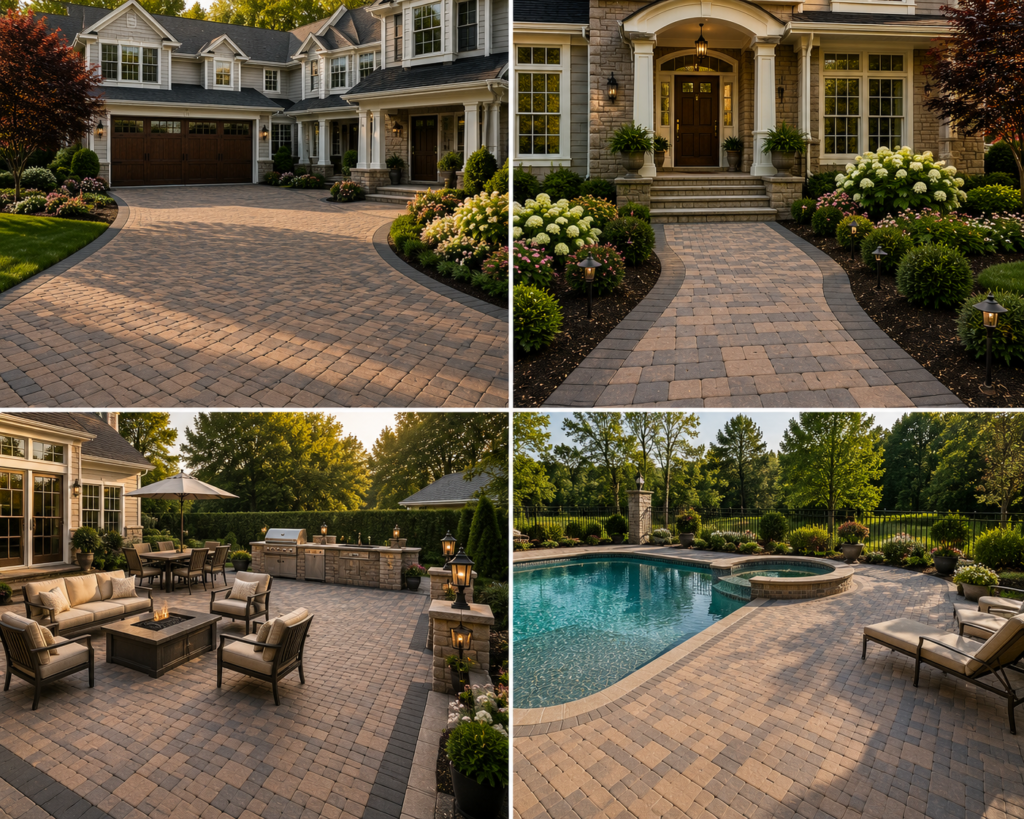
Not every paver project delivers the same return. Here’s how I’d rank them based on what I’ve seen buyers and appraisers respond to over the years.
| Project Type | Value Added | Best For | Typical Lifespan |
| Driveway | High | First impressions, daily use | 25–30+ years with proper base |
| Front Entrance/Walkway | High | Curb appeal, first impression | 25–30+ years |
| Patio | High | Outdoor living, entertaining | 25–30+ years |
| Pool Deck | Moderate to high | Homes with pools | 20–30 years |
| Garden Pathway | Moderate | Landscaping cohesion | 20–25 years |
| Outdoor Kitchen | Moderate | Entertaining-focused buyers | Varies by components |
Driveways and front walkways tend to matter most because every buyer sees them, whether they’re touring the home or just driving by. Patios come in close behind, especially in a lot of New York suburbs where outdoor living space has become something buyers actively look for.
Pool decks and outdoor kitchens add real enjoyment and can help a home stand out, but they appeal to a narrower slice of buyers, so I’d rank them slightly below driveway and patio work if you’re prioritizing resale value specifically.
How Much ROI Can You Expect from Paver Installation?
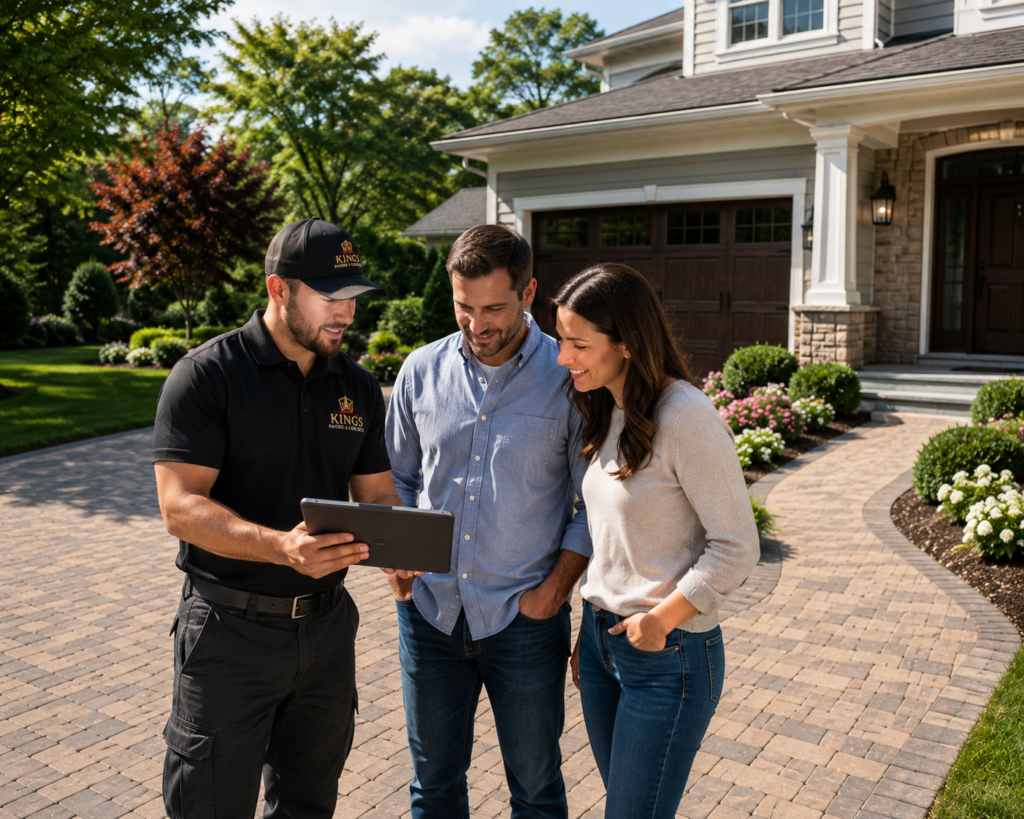
I wish I could give you a clean number here. I can’t, and honestly, any contractor who does is either guessing or trying to close a sale.
ROI on a paver project depends on:
Project quality. A driveway installed on a properly compacted base with correct drainage will hold its value. One installed by a crew cutting corners on base depth will develop problems within a few years, and that shows up during a home inspection.
Neighborhood. A paver driveway on a street where every other home has plain asphalt stands out more than one on a street where paver driveways are already the norm.
Material selection. Higher-end pavers with better color retention and finish tend to hold up better visually over time, which matters to future buyers.
Installation workmanship. This is the biggest variable, and it’s the one homeowners have the most control over. A poorly installed paver driveway can actually hurt resale value if it’s heaving, settling, or has weeds growing through the joints.
Property condition overall. A beautiful driveway on a house that needs a new roof isn’t going to move the needle much on its own.
If someone tells you a paved driveway will add a guaranteed dollar amount to your home’s value, I’d ask them how they know that without ever seeing your house.
Step-by-Step Guide to Maximizing Property Value with Pavers
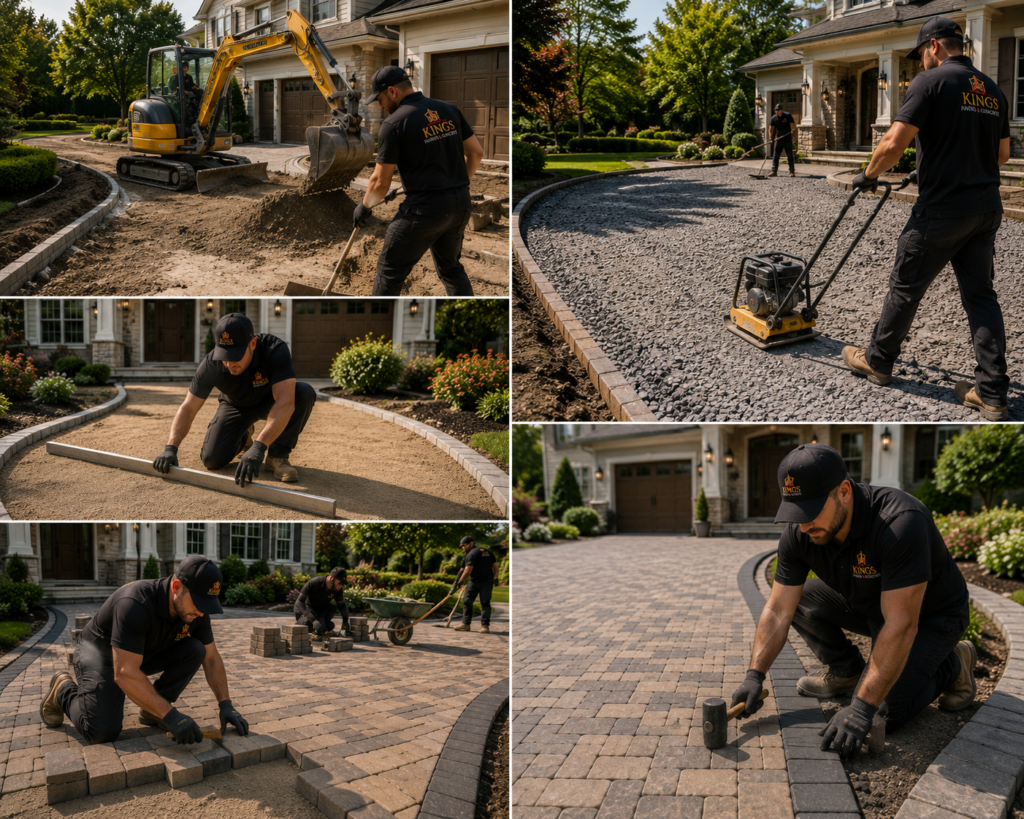
Step 1: Choose the right location. Start with the areas buyers actually notice: driveway, front walkway, entryway patio, before spending on features tucked in the backyard.
Step 2: Select durable materials. Not all pavers are made the same. Ask about thickness, load rating (especially for driveways), and freeze-thaw performance, which matters a lot in New York’s climate.
Step 3: Choose timeless colors. I’ve torn out plenty of driveways in colors that were trendy fifteen years ago and look dated now. Neutral grays, tans, and blends tend to age better than bold or unusual color choices.
Step 4: Hire an experienced installer. Base preparation is the single biggest factor in whether a paver project lasts. Ask any contractor about base depth, compaction method, and drainage plan before signing anything.
Step 5: Maintain your investment. Resealing every few years, keeping joint sand topped up, and addressing small issues early keeps a paver surface looking new for decades.
Real Homeowner Case Study
A homeowner on Long Island came to me a few years back with a driveway that was original to the house, cracked asphalt, patched in a couple of spots, with grass growing through the seams. They were planning to sell within the year and wanted to know if it was worth replacing before listing.
We replaced the asphalt with a paver driveway, added a matching front walkway, and cleaned up the entry landing with the same material for a cohesive look.
When the house went on the market, it sold faster than two comparable homes on the same street that were still listed weeks later. Their agent mentioned that buyers commented on the entryway specifically during showings.
I can’t tell you the driveway alone sold the house. Price, location, and condition of the rest of the property all played a role. But the homeowner and their agent both felt the improved curb appeal made a real difference in how quickly buyers responded and how the home compared to similar listings nearby.
The lesson I took from that project, and ones like it: first impressions matter more than people expect, and a tired driveway can quietly work against you even if the rest of the house is in great shape.
Expert Insight
I asked a longtime colleague of mine, a hardscape contractor who’s been installing pavers across the region for close to thirty years, why he thinks paver projects continue to hold up so well decades later. His take: it almost always comes down to what’s underneath. “People look at the pavers on top and think that’s the product,” he said. “The base is the product. Get that right, and the surface takes care of itself for thirty years.”
That matches what I’ve seen too. The driveways and patios still looking great after fifteen or twenty years are the ones where the base work was done the first time properly.
Common Mistakes That Reduce the Value of Paver Projects
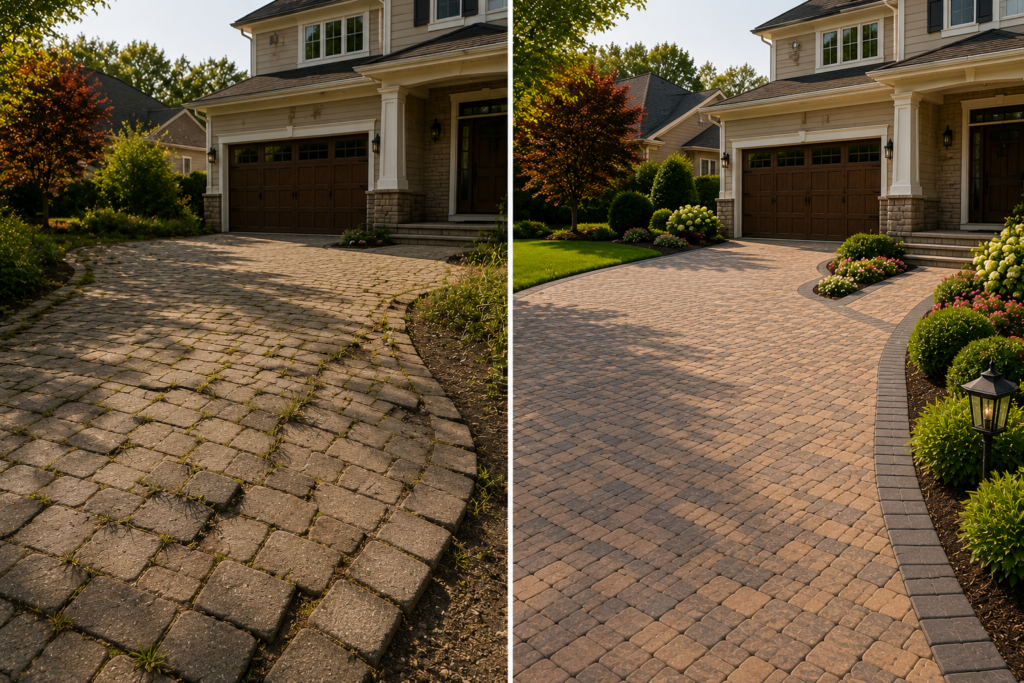
Choosing trendy colors that age poorly. What looks current today can look dated in a decade. Neutral tones tend to hold appeal longer.
Poor drainage. Water pooling on a patio or driveway leads to settling, staining, and ice hazards in winter. Drainage should be planned before the first paver goes down.
DIY installation. I’ve been called in more than once to fix a driveway a homeowner tried to install themselves. Base compaction and proper slope are harder to get right than they look, and mistakes here are expensive to correct later.
Ignoring edge restraints. Without proper edging, pavers shift and spread over time, especially on driveways that see regular vehicle traffic.
Skipping maintenance. Joint sand washes out, weeds creep in, and surfaces can shift if a paver installation is never resealed or refreshed. A little upkeep every few years prevents bigger problems.
Are Pavers Better Than Concrete or Asphalt?
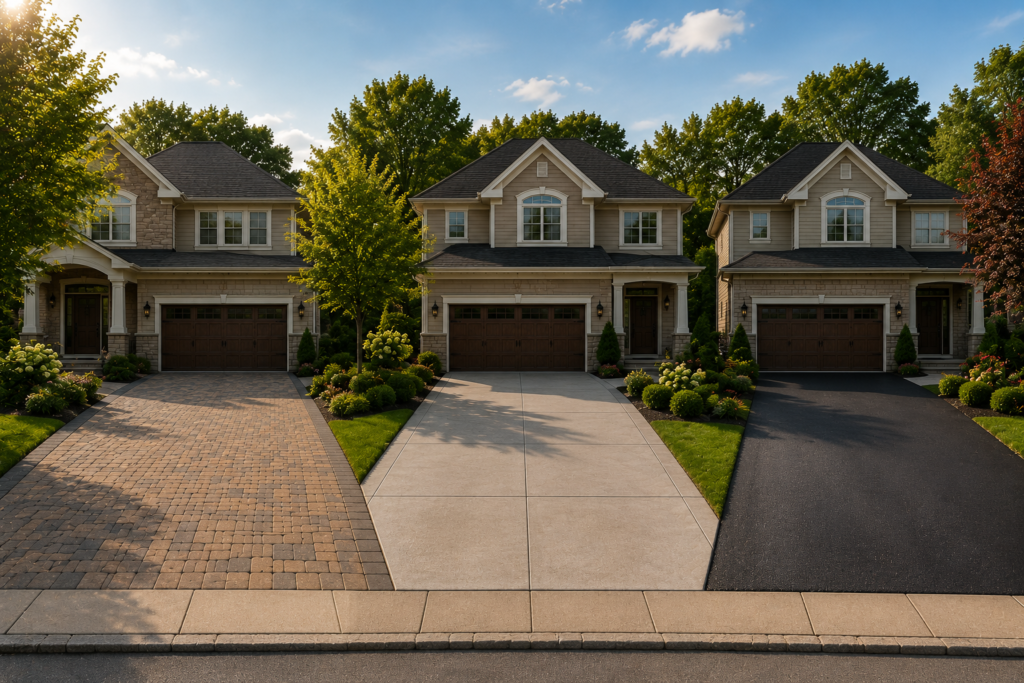
| Feature | Pavers | Concrete | Asphalt |
| Lifespan | 25–30+ years | 20–30 years | 15–20 years |
| Maintenance | Low, occasional resealing | Low | Regular resealing needed |
| Repairability | Individual units replaceable | Full-section replacement | Patchwork repairs common |
| Appearance | Wide range of colors/patterns | Limited design options | Limited, mostly utilitarian |
| ROI | Generally strong | Moderate | Lower |
| Cost | Higher upfront | Moderate | Lower upfront |
Pavers usually cost more upfront than asphalt or plain concrete, but the repairability and appearance tend to make up for that over the life of the surface. Concrete is a reasonable middle ground if budget is the main concern. Asphalt is the most affordable option initially but usually needs more frequent maintenance and doesn’t offer much in terms of design or curb appeal.
Frequently Asked Questions
Do pavers increase home value? In most cases, yes. Professionally installed pavers improve curb appeal, functionality, and buyer perception, which can support a stronger resale value compared to plain concrete or asphalt. Exact returns vary by market and installation quality.
Are pavers worth the investment? For most New York homeowners, yes, especially for driveways, front walkways, and patios, which see daily use and are highly visible to buyers and guests alike.
Do paver driveways increase resale value? They often do, largely because of improved curb appeal and buyer perception. The degree depends on installation quality, neighborhood norms, and overall property condition.
How long do pavers last? A properly installed paver driveway or patio can last 25 to 30 years or more, especially with a solid base and routine maintenance.
Are pavers better than concrete? Pavers generally offer better repairability, design flexibility, and appearance than concrete, though concrete can be a reasonable lower-cost alternative depending on budget and goals.
Which paver project adds the most value? Driveways and front walkways tend to add the most value since they’re the first things buyers see, closely followed by patios for their appeal to buyers who value outdoor living space.
Conclusion
Pavers aren’t a guaranteed dollar-for-dollar return, and anyone telling you otherwise isn’t being straight with you. What they are is a long-term investment in how your property looks, functions, and holds up over time, and in my experience, that consistently pays off when it’s time to sell.
You’re most likely to see real value when the installation is done right from the base up, when you choose materials and colors that won’t feel dated in ten years, and when you maintain the investment instead of ignoring it.
If you’re weighing a driveway, patio, or walkway project and want an honest read on what makes sense for your property, that’s a conversation worth having before you spend a dime.
Thinking about upgrading your driveway, patio, or walkway? Reach out for a consultation, and we’ll walk your property together and talk through what actually makes sense for your home and budget.