Can You Lay Pavers Without a Base? What Every New York Property Owner Should Know
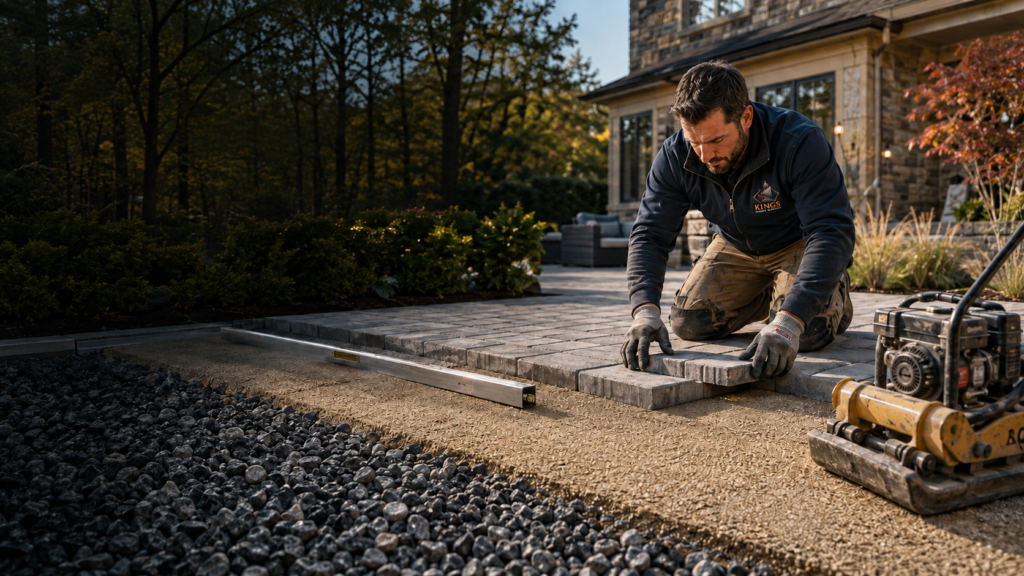
I get this question a lot, usually from someone standing in their backyard with a pallet of pavers already delivered, trying to figure out if they really need to rent a plate compactor and haul in gravel. The honest answer is yes, you can technically lay pavers directly on dirt or grass. People do it every weekend across New York. But “can” and “should” are two very different things, and after twenty-plus years of installing patios, driveways, and walkways from Long Island to the Hudson Valley, I can tell you which projects hold up and which ones end up as repair calls. Skipping the base is tempting. It saves time, cuts out the cost of gravel and delivery, and skips the most physically demanding part of the job. I understand the appeal. But before you skip it, you should know exactly what you’re trading away. Can You Lay Pavers Without a Base? Yes, you can lay pavers without a base, but it’s rarely a good idea for anything permanent. Without a compacted gravel base, pavers shift, sink, and settle unevenly, especially through New York’s freeze-thaw winters. Skipping the base works only for temporary or very low-traffic projects like a short garden path. That’s the short version. Here’s the longer one. If you’re working on a small decorative path through a flower bed, something nobody’s going to walk on with regularity or drive a wheelbarrow over, you can get away with laying pavers on compacted soil or a thin layer of sand. I’ve seen plenty of these hold up fine for years because the loads are light and the area is small enough that any minor settling isn’t a big deal. But for a patio, walkway, driveway, or anything near a house foundation, skipping the base is a mistake I’ve been called out to fix more times than I can count. New York soil isn’t forgiving. We’ve got clay-heavy ground in a lot of areas; we get real winters with deep frost, and heavy rain events that used to be occasional are happening more often. All three of those conditions punish an installation that doesn’t have proper support underneath it. Professionals don’t recommend skipping the base because pavers themselves aren’t what holds the surface together. The base is. The pavers are just the top layer sitting on a system that’s supposed to handle drainage, weight, and ground movement. Take that system away, and you’re basically hoping the dirt underneath cooperates. It usually doesn’t. Why a Proper Base Is So Important A paver base isn’t just filler material. It’s doing several jobs at once, and each one matters. Stability. Compacted gravel locks together and creates a firm, load-bearing surface. Without it, pavers rest directly on soil that shifts with moisture, temperature, and foot traffic. Drainage. Water needs somewhere to go. A properly graded gravel base lets water move through and away from the pavers instead of pooling on the surface or seeping into the joints. Weight distribution. Whether it’s people walking across a patio or a car parked on a driveway, the base spreads that weight out across a wider area so no single spot takes the full impact. Frost protection. This one is huge in New York. When water sits under pavers and freezes, it expands. That expansion pushes pavers up and out of alignment. A properly built base, especially one that extends below the frost line for driveways, reduces how much that freeze-thaw cycle can move things around. Long-term durability. Put all of the above together, and you get a surface that stays flat, drains correctly, and holds its shape for decades instead of a couple of seasons. Here’s a side-by-side look at what you’re really choosing between. Factor Without Base Proper Base Installation Stability Shifts and sinks over time Stays firm under foot and vehicle traffic Drainage Water pools on surface Water drains through and away Weight handling Pavers bear load directly Load spread across compacted stone Frost resistance Highly vulnerable to heaving Built to handle freeze-thaw cycles Weed growth Common through gaps and soft ground Minimized by compacted layers Lifespan 1–3 years before major issues 20–30+ years with basic upkeep Repair frequency Frequent, often within the first year Rare, mostly routine maintenance What Happens When You Skip the Base? I’ve walked onto a lot of properties where someone laid pavers straight on dirt because a video made it look simple. The early stages usually look fine. It’s what happens over the following months that tells the real story. Uneven settling is the first thing homeowners notice. Foot traffic compresses soft ground unevenly, so certain pavers start sitting lower than their neighbors. Once that starts, it doesn’t stop on its own. Weed growth becomes a constant fight. Without a compacted base blocking growth from underneath, weeds and grass push up through the joints within a single growing season. Water pooling shows up after the first heavy rain. Instead of draining through a graded base, water sits on top of the pavers or collects in low spots, which is exactly the kind of thing that turns a patio into a mosquito breeding ground. Loose pavers follow soon after. With nothing locking them into place from below, individual pavers start rocking underfoot. I’ve had homeowners call me because a paver flipped up and became a trip hazard. Cracking happens more with concrete pavers than natural stone, but it happens either way once there’s a void underneath from settling. Pavers aren’t designed to span gaps. They need consistent support. Frequent repairs are the result of all of the above. I’ve re-done entire patios that were installed without a base less than two years earlier, and the homeowner ended up paying for the labor twice. One project that sticks with me was a small backyard patio in Nassau County. The homeowner had laid the pavers himself on packed dirt to save on the gravel base. It looked great for about eight months. Then the edges started sinking near the low corner of
Do Pavers Increase Home Value? A New York Homeowner’s Guide
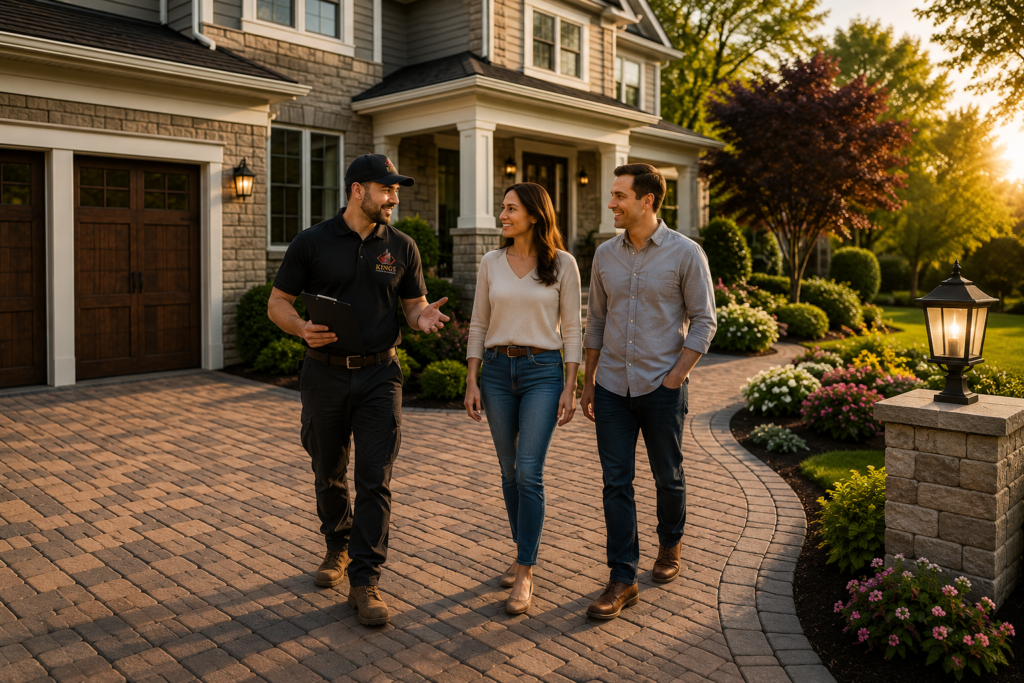
I get asked this question almost every week, usually while I’m standing in someone’s driveway pointing out cracks in twenty-year-old asphalt. “Is this actually worth it, or am I just throwing money at my driveway?” Fair question. You’re not just paying for stone. You’re deciding whether to put real money into your property, and you want to know it’s going to pay off. Here’s the honest answer: value isn’t only about what your house sells for someday. It’s also about how much you enjoy the space while you live there, how little you have to fuss with repairs, and how your home compares to the one next door when a buyer is deciding between the two. In this guide, I’ll walk you through what I’ve actually seen after installing driveways, patios, walkways, and pool decks across New York for over two decades: what adds value, what buyers respond to, and where homeowners sometimes waste money. Do Pavers Really Increase Home Value? Yes, in most cases, a professionally installed paver driveway, patio, or walkway increases home value by improving curb appeal, functionality, and buyer perception, while offering better long-term durability than poured concrete or asphalt. Actual ROI depends on installation quality, material choice, and your local market. A few things drive that value: Curb appeal. The driveway and front walkway are the first things a buyer sees, often before they even get out of the car. A clean, well-laid paver surface signals that the home has been cared for. Functionality. Pavers hold up to New York’s freeze-thaw cycles better than most surfaces when installed with proper base preparation and drainage. That matters here more than almost anywhere else in the country. Buyer perception. Buyers tend to associate pavers with a “finished,” upgraded property rather than a fixer-upper. Durability. A well-installed paver surface can be repaired section by section instead of being torn out entirely, which matters over a decade or two of ownership. Potential ROI. Outdoor hardscape projects are consistently cited by real estate and remodeling industry sources as among the better-performing home improvements for resale value, though exact returns vary widely by region and project. Here’s how paver driveways generally stack up against other common driveway materials I install or replace: Outdoor Upgrade Estimated ROI Impact on Curb Appeal Maintenance Level Paver Driveway Strong, varies by region High Low to moderate Concrete Driveway Moderate Moderate Low Asphalt Driveway Lower Low to moderate Moderate (resealing needed) Decorative Concrete Moderate to strong Moderate to high Moderate I want to be upfront: I’m not going to hand you a specific percentage return, because anyone who does without seeing your property, your neighborhood, and your market is guessing. What I can tell you is which projects tend to perform well and why. Why Buyers Prefer Homes with Pavers I’ve walked through a lot of open houses over the years, sometimes as a favor to past clients who wanted my opinion before listing. The homes with paver driveways and patios almost always get a comment from buyers, even ones who don’t know a paver from poured concrete. Premium appearance. Pavers come in enough colors, textures, and patterns that a driveway or patio can actually look designed, not just installed. Low maintenance. No large slabs to crack, no annual sealcoating like asphalt requires. A quick rinse and occasional joint sand top-up is usually all it takes. Durability. Individual pavers can be lifted and reset if something shifts, instead of jackhammering out an entire section like you would with concrete. Design flexibility. Borders, patterns, and material blends let a driveway or patio match the architecture of the house instead of looking like an afterthought. Outdoor entertaining spaces. A paver patio extends living space outside. I’ve had clients tell me their patio became the room they use most in the summer. One homeowner in Westchester told me her real estate agent specifically mentioned the paver walkway and front patio in the listing photos before anything else about the house. That’s not something I hear about every project, but it happens often enough that I pay attention to it. Which Paver Projects Add the Most Value? Not every paver project delivers the same return. Here’s how I’d rank them based on what I’ve seen buyers and appraisers respond to over the years. Project Type Value Added Best For Typical Lifespan Driveway High First impressions, daily use 25–30+ years with proper base Front Entrance/Walkway High Curb appeal, first impression 25–30+ years Patio High Outdoor living, entertaining 25–30+ years Pool Deck Moderate to high Homes with pools 20–30 years Garden Pathway Moderate Landscaping cohesion 20–25 years Outdoor Kitchen Moderate Entertaining-focused buyers Varies by components Driveways and front walkways tend to matter most because every buyer sees them, whether they’re touring the home or just driving by. Patios come in close behind, especially in a lot of New York suburbs where outdoor living space has become something buyers actively look for. Pool decks and outdoor kitchens add real enjoyment and can help a home stand out, but they appeal to a narrower slice of buyers, so I’d rank them slightly below driveway and patio work if you’re prioritizing resale value specifically. How Much ROI Can You Expect from Paver Installation? I wish I could give you a clean number here. I can’t, and honestly, any contractor who does is either guessing or trying to close a sale. ROI on a paver project depends on: Project quality. A driveway installed on a properly compacted base with correct drainage will hold its value. One installed by a crew cutting corners on base depth will develop problems within a few years, and that shows up during a home inspection. Neighborhood. A paver driveway on a street where every other home has plain asphalt stands out more than one on a street where paver driveways are already the norm. Material selection. Higher-end pavers with better color retention and finish tend to hold up better visually over time, which matters to future buyers. Installation workmanship. This
How Often Should Pavers Be Sealed? A New York Property Owner’s Guide
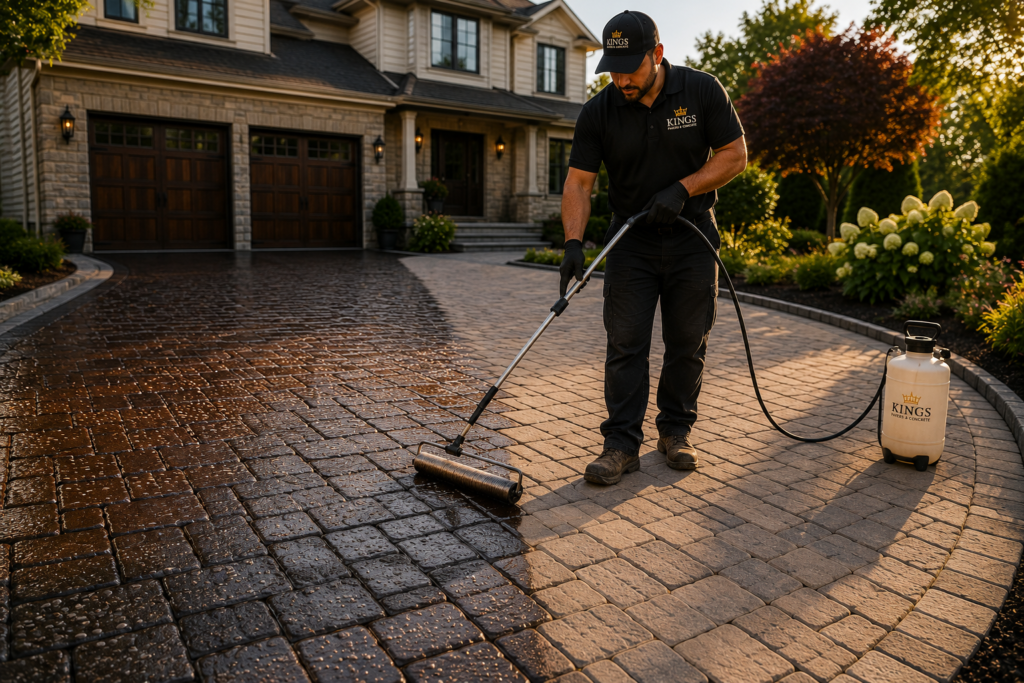
I get some version of this question almost every week: “I sealed my pavers when they were installed. Shouldn’t that be enough?” I understand why people think that way. A paver sealer job looks great on day one, and it’s easy to assume that finished look is permanent. But sealing isn’t a one-and-done project. It’s more like repainting a fence or staining a deck. It wears off, and New York weather makes sure of that. Between freezing winters, salt on the roads, humid summers, and rain that never seems to let up in spring, our pavers take a beating most other regions don’t deal with. That’s exactly why paver sealing needs to happen on a schedule, not just once. In this guide, I’ll walk you through how often pavers should actually be sealed, what changes that timeline, and how to tell when your pavers are asking for attention. This comes from two decades of kneeling on driveways and patios across New York, not from a textbook. Why Do Pavers Need to Be Sealed? A good sealer does a lot of quiet work that homeowners rarely think about until something goes wrong. Protection from moisture. Pavers are porous. Without a sealer, water soaks in, and in New York, that water freezes in winter. Ice expands. Over a few seasons, that expansion cracks and flakes the surface. UV protection. Sun exposure fades color faster than most people expect, especially on south-facing driveways and open patios with no shade. Preventing stains. Oil drips, leaf tannins, and rust from patio furniture, mildew sealed pavers shed most of it. Unsealed pavers absorb it. Weed reduction. Sealer locks down the joint sand between pavers, which makes it much harder for weed seeds to take root in the joints. Joint sand stabilization. Speaking of joint sand, sealing helps keep it in place instead of washing out every time it rains hard. Easier maintenance. Sealed surfaces clean up faster. A hose and a soft brush usually do the job instead of a pressure washer and an hour of scrubbing. Here’s a simple side-by-side of what I typically see on jobs: Sealed Pavers Unsealed Pavers Color stays rich for years Fades noticeably within 1–2 seasons Water beads on the surface Water soaks in and can freeze Stains wipe off easily Oil, rust, and organic stains set in Joint sand stays put Joint sand erodes and washes away Fewer weeds between joints Weeds sprout in loose joints Cleaning takes minutes Cleaning takes real effort How Often Should Pavers Be Sealed? This is the question everyone actually wants answered, so here’s my straight answer: most residential pavers need resealing every 2 to 4 years. But that range shifts depending on the surface, the traffic it takes, and the sealer used. Paver Type Recommended Sealing Interval Notes Driveways Every 2–3 years Vehicle weight and road salt accelerate wear Patios Every 3–4 years Less traffic, but still exposed to weather Walkways Every 3–4 years Foot traffic is lighter than driveways Pool decks Every 2–3 years Chlorine, water splash, and sun exposure wear sealer faster Commercial pavers Every 1–2 years Heavy foot or vehicle traffic wears sealer down quicker I always tell clients these numbers are a starting point, not a guarantee. I’ve seen driveways that needed resealing in eighteen months because of a steep slope that channels meltwater across the surface all winter. I’ve also seen shaded patios go five years and still look decent. The surface tells you when it’s ready; more on that below. What Factors Affect Sealing Frequency? A handful of things determine whether your pavers land on the short end or long end of that sealing window. New York freeze-thaw cycles. This is the big one. Water gets into tiny surface pores, freezes, expands, and stresses the sealer and the paver itself. Homes in colder pockets of the state, or anywhere with a lot of shade that keeps ice around longer, tend to need more frequent sealing. Heavy vehicle traffic. A driveway with two cars coming and going daily wears differently than a rarely used side path. More weight, more friction, faster breakdown. Direct sunlight. UV rays break down sealer chemically, not just visually. A south-facing patio with no tree cover will need attention sooner than a shaded backyard space. Drainage. I’ve walked onto properties where the grading pushes water toward the pavers instead of away from them. Standing water is one of the fastest ways to shorten a sealer’s life. Tree coverage. Shade sounds like a benefit, and it is for UV protection, but falling leaves, sap, and berries stain surfaces and hold moisture against the pavers longer. Type of sealer. Water-based sealers generally need reapplication more often than solvent-based or high-performance sealers, though they’re often easier to apply and have lower odor. Paver material. Concrete pavers, brick pavers, and natural stone pavers all absorb and release moisture differently, which affects how long a sealer holds up on each. Installation quality. This one surprises people. A driveway installed with poor compaction or inconsistent joint sand will show wear faster, sealer or no sealer. Good sealing can’t fully make up for a rushed installation. Signs Your Pavers Need to Be Resealed You don’t need a calendar reminder if you know what to look for. I tell every client to check these things once a year, ideally in spring after the snow clears. Step-by-Step Guide to Sealing Pavers Here’s the process I follow on every job, whether it’s a small walkway or a full commercial plaza. Step 1: Inspect the surface. Walk the entire area and note cracked pavers, loose joints, drainage issues, or heavy staining before doing anything else. Step 2: Deep clean the pavers. A pressure washer with the right nozzle and a paver-safe cleaner removes dirt, algae, and old sealer residue. Skipping this step is the number one reason sealer jobs fail early. Step 3: Replace joint sand if necessary. If sand has washed out or eroded, it needs to be swept back in and compacted