
I get some version of this question almost every week: “I sealed my pavers when they were installed. Shouldn’t that be enough?”
I understand why people think that way. A paver sealer job looks great on day one, and it’s easy to assume that finished look is permanent. But sealing isn’t a one-and-done project. It’s more like repainting a fence or staining a deck. It wears off, and New York weather makes sure of that.
Between freezing winters, salt on the roads, humid summers, and rain that never seems to let up in spring, our pavers take a beating most other regions don’t deal with. That’s exactly why paver sealing needs to happen on a schedule, not just once.
In this guide, I’ll walk you through how often pavers should actually be sealed, what changes that timeline, and how to tell when your pavers are asking for attention. This comes from two decades of kneeling on driveways and patios across New York, not from a textbook.
Why Do Pavers Need to Be Sealed?
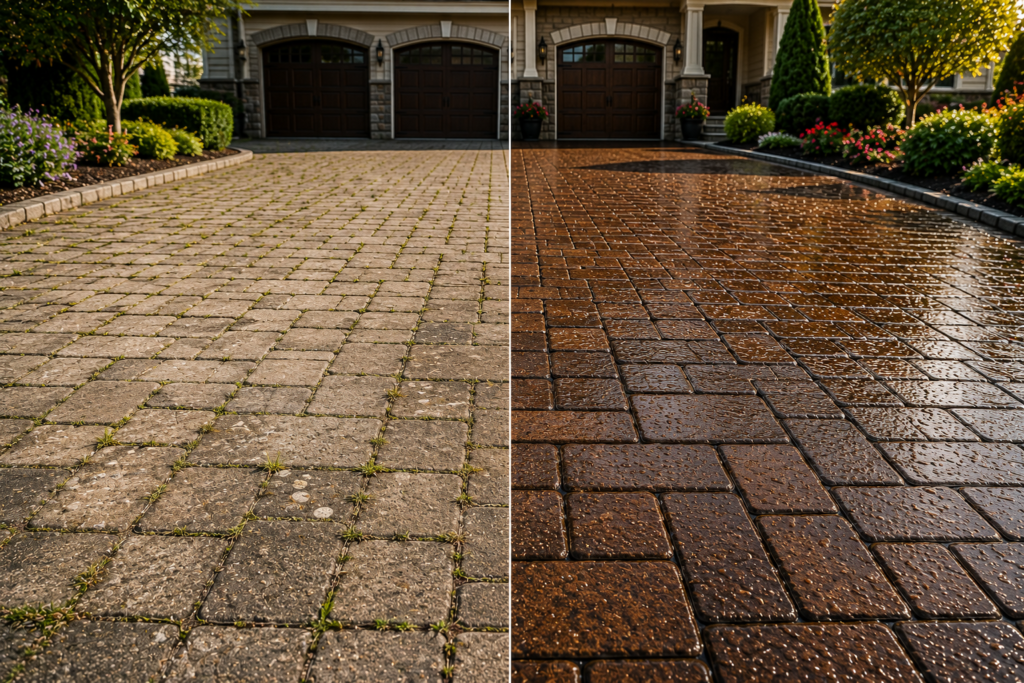
A good sealer does a lot of quiet work that homeowners rarely think about until something goes wrong.
Protection from moisture. Pavers are porous. Without a sealer, water soaks in, and in New York, that water freezes in winter. Ice expands. Over a few seasons, that expansion cracks and flakes the surface.
UV protection. Sun exposure fades color faster than most people expect, especially on south-facing driveways and open patios with no shade.
Preventing stains. Oil drips, leaf tannins, and rust from patio furniture, mildew sealed pavers shed most of it. Unsealed pavers absorb it.
Weed reduction. Sealer locks down the joint sand between pavers, which makes it much harder for weed seeds to take root in the joints.
Joint sand stabilization. Speaking of joint sand, sealing helps keep it in place instead of washing out every time it rains hard.
Easier maintenance. Sealed surfaces clean up faster. A hose and a soft brush usually do the job instead of a pressure washer and an hour of scrubbing.
Here’s a simple side-by-side of what I typically see on jobs:
| Sealed Pavers | Unsealed Pavers |
| Color stays rich for years | Fades noticeably within 1–2 seasons |
| Water beads on the surface | Water soaks in and can freeze |
| Stains wipe off easily | Oil, rust, and organic stains set in |
| Joint sand stays put | Joint sand erodes and washes away |
| Fewer weeds between joints | Weeds sprout in loose joints |
| Cleaning takes minutes | Cleaning takes real effort |
How Often Should Pavers Be Sealed?
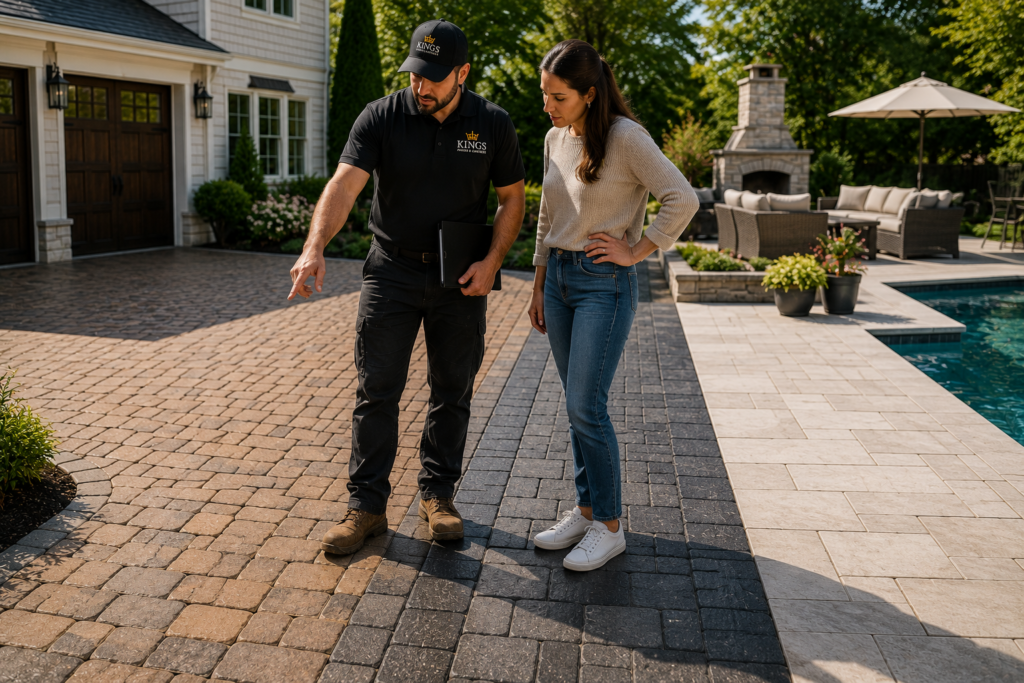
This is the question everyone actually wants answered, so here’s my straight answer: most residential pavers need resealing every 2 to 4 years. But that range shifts depending on the surface, the traffic it takes, and the sealer used.
| Paver Type | Recommended Sealing Interval | Notes |
| Driveways | Every 2–3 years | Vehicle weight and road salt accelerate wear |
| Patios | Every 3–4 years | Less traffic, but still exposed to weather |
| Walkways | Every 3–4 years | Foot traffic is lighter than driveways |
| Pool decks | Every 2–3 years | Chlorine, water splash, and sun exposure wear sealer faster |
| Commercial pavers | Every 1–2 years | Heavy foot or vehicle traffic wears sealer down quicker |
I always tell clients these numbers are a starting point, not a guarantee. I’ve seen driveways that needed resealing in eighteen months because of a steep slope that channels meltwater across the surface all winter. I’ve also seen shaded patios go five years and still look decent. The surface tells you when it’s ready; more on that below.
What Factors Affect Sealing Frequency?
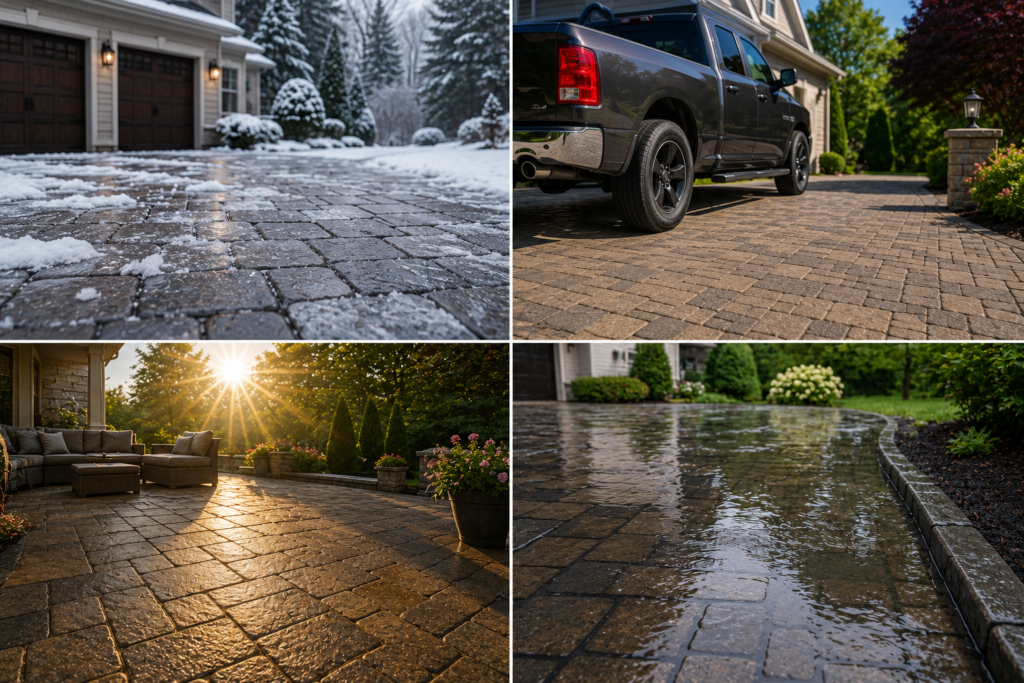
A handful of things determine whether your pavers land on the short end or long end of that sealing window.
New York freeze-thaw cycles. This is the big one. Water gets into tiny surface pores, freezes, expands, and stresses the sealer and the paver itself. Homes in colder pockets of the state, or anywhere with a lot of shade that keeps ice around longer, tend to need more frequent sealing.
Heavy vehicle traffic. A driveway with two cars coming and going daily wears differently than a rarely used side path. More weight, more friction, faster breakdown.
Direct sunlight. UV rays break down sealer chemically, not just visually. A south-facing patio with no tree cover will need attention sooner than a shaded backyard space.
Drainage. I’ve walked onto properties where the grading pushes water toward the pavers instead of away from them. Standing water is one of the fastest ways to shorten a sealer’s life.
Tree coverage. Shade sounds like a benefit, and it is for UV protection, but falling leaves, sap, and berries stain surfaces and hold moisture against the pavers longer.
Type of sealer. Water-based sealers generally need reapplication more often than solvent-based or high-performance sealers, though they’re often easier to apply and have lower odor.
Paver material. Concrete pavers, brick pavers, and natural stone pavers all absorb and release moisture differently, which affects how long a sealer holds up on each.
Installation quality. This one surprises people. A driveway installed with poor compaction or inconsistent joint sand will show wear faster, sealer or no sealer. Good sealing can’t fully make up for a rushed installation.
Signs Your Pavers Need to Be Resealed
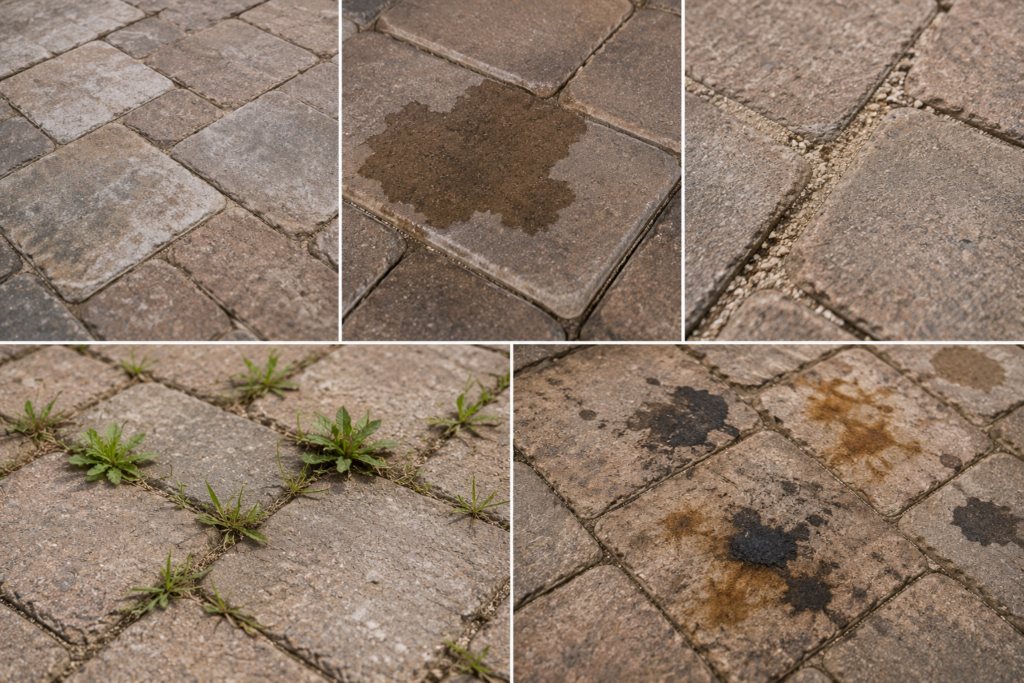
You don’t need a calendar reminder if you know what to look for. I tell every client to check these things once a year, ideally in spring after the snow clears.
- Color fading. If the pavers look noticeably duller or grayer than when they were installed, the sealer is likely wearing thin.
- Water no longer beads. Pour a little water on the surface. If it soaks in instead of forming beads, the sealer has broken down.
- Joint sand washing away. Gaps forming between pavers, or sand visibly missing after rain, means the joints need attention.
- Weed growth. New weeds popping up in joints that were previously clean is a reliable red flag.
- Surface stains. Oil, rust, or organic stains that didn’t used to show up as easily are a sign the protective layer is gone.
- Dull appearance. Sometimes it’s not one specific problem, just an overall flat, tired look compared to a freshly sealed surface.
Step-by-Step Guide to Sealing Pavers
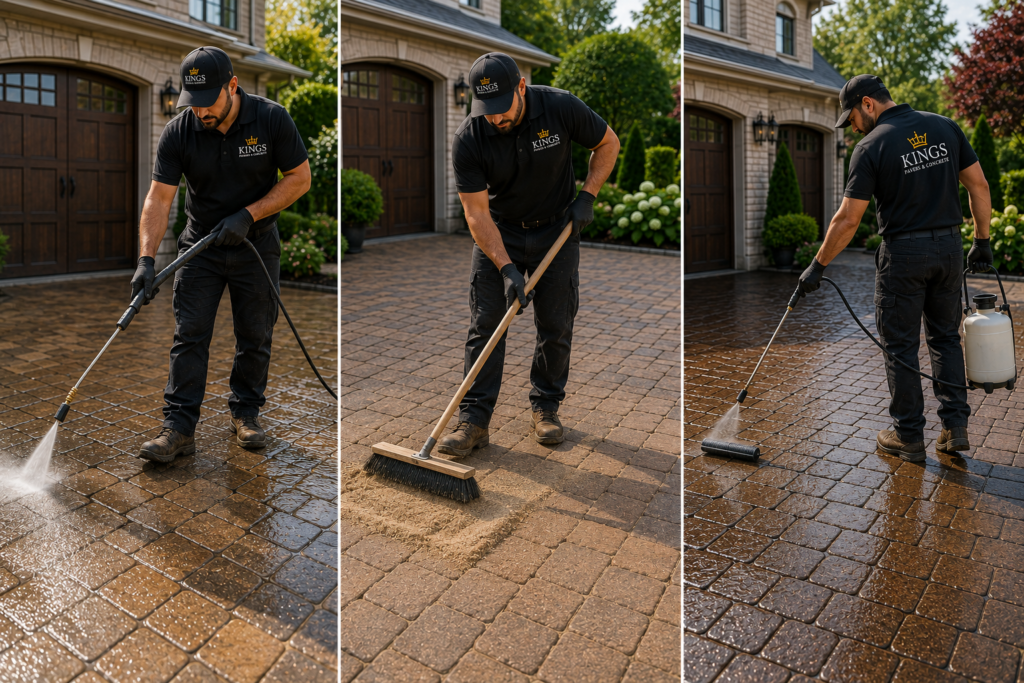
Here’s the process I follow on every job, whether it’s a small walkway or a full commercial plaza.
Step 1: Inspect the surface. Walk the entire area and note cracked pavers, loose joints, drainage issues, or heavy staining before doing anything else.
Step 2: Deep clean the pavers. A pressure washer with the right nozzle and a paver-safe cleaner removes dirt, algae, and old sealer residue. Skipping this step is the number one reason sealer jobs fail early.
Step 3: Replace joint sand if necessary. If sand has washed out or eroded, it needs to be swept back in and compacted before sealing locks it in place.
Step 4: Allow the surface to dry completely. This usually means 24 to 48 hours depending on humidity and temperature. Sealing over damp pavers traps moisture underneath and causes cloudy patches or peeling.
Step 5: Apply the correct sealer. Whether that’s a water-based, solvent-based, or specialty sealer depends on the paver material and how the space is used. Applying it evenly, usually with a sprayer and roller combo, prevents streaking.
Step 6: Allow proper curing time. Foot traffic can usually resume within a day, but vehicles should stay off a driveway for at least 48 to 72 hours so the sealer fully cures.
Common Mistakes Property Owners Make
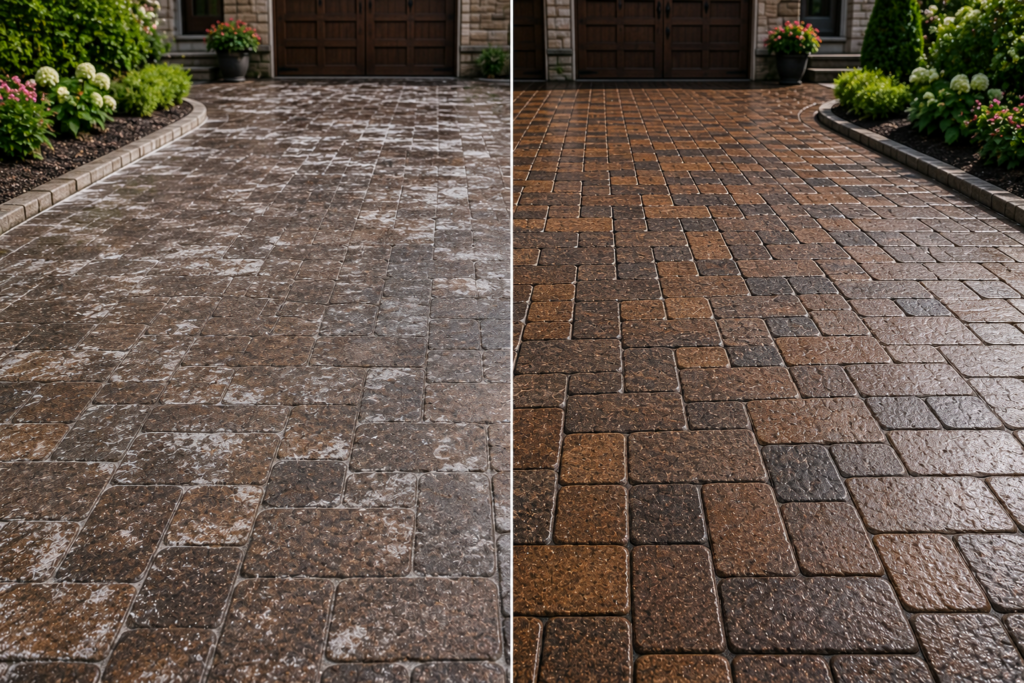
I’ve corrected all of these on other contractors’ work, and a few on my own crew’s early jobs years ago.
- Sealing too soon after installation. New pavers usually need 60 to 90 days to cure before sealing. Seal too early, and you can trap efflorescence (that white, chalky residue) under the sealer.
- Applying too much sealer. More isn’t better. Thick coats can turn cloudy, tacky, or peel within a season.
- Ignoring drainage issues. Sealing over a drainage problem just delays the damage. Fix the grading first.
- Choosing the wrong sealer. A glossy sealer on a pool deck can turn dangerously slick when wet. Matte, non-slip formulas matter in those areas.
- Skipping cleaning before sealing. Sealing over dirt, algae, or old sealer residue traps the problem underneath instead of solving it.
Case Study
A homeowner in the Hudson Valley called me a couple of years ago about a driveway that had gone from rich charcoal gray to a chalky, uneven tan in about four years. They’d sealed it once at installation and never touched it again, figuring the job was done for good.
By the time I got there, joint sand had washed out along the edges where water ran off toward the garage, and small weeds had taken hold in several joints. The surface no longer beaded water at all.
We pressure washed the entire driveway with a paver-safe cleaner, refilled the joints with polymeric sand, let everything dry for two full days, and applied a solvent-based sealer suited for vehicle traffic and New York winters. The color came back close to its original shade, and the homeowner started sealing every two and a half years after that instead of waiting for it to look bad again.
Two years later, that driveway still looks close to how it did right after the redo. That’s the difference routine sealing makes compared to waiting until it’s obvious.
Expert Insight
“There’s no single sealing schedule that fits every property. I’ve got clients on quiet residential patios who go four years between sealing, and commercial clients whose parking areas need it every twelve to eighteen months because of constant traffic and salt exposure. The schedule should match how the space is actually used, not just a number on a calendar.”
How Much Does Professional Paver Sealing Cost?
Costs vary based on square footage, surface condition, and whether cleaning or joint sand replacement is needed first. Here’s a general range I see across New York projects.
| Project Type | Typical Cost Range in New York |
| Driveway | $500 – $1,500 |
| Patio | $300 – $900 |
| Walkway | $150 – $500 |
| Pool Deck | $400 – $1,200 |
| Commercial Plaza | $1,500 – $6,000+ |
These ranges shift based on how dirty the pavers are going in, whether joint sand needs replacing, the sealer type chosen, and the size and layout of the space. A driveway with a lot of oil staining or a plaza with heavy weed growth will cost more to prep than a surface that’s been maintained on schedule.
Frequently Asked Questions
How often should pavers be sealed?
Most residential pavers should be resealed every 2 to 4 years, with driveways and pool decks typically on the shorter end of that range due to traffic and exposure.
Can you seal pavers too often?
Yes. Applying sealer before the previous coat has worn down can trap moisture and cause cloudiness, discoloration, or peeling. Let the surface tell you when it’s ready.
What happens if you never seal pavers?
Unsealed pavers fade faster, absorb stains, lose joint sand more quickly, and are more vulnerable to freeze-thaw damage over New York winters, which shortens their overall lifespan.
How long does paver sealer last?
Typically 2 to 4 years, depending on the sealer type, paver material, sun exposure, and traffic the surface handles.
Should new pavers be sealed immediately?
No. New pavers generally need 60 to 90 days to cure first. Sealing too early can trap efflorescence under the surface.
Is professional sealing worth it?
For most driveways and larger spaces, yes. Proper prep, even application, and the right sealer choice make a real difference in how long the job lasts compared to a rushed DIY application.
Conclusion
Sealing protects more than the color of your pavers. It protects the investment you made in your driveway, patio, or walkway, and it extends how many years you get out of that investment before repairs or replacement come into play.
Routine maintenance beats reactive maintenance every time. A sealer applied on schedule does far more good than an extra-thick coat applied after years of neglect. Timing matters more than quantity.
If it’s been a few years since your pavers were sealed, or you’re noticing fading, weeds, or stains that didn’t used to show up, it’s worth having someone take a look before winter puts more stress on the surface.
Ready to Protect Your Pavers?
If you’re not sure where your pavers stand, I’m happy to take a look. A quick inspection can tell you whether you need a full cleaning and reseal or just a few more seasons before it’s necessary. Reach out to schedule a paver inspection, cleaning, or sealing service for your property.