
A paver driveway is only as stable as the layers beneath it. Proper base preparation means removing the old surface, excavating to the planned depth, compacting the soil, building a compacted aggregate base, and setting the pavers on a level bedding layer. That structure carries vehicle loads, moves water away, and keeps the surface level through freeze-thaw seasons. Attractive pavers cannot make up for an unstable foundation. When a driveway sinks, ruts, or shifts, the cause is often found below the surface.
This guide explains what the base is, what happens when it is rushed, how the installation sequence works, and what to ask a contractor before work begins.
What Is Base Preparation for a Paver Driveway?
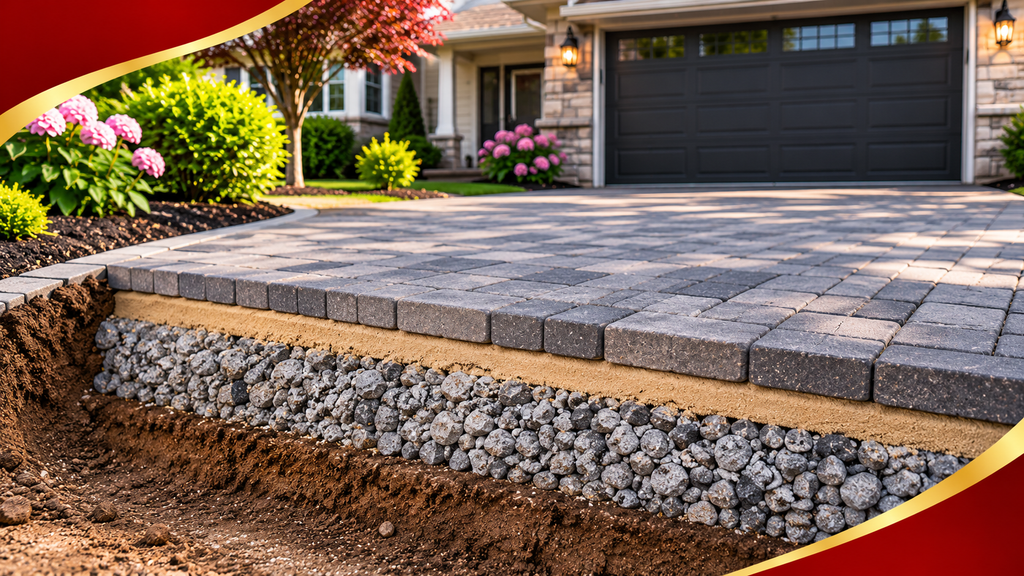
Base preparation is everything that happens between the old ground and the finished pavers. A paver driveway is a layered system, and each layer has a job.
- Subgrade. The natural soil (or fill) at the bottom of the excavation. It ultimately supports everything above it, so its condition matters.
- Aggregate base. Compacted crushed stone or similar aggregate that spreads vehicle loads across the subgrade and helps water drain.
- Bedding layer. A thin, screeded layer of bedding material (commonly sand or a specified aggregate) that gives the pavers an even seat.
- Pavers, joints, and edge restraints. The pavers form the wearing surface, joint material locks them together, and edge restraints keep the whole field from spreading outward.
Preparation also includes the steps that lead up to these layers: removing the existing surface, excavating, evaluating the subgrade, compacting, and grading so water has somewhere to go.
Why Proper Base Preparation Matters
The base does several jobs at once:
- Supports vehicle loads. Weight from cars and heavier vehicles passes through the pavers into the base, then into the soil. A well-built base distributes that weight instead of concentrating it.
- Keeps the surface stable. Interlocking pavers rely on a firm, even foundation. If the layers below move, the surface moves with them.
- Manages water. Water that sits in or under the base weakens it and sets up freeze-thaw damage.
- Maintains consistent grading. A stable base holds the slope the installer set, so water keeps draining the way it was designed to.
- Reduces long-term maintenance. Fewer settled spots and loose joints mean fewer repairs.
What Happens When the Base Is Poorly Prepared?
Weak groundwork usually shows up months or years after installation, often after a winter or two. Common signs include:
- Sunken or low pavers
- An uneven or wavy surface
- Rutting along wheel paths
- Water pooling in certain areas
- Shifting pavers and widening gaps
- Loose or washed-out joints
- Edges that spread or drift
- Repeated repairs in the same spots
These symptoms can have more than one cause. A low spot might come from poor compaction, but it could also come from a leaking pipe, washed-out base material, or a drainage problem. Proper diagnosis matters before anyone assumes the fix, and a repair that ignores the underlying cause tends to fail again.
How Contractors Prepare the Ground
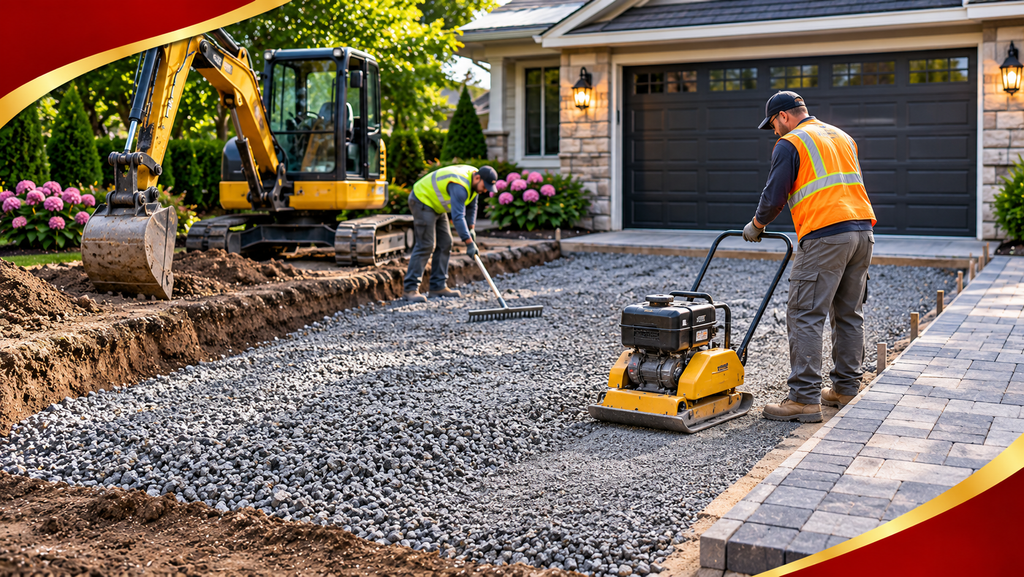
The exact method depends on site conditions, the paver manufacturer’s guidance, and the design of the pavement system. In general, the sequence looks like this:
- Site assessment and planning. The contractor looks at driveway size, slope, drainage paths, access, and how the driveway will be used.
- Excavation. Existing pavement and unsuitable material are removed to the planned depth.
- Subgrade inspection. Soft, wet, or disturbed areas are identified. Problem spots may need correction before building upward.
- Soil compaction. The subgrade is compacted so it provides a firm, uniform platform.
- Aggregate base installation. Specified base material is placed across the area.
- Compaction in lifts. The aggregate is typically placed and compacted in layers rather than all at once, which helps compaction reach the full depth.
- Grading and drainage checks. Slopes are verified so water flows away from the garage, house, and neighboring property.
- Bedding layer preparation. A thin, even bedding layer is screeded to the proper elevation.
- Paver installation. Pavers are laid in the chosen pattern, with edge restraints securing the perimeter.
- Joint filling and final compaction. Joint material is swept in and the surface is compacted where appropriate for the product.
Skipping or shortening any of these steps creates a weak link, and the base work is the part homeowners cannot see once the pavers go down.
How Thick Should a Paver Driveway Base Be?
There is no single correct thickness, and this article does not give one. Base depth depends on:
- Soil conditions
- Expected vehicle loads
- Drainage
- Climate and frost exposure
- Aggregate type and specifications
- The installation design
- Manufacturer or industry guidance
Driveways generally need a more substantial base than patios or walkways because of the vehicle loads. Beyond that, the right depth is a project-specific decision. Ask the contractor what depth they plan to use and why, and what standard or guidance supports it. A thicker base is not automatically a better one if the soil, drainage, and compaction are not addressed.
Why Drainage and Grading Matter
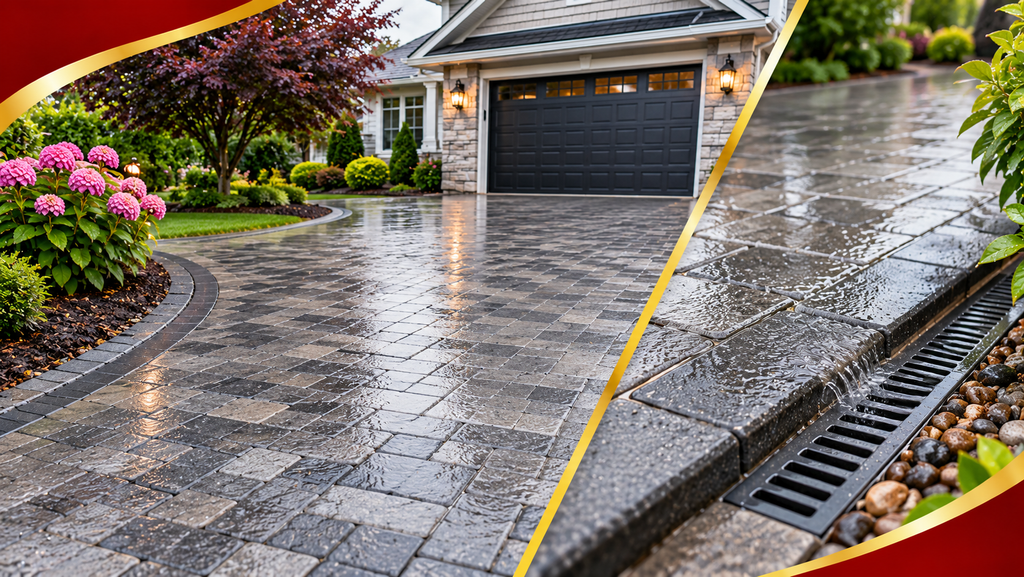
Water is the biggest enemy of a paver base. The subgrade and aggregate are designed to carry loads, and saturated material carries them poorly.
- Surface slope. The driveway should be graded so water runs off instead of sitting on the surface or flowing toward the garage or house.
- Standing water. Puddles indicate grading problems and can let water seep into joints and the base.
- Saturated subgrade. Soil that stays wet loses strength and is more vulnerable to settlement.
- Runoff management. Water should be directed somewhere appropriate, not toward neighboring properties.
- Edge conditions. Where the driveway meets lawn, garage aprons, or walkways, water can undermine edges if it isn’t managed.
A standard interlocking paver driveway is not automatically a permeable paver system. Permeable systems use specially designed joints, open-graded aggregate, and drainage layers. A conventional driveway relies mostly on surface grading to shed water. Adding more gravel does not by itself solve drainage or settlement. It has to be part of a plan that accounts for where the water goes.
New York Winters and Driveway Base Performance
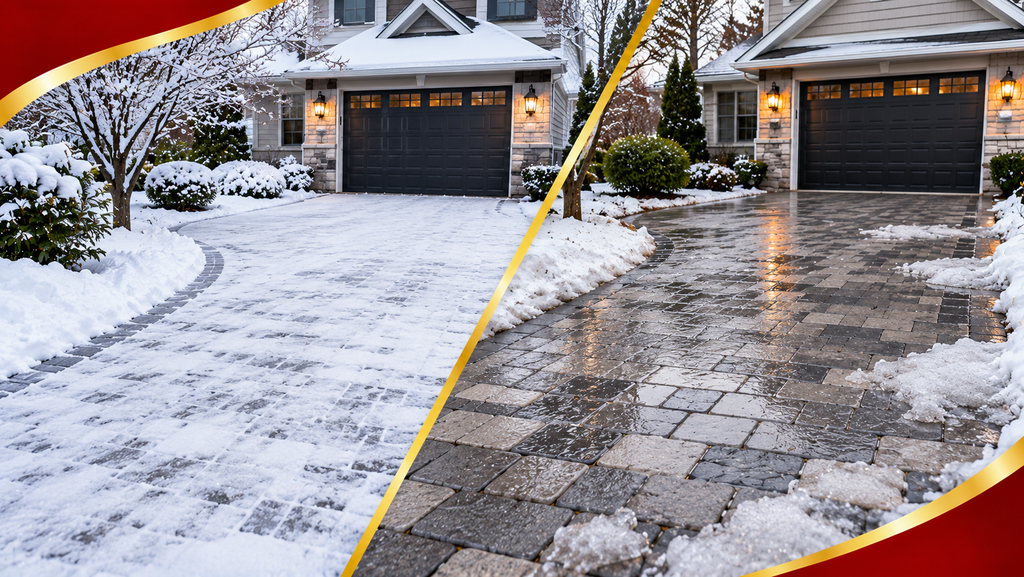
In New Hyde Park and the surrounding region, winter brings repeated cycles of freezing and thawing. Water that enters the joints, the bedding layer, or the base can freeze and expand, then contract when it thaws. Over many cycles, that movement can contribute to uneven surfaces, shifting pavers, and loosened joints.
Poor drainage makes this worse. Snowmelt that pools or soaks into the base feeds the freeze-thaw process, and a base that cannot shed water is more likely to move. A well-prepared base is designed to limit trapped moisture and stay stable through seasonal changes.
Exact frost depth and soil conditions vary by property, so a contractor should evaluate your site instead of assuming conditions. Homeowners may also want to ask how the base plan accounts for winter exposure.
Common Base Preparation Mistakes
- Inadequate excavation. Digging too shallow leaves too little room for a proper base, so the layers end up thinner than they should be.
- Poor soil compaction. An uncompacted or soft subgrade can settle unevenly under load.
- Unsuitable aggregate. Material that doesn’t compact or drain properly undermines the base.
- Improper compaction methods. Placing thick layers at once, or compacting when material is too wet or dry, can leave weak zones.
- Incorrect grading. A driveway sloped the wrong way sends water toward the house or lets it collect on the surface.
- Inadequate edge restraint. Without firm edges, pavers can spread and joints open up.
- Ignoring drainage. Even a well-compacted base can fail when water has nowhere to go.
- Rushing the installation. Speed is rarely the problem on its own, but rushed work is where steps get skipped.
Questions to Ask a Paver Driveway Contractor
These questions help you understand how a contractor plans to build what’s underneath:
- How deep will you excavate, and why? Ask what the depth is based on.
- How will you evaluate the subgrade? Ask what happens if soft or wet areas turn up.
- What aggregate will you use? Ask for the material type and where it comes from.
- How will you compact the base? Ask about equipment and whether the base is compacted in layers.
- How will the driveway drain? Ask where the water goes and how the grading will be checked.
- What edge restraints will you use?
- Will the old driveway be removed, and is that in the estimate?
- What does the written estimate include? Look for scope, materials, base specifications, and exclusions.
- Do I need any permits or approvals? Requirements can depend on the property’s municipality and the scope of work.
If two estimates differ a lot in price, compare the base plans first. A lower number sometimes reflects less excavation or less base material.
Frequently Asked Questions
What is the best base for driveway pavers?
A compacted aggregate base, built over a properly prepared and compacted subgrade, is the standard approach. The right material, thickness, and compaction method depend on soil, vehicle loads, drainage, and manufacturer or industry guidance, so the best base is the one designed for your specific driveway.
Can driveway pavers be installed directly on soil?
Installing pavers directly on soil is not recommended for driveways. Soil alone can settle, shift, and hold water, and it doesn’t distribute vehicle loads well. A compacted aggregate base gives pavers a stable, draining foundation that soil by itself generally cannot provide.
How deep should a driveway paver base be?
There is no universal depth. It depends on soil conditions, vehicle loads, drainage, climate, aggregate type, and manufacturer guidance. Driveways usually need more base than walkways or patios. Ask your contractor for the planned depth and the reasoning behind it.
What happens if the paver base is not compacted?
An uncompacted base can settle over time, especially under vehicle weight and repeated freeze-thaw cycles. That can cause sunken areas, ruts, uneven pavers, and open joints. Compaction helps the base stay dense and stable, ideally in layers so it reaches the full depth.
Does a gravel base help with drainage?
A properly designed aggregate base can help water move through and away from the structure, but it is not a complete drainage solution. Surface grading, edge conditions, and where the water ultimately goes still matter. More gravel alone does not fix a driveway that holds water.
Can poor base preparation cause pavers to sink?
Yes, it is a common cause. Inadequate excavation, poor compaction, unsuitable base material, and water problems can all lead to settlement. Sinking can also have other causes, such as washed-out material or leaking utilities, so the cause should be diagnosed before repairs.
Why does base preparation matter during New York winters?
Water in the base can freeze, expand, and thaw repeatedly, which can shift pavers and loosen joints. A well-compacted base with good drainage helps limit trapped moisture and keeps the surface more stable through seasonal cycles. Site conditions vary, so a contractor should assess your property.
Building a Stronger Paver Driveway Starts Below the Surface
The pavers are what you see, but the subgrade, aggregate base, bedding layer, and drainage plan determine how the driveway performs. Proper excavation, compaction, grading, and edge restraint help it carry vehicles, shed water, and handle New York winters. When you compare estimates, look closely at the base plan instead of just the paver choice or the final price.
If you’re planning a new driveway or replacing an existing one, you can learn more about paver driveway installation, browse the full list of Kings Pavers & Concrete services, or visit the Kings Pavers & Concrete website to discuss your project, including base preparation, drainage, and installation requirements.