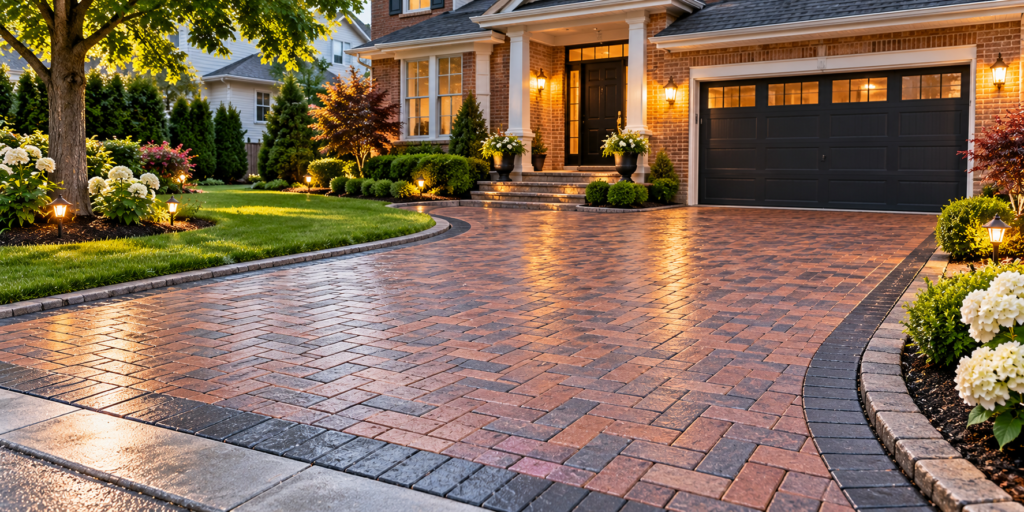
Most people start thinking about a new driveway after the same few signs pile up. Cracks that keep coming back. A low spot where water sits after every rain. An old slab that makes the front of the house look tired. If that sounds familiar, brick driveway paving in New Hyde Park is worth a serious look.
Here is the short answer. A brick paver driveway usually costs more up front than poured concrete or asphalt, but it can be repaired one paver at a time and holds its appearance well when the base is built correctly. Nationally, installed prices commonly run from about $10 to $30 per square foot, and your final number depends heavily on excavation, drainage, and design.
One clarification before going further. Most driveways called brick are actually built with concrete pavers molded and colored to look like brick. Genuine clay brick pavers are fired clay, with color that runs all the way through the unit. They can be an excellent choice, but they cost more and must be rated for vehicle traffic. Ask which one you are being quoted, because the two behave differently.
Why Homeowners in New Hyde Park Choose Brick Driveways
The first reason is usually looks. A paver driveway has texture, pattern, and color that a flat gray slab can’t match, and it tends to suit the older brick and colonial-style homes common on Long Island. Our guide to which driveway pavers suit New Hyde Park homes goes deeper on matching materials to house styles.
The practical reasons matter more over time:
- Spot repairs. If a section settles or a utility crew digs it up, the pavers can be lifted and reset. A cracked slab usually means patching or replacing a big piece.
- Design flexibility. Patterns, borders, and color blends are all on the table.
- Flexible surface. Interlocking pavers shift slightly under load instead of cracking, as long as the base underneath is solid.
There are real downsides too. Upfront cost is higher. Joints need sand topped up now and then, and weeds will take any opening you give them. Replacement pavers may not match a weathered driveway perfectly. And the whole system depends on the installer, since a handsome driveway on a weak base will sink.
How Much Does Brick Driveway Paving Cost in New Hyde Park?
No published figure is specific to New Hyde Park, so treat the numbers below as national ranges. Labor in the New York area tends to run above national averages, so quotes can land toward the upper end.
Hunker, citing Angi data, puts pavers at roughly $10 to $35 per square foot, with decorative styles at the top. LawnStarter and InchCalculator both land closer to $10 to $30 installed. For a typical two-car driveway of 16 by 40 feet (640 square feet), that works out to roughly $6,400 to $19,200 before any extras.
What moves your quote up or down:
| Cost factor | Why it matters |
| Material | Concrete pavers cost less than clay brick or natural stone. Premium shapes and colors add more. |
| Driveway size | Square footage is the biggest single driver. |
| Old driveway removal | Demolition and hauling are usually quoted separately. National figures run about $3 to $8 per square foot for concrete and $3 to $7 for asphalt. |
| Excavation and base | Deeper digging and more stone cost more, but this is the last place to cut corners. |
| Drainage | Grading changes, drains, or tie-ins to a dry well add labor and materials. |
| Pattern and cuts | Herringbone and curved borders take longer than a simple running bond. |
| Access and complexity | Tight lots, slopes, and limited staging space slow the crew down. |
A useful comparison, again using national figures:
| Surface | Typical installed cost per sq ft | Source |
| Asphalt | $7 to $13 | Hunker (Angi data), MyRainPlan |
| Poured concrete | $8 to $20 | MyRainPlan |
| Brick or concrete pavers | $10 to $30 | LawnStarter, InchCalculator |
These are estimates, not quotes. Sources disagree with each other, which is itself a hint of how much job conditions matter. A written estimate after a site visit is the only number worth planning around.
Brick Pavers vs Concrete and Asphalt Driveways
None of these is the right answer for everyone. A rental property on a tight budget and a home where curb appeal is a priority are different jobs.
| Pavers | Poured concrete | Asphalt | |
| Initial cost | Highest of the three | Mid-range | Usually lowest |
| Appearance | Most pattern and color options | Plain, or stamped for extra cost | Uniform black |
| Repair options | Lift and reset individual units | Patch, grind, or replace sections | Patch or resurface |
| Maintenance | Joint sand, cleaning, occasional releveling | Crack sealing, occasional sealing | Sealcoating, commonly every few years |
| Expected service life | Varies widely with base quality and care | Often cited as decades, varies by source | Often cited as 15 to 25 years |
| Installation | Labor intensive, base prep critical | Needs curing time, control joints | Fast, needs proper compaction |
If you are weighing the other options, we also cover concrete driveways and asphalt services, and there is a separate guide on how long asphalt lasts in New York.
Popular Brick Driveway Design Ideas for New Hyde Park Homes
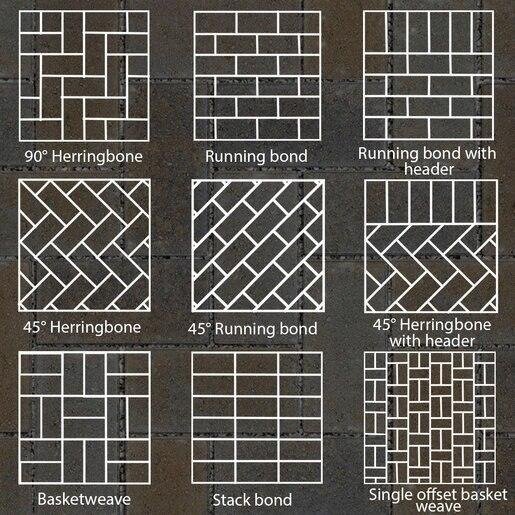
Herringbone. The interlocking zigzag is the standard for driveways because it resists the sideways push of turning tires better than most patterns. It looks right on almost any house.
Running bond. Staggered rows like a brick wall. Cleaner and more traditional, and quicker to lay, which can help the budget. It suits colonials and Capes.
Basketweave. Pairs of pavers turned at right angles. It has a classic, slightly formal look that works on older homes, though it handles vehicle loads less well than herringbone unless the base and unit thickness are right.
Color choices. Traditional red is bold and works best on homes with matching brick or red accents. Charcoal, tan, and blended mixes are more forgiving and hide oil and tire marks better.
Borders. A contrasting border, or a soldier course along the edges, frames the driveway and also helps hold the field in place. Our page on driveway borders and edging shows the options.
A good rule: pick the pattern that suits how the driveway is used, then let color and borders express the style.
How Professional Brick Driveway Installation Works
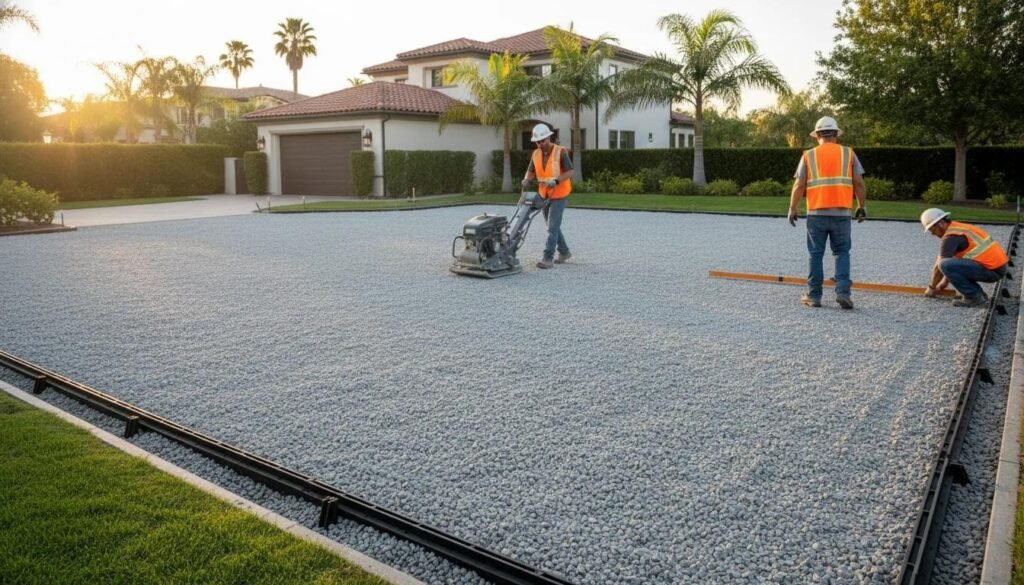
Most of what you are paying for is buried underground, where nobody will see it again. Here is the sequence a careful crew follows, which is also the sequence our paver driveway installation work is built around.
- Inspect the site. The crew looks at the existing driveway, soil, slope, garage and walkway elevations, and where water currently goes.
- Plan grading and drainage. The finished surface needs a gentle slope away from the house and garage, with a plan for where runoff ends up.
- Remove and excavate. Old material comes out, along with enough soil to fit a proper base. Soft or wet spots get dealt with here, not covered over.
- Build and compact the base. Crushed stone goes in lifts, compacted at each stage. Residential driveways need a thicker base than patios because of vehicle weight.
- Set bedding and edge restraints. A thin, screeded layer of bedding sand goes down, and rigid edge restraints are installed to stop the pavers from spreading.
- Lay the pavers. Pattern lines are checked as the work goes, and edge cuts are made cleanly.
- Fill joints and compact. Joint sand is swept in and the surface is compacted with a plate compactor, locking the units together.
- Final inspection. Check for lippage, water flow, and any low spots before the crew leaves.
Skip or rush any of these and the driveway will tell you within a few seasons. Appearance is the easy part. The base, drainage, and edge restraint decide whether it stays that way.
How New York Weather Affects Brick Driveways
Freeze-thaw is the main enemy in this region. Water that gets into a weak base or sits under the surface expands as it freezes, pushes pavers upward, and leaves voids when it thaws. Repeat that a few dozen times and you get ruts, dips, and loose edges.
Two things protect a paver driveway. First, the units themselves should meet freeze-thaw durability standards. Concrete pavers made to ASTM C936 are tested for this, and clay pavers have their own ASTM standards, including grades for heavy vehicle use. Second, the base has to drain. Compacted stone that water can pass through, plus grading that sheds water off the surface, keeps ice from forming where it can do damage.
For winter care:
- Use a plastic-edged shovel, or a plow with shoes that keep the blade slightly off the surface.
- Use sand for traction where possible, and use deicers sparingly.
- Avoid fertilizer-type products containing ammonium nitrate or sulfate, which can damage paving. Check the paver manufacturer’s deicer guidance.
- Sweep up leftover sand in spring and refill joints as needed.
How to Maintain a Brick Driveway
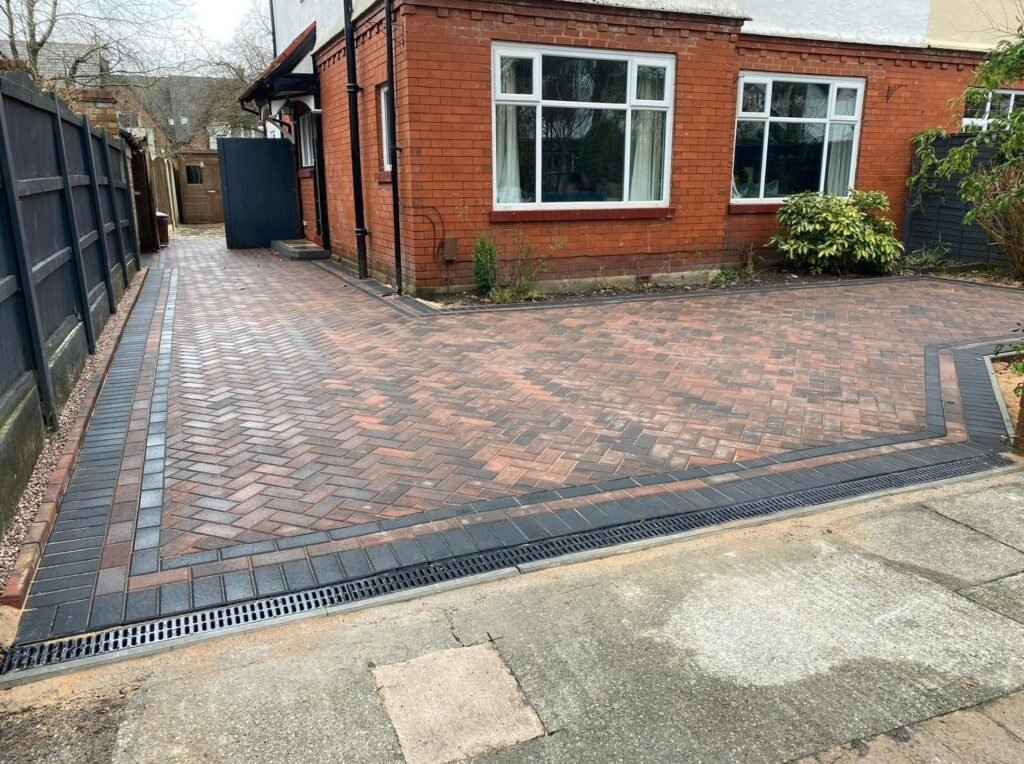
Maintenance is lighter than most people expect, but it is not zero. Hunker, citing Angi, puts paver upkeep at about $1 to $3 per square foot over time.
- Cleaning. Sweep regularly and rinse with a hose. For stains, use cleaners the manufacturer approves. Keep pressure washing gentle, since a hard blast strips joint sand.
- Joints. Top up joint sand when it drops. Polymeric sand helps resist weeds and washout when installed correctly.
- Weeds. Pull them early and keep joints full. Weeds usually mean the sand has gone.
- Drainage checks. After heavy rain, look for standing water and clear nearby drains and downspout outlets.
- Damaged pavers. Replace cracked or sunken units quickly, before neighboring pavers start to shift.
- Sealing. Optional for many driveways. It can deepen color and help with stains, but timing, product, and reapplication vary, so follow the paver and sealer manufacturers’ instructions rather than a fixed schedule.
Common Brick Driveway Installation Mistakes
Most failures trace back to a short list of shortcuts.
- Thin or poorly compacted base. The classic cause of sinking and ruts.
- Wrong grading. Even a nice surface will hold water if it was graded flat or toward the house.
- Weak or missing edge restraints. Without them, pavers creep outward under traffic.
- Pavers not rated for vehicles. Patio-grade units used on a driveway tend to crack or shift. Confirm thickness and rating.
- Ignoring drainage. Water has to go somewhere, and the plan should say where.
- Picking only the lowest quote. A low number often means a thinner base. Compare what each quote includes, not just the total.
When Should You Repair or Replace an Existing Driveway?
Isolated damage, such as one or two uneven pavers or a small depression near a downspout, can usually be fixed by lifting the units, correcting the base, and resetting them.
Repair stops making sense when problems spread. Signs include widespread settling, ruts in wheel paths, edges that keep drifting, water that pools despite cleaning and re-sanding, or the same repairs coming back every year or two.
A hypothetical example: a homeowner has a 20-year-old paver driveway with a dip near the garage. If a contractor lifts the pavers and finds a thin, washed-out base only in that area, a localized fix could solve it. If the base is thin throughout, spot repairs will keep failing, and rebuilding may cost less over time. This scenario is illustrative, not a real customer project.
If you are not sure which situation you are in, have a professional look at it. An inspection before you spend money tends to save money.
What to Ask Before Hiring a Brick Driveway Contractor
Use this checklist when you are collecting estimates.
- Experience: How many paver driveways have you built, and can I see completed examples?
- Materials: Which paver, what thickness, and is it rated for vehicle traffic?
- Base depth: How deep will the excavation and compacted base be, and why?
- Drainage: Where will water go, and how will the grading handle it?
- Estimate: Is it written and itemized, including removal, base, edging, and joint sand?
- Insurance and licensing: Can you provide proof of insurance? Who handles any permits your town or village requires?
- Schedule and expectations: How long will it take, and how will you handle access to the garage during work?
- Warranty: What is covered, for how long, and what does the manufacturer cover separately?
A contractor who answers these clearly, without hedging, is usually the one who has done the work before.
Frequently Asked Questions
How much does a brick driveway cost in New Hyde Park?
National figures put installed paver driveways at roughly $10 to 30persquarefoot, with decorative styles higher.Atypicaltwo-cardrivewayofabout640squarefeetcouldlandanywherefromthemid-6,000s to nearly $20,000. Local labor, excavation, drainage, and old driveway removal move the number, so a site visit is the only way to get a reliable quote.
How long do brick driveway pavers last?
There is no honest single number. Pavers set on a well-compacted base with proper drainage and edge restraints commonly last for decades, while poorly built ones can settle within a few years. Climate, vehicle weight, and maintenance all play a part. Ask about base specifications and any workmanship warranty rather than relying on a headline lifespan figure.
Are brick pavers better than concrete for driveways?
It depends on your priorities. Pavers cost more up front and offer easier spot repairs and more design options. Poured concrete costs less and has fewer joints to maintain, but a cracked slab usually means patching or replacing a large section. Neither is universally better. Budget, appearance goals, and site conditions should decide.
Can brick driveway pavers handle New York winters?
Yes, when they are built for it. Concrete pavers made to ASTM C936 are designed for freeze-thaw exposure, and a well-compacted, well-drained base keeps water from freezing under the surface. Problems usually come from poor drainage or thin bases, not the pavers themselves. Use plastic shovels and go easy on deicers.
Do brick driveways require sealing?
Not always. Sealing can deepen color, resist stains, and stabilize joint sand, but it is optional for many driveways, and some manufacturers recommend waiting several months after installation. Sealers need reapplication and can look blotchy or feel slippery if misapplied. Follow the paver manufacturer’s and sealer maker’s instructions.
Can damaged brick pavers be replaced individually?
Yes, and that is one of the main advantages. A contractor lifts the damaged unit, corrects the base underneath if it has settled, and sets a new paver. Color matching can be tricky on older driveways because pavers weather, so keep a few spare pavers from your original installation if you can.
Getting a Realistic Estimate for Your Driveway
If you take one thing from all this, make it the base and drainage. Pattern and color are the fun decisions, but the work below the surface is what keeps a New Hyde Park driveway flat through freeze-thaw winters. Decide your budget range, choose a pattern that suits the house, and get itemized quotes that show what is under the pavers.
Kings Pavers & Concrete offers free on-site assessments, and you can request a driveway paving estimate through the contact page or by calling (516) 905-4800. No pressure. Even a quick conversation can help you work out whether you need a repair or a full rebuild.