
How Thick Should a Concrete Driveway Be in New York?
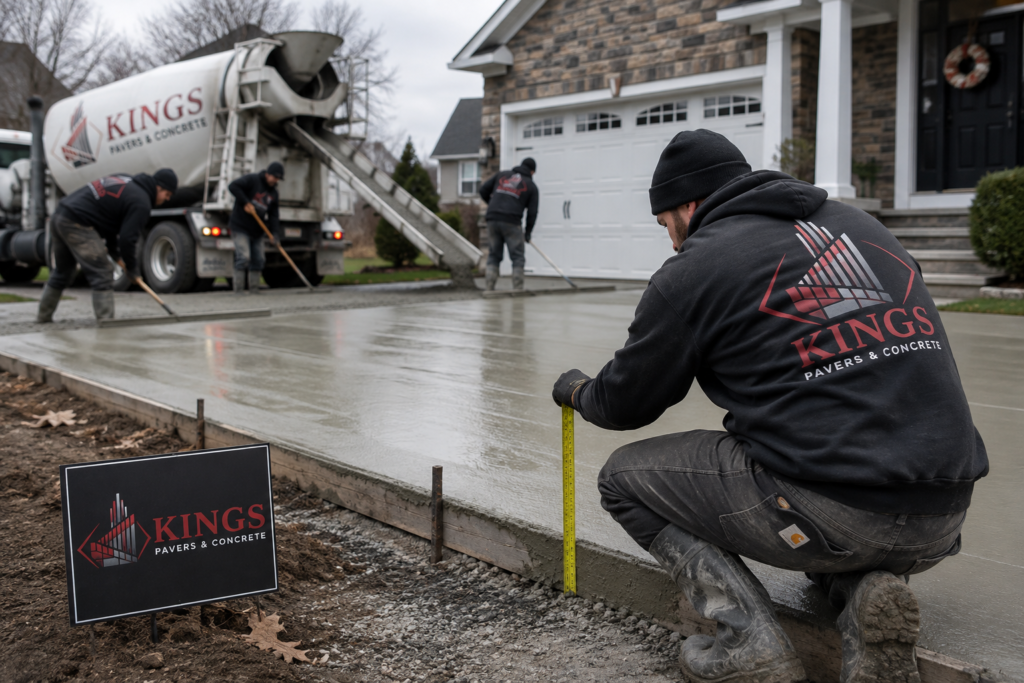
If you’re standing in your driveway right now trying to figure out whether to go with 4 inches or 6, here’s the short answer: for most homes with regular cars and SUVs, 4 inches of concrete is the standard starting point. But that number isn’t the whole story, and in a lot of New York driveways, it’s not actually the number I’d recommend. So how thick should a concrete driveway be? For a typical residential driveway carrying passenger cars and light trucks, 4 inches is the accepted minimum. If you’re regularly parking a pickup, an SUV, a work van, or you deal with New York’s freeze-thaw winters, 5 to 6 inches is usually the smarter call. Commercial driveways that see delivery trucks or heavier equipment often need 6 to 8 inches, sometimes more, depending on the loads involved. That’s the baseline. What actually determines the right number for your specific driveway comes down to a handful of things working together: how heavy the vehicles are, what kind of soil is under there, how well the base gets prepared, whether there’s reinforcement, and how the site handles water and freezing. Thickness matters, but it’s one piece of a bigger puzzle. I’ve seen 4-inch driveways outlast 6-inch driveways because the base and drainage were done right, and I’ve seen the opposite happen just as often. Let’s walk through where these numbers come from and how a contractor actually arrives at a thickness for a specific job, not just a generic rule of thumb. What Is the Standard Concrete Driveway Thickness? For a standard residential concrete driveway, 4 inches is the commonly cited minimum for slabs supporting passenger vehicles. That’s the number you’ll see repeated across the industry, and it holds up fine for a lot of driveways. A family with two sedans and maybe an occasional visitor’s car isn’t putting much stress on the slab. Where it gets more nuanced is the difference between “meets the minimum” and “built for the long haul.” A 4-inch slab poured over a well-compacted base, with the right concrete mix and proper joints, can perform well for decades. A 4-inch slab poured over soft or poorly prepared ground is a different story regardless of what’s written on the concrete truck’s ticket. Here’s where people sometimes get into trouble: they hear “4 inches is standard” and assume that’s a universal answer for every situation, including driveways that regularly see trucks, RVs, or multiple vehicles parked side by side. That’s not really how it works. The 4-inch number is a baseline for light residential use, not a one-size-fits-all spec. Driveway Use Typical Thickness What to Consider Passenger vehicles 4 inches Normal residential use, stable soil SUVs / pickups 4–5 inches Vehicle weight and how often they’re parked in the same spot Heavy vehicles (RVs, boats, work trucks) 5–6 inches May need thicker slab and reinforcement Commercial traffic 6–8+ inches Project-specific, generally needs engineering input Keep in mind these ranges are general guidance, not a substitute for a site-specific evaluation. Local code requirements, soil reports, and the actual vehicles using the driveway should determine the final number. Is 4 Inches of Concrete Enough for a Driveway? For most cars and light trucks, yes, 4 inches is generally considered adequate, assuming the base underneath is properly prepared and the concrete itself is a suitable mix for the climate. That doesn’t necessarily mean you need a thicker slab just because you own an SUV. Plenty of SUVs and light trucks fall well within what a 4-inch driveway can handle over a solid base. Where 4 inches starts to fall short is when the driveway sees regular heavier traffic, think delivery trucks, moving trucks, a boat trailer parked in the same spot every summer, or a work vehicle that comes and goes daily. Concentrated, repeated loads in the same location wear on a slab differently than the occasional car rolling across it. The other factor that pushes people toward a thicker slab, even for otherwise normal residential use, is New York’s climate. In areas that see real freeze-thaw cycles, going to 5 inches adds a margin of durability that a lot of contractors around here consider worth the extra cost, especially for driveways that will be in service for decades. If you’re on the fence, this is a good conversation to have with whoever is doing your concrete driveway installation before the pour, not after. When Should a Concrete Driveway Be Thicker? A handful of situations tend to push the recommendation past that 4-inch baseline: None of this means every driveway needs to be overbuilt. It means the decision should match the actual use, not a generic number pulled from a website. Why the Base Under the Concrete Matters Just as Much Here’s something that doesn’t get said enough: pouring thicker concrete over a bad base is like putting a better roof on a house with a cracked foundation. It might buy you some time, but it doesn’t fix the underlying problem. The base is what everything else sits on, and it needs a few things done right: Excavation. The area needs to be dug out to the correct depth, removing topsoil, organic material, and anything else that will settle or decompose over time. Skipping this or excavating unevenly is one of the more common shortcuts I’ve seen cause problems years later. Compaction. Loose soil settles. If the ground under a driveway isn’t properly compacted before the base material goes down, the slab above it will eventually follow that movement, and that’s when you start seeing cracks and low spots. Aggregate and subbase preparation. A layer of crushed stone or gravel, properly compacted, gives the concrete a stable, well-drained surface to sit on. This layer also helps with drainage, which matters a lot more in a state that deals with snowmelt and spring thaw every year. Soft areas. Any pockets of soft or wet soil found during excavation need to be addressed before the pour, not covered up and hoped away.
How Long Does a Concrete Driveway Last? Lifespan, Maintenance & Replacement Guide
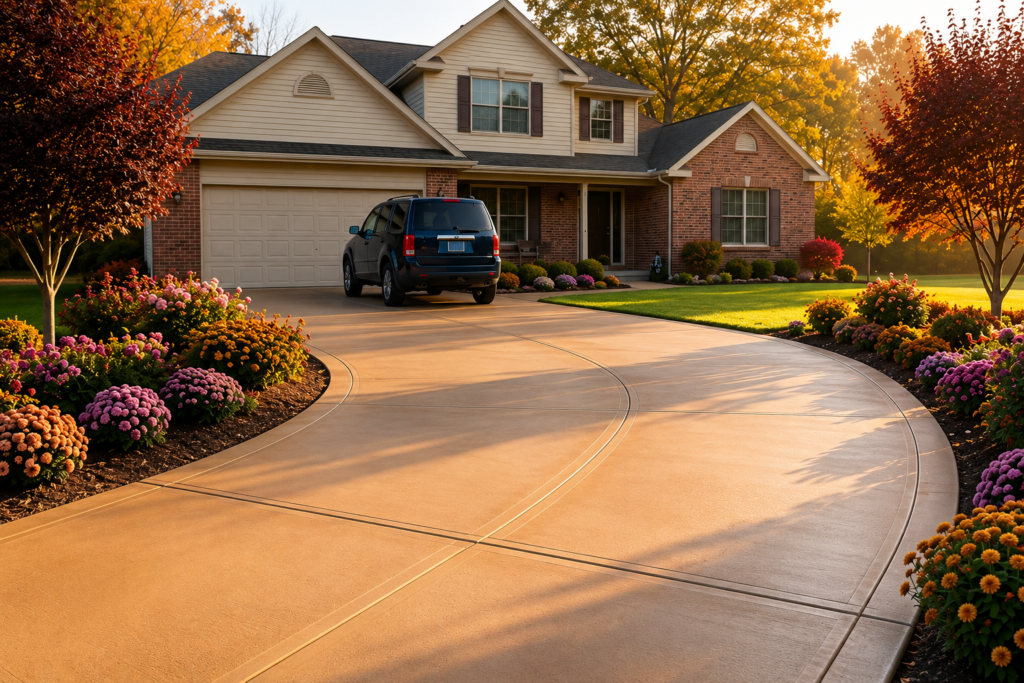
Every week, I get calls from homeowners asking some version of the same question: ‘My driveway is looking rough, is it time to replace it, or can we save it?’ After more than 20 years installing and repairing concrete driveways across New York, I’ve seen driveways that were crumbling at 12 years and driveways still holding strong at 40. The difference almost always comes down to the same handful of factors. So how long does a concrete driveway last? The honest answer: anywhere from 25 to 50 years, sometimes longer. But that range tells you very little unless you understand what pushes a driveway toward the short end or the long end of that spectrum. In this guide, I’m going to walk you through what really determines concrete driveway lifespan, what warning signs to watch for, how to get the most years out of what you’ve got, and how to know when it’s time to stop patching and start fresh. How Long Does a Concrete Driveway Last? A well-built residential concrete driveway, properly maintained, should last 30 to 40 years. That’s the realistic sweet spot for most New York homeowners. Under ideal conditions, with a quality installation, minimal freeze-thaw stress, and routine sealing, 50 years is achievable. Under poor conditions, you might be looking at a replacement in 15 to 20 years. The biggest variable isn’t the concrete itself. It’s everything surrounding the concrete: how it was poured, what it was poured on, how much punishment it takes from weather and vehicles, and whether the homeowner bothered to maintain it. Driveway Condition Expected Lifespan Professionally installed, well-maintained, and sealed regularly 35–50 years Professionally installed, minimal maintenance 25–35 years DIY or poor-quality installation, some maintenance 15–25 years Poor installation, no maintenance, heavy traffic 10–15 years Already showing major cracks, spalling, or drainage issues 5–10 years (if not addressed) I’ve replaced driveways at the 15-year mark that were in worse shape than driveways I’ve inspected at 35 years old. Age is just a number; condition is what matters. What Affects the Lifespan of a Concrete Driveway? Six main things determine how long your driveway will last. Some you can control going forward. Some you’re already locked into. 1. Installation Quality This is the single biggest factor, and it’s one most homeowners never think about until problems show up years later. Concrete driveway durability starts with the mix design, the subbase preparation, and the finishing work. A subbase that wasn’t compacted properly will shift. Concrete that was poured too thin (less than 4 inches for residential) will crack under load. If water isn’t cured out correctly, the surface will scale prematurely. I’ve repaired driveways that were done cheaply by whoever gave the lowest bid, and in almost every case, the problems were baked in from day one. 2. Climate and Weather New York is hard on concrete. We get cold winters, spring thaws, summer heat, and enough rain to cause serious drainage headaches. Each freeze-thaw cycle, when water gets into cracks or the subbase, freezes, expands, and thaws, is a small attack on your driveway’s structure. Do that enough times over enough years, and you’ll see cracking and heaving. The freeze-thaw issue is why we’re big on sealing driveways here. A properly sealed driveway keeps water from penetrating the surface, which dramatically slows down freeze-thaw damage. 3. Soil Conditions Clay-heavy soil shifts more than sandy or gravelly soil. Expansive soils push up from below, especially during wet seasons. I’ve replaced sections of driveways in parts of Long Island and Westchester where the soil movement was severe enough to crack concrete that was only 8 years old. If your house sits on problematic soil, you need a contractor who accounts for that upfront with proper drainage and subbase preparation. 4. Vehicle Traffic A standard residential concrete driveway is built for passenger vehicles. If you’re regularly parking delivery trucks, RVs, or heavy equipment on a residential pour, you’re exceeding what it was designed to handle. I’ve seen driveways crack in specific spots that always had the same dump truck parked on them during a renovation project. Weight distribution matters. 5. Maintenance Habits The homeowners with the longest-lasting driveways are the ones who seal on schedule, fill small cracks before they become big ones, and keep an eye on drainage. It sounds simple because it is simple. Neglect leads to deterioration. Maintenance leads to longevity. Signs Your Concrete Driveway Is Aging Most homeowners don’t notice driveway problems until they’re fairly serious. Here’s what to look for when you walk out to your car: Surface Cracks Hairline cracks are common and not necessarily alarming. They develop as concrete cures and settle. But cracks wider than a quarter inch, cracks that run in multiple directions, or cracks that have started to shift vertically (where one side is higher than the other) are signs of deeper structural movement. Left alone, they become channels for water, and then freeze-thaw damage accelerates rapidly. Scaling Scaling looks like the surface of the concrete is flaking or peeling away in thin layers. You’ll notice it first where you applied rock salt or calcium chloride de-icers. It can also happen when concrete is poured in cold weather without proper curing protection. Once scaling starts, it rarely stops on its own. Spalling Spalling is more severe than scaling; you’re seeing chunks of concrete breaking off rather than surface flaking. This usually means water has gotten deep into the slab, frozen, expanded, and broken pieces have become loose from the inside. Significant spalling typically means the driveway is approaching the end of its serviceable life. Drainage Problems If water is pooling on your driveway after rain instead of running off the edges, something has changed: either the concrete has settled unevenly, or it was graded incorrectly from the start. Standing water accelerates surface deterioration and eventually undermines the subbase. Uneven or Sunken Sections If part of your driveway has started to sink or tilt, the subbase beneath it has shifted or eroded. This is a
How to Prevent Concrete Driveway Cracking and Avoid Costly Repairs
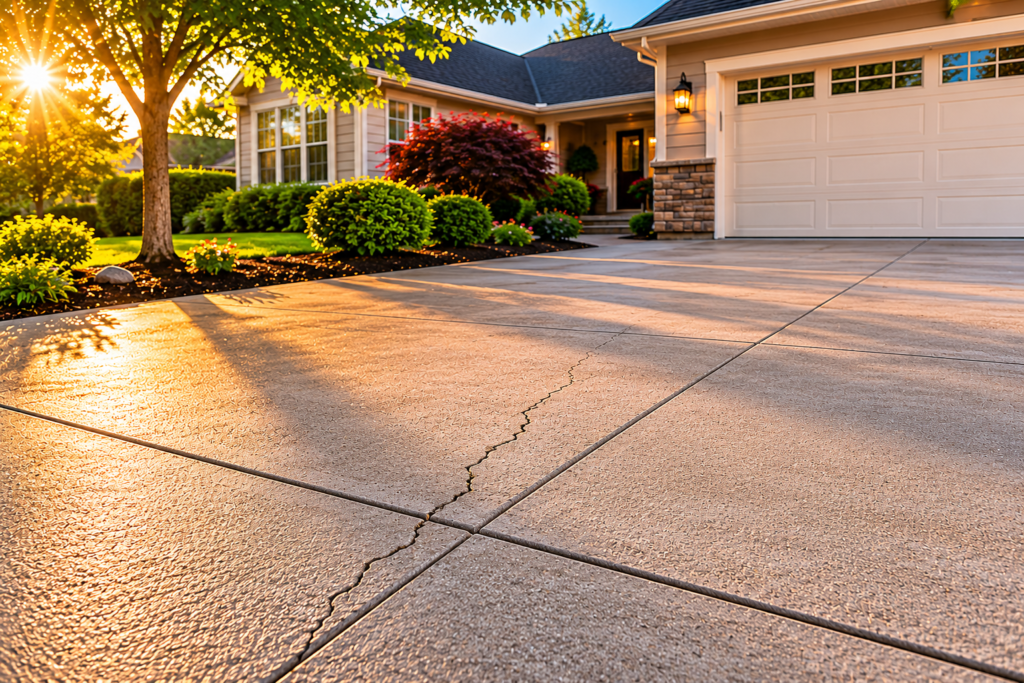
Your driveway takes a beating every single day: rain, ice, UV rays, oil drips, and the weight of vehicles rolling across it year after year. Most homeowners don’t think about it until a crack appears. By then, the damage has already started. The truth is, learning how to maintain a concrete driveway isn’t complicated. It doesn’t require professional tools or a big budget. What it does require is consistency and knowing what to look for before small problems grow into expensive ones. Neglected driveways can cost anywhere from $1,500 for a basic resurfacing to over $10,000 for a full replacement. Preventive concrete driveway maintenance, on the other hand, costs a fraction of that, and it works. This guide walks you through everything: why cracks form, how to stop them, when to seal, and what warning signs you should never ignore. Why Concrete Driveways Crack Concrete is strong, but it isn’t flexible. It expands in heat and contracts in cold. It shifts when the ground beneath it moves. Over time, those stresses add up, and cracks are the result. Here are the most common culprits behind driveway damage: Freeze-Thaw Cycles In colder climates, water seeps into tiny pores in the concrete, freezes, and expands. That expansion puts enormous pressure on the slab from the inside out. Over many winters, this process chips, flakes, and cracks even a well-poured driveway. Poor Installation Not all concrete jobs are created equal. A driveway poured without proper sub-base preparation, insufficient thickness, or inadequate curing time is a driveway that will crack earlier than it should. This is why hiring a reputable contractor matters as much as the concrete itself. Heavy Vehicle Loads Residential concrete driveways are typically designed for passenger vehicles, not delivery trucks or heavy equipment. Parking a loaded moving truck or renting a dumpster that sits directly on your driveway can fracture the slab, especially along edges where the concrete is thinnest. Tree Roots A mature tree planted near your driveway may look beautiful until its roots push up under the slab. Root intrusion causes uneven lifting and cracking that’s difficult and expensive to repair without addressing the tree itself. Soil Movement Shifting soil underneath the concrete causes sections to sink or heave. This is especially common in areas with clay-heavy soil, poor compaction during installation, or after heavy periods of rain that erode the sub-base. Water Infiltration Water is the enemy of concrete. When it gets under the slab through cracks, expansion joints, or poor drainage, it weakens the sub-base, promotes root growth, and accelerates every other cause on this list. Here’s a quick reference for risk levels and prevention methods: Cause Risk Level Prevention Method Freeze-Thaw Cycles High Seal regularly; improve drainage Poor Installation High Hire reputable licensed contractors Heavy Vehicle Loads Medium Avoid parking heavy equipment on slab Tree Roots Medium Plant trees at least 10 ft from driveway Soil Movement Medium Proper sub-base compaction during install Water Infiltration High Seal cracks promptly; manage runoff How to Maintain a Concrete Driveway Properly Good concrete driveway maintenance comes down to four habits. None of them are difficult; the key is doing them consistently. Regular Inspections Walk your driveway every few months with fresh eyes. Look for new cracks (even hairline ones), any spots that feel uneven underfoot, discoloration, or areas where water pools after rain. Catching problems early is the difference between a $30 fix and a $3,000 one. Cleaning Routines Oil, gasoline, and road salt are corrosive to concrete over time. Clean up spills promptly with an absorbent material and rinse the area thoroughly. Give the entire driveway a proper wash with a stiff broom and mild detergent at least twice a year, once in spring and once heading into fall. Avoid using a pressure washer on aging or already-cracked concrete. High pressure can force water into existing fissures and worsen the damage. Drainage Management Water that sits on or flows across your driveway accelerates wear. Check that your gutters and downspouts direct water away from the slab, not toward it. Look for low spots where water pools and consider having a contractor adjust the grade or install a channel drain if the problem is recurring. Weed and Root Control Weeds growing in expansion joints might seem harmless, but their roots are quietly prying those joints wider. Pull weeds by hand as soon as you see them; don’t let them establish a root system. Apply a joint filler or polymeric sand to expansion joints to reduce the space where seeds can germinate. Step-by-Step Guide to Prevent Concrete Driveway Cracking Follow these six steps to give your driveway the best chance at a long, crack-free life. Step 1: Clean the Surface Regularly Use a stiff-bristle push broom and a mild concrete-safe detergent to remove dirt, debris, and organic material. Rinse thoroughly. Do this at minimum twice per year. For oil stains, use a degreaser and let it sit for 10–15 minutes before scrubbing. Step 2: Seal the Driveway Every Few Years Sealing a concrete driveway is the single most effective thing you can do to extend its life. A quality sealer creates a moisture barrier that protects against freeze-thaw damage, staining, and surface wear. Plan to reseal every 2–3 years, or sooner if you notice the surface has become porous or dull. Step 3: Address Small Cracks Immediately Don’t wait on cracks, not even small ones. Water entering a hairline crack will widen it during the first freeze. Use a high-quality liquid concrete filler or polyurethane caulk for cracks under 1/4 inch. For wider cracks, use a cement-based patching compound. Clean the crack thoroughly before applying any filler. Step 4: Improve Drainage Extend downspouts at least 6 feet away from your driveway. If water runs across the slab from a neighboring yard or lawn, consider adding a small berm or swale to redirect it. Improving drainage is one of the highest-impact, lowest-cost ways to prevent driveway damage. Step 5: Avoid Excessive Weight Loads Keep heavy construction equipment, overloaded delivery trucks,
How to Fix Cracks in a Concrete Driveway (DIY Methods That Actually Last)
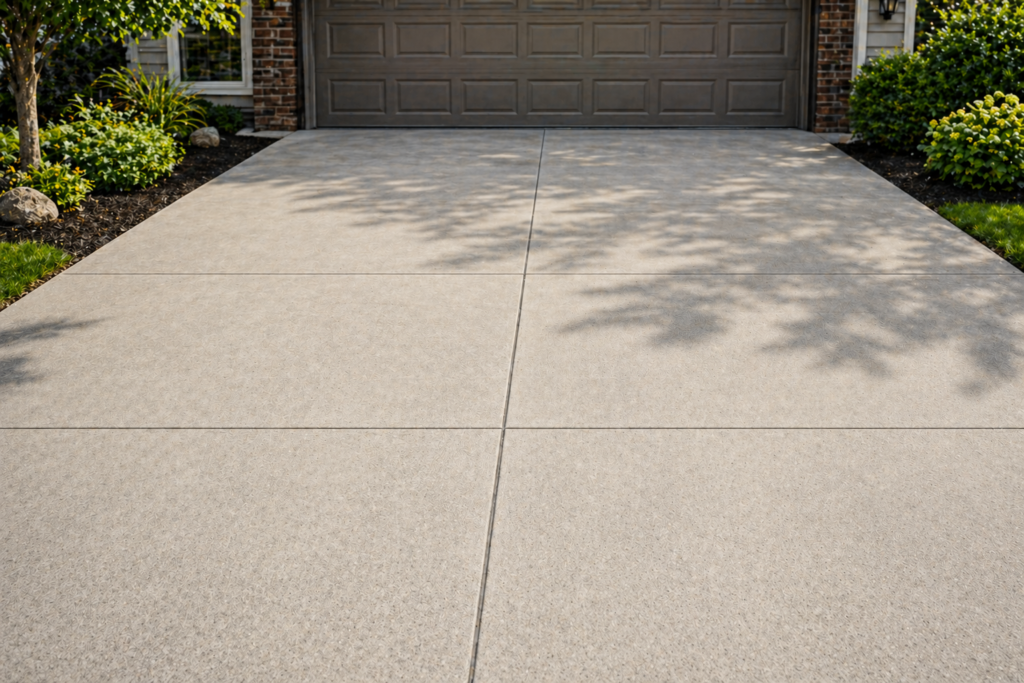
Cracks in a concrete driveway are more than just an aesthetic blemish on your property’s curb appeal; they are early warning signs of structural fatigue. For most homeowners, a driveway is one of the most expensive components of their exterior landscape. Yet, it is often the most neglected. The primary enemy of concrete isn’t actually the weight of its water. When a crack opens, even a hairline one, it creates a direct highway for moisture to reach the sub-base. Once that moisture enters, the clock starts ticking on a “domino effect” of damage that can lead to thousands of dollars in replacement costs. In this guide, we provide the most comprehensive look at how to fix cracks in concrete driveway slabs to ensure your home remains safe and valuable. 1. The Science of Concrete Failure: Why Driveways Break Before you can master how to fix cracks in concrete driveway issues, you must understand the material itself. Concrete is essentially a rigid sponge. It is incredibly strong under compression but very weak under tension. Thermal Expansion and Contraction Concrete is a “living” material that breathes. On a hot summer day, a 50-foot driveway can expand by as much as half an inch. Without proper expansion joints, the internal pressure becomes so great that the concrete must “relieve” itself by cracking. Sub-Base Erosion If the soil underneath your driveway was not compacted properly or if water has washed away the sand bedding, the concrete slab is essentially “bridging” a vacuum. When a 4,000-pound SUV drives over that bridge, the concrete snaps. This is why learning how to fix cracks in concrete driveway early is vital; it prevents the water from reaching that sub-base in the first place. The PSI Limit Most residential driveways are poured to a strength of 3,000 to 4,000 PSI (Pounds per Square Inch). While this is plenty for a standard car, heavy delivery trucks or construction machinery can easily exceed this limit, causing immediate structural failure. 2. The Danger Zone: What Happens If You Ignore Cracks? Many homeowners wait until a crack is wide enough to trip over before researching how to fix cracks in concrete driveway. By then, the damage is often irreversible. The Freeze-Thaw Exploder In regions where temperatures drop below freezing, water enters the crack, turns to ice, and expands by approximately 9%. This exerts thousands of pounds of pressure against the walls of the crack, forcing it wider every single night. Hydrostatic Pressure Water trapped under the slab can push upward (heaving), especially during heavy monsoon seasons or rapid snowmelts. This pressure can tilt entire slabs, creating dangerous trip hazards. Vegetation Sabotage Wind-blown dirt fills open cracks, creating a perfect seedbed for weeds. As roots grow, they act like biological wedges, slowly prying the concrete apart from the inside out. Knowing how to fix cracks in concrete driveway gaps prevents this “biological weathering.” 3. Material Science: Choosing the Right Sealant Stop using cheap “hardware store” mortar. If you want to know how to fix cracks in concrete driveway permanently, you need to understand polymers. Polyurethane Sealants (The Gold Standard) Polyurethane is a reactive polymer that stays flexible once cured. Since driveways move, you need a material that can stretch and compress. Polyurethane bonds chemically to the concrete walls, creating a waterproof seal. Epoxy Resins If the crack is on a vertical surface or requires structural “gluing,” epoxy is the answer. It is stronger than the concrete itself once cured, though it lacks the flexibility of polyurethane. Self-Leveling vs. Non-Sag 4. The Professional Tool Kit Gather these items before you begin. Having the right tools is 50% of the battle when learning how to fix cracks in concrete driveway. 5. Step-by-Step Restoration: How to Fix Cracks in Concrete Driveway Step 1: Deep Cleaning and Preparation Start by scrubbing the crack with a wire brush. If there is moss or deep-seated dirt, use a pressure washer. Important: If you use water, you must wait at least 24–48 hours for the concrete to be bone-dry. Most sealants will not bond to a damp surface. Step 2: The Undercutting Technique (The Pro Secret) Most DIYers just pour filler into a thin crack. To truly understand how to fix cracks in concrete driveway, you must use the “Undercut.” Use a hammer and chisel to widen the crack slightly, creating an inverted “V” shape (wider at the bottom than the top). Step 3: Removing the Dust After chiseling, the crack will be full of fine white powder. This powder acts like a “release agent” that prevents the sealant from touching the concrete. Use a shop vac to get the crack perfectly clean. Step 4: Installing the Backer Rod If your crack is deeper than 1/2 inch, do not fill it entirely with sealant. Press a foam backer rod into the crack until it sits about 1/4 inch below the surface. This ensures “two-point” bonding (the sealant sticks to the two side walls but doesn’t get sucked into the bottom of the crack). Step 5: Applying the Sealant Apply your chosen polyurethane filler. Start at the highest point of the driveway and work down. Let the material flow and settle. Following this professional process is the most effective way for how to fix cracks in concrete driveway permanently. Step 6: The Texture Match Fresh sealant is often shiny. While the sealant is still tacky, you can lightly sprinkle a bit of fine sand over it or brush it with a stiff-bristled broom to match the surrounding rough texture. 6. Comprehensive Troubleshooting Guide Even with a guide on how to fix cracks in concrete driveway, issues can arise. My Filler is Bubbling This usually happens if the concrete was damp or if the temperature was too high during application. The “outgassing” of the concrete creates air pockets in the sealant. The Sealant is Sinking You likely skipped the backer rod. Without a solid base, the liquid sealant will continue to sink into the sub-grade until it cures, leaving a dip in