Concrete Resurfacing in NY: Can You Pour Over Existing Concrete?
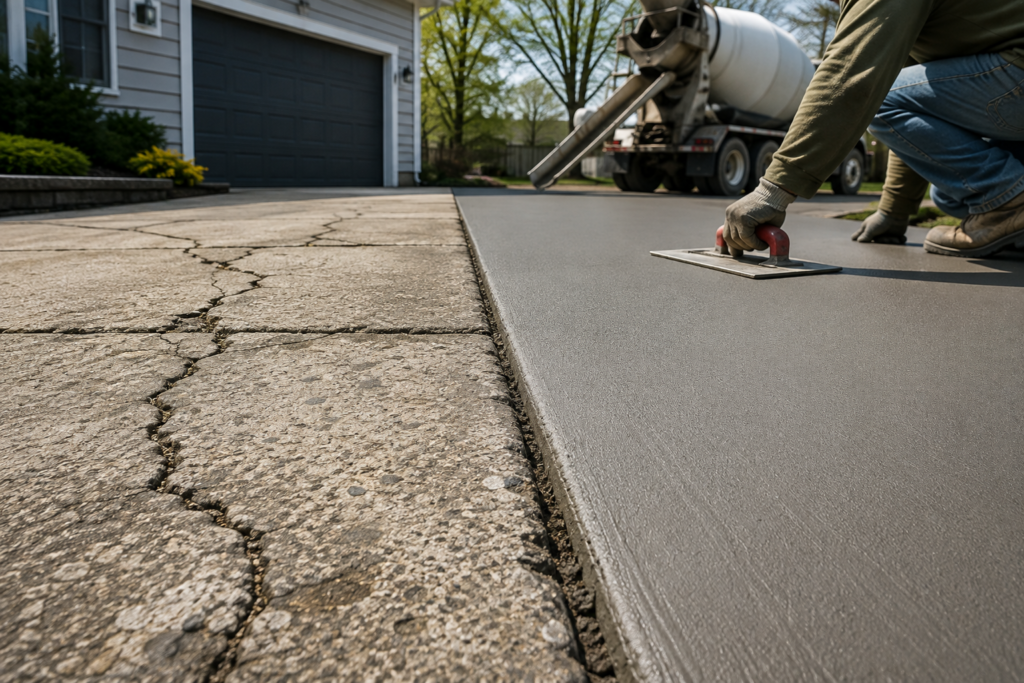
Yes, you can pour new concrete over existing concrete, but only if that old slab earns the privilege. A driveway with light surface wear and no real structural problems is often a good candidate. A driveway with a two-inch height difference across a crack, or one that’s been heaving every spring for years, usually isn’t. The concrete underneath doesn’t just sit there quietly once you cover it. Whatever problems it has tend to show up again, and sometimes faster than homeowners expect. If you’re standing on an old patio or driveway in New York right now, trying to decide whether it’s worth saving, here’s what actually goes into that decision. Can You Pour Concrete Over Existing Concrete? Technically, yes. Contractors do it all the time, and there’s nothing unusual about adding a new layer of concrete on top of an old slab. The real question isn’t whether it’s possible; it’s whether it’s the right call for your specific slab. Here’s the distinction that matters: pouring fresh concrete over an existing slab is different from what most people mean when they say “resurfacing” or “overlaying.” A true concrete overlay is a thin, specialized layer, often somewhere between a fraction of an inch and a couple of inches, designed specifically to bond to old concrete and give it a new wearing surface. Pouring a full-depth slab on top of an existing one is a heavier undertaking, and it comes with its own set of clearance and elevation issues around doors, garage openings, and drainage. Both approaches depend on one thing above everything else: the existing slab needs to be structurally sound. Not perfect. Not crack-free. Just sound enough that it isn’t actively moving, settling, or failing underneath whatever gets placed on top of it. Cosmetic damage: surface scaling, discoloration, shallow spalling, hairline cracks that have stopped moving – those are usually fine to build over. Structural problems are a different story, and covering them up rarely makes them go away. When Is Pouring Over Existing Concrete a Good Idea? A patio that’s held up fine for fifteen years but looks tired and pitted on the surface is a textbook case for resurfacing. So is a walkway with some staining and minor scuffing, or a basement floor that’s structurally solid but visually rough. Driveways are a little more situational. If the slab is level, drains properly, and the cracking is limited to hairline stuff that isn’t shifting, an overlay can extend its life and improve how it looks without the cost of tearing everything out. The trouble comes when a driveway has been patched repeatedly over the years, or when one section has settled lower than the rest. At that point, you’re not resurfacing a problem; you’re hiding it. Commercial properties see this question a lot too, especially older parking areas, loading zones, and walkways around retail buildings. If the base underneath is still stable and the slab isn’t tracking any drainage or settlement issues, resurfacing can be a reasonable way to refresh a worn surface without shutting down a lot of the property for demolition. The common thread across all of these situations is stability. Surface wear is something an overlay was built to solve. Movement is not. When Should You NOT Pour Concrete Over Existing Concrete? Some warning signs should stop the conversation before it starts. Major cracks the kind wider than a pencil line, or ones where you can feel a lip between one side and the other usually point to something happening below the surface, not on it. Uneven settlement is another one. If part of a slab has sunk relative to the rest, that’s a base problem, and a new layer of concrete on top isn’t going to correct the grade or stop it from continuing to settle. Heaving is its own category, and it’s common enough in this region that it deserves its own mention below. Drainage problems matter too if water already pools against a slab or runs toward a foundation instead of away from it, adding material on top can make the pitch worse, not better. An unstable base is probably the least visible of these issues and the most important. Concrete only performs as well as what’s underneath it. Voids, washed-out soil, or a base that was never compacted properly will eventually cause new concrete to crack in the same spots as the old, no matter how well the surface work was done. The practical point here is simple: a crack or movement problem in the old slab doesn’t stay contained. Left alone, it tends to reflect whatever gets placed on top, sometimes within a year or two, sometimes longer. Covering a problem isn’t the same as solving it. Concrete Resurfacing vs. Concrete Replacement Factor Resurfacing/Overlay Full Replacement Existing slab condition Structurally sound, cosmetic or surface-level wear Cracked, settled, heaving, or base is compromised Typical use Patios, walkways, some driveways, interior floors, commercial surfaces in stable condition Driveways with major cracking, slabs with drainage or settlement failure Preparation required Cleaning, crack treatment, bonding agent, surface profiling Demolition, disposal, base regrading and compaction Disruption Lower often a shorter project timeline Higher full excavation and rebuild Appearance options Stamping, staining, broom or trowel finishes, similar to new concrete Full design flexibility since it’s built from scratch Best suited for Slabs with wear, staining, or minor stable cracking Slabs with structural, drainage, or base problems Main limitation Can’t fix what’s happening underneath the slab Higher cost and more disruption to the property How Contractors Decide Whether Existing Concrete Can Be Resurfaced A contractor evaluating a slab isn’t just glancing at the surface. They’re reading it. Crack patterns tell a story. A single hairline crack that hasn’t widened in years reads very differently than a spiderweb pattern radiating from one corner, which often points to a base or drainage issue. Settlement gets checked by eye and sometimes with a level to see if one section is lower than the section next to it, and if so, by
What Is Concrete Spalling? Causes, Signs & How to Fix It in New York
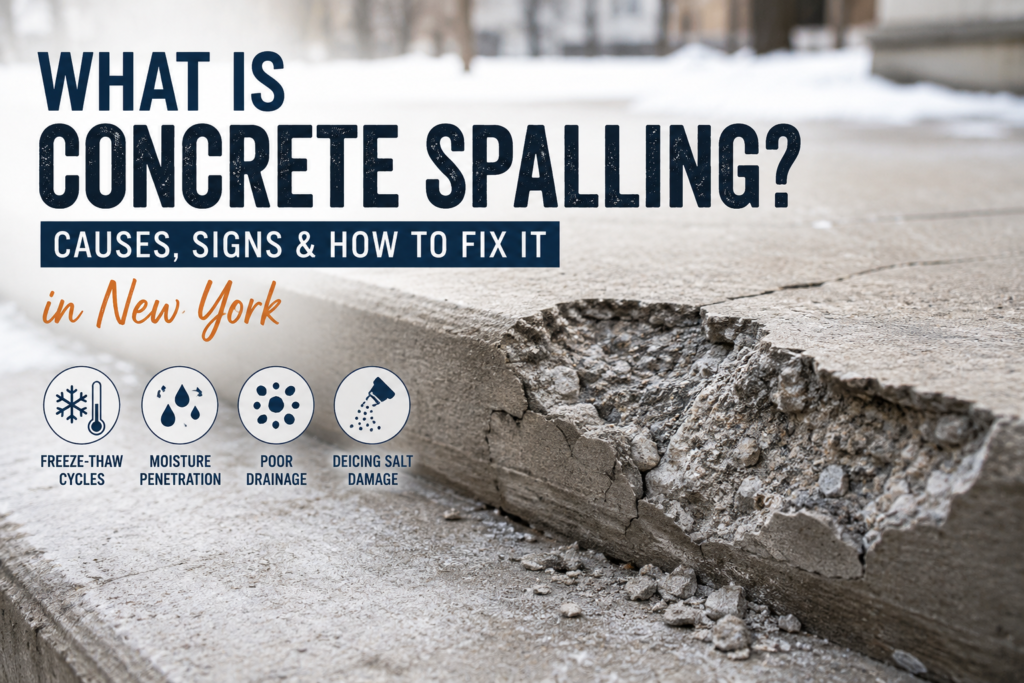
You walk out to the driveway in March, snow’s finally gone, and there it is: a patch near the garage where the top of the concrete has flaked away, leaving behind a rough, pitted surface that wasn’t there last fall. Maybe it’s the front steps. Maybe it’s a section of sidewalk where you can suddenly see the little stones that make up the concrete itself. Whatever the spot, the question is usually the same: what is this, and do I need to worry about it? In most cases, what you’re looking at is concrete spalling. It’s one of the most common things we get called out for in the spring, and it’s almost always tied back to how New York concrete gets treated over the winter. The short version: spalling is the surface of the concrete breaking away, usually in layers or chunks, because of moisture that got into the slab and then froze. The longer version, including when it’s minor and when it’s a bigger problem, is worth understanding before you decide what to do about it. What Is Concrete Spalling? Spalling is what happens when the top layer of a concrete surface flakes, peels, or chips away, exposing the material underneath. It can look like anything from light surface flaking that resembles peeling paint to larger chunks breaking loose and leaving craters behind. What’s actually happening is that moisture works its way into the concrete through hairline cracks, through the natural pores in the surface, or through poor finishing, and then something puts pressure on that moisture from the inside. Usually it’s freezing. Water expands when it turns to ice, and concrete isn’t flexible enough to handle that expansion without cracking or breaking at the surface. Over a few freeze-thaw cycles, that damage compounds. What starts as a rough patch can turn into a section of missing concrete. Some people call this spalling concrete, some call it flaking concrete, and some just say the surface is “peeling.” It’s the same issue described in a few different ways. And it’s worth being clear about something early on: a little bit of surface texture change isn’t automatically a crisis. Concrete ages. But spalling that keeps spreading, or that exposes anything underneath the surface, is a different story. What Does Spalling Concrete Look Like? This is usually the easiest way to figure out what you’re dealing with, because spalling has a pretty distinct look once you know what to check for. Light spalling often shows up as flaking or peeling thin layers of concrete lifting away, sometimes in patches only a few inches wide. Move further along the damage scale, and you start seeing pitting, small craters where pieces have popped out entirely. In more advanced cases, the surface feels rough or sandy underfoot; the aggregate, the gravel mixed into the concrete, becomes visible, and edges near joints or cracks start crumbling when you press on them. The most serious version is when you can see rebar or wire mesh poking through. That’s not cosmetic anymore, and it usually means water and possibly deicing salt have been getting to that steel for a while. What You See What It Could Indicate Recommended Next Step Light surface flaking, small patches Early-stage spalling, possibly a poor finishing layer Monitor and keep clean; note if it spreads Pitting or small craters Freeze-thaw damage progressing below the surface Have it inspected before next winter Visible aggregate (gravel showing) Loss of the top mortar layer Repair recommended to prevent further wear Rough, sandy texture over a wide area Widespread surface deterioration Professional assessment of repair vs. resurfacing Crumbling near joints or edges Water collecting and freezing at vulnerable points Check drainage and repair before it spreads Exposed rebar or wire mesh Reinforcement corrosion, more serious internal damage Get a professional evaluation soon What Causes Concrete Spalling? There’s rarely just one cause. Usually, it’s a combination of things working against the slab at the same time. Freeze-Thaw Cycles This is the big one in New York. Concrete is porous, not obviously, but at a small scale, water can get in. When temperatures drop, that trapped water freezes and expands, putting pressure on the surrounding concrete from the inside. When it thaws, the pressure releases, but the damage from the expansion is already done. Repeat that cycle over a winter with multiple thaws and refreezes, which is typical for us, and the surface starts to break down layer by layer. Deicing Salts Rock salt and other deicing products lower the freezing point of water sitting on the surface, which changes how and when that moisture freezes and refreezes. Over repeated seasons, this can accelerate surface deterioration, especially on concrete that wasn’t finished or sealed well to begin with. It’s not that using salt once will ruin a driveway; it’s the cumulative effect over years that tends to show up. Excess Moisture and Poor Drainage Any spot where water tends to pool a low point in a driveway, an area near a downspout, or a section without proper slope is going to spall before the rest of the slab. Standing water means more saturation, and more saturation means more material available to freeze and expand. Installation or Finishing Problems Some spalling traces back to how the concrete was placed years earlier. Adding too much water to the mix, finishing the surface too early or too late, or troweling in a way that seals a weak, water-rich layer at the top can all leave a surface that’s more vulnerable than it should be. This isn’t always obvious until years later, when that top layer starts to go. Corroding Reinforcement When water and salt reach the steel reinforcement inside the concrete rebar or mesh the steel starts to rust. Rust takes up more space than the original steel, and that expansion pushes outward against the concrete around it, cracking and eventually breaking it away from the inside. This is one of the more serious causes because the damage is happening
What Causes Concrete to Crack? Common Reasons and How to Prevent It
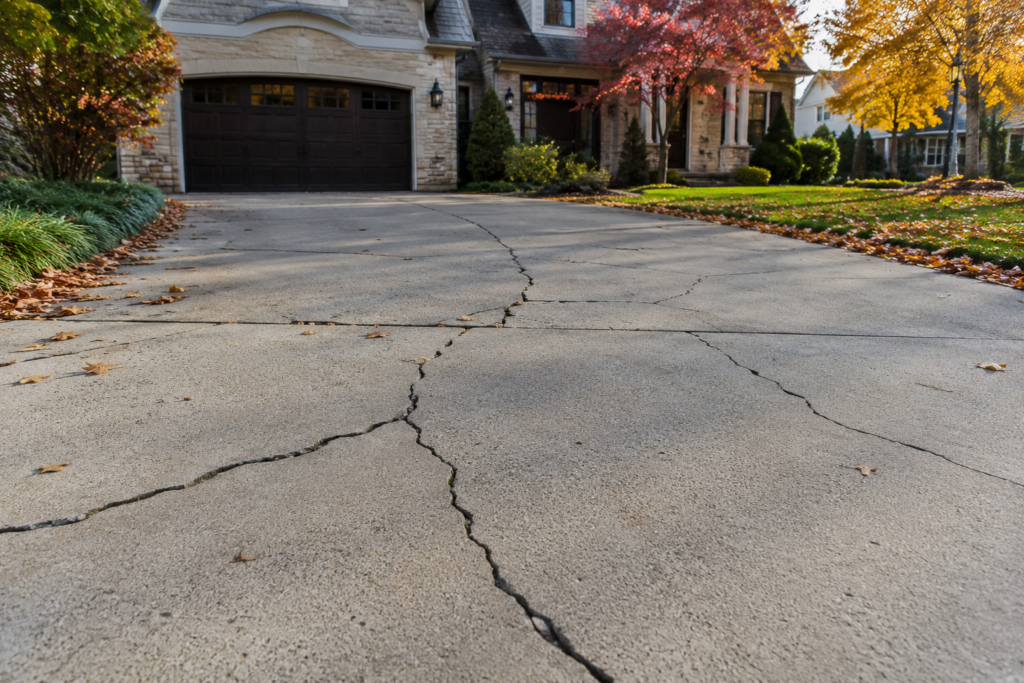
If you just walked outside and noticed a new crack running across your driveway or patio, take a breath. You’re not alone, and it doesn’t automatically mean something went wrong. In twenty-plus years of pouring and repairing concrete around New York, I can tell you that cracking is probably the single biggest thing homeowners call me about. More than color, more than finish, more than anything else. Someone sees a line in their slab and immediately pictures a five-figure replacement job. Most of the time, that’s not where this is headed. Concrete is a material that’s designed to crack in some form. What matters is where the crack shows up, how wide it is, and what’s causing it. In this article, I’ll walk you through the real reasons concrete cracks the ones I actually see on job sites, not textbook explanations plus what’s normal, what’s a red flag, and how a contractor prevents most of this from happening in the first place. Is It Normal for Concrete to Crack? Short answer: yes, to a point. Concrete shrinks as it cures. That’s just chemistry. As the water in the mix evaporates and the slab hardens, it pulls together slightly, and that tension has to go somewhere. Usually it shows up as a thin hairline crack, sometimes barely visible unless the light hits it right. I tell people to think of hairline cracks like the fine lines on an old piece of pottery. They’re part of how the material ages. If you can’t slide a coin into the crack, and the two sides of the slab are level with each other, you’re probably looking at cosmetic cracking, not a structural issue. What crosses the line into “call someone” territory is different. A crack wider than a quarter inch, one side of the slab sitting higher than the other, or cracks that keep spreading over a few months that’s when I’d actually get concerned and want to look at it in person. So don’t panic over every crack you see. But don’t ignore the ones that are changing shape or letting water underneath, either. What Causes Concrete to Crack? There isn’t one single answer here. Concrete cracks for a mix of reasons, and honestly it’s usually more than one factor working together. Let me go through the ones I run into most. Shrinkage During Curing This is the most common cause, hands down. As concrete cures, it loses moisture and shrinks slightly across the whole slab. Contractors plan for this by cutting control joints (more on that below), which give the concrete a planned place to crack instead of cracking randomly across your driveway. Concrete shrinkage cracks usually show up within the first few weeks after a pour, and they’re typically thin and shallow. Freeze-Thaw Cycles in New York This one is huge for us specifically. New York winters put concrete through repeated freezing and thawing, sometimes several times in a single week. Water gets into tiny pores in the concrete, freezes, expands, and puts pressure on the surface from the inside. Do this enough winters in a row, and you’ll start seeing surface flaking, called spalling, along with actual cracking. Freeze-thaw damage is one of the top reasons I get called out to driveways that are only five or six years old. Poor Soil Preparation Concrete is only as good as what’s underneath it. If the base wasn’t compacted properly before the pour, or if there’s soft, uneven soil under the slab, that ground is going to shift over time. When the soil moves, the concrete above it has no choice but to crack or settle. I’d say a good chunk of the “why did this crack so fast” calls I get trace back to a base that wasn’t prepped right, sometimes by a previous contractor, sometimes on an older job before current standards. Heavy Vehicle Loads Driveways and garage floors get driven on, obviously. But there’s a difference between a car and a delivery truck, a dumpster, or heavy equipment. Concrete that wasn’t designed or reinforced for heavier loads can develop cracks from that extra weight, especially near the edges of a slab. If you’re expecting anything heavier than typical vehicles on your driveway, that’s worth mentioning to your contractor before the pour, not after. Tree Roots Roots don’t care what’s above them. As trees near a driveway or walkway grow, their root systems can push up against the underside of a slab and lift or crack it from below. This is a slow process, usually taking years, but it’s a common one on older properties with mature trees close to the concrete. Water Damage Water is patient, and it’s relentless. Whether it’s from poor grading, a downspout dumping right next to your slab, or water pooling and seeping into small cracks and then freezing, water is behind a lot of the concrete damage I see. It gets into any small opening it can find and makes the problem bigger over time. Poor Drainage Related to the above but worth its own mention. If water isn’t draining away from a slab properly, it sits there. Saturated soil underneath concrete shifts more than dry, stable soil, and standing water accelerates freeze-thaw damage in the winter. Good drainage is honestly one of the most underrated parts of a long-lasting concrete installation. Lack of Control Joints I mentioned control joints above under shrinkage, but this deserves its own section because it’s such a common mistake. Concrete expansion joints and control joints give a slab planned weak points where it’s supposed to crack, hiding that cracking in a clean, straight line instead of letting it happen randomly across the surface. If a slab was poured without enough joints, or the joints were spaced too far apart, you’ll often see random cracking running diagonally across the concrete instead of following a joint line. Improper Concrete Mix Not all concrete mix is created equal, and mixing it wrong too much water, wrong ratio of cement to
What Is Stamped Concrete? Benefits, Costs, and Is It Worth It?
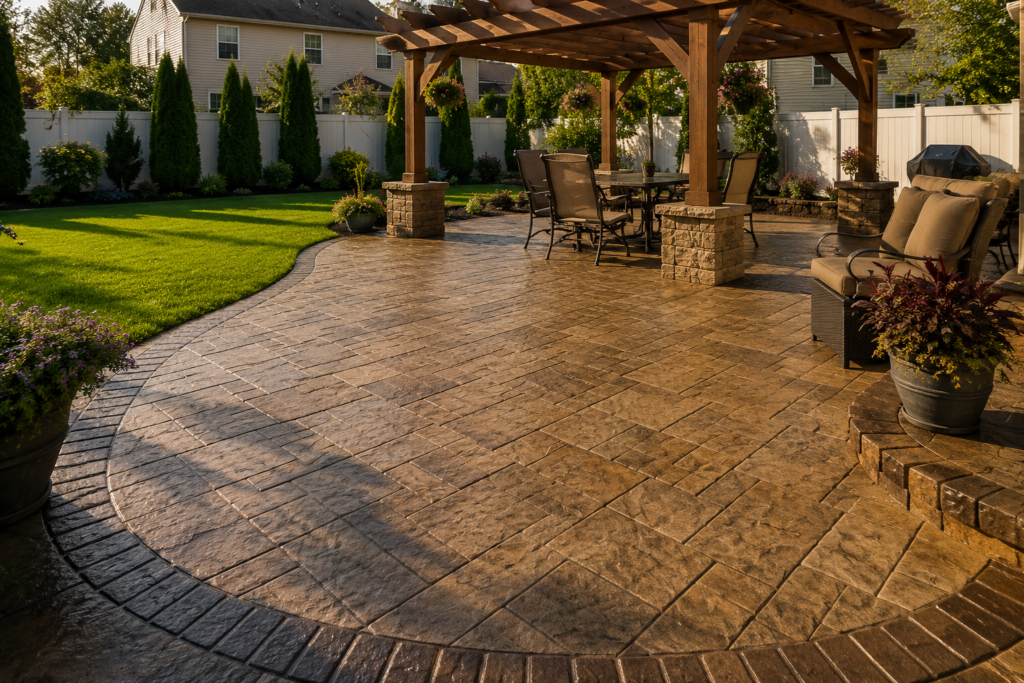
I’ve been pouring and stamping concrete in New York for over twenty years. In that time, I’ve worked on everything from small backyard patios in Queens to sprawling pool decks on Long Island estates. And one question comes up more than almost any other: “What exactly is stamped concrete, and is it worth the money?” It’s a fair question. There’s a lot of information floating around online, some of it accurate, a lot of it not. So let me break it down the way I would if you were standing in my driveway asking me directly. What Is Stamped Concrete? Stamped concrete is regular concrete that’s been textured and colored to look like brick, stone, slate, wood, or other natural materials. The “stamping” part refers to large rubber or polyurethane molds called stamps that get pressed into freshly poured concrete before it hardens. The result is a surface that mimics the look of more expensive materials at a fraction of the cost. It goes by a few other names: decorative concrete, textured concrete, patterned concrete. They all mean the same thing. How It’s Made The process starts with standard concrete, the same stuff used for sidewalks and foundations. What makes stamped concrete different is what happens during and after the pour. Coloring comes first. There are two main ways to add color: Then comes stamping. Once the concrete reaches the right consistency, firm enough to hold an impression but soft enough to stamp, the crew lays the stamp mats across the surface and presses them in using body weight or a tamper. They work fast because timing is everything. If the concrete sets too much, the stamps won’t leave a clean impression. After it cures, the surface gets sealed, a critical step that protects the color, brings out the texture, and keeps moisture from getting in. Common Stamped Concrete Patterns There are dozens of stamp patterns available. Here are the ones I install most often in the New York area: Pattern Type Appearance Best For Ashlar Slate Large, irregular stone tiles Patios, pool decks, walkways Cobblestone Small, rounded stones in a grid Driveways, entryways Brick Classic running bond brick pattern Driveways, walkways, borders Wood Plank Realistic wood grain and boards Covered patios, porches Flagstone Irregular natural stone shapes Patios, garden paths Natural Stone Fieldstone or random rock patterns Patios, retaining walls, steps Herringbone Interlocking diagonal brick pattern Driveways, courtyard areas You can also mix patterns, for example, a flagstone field with a brick border. That’s a popular combination around here, especially on larger patios. Where Can Stamped Concrete Be Used? Stamped concrete works on most horizontal surfaces. Here’s where I see it used most often: Driveways: A stamped concrete driveway instantly changes the look of a home’s exterior. Cobblestone and ashlar slate patterns are popular because they give a high-end look without the cost of real stone or pavers. Just make sure your contractor accounts for expansion joints, driveways experience more stress from vehicle weight and temperature swings than any other surface. Patios. This is probably the most common stamped concrete application. A well-done stamped concrete patio can look like a professionally laid stone patio, but it costs less and has no gaps for weeds to grow through. Walkways, front walkways, and garden paths are great candidates for stamped concrete. A brick or flagstone pattern adds character to what would otherwise be a plain gray slab. Pool Decks Stamped concrete is a good fit around pools because it can be finished with a texture that reduces slip risk. You can also keep the color cooler underfoot than some alternatives. If you’re in New York and you have a pool, this is worth a serious look. Outdoor Kitchens and Entertainment Areas. More homeowners are building outdoor kitchen spaces, and stamped concrete is a natural fit. It handles heat, weather, and foot traffic without issues. Commercial Entrances and Plazas: I’ve done a lot of work on restaurant entrances, retail storefronts, and office building walkways here in New York. Stamped concrete holds up to heavy foot traffic, and it photographs well, which is important for any business that cares about its curb appeal. Benefits of Stamped Concrete Here’s what I tell homeowners when they ask me why they should consider stamped concrete: It looks good. That’s the obvious one. Done right, stamped concrete genuinely does look like natural stone or brick, especially from a normal viewing distance. Visitors often can’t tell the difference until they get close. It costs significantly less than the real thing. Natural bluestone, genuine cobblestone, or high-end pavers can cost two to three times more than a stamped concrete installation. For most homeowners, that difference matters. You have real design flexibility. You’re not limited by what’s available at a stone yard. You can choose your pattern, your color, and your border style. You can match your home’s exterior, your landscaping, or whatever look you’re going for. It’s durable. Concrete is one of the toughest paving materials there is. A properly installed and sealed stamped concrete surface holds up well to New York winters, vehicle traffic, and years of foot traffic. Maintenance is manageable. You’re mainly looking at resealing every two to three years and periodic cleaning. There are no individual pavers to settle and shift, no joints to re-sand every season. It can increase your property’s value. I’ve had homeowners tell me their Realtor noticed the patio or driveway during a listing. An attractive outdoor surface does make an impression on buyers. One thing I always tell people: the benefits only hold if the installation is done correctly. Rushed work, wrong timing during the pour, cheap sealers, any of those things can undermine even the best-looking project. That’s why choosing an experienced stamped concrete contractor matters as much as choosing the right pattern. Stamped Concrete vs Other Materials This comes up constantly, so let me give you a straight comparison. Material Appearance Cost (NY Estimate) Maintenance Lifespan Stamped Concrete Mimics stone, brick, wood $12–$22/sq ft Reseal every 2–3
What to Look for in a Concrete Contractor: A Complete Guide
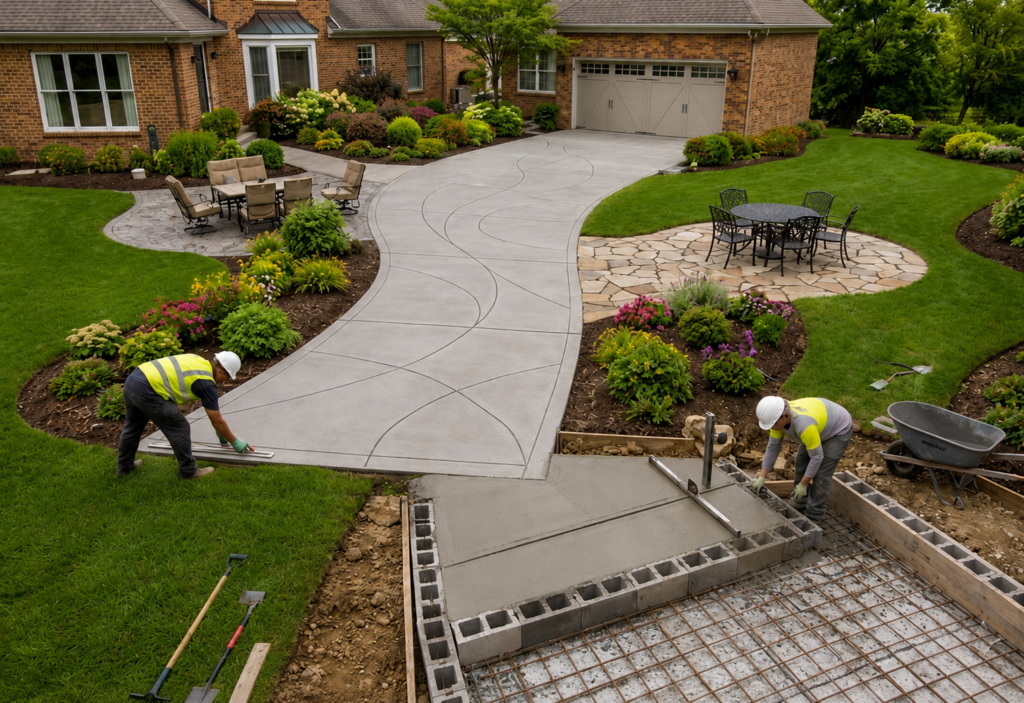
Concrete is a permanent decision. Unlike almost any other home improvement project, a concrete pour involves a chemical reaction that, once started, cannot be easily undone. It is a structural element that becomes a literal part of your property’s foundation and long-term equity. Hiring a contractor is not merely about finding someone with a truck and the physical strength to move wet material; it is about finding a technician who understands the chemistry of hydration and the physics of load-bearing. This guide is your roadmap to identifying a partner who values structural integrity as much as aesthetic beauty. 2. The Science of the Subgrade: The Invisible Foundation The most common mistake in the industry is focusing entirely on the top surface while ignoring what lies beneath. A concrete slab is only as stable as the ground supporting it. Soil Analysis and Site Preparation A master contractor begins with the dirt. They must analyze the soil composition of your specific lot. In many regions, expansive clays or loose sandy loams require different preparation strategies. The Aggregate Base The use of a dedicated stone base is non-negotiable for high-quality work. This layer acts as a “buffer” between the earth and the concrete. It provides essential drainage, ensuring that moisture does not sit directly beneath the slab, which is the primary cause of “heaving” during seasonal temperature shifts. 3. Concrete Mix Design: Understanding the “Recipe” Think of concrete like a sophisticated chemical cocktail. Every project requires a specific “mix design” tailored to its intended use. You need to know that your contractor is ordering a high-quality product from a reputable ready-mix plant. Strength and Durability Instead of looking for the cheapest mix, a pro looks for the densest mix. A higher-strength mix is less permeable, meaning it resists the penetration of water, oils, and environmental chemicals that cause internal degradation over time. Environmental Admixtures In regions that experience frost or heavy moisture, the mix must include specific “admixtures.” The most important of these is Air Entrainment. This process adds billions of microscopic bubbles to the wet concrete. These bubbles act as tiny pressure-relief valves. When trapped moisture freezes and expands, it moves into these bubbles instead of shattering the internal structure of your concrete. 4. Reinforcement: The Skeleton of the Slab Concrete has incredible “crush” strength but very low “tensile” or pulling strength. Reinforcement provides the “muscle” that holds the slab together when the ground inevitably shifts. Rebar Mastery While some use thin wire mesh, a master contractor utilizes structural steel rebar. 5. The “Liability Shield”: Credentials that Matter In the professional world, a “handshake” is a liability. You must protect your home from legal and financial risks. 6. The Logistics of “Pour Day” A professional pour is a synchronized performance. Knowing what happens allows you to spot errors while they can still be corrected. 7. Curing vs. Drying: The Chemical Secret Concrete does not “dry” like a puddle; it “cures” through a chemical reaction called Hydration. 8. Red Flags: When to Walk Away 9. Frequently Asked Questions 10. The Ultimate Hiring Checklist 11. Conclusion: Choose Value Over Price In the world of concrete, the lowest bid is almost always a warning sign. By looking for a contractor who prioritizes technical specifications, subgrade physics, and proper chemical curing, you are ensuring that your investment stands the test of time. A master contractor is not just a laborer they are the guardian of your property’s foundation.