Which Driveway Pavers Are Best for New Hyde Park Homes?
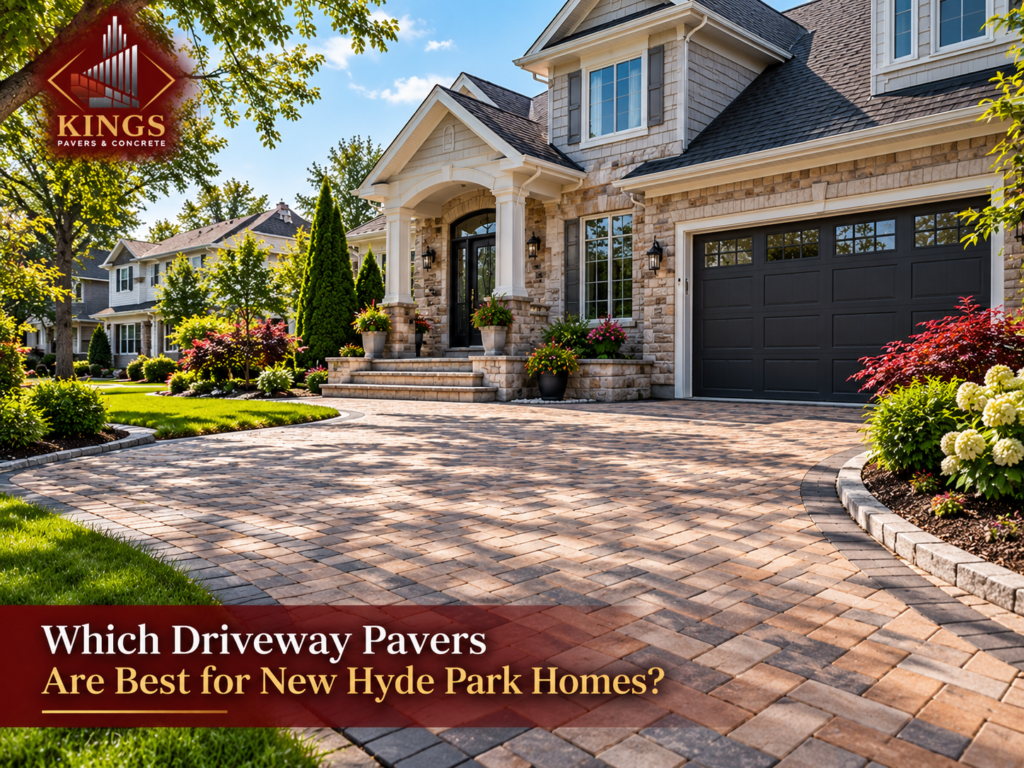
Most driveway conversations in New Hyde Park start the same way. A homeowner has a cracked asphalt or concrete drive, or a paver driveway that has sunk in the wheel tracks, and wants to know what to put down next. Within a few minutes, the question shifts from “what looks nice?” to “what will still look right after fifteen winters and a few thousand trips in and out of the garage?” A driveway material has to balance appearance, vehicle use, maintenance, weather resistance, repairability, installation quality, and budget. Improving one often costs you another. The short answer: for most New Hyde Park homes, a properly installed interlocking paver driveway in either clay brick or concrete is a sensible choice. Brick suits traditional homes and owners who value color that holds up over time. Concrete pavers offer more styles and shapes, and they often cost less. Natural stone is beautiful but is a premium option that doesn’t suit every driveway. In every case, the base under the pavers matters at least as much as the pavers themselves. The rest of this guide explains why, so you can compare options for your own property. What to Consider Before Choosing Driveway Pavers A paver that works on one street can struggle on another, so it helps to look at the whole situation before picking a color. Freeze-thaw cycles. Long Island winters don’t stay cold. Temperatures swing above and below freezing many times a season, and that is harder on a driveway than steady cold. Water gets into joints and small gaps, freezes, expands, and thaws again. Over time, that movement can loosen joints, lift edges, and show up any weak spot in the base or the pavers. Rain and drainage. Water needs somewhere to go. A driveway that sheds water toward the street, a lawn, or a drain behaves very differently from one that holds water against the garage slab or the foundation. Much of Long Island has sandy soil that drains well, but that isn’t universal. Fill material, clay pockets, and compacted older driveways can all change how water moves. Look at where water sits after a heavy rain. Snow and ice. Shoveling, plowing, and deicing all affect the surface. Some paver edges catch snow blades more than others. Some surfaces hold up to salt better than others, depending on the product’s quality and how it was made. Vehicle traffic and weight. A driveway for two sedans is a different job from one that sees SUVs, delivery trucks, or the occasional heavy vehicle. Turning movements, like pulling into a tight garage, put more stress on the surface than straight driving. The paver thickness and base depth should match the loads. Existing soil and base. What’s under the old driveway, and what is the soil like? Removing an old asphalt drive often exposes a base that is thin, contaminated, or uneven. That is useful information before you commit to a material. Maintenance expectations. Some owners are happy to rinse the drive, top up joint sand, and reseal now and then. Others want to do as little as possible. Be honest about which you are. Home style. A red-brown brick drive suits a traditional Cape or colonial. A clean-lined, gray modern home may call for larger-format concrete pavers. The driveway should look like it belongs with the house, the walkway, and the neighbors. Brick Pavers for Driveways Clay brick pavers are made from fired clay, and the color runs through the whole unit rather than sitting on the surface. That is a big part of their appeal. They tend to keep their color well over the years, and they age gracefully, with a warmth that suits older neighborhoods. Appearance. The classic look is a range of reds, browns, and charcoals, often laid in a herringbone pattern. Herringbone also adds mechanical strength for vehicle traffic, which is why you see it so often on driveways. Durability. Quality clay pavers handle vehicle loads well when they are made for that use and installed on a good base. Because clay absorbs water differently from concrete, it’s worth asking your supplier whether the product is rated for severe weathering and vehicular traffic. Standards such as ASTM C902 and ASTM C1272 cover clay pavers, and a reputable supplier should be able to tell you what a product meets. Maintenance. Brick is fairly forgiving. It needs occasional cleaning, joint sand that is kept topped up, and attention to weeds and moss in shaded spots. Sealing is optional, mainly to deepen color, resist stains, or help hold joint sand in place. Repairability. Pavers can be lifted, the base corrected, and the same pavers set back down. That is a real advantage over poured surfaces, where a repair usually shows. Potential drawbacks. Brick often costs more than basic concrete pavers. The color range is narrower than with concrete, and a poor-quality brick can chip or flake. If you’re matching an existing walkway or steps, it can also be hard to find an exact color match later. Where brick works well. Brick driveway paving in North New Hyde Park often makes sense on traditional homes, on streets with older housing stock, and for owners who want a driveway that looks better with age. It also suits homeowners who want to be able to repair a section down the line without redoing the whole drive. Concrete Pavers Concrete pavers are made from molded concrete, and they are the most widely used driveway paver. A large part of the reason is flexibility. Where they make sense. If you want a specific color, shape, or texture, there are many options: tumbled and aged finishes, large-format slabs for a modern look, and designs that imitate stone or wood. They suit both traditional and modern homes, and they’re often a good fit when budget matters and the owner still wants the benefits of an interlocking system. Practical advantages. Pavers are manufactured under controlled conditions, so size and thickness are consistent. That helps with laying patterns and tight
Brick Driveway Paving New Hyde Park: What NY Homeowners Should Know
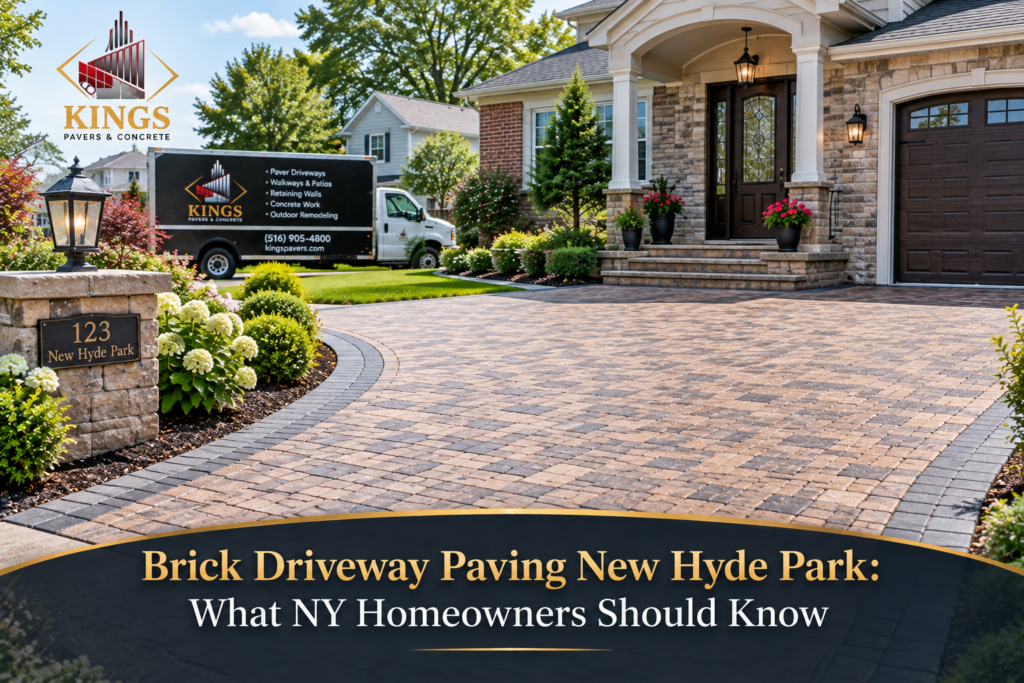
A brick driveway looks finished the day the crew packs up. Whether it still looks that way after a few Long Island winters depends on what you can’t see from the street: what’s underneath, where the water goes, and how the edges are held in place. This guide walks through brick driveway paving New Hyde Park property owners ask about most often. It covers what the work involves, how local weather affects it, what upkeep looks like, and what to ask a contractor before you commit. It applies to homes and smaller commercial lots, though heavier commercial traffic changes the base requirements quite a bit. What People Usually Mean by a “Brick Driveway” Ask three people to describe a brick driveway and you’ll get a few different products. Some mean traditional clay brick, which is kiln-fired, dense, and colored all the way through. Most mean interlocking pavers, which are typically molded concrete units, sometimes in brick-like proportions and sometimes in larger or more varied shapes. Either way, the units sit on a compacted base and a thin bedding layer, and sand-filled joints lock them together. The difference matters when you compare quotes. Clay pavers hold their color well and have a classic look. Concrete pavers come in a wider range of shapes, colors, and textures, and they’re usually easier to source. Ask any contractor to name the exact unit they’re proposing, including its thickness and whether it’s rated for vehicle traffic. Driveway pavers are generally thicker than patio pavers (around 3 1/8 inches, or 80 mm, is a common figure, but follow the manufacturer’s rating). Brick sold for building walls isn’t made to be driven on. Reclaimed brick can also be unpredictable, since soft or absorbent units may flake after repeated freezing and thawing. Why Homeowners Choose Brick and Paver Driveways, and Where They Fall Short The appeal is easy to see. Pavers give you control over color, pattern, borders, and even a change of texture near the entry. The system is also flexible. Small ground movement tends to show up as a slightly low spot rather than a crack running across a slab. When something goes wrong, or a utility crew has to dig, the units can be lifted and reset without leaving a patch that never quite matches. The downsides deserve equal time. Pavers usually cost more up front than asphalt or plain concrete. The work is labor-intensive, so the result depends heavily on the crew. Joints need occasional attention, snow removal takes a little more care, and if the base or drainage is wrong, settlement is visible. A paver driveway is durable, but it isn’t maintenance-free. For a long, plain, straight driveway on a tight budget, asphalt or concrete may serve you better, and that’s a perfectly reasonable call. What Matters Before the First Paver Goes Down Pull up a failed paver driveway, and the pavers are often fine. The trouble is a few inches below them. That’s why the planning stage matters more than the product catalog. Soil and site conditions. Much of Long Island has sandy soil that drains well, but lots vary. Fill, clay pockets, tree roots, buried debris, and low spots all change what the base needs. A good contractor looks at your property instead of applying one recipe everywhere. Excavation. Old pavement and loose or organic soil have to come out. The depth depends on the soil and the expected loads, and it’s considerably deeper than for a patio. Base and compaction. The base is typically crushed, well-graded aggregate installed in layers and compacted as it goes. Compacting one thick layer leaves soft pockets underneath. In weak soils, a geotextile fabric or a thicker base may be called for. Grading and drainage. The finished surface needs a consistent slope so water leaves instead of standing. Look at where roof downspouts discharge, how the driveway meets the garage and the street, and where runoff will end up. Flat lots have little natural fall, so they may need added measures such as a trench drain at the garage door or a dry well. Rules on where runoff can go vary by municipality, so confirm them before the design is final. Edge restraints. Turning tires push sideways. Without a firm edge, pavers spread, joints open, and the pattern drifts. Driveways need stronger restraint than walkways. Paver selection and vehicle loads. Think about what actually drives on the surface: a family car, a work truck, a delivery van, a dumpster, an RV. Commercial properties see heavier and more frequent loads, which changes both the paver and the base. Spots where vehicles brake, turn, or park in the same place take the most abuse. General contractor guidance: A paver driveway is only as stable as the ground and base beneath it, and water is what most often undermines both. Plan the drainage first, then choose the pavers. How Winter Treats a Brick Driveway in New Hyde Park Freeze-thaw is the mechanism to understand. Rain and melting snow get in through the joints and low spots. If that water reaches a base that doesn’t drain, it freezes, expands, and lifts the surface slightly. When it thaws, it leaves a void or a softened area, and the next vehicle pushes the pavers down. Long Island winters tend to swing above and below freezing repeatedly, so that cycle can repeat many times in one season. Prevention is mostly about not letting water hang around: Seasonal temperature swings also make the units expand and contract slightly. Good joint fill and firm edge restraint absorb that movement. Plowing and deicing add their own stress, which the maintenance section covers below. Brick and Paver Driveway Installation: Step by Step The details change from site to site, but a properly done job generally follows this order: Brick Pavers Compared With Other Driveway Materials Material Appearance Maintenance Repairability Winter considerations Longevity characteristics Relative initial cost Brick/clay pavers Classic look, stable color Sweep, refill joints, control weeds Individual units can be reset or replaced Handle