
How to Fix Sunken Pavers in New York and Prevent Them From Sinking Again
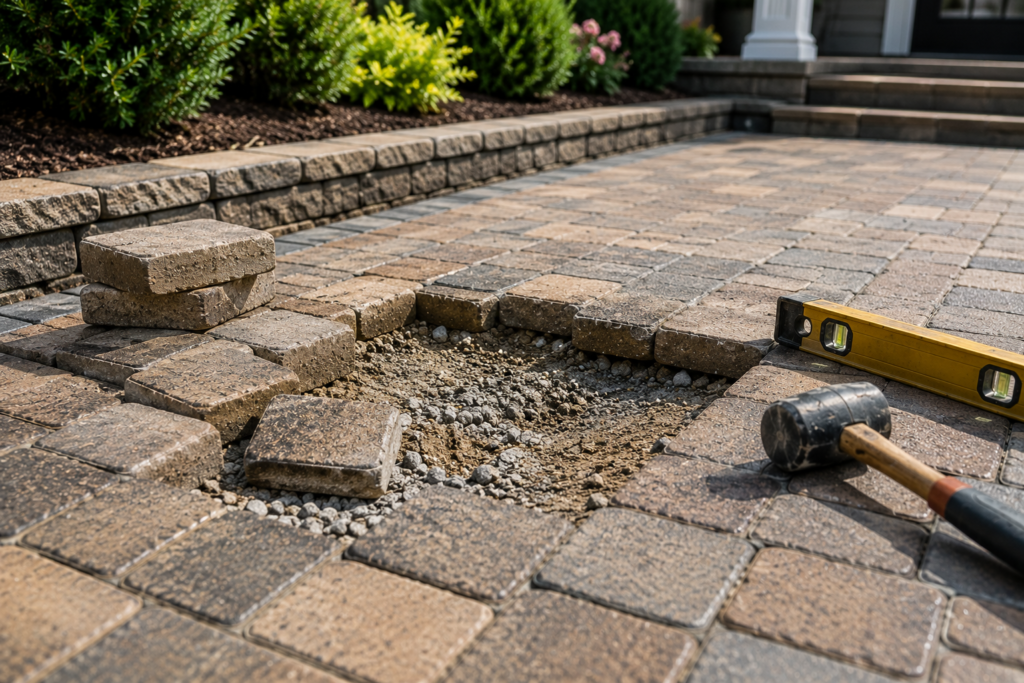
You step onto your patio and one paver rocks under your foot. Or maybe it’s the driveway: there’s a low spot near the garage that fills with water every time it rains, even though the rest of the surface drains fine. If you’ve noticed pavers that have dropped, tilted, or created a dip you can feel when you walk over them, you’re dealing with a settlement problem. It’s worth understanding what’s actually going on underneath before you decide how to fix it. This happens on driveways, patios, and walkways all over New York, and it’s rarely random. Something changed beneath those pavers, and the sunken section is just where it first became visible. Why Pavers Sink in the First Place Pavers themselves are just the surface layer. What holds them in place and what fails when they sink is almost always the material underneath: the compacted base, the bedding sand, and the drainage that’s supposed to move water away from that base instead of through it. A few things cause most of the settlement we see: Here’s the distinction that matters most: the sunken paver is a symptom. The problem is what happened to the material underneath it. Fix the paver without addressing that, and you’re just delaying the same repair. Can Sunken Pavers Be Fixed? In most cases, yes, a single paver or a small cluster that’s dropped can usually be lifted, the base corrected, and the section reset so it sits flush again. This is a normal, expected repair for interlocking pavers, which is part of why they’re used in the first place. Unlike poured concrete, individual units can come out and go back in without redoing the whole surface. Where it gets more complicated is widespread settlement multiple areas sinking, a whole section of driveway that’s gone wavy, or the same spot sinking again after a previous repair. That usually points to a larger drainage or base issue that a bag of polymeric sand isn’t going to solve. In those situations, patching the visible symptom without figuring out the underlying cause tends to be a short-term fix at best. How to Fix Sunken Pavers The general process is the same whether you’re dealing with a patio corner or a driveway low spot, though the scope obviously changes with the size of the problem. Site conditions vary a lot: soil type, how deep the original base was built, what’s causing the water problem, and how large the affected area is all change what the repair actually involves. Severe settlement, standing water that won’t drain, large uneven areas, or anything near a retaining wall or structure is worth having a professional look at before you start digging. Common DIY Mistake: Adding Sand on Top This is probably the most common shortcut, and, understandably, a low paver is annoying, and a bag of sand seems like an easy fix. Spreading sand over a sunken paver, or repeatedly topping off the joints, can make the surface look level again for a little while. It doesn’t touch the actual problem underneath. If the base has a void or the drainage issue that caused the settlement is still there, the same spot will typically sink again, sometimes worse than before, because the added material can wash out along with everything else. If you’ve topped off the same low spot more than once, that’s usually a sign the base needs to be opened up and looked at rather than covered again. How to Prevent Pavers From Sinking Again Prevention mostly comes down to getting the things that failed the first time right, plus paying attention afterward. New York Weather and Paver Settlement New York’s freeze-thaw cycle is a real factor in paver settlement, but it’s not the whole story it tends to make an existing weak spot worse rather than create the problem on its own. Water that’s already gotten into the base from poor drainage or eroded material freezes in winter, expands, and shifts things around. When it thaws, the material doesn’t always settle back evenly, which is why a lot of settlement problems seem to show up or get worse in spring. Heavy spring rainfall adds to this by moving more water through any weak points that opened up over winter. That’s part of why so many settlement calls come in during the first few weeks of warmer weather: the underlying issue was there already, and winter just made it visible. Repair or Reinstall? Condition Likely Approach Why One or two low pavers Localized lift-and-reset Usually an isolated base issue that doesn’t require touching the surrounding area Small, contained depression Lift-and-reset with base correction The affected area is limited, so the fix can stay localized Repeated sinking in the same spot Base and drainage investigation Recurrence usually means the original cause was never addressed Large uneven area Reinstall of that section Widespread movement often points to base failure across the whole area, not just individual pavers Standing water on the surface Drainage correction, then repair Fixing the pavers without addressing water flow tends to repeat the problem Loose or spreading edges Edge restraint repair or replacement Pavers without proper containment shift laterally, which affects everything nearby These are general patterns, not a substitute for someone actually looking at the site. Two driveways with similar-looking sinking can have very different causes underneath. Illustrative Case Example Here’s a scenario that reflects the kind of thing property owners commonly run into. This is a representative example, not a specific past project. A homeowner in a New York suburb notices three pavers near the base of a downspout gradually dropping over the course of a summer. From the surface, it looks like a simple settling issue. Once the pavers are lifted, though, it becomes clear that the downspout has been discharging directly onto the base for years, and the runoff has slowly washed material out from underneath, leaving a shallow void. A repair limited to resetting those three pavers would likely sink again within a
Can You Lay Pavers Without a Base? What Every New York Property Owner Should Know
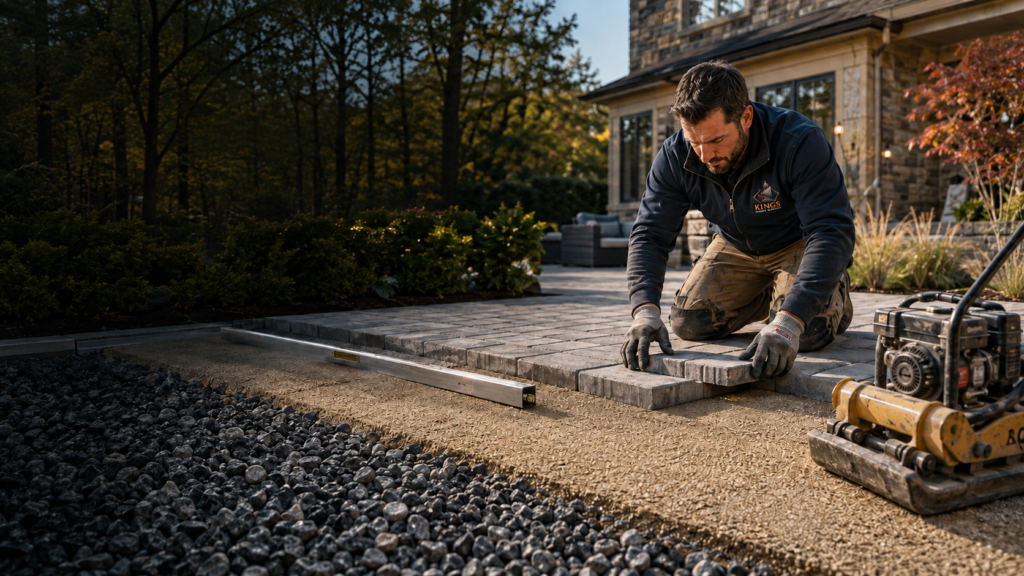
I get this question a lot, usually from someone standing in their backyard with a pallet of pavers already delivered, trying to figure out if they really need to rent a plate compactor and haul in gravel. The honest answer is yes, you can technically lay pavers directly on dirt or grass. People do it every weekend across New York. But “can” and “should” are two very different things, and after twenty-plus years of installing patios, driveways, and walkways from Long Island to the Hudson Valley, I can tell you which projects hold up and which ones end up as repair calls. Skipping the base is tempting. It saves time, cuts out the cost of gravel and delivery, and skips the most physically demanding part of the job. I understand the appeal. But before you skip it, you should know exactly what you’re trading away. Can You Lay Pavers Without a Base? Yes, you can lay pavers without a base, but it’s rarely a good idea for anything permanent. Without a compacted gravel base, pavers shift, sink, and settle unevenly, especially through New York’s freeze-thaw winters. Skipping the base works only for temporary or very low-traffic projects like a short garden path. That’s the short version. Here’s the longer one. If you’re working on a small decorative path through a flower bed, something nobody’s going to walk on with regularity or drive a wheelbarrow over, you can get away with laying pavers on compacted soil or a thin layer of sand. I’ve seen plenty of these hold up fine for years because the loads are light and the area is small enough that any minor settling isn’t a big deal. But for a patio, walkway, driveway, or anything near a house foundation, skipping the base is a mistake I’ve been called out to fix more times than I can count. New York soil isn’t forgiving. We’ve got clay-heavy ground in a lot of areas; we get real winters with deep frost, and heavy rain events that used to be occasional are happening more often. All three of those conditions punish an installation that doesn’t have proper support underneath it. Professionals don’t recommend skipping the base because pavers themselves aren’t what holds the surface together. The base is. The pavers are just the top layer sitting on a system that’s supposed to handle drainage, weight, and ground movement. Take that system away, and you’re basically hoping the dirt underneath cooperates. It usually doesn’t. Why a Proper Base Is So Important A paver base isn’t just filler material. It’s doing several jobs at once, and each one matters. Stability. Compacted gravel locks together and creates a firm, load-bearing surface. Without it, pavers rest directly on soil that shifts with moisture, temperature, and foot traffic. Drainage. Water needs somewhere to go. A properly graded gravel base lets water move through and away from the pavers instead of pooling on the surface or seeping into the joints. Weight distribution. Whether it’s people walking across a patio or a car parked on a driveway, the base spreads that weight out across a wider area so no single spot takes the full impact. Frost protection. This one is huge in New York. When water sits under pavers and freezes, it expands. That expansion pushes pavers up and out of alignment. A properly built base, especially one that extends below the frost line for driveways, reduces how much that freeze-thaw cycle can move things around. Long-term durability. Put all of the above together, and you get a surface that stays flat, drains correctly, and holds its shape for decades instead of a couple of seasons. Here’s a side-by-side look at what you’re really choosing between. Factor Without Base Proper Base Installation Stability Shifts and sinks over time Stays firm under foot and vehicle traffic Drainage Water pools on surface Water drains through and away Weight handling Pavers bear load directly Load spread across compacted stone Frost resistance Highly vulnerable to heaving Built to handle freeze-thaw cycles Weed growth Common through gaps and soft ground Minimized by compacted layers Lifespan 1–3 years before major issues 20–30+ years with basic upkeep Repair frequency Frequent, often within the first year Rare, mostly routine maintenance What Happens When You Skip the Base? I’ve walked onto a lot of properties where someone laid pavers straight on dirt because a video made it look simple. The early stages usually look fine. It’s what happens over the following months that tells the real story. Uneven settling is the first thing homeowners notice. Foot traffic compresses soft ground unevenly, so certain pavers start sitting lower than their neighbors. Once that starts, it doesn’t stop on its own. Weed growth becomes a constant fight. Without a compacted base blocking growth from underneath, weeds and grass push up through the joints within a single growing season. Water pooling shows up after the first heavy rain. Instead of draining through a graded base, water sits on top of the pavers or collects in low spots, which is exactly the kind of thing that turns a patio into a mosquito breeding ground. Loose pavers follow soon after. With nothing locking them into place from below, individual pavers start rocking underfoot. I’ve had homeowners call me because a paver flipped up and became a trip hazard. Cracking happens more with concrete pavers than natural stone, but it happens either way once there’s a void underneath from settling. Pavers aren’t designed to span gaps. They need consistent support. Frequent repairs are the result of all of the above. I’ve re-done entire patios that were installed without a base less than two years earlier, and the homeowner ended up paying for the labor twice. One project that sticks with me was a small backyard patio in Nassau County. The homeowner had laid the pavers himself on packed dirt to save on the gravel base. It looked great for about eight months. Then the edges started sinking near the low corner of