Why Do Sidewalks Have Built-In Cracks in New York?
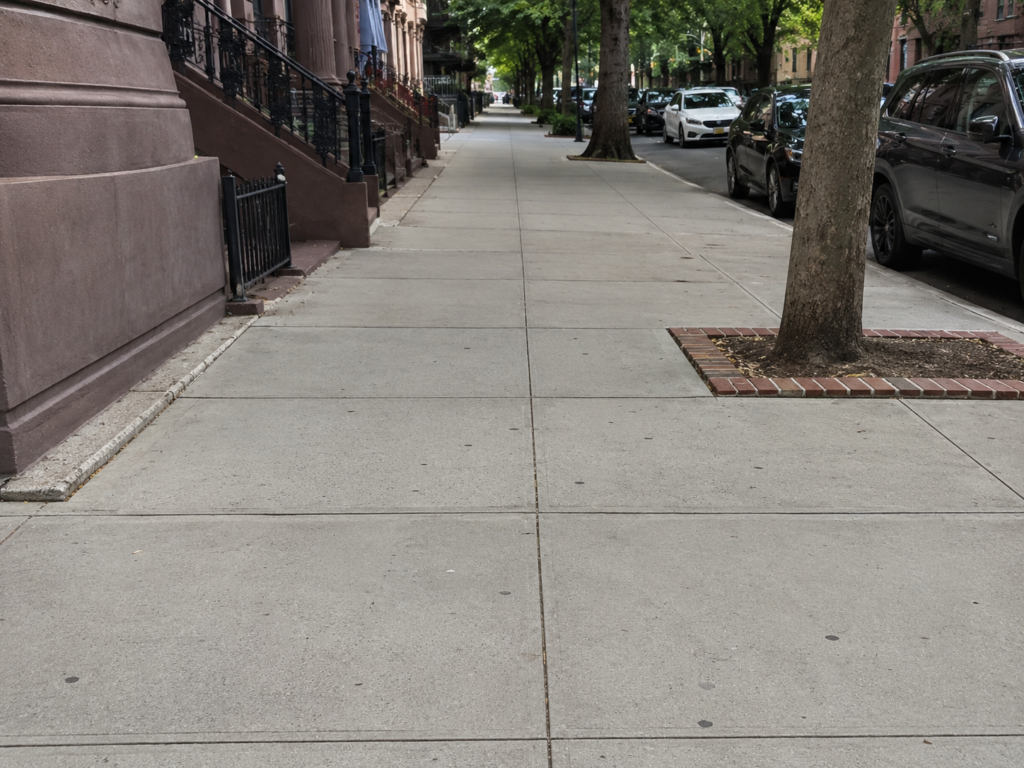
If you’ve ever looked down at the sidewalk in front of your building and noticed a series of straight lines running across it every few feet, you may have wondered whether the concrete is falling apart. It usually isn’t. In most cases, what you’re looking at is a control joint, a groove that was cut or formed into the concrete on purpose. So to answer the question directly: why do sidewalks have built-in cracks? They don’t, technically. What looks like a crack is almost always a planned joint, placed there specifically so the concrete has somewhere to move without breaking apart on its own terms. That distinction matters more than it sounds like it should. Concrete is rigid, but it’s not static. It expands when it warms up, contracts when it cools, shrinks slightly as it cures, and shifts a little depending on what’s happening in the soil underneath it. If a contractor pours a long, unbroken slab of concrete with nowhere for that movement to go, the concrete will crack somewhere, and it won’t ask your permission about where. Joints give it a place to do that in a straight, controlled line instead of a jagged one running through the middle of a panel. Are the Lines in Sidewalks Actual Cracks? No, not usually. The straight, evenly spaced lines you see across most sidewalk panels are control joints, tooled or saw-cut into the concrete during installation. They’re there by design, not by accident. A real crack, on the other hand, tends to look different. It’s often irregular, doesn’t line up with the joint pattern, and may run diagonally through a slab rather than straight across it. Once you know what to look for, the difference becomes fairly easy to spot on your own. What Control Joints Actually Do Concrete shrinks as it cures. This isn’t a defect; it’s just how the material sets. As the water in the mix evaporates and the concrete hardens, it pulls inward slightly. Over a large, continuous surface like a sidewalk, that shrinkage has to go somewhere. Control joints give it a predetermined weak point. By cutting or forming a groove partway through the slab, the concrete is more likely to crack along that thinner line rather than at some random spot across the surface. It’s a similar idea to scoring a piece of glass before you snap it: you’re not preventing the break; you’re deciding where it happens. Contractors typically space these joints based on the thickness of the slab. A common rule of thumb is spacing the joints at roughly two to three times the slab’s thickness in feet, though the exact spacing depends on the project, the concrete mix, and site conditions. Why Concrete Cracks in the First Place Even with well-placed joints, concrete can still develop hairline cracks. That’s not a sign of poor workmanship by itself; it’s a reflection of how the material behaves. Shrinkage during curing. As mentioned above, concrete loses moisture as it hardens, and that process causes it to contract slightly. Some minor shrinkage cracking is considered normal, especially in the first year after a pour. Temperature swings. Concrete expands when it heats up and contracts when it cools. In a city with hot summers and cold winters, sidewalks go through a wide temperature range every year. Without joints or with joints spaced too far apart, that constant expansion and contraction puts stress on the slab. Freeze-thaw cycles. This is a big one for New York specifically. Water that seeps into small cracks or the porous surface of concrete can freeze in winter. When it freezes, it expands, and that expansion pushes outward on the surrounding concrete. Repeated freezing and thawing over a winter, or over several winters, gradually widens small cracks and can flake or spall the surface. Deicing salts can make this worse, since they affect how and when water on the surface freezes and refreezes. Soil movement and settlement. Sidewalks sit on a base of compacted soil or gravel. If that base wasn’t compacted evenly, or if the soil underneath shifts over time, which happens with New York’s clay-heavy soils in some neighborhoods, the slab above it can settle unevenly. This is a common cause of the more serious cracks and of slabs that no longer sit flush with each other. Tree roots. Street trees are part of what makes a lot of New York blocks pleasant to walk down, but their root systems don’t always stay put. Roots growing under a sidewalk panel can lift it from below, which shows up as either a raised slab edge or a crack radiating out from the pressure point. Water and drainage problems. Water that consistently pools next to or under a slab softens the base material over time. A slab sitting on a saturated, uneven base is more likely to shift, crack, or settle than one on a well-drained base. When Joints Are Missing or Poorly Spaced Not every crack you see is the fault of the concrete itself. Sometimes it comes down to how the joints were laid out in the first place. If joints are spaced too far apart, or skipped in sections where they should have been placed, the slab has fewer controlled release points for all that shrinkage and movement. The result is a random crack somewhere in the panel instead of a clean line along a joint. This is one of the more avoidable causes of sidewalk cracking, and it usually traces back to the original installation rather than anything the property owner did. How to Tell a Joint From a Real Problem A straight groove that runs the same width across several slabs, spaced at regular intervals, and lines up from panel to panel is almost certainly an intentional control joint. That pattern is deliberate. A crack that cuts diagonally through the middle of a slab, that doesn’t match the joint pattern, or that appears suddenly in one spot tells a different story. That’s more likely to
Why Are There Cracks in Sidewalks in New York?
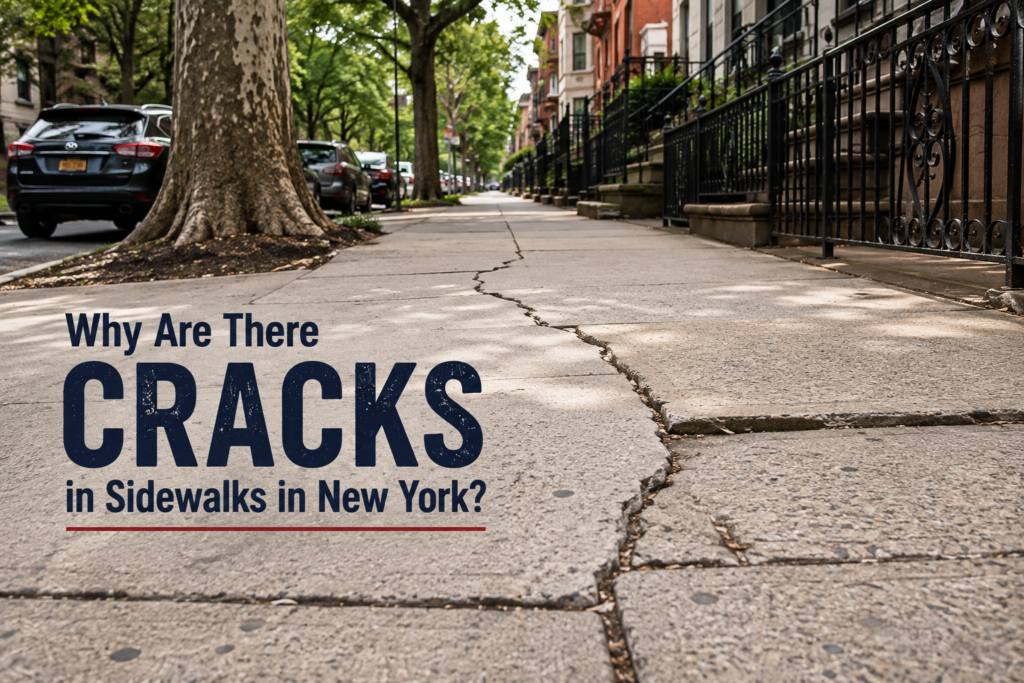
You probably didn’t think much about that hairline crack near your stoop back in October. It was thin, barely wide enough to catch a heel, the kind of thing you step over without noticing. Then March rolled around, the snow melted, and suddenly that same crack has a lip to it. One side sits a little higher than the other. Water pools next to it every time it rains. If that sounds familiar, you’re not imagining things. New York sidewalks take a beating every year, and the damage tends to show up gradually, then all at once. Why Are There Cracks in Sidewalks? Sidewalk cracks usually aren’t caused by one single thing. They’re the result of several forces working on the same slab of concrete over time: moisture getting into small gaps, the ground underneath shifting, roots pushing up from below, the concrete itself aging, and in some cases, a base that wasn’t prepared properly when the sidewalk was poured. Add in a New York winter, and a small imperfection can turn into a real problem faster than most property owners expect. Concrete is strong under compression but much weaker when it’s pulled or flexed, which is exactly what happens when the ground beneath it moves unevenly. Once a crack forms, it becomes an entry point for water, and that’s usually where things start to accelerate. Common Causes of Sidewalk Cracks in New York Freeze-thaw cycles Water gets into a crack, freezes, expands, and widens the opening. This happens repeatedly over a winter, sometimes dozens of times depending on the weather pattern. Tree roots Mature street trees, especially the older plantings common in many New York neighborhoods, have root systems that don’t stop growing just because there’s concrete overhead. Roots push up from underneath, and a slab that was flat can end up tilted or lifted along one edge. Soil settlement and movement The soil under a sidewalk isn’t static. It compacts, shifts, and sometimes washes out from underneath the slab, particularly near older utility work or where drainage has been a long-term issue. When the base loses support, the concrete above it has nothing to rest on evenly. Aging concrete Concrete has a service life. Older sidewalks, especially ones installed decades ago with different materials and standards, are simply more prone to cracking than a slab poured in the last several years. Poor drainage Water that has nowhere to go tends to find its way under the sidewalk instead. Over time, that erodes the base and contributes to uneven settling. Heavy pedestrian and vehicle use Sidewalks near commercial corridors, transit stops, or driveways see far more load and vibration than a quiet residential block. That extra stress adds up. Improper installation Not every sidewalk was poured the same way. A base that wasn’t compacted correctly, or concrete that wasn’t cured properly, tends to crack sooner and more unpredictably than a well-installed slab. How New York Winters Affect Concrete Sidewalks This is the one most property owners underestimate. A crack that looks purely cosmetic in October can look completely different by February. Here’s the basic mechanism: water gets into any small opening in the concrete, whether that’s a hairline crack or a joint. When temperatures drop, that water freezes and expands, which pushes the crack wider. When it thaws, the water drains a little deeper into the gap. Then it freezes again. Repeat that cycle a few dozen times over a New York winter, and a crack that started as a cosmetic issue can turn into something with real depth and width. This is also why so many sidewalk complaints and repair calls pick up in early spring. The damage was building all winter. It just becomes visible once the snow is gone. Tree Roots and Sidewalk Damage Street trees are one of the most common causes of lifted or cracked sidewalk slabs in New York, particularly on blocks with mature trees planted decades ago. As a tree matures, its root system spreads outward, often much farther than people expect, and roots close to the surface can push directly against the underside of a concrete slab. This doesn’t mean the tree needs to come out. In many cases, the tree can stay, and the sidewalk section can be repaired or reset around it. Because trees along New York sidewalks are frequently subject to specific rules, particularly when they’re city-owned, any work near tree roots may require some coordination with the relevant department before repairs move forward. It’s worth checking current requirements before starting work, since root-related sidewalk repairs are handled differently than a standard crack repair. Drainage and Water Problems Water is one of the most consistent culprits behind sidewalk deterioration. When drainage around a property isn’t working the way it should, water can run toward the sidewalk instead of away from it, pool at low points, and eventually find its way underneath the slab. Once water sits under a section of concrete regularly, it starts to erode the base material. That leads to voids, which leads to settling, which leads to cracking or an uneven slab. It’s a slow process, but it’s a steady one, and it’s often made worse by gutters, downspouts, or grading that push water toward the sidewalk rather than away from the building. Does Every Sidewalk Crack Need Repair? Not necessarily. Sidewalk damage exists on a spectrum, and the right response depends on where a specific crack falls on it. None of this can be diagnosed accurately from a description alone. If a crack is growing, if a slab has shifted, or if water is consistently pooling in the same spot, that’s usually the point where a professional inspection makes more sense than guessing. Signs a Sidewalk Problem Is Getting Worse A few practical things worth watching for over time: None of these alone means a full replacement is necessary, but seeing more than one of them together is a reasonable signal to get it looked at. Step-by-Step: What to Do When You Notice
Common Types of Sidewalk Damage and How to Fix Them in New York
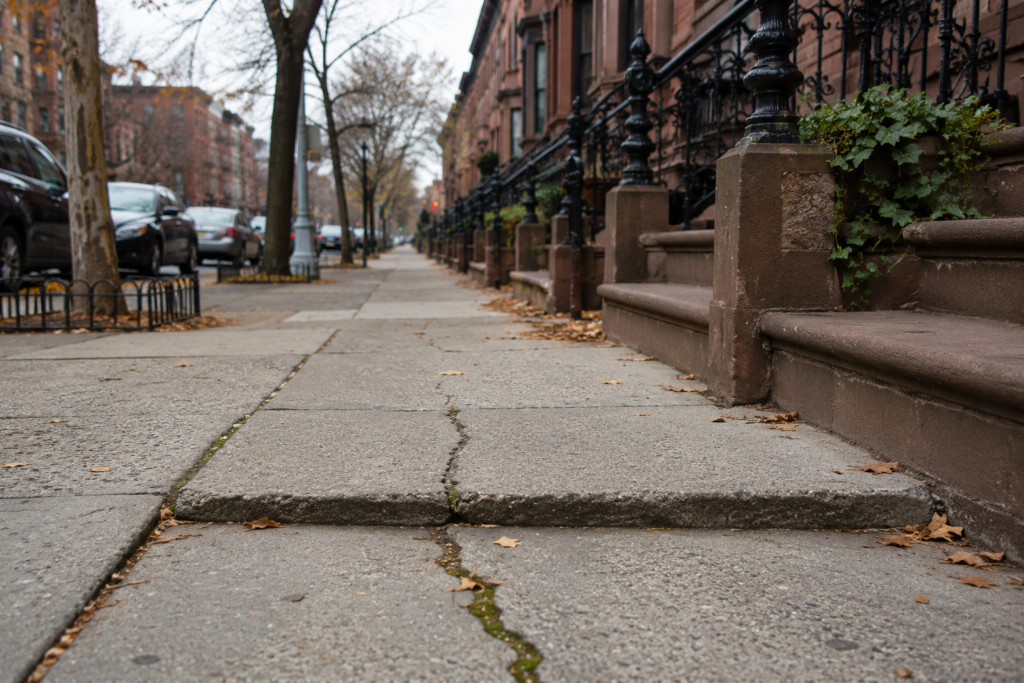
Most property owners don’t notice sidewalk problems until they’ve already been living with them for a while. Maybe it’s a hairline crack near the property line that’s been there since spring. Maybe it’s a corner slab that’s started to crumble at the edge. Or maybe someone tripped over a spot where one slab sits half an inch higher than the next, and now you’re looking at it differently. That’s usually how it starts. A small, easy-to-ignore flaw that sits there quietly getting worse, especially once winter hits. New York’s freeze-thaw cycles, heavy foot traffic, and aging concrete infrastructure mean that sidewalk damage rarely stays the same size for long. What looks minor in October can turn into a real trip hazard and a real liability by the following spring. This guide walks through the sidewalk problems New York property owners run into most, what’s usually behind them, and how to tell the difference between something you can patch and something that needs to come out and be poured again. What Causes Sidewalk Damage in New York? Concrete sidewalks don’t fail for no reason. There’s almost always an underlying cause, and figuring out that cause is half the battle when you’re trying to fix a damaged sidewalk for good instead of patching it every couple of years. Freeze-thaw cycles are probably the single biggest factor in this region. Water gets into small cracks or pores in the concrete, freezes, expands, and pushes the surrounding material apart. It happens again with the next freeze. Over a winter with several freeze-thaw swings, that repeated expansion does real damage, even to concrete that looked fine the previous fall. Water infiltration and poor drainage go hand in hand with that. If water is pooling against a slab instead of running off, it’s sitting there working its way into the concrete every time the temperature drops. A downspout dumping water right next to a sidewalk edge, or a yard that slopes toward the walkway instead of away from it, will accelerate damage in that exact spot year after year. Tree roots are everywhere in New York’s older residential neighborhoods, and they don’t stop growing just because there’s concrete in the way. As roots thicken beneath a slab, they push it upward unevenly, which is why you’ll often see raised sidewalk slabs concentrated near mature street trees. Soil settlement does something similar in reverse. If the base beneath a slab wasn’t compacted properly, or if it shifts over time, sections can sink instead of rise. Heavy loads, delivery trucks parked on a sidewalk apron, dumpsters left in one spot too long, put stress on concrete that wasn’t built for that kind of weight. Deicing salts are worth calling out specifically because so many property owners don’t connect them to the damage they see later. Salt lowers the freezing point of water sitting on the concrete’s surface, which sounds helpful, but the chemical reaction and the extra freeze-thaw cycling it triggers actually accelerate scaling and pitting on the surface. And then there’s simple age. A lot of New York sidewalks are decades old. Concrete has a service life, and once it’s past it, cracking and crumbling become more of a when than an if, especially in sections that got a rushed or poor-quality installation in the first place. Common Types of Sidewalk Damage and How to Fix Them Not all damage is created equal. Some of it is cosmetic. Some of it is a warning sign of something happening below the surface. Here’s how to tell the difference. 1. Hairline and Surface Cracks These are the thin cracks, often less than an eighth of an inch wide, that show up on the surface of a slab. They’re usually caused by normal concrete shrinkage as it cures, minor surface stress, or the early effects of freeze-thaw cycling. In most cases, hairline cracks are cosmetic. They don’t go through the full depth of the slab, and they’re not moving or widening. If a crack has stayed the same size for a year or two and there’s no vertical offset at either edge, it’s usually not urgent. The problem is when a hairline crack starts widening, multiplying, or running toward an edge or joint. That can mean it’s connected to something underneath: settlement, root pressure, or water working into the slab. A simple concrete crack filler or sealant handles the cosmetic version. If it keeps coming back in the same spot, that’s a sign to look deeper rather than just refilling it again. 2. Wide or Deep Cracks Once a crack opens beyond about a quarter inch, or you can see it runs through the full thickness of the slab, it’s a different situation than a surface crack. Wide cracks usually mean the concrete has actually separated, not just shrunk, which points to movement from a root, from settling soil, or from water erosion beneath the slab. Patching a wide crack without addressing its cause tends to be a short-term fix. The patch material bonds to the edges of the existing crack, but if the ground underneath is still shifting, the crack or a new one right next to it comes back within a season or two. For wide or deep cracking, it’s worth having someone check what’s happening below the slab before deciding whether a repair will actually hold. 3. Uneven or Raised Sidewalk Slabs This is one of the most common calls property owners deal with, and it’s almost always caused by one of three things: tree roots pushing up from below, soil settlement causing one slab to sit lower than its neighbor, or general ground movement over time. An uneven sidewalk is also one of the more serious issues from a liability standpoint, because it’s the classic trip-hazard scenario: a raised lip where pedestrians expect a flat surface. Even a half-inch height difference between adjacent slabs is enough to catch a shoe. Repair options here depend on the cause and the severity. If a slab has lifted from
How to Repair a Concrete Sidewalk: A Step-by-Step Guide for New York Property Owners
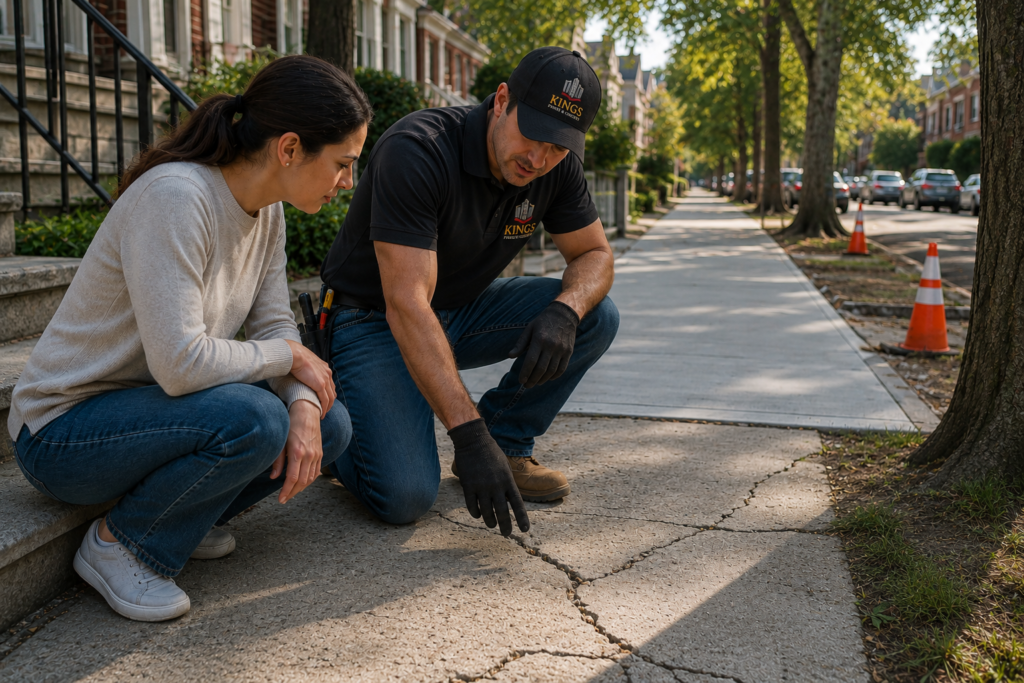
I’ve been patching, replacing, and arguing with New York sidewalks for over twenty years now. And if there’s one thing I’ve learned, it’s that concrete doesn’t crack for no reason. Something is always going on underneath it. Most homeowners call me after they’ve tripped over their own sidewalk, or worse, after a neighbor or a mail carrier has. By then the crack has usually been sitting there for a year or two, slowly getting worse every winter. Sidewalks crack because the ground under them moves. New York winters freeze and thaw the soil over and over, tree roots push up from below, water finds its way underneath the slab, and eventually something has to give. Add in decades of foot traffic, delivery carts, and the occasional car pulling onto the curb, and it’s honestly surprising sidewalks last as long as they do. Here’s the part that actually matters to you as a property owner: in New York City, the sidewalk in front of your building is your responsibility, not the city’s. If someone gets hurt on a cracked or uneven section, you can be held liable. The Department of Transportation also issues violations for sidewalk defects, and those fines add up fast if you ignore them. The good news is that most sidewalk damage can be repaired without a full replacement, as long as you catch it early. This guide walks through how that repair process actually works, based on jobs I’ve done, not textbook theory. What Causes Concrete Sidewalk Damage? Every sidewalk crack has a story behind it. After enough jobs, you start recognizing the pattern before you even get out of the truck. Freeze-thaw cycles. Water gets into tiny pores in the concrete, freezes, expands, and pushes the surface apart. This is the number one cause of sidewalk crack repair calls I get every spring. Heavy foot and cart traffic. Sidewalks in front of commercial buildings and busy residential blocks take a beating. Repeated weight on a slab that’s already settling unevenly speeds up cracking. Tree roots. This one’s huge in New York. Street trees look great, but their roots grow shallow and wide, and they will lift a slab right off its base. I’ve pulled up sections where a root as thick as my arm was sitting directly under the crack. Water infiltration. Poor drainage lets water pool against or under the slab. Over time, that softens the base material and the concrete loses its support. Soil settlement. Some parts of New York sit on fill soil that was never compacted properly decades ago. It settles slowly, and the sidewalk settles with it. Poor original installation. Not every sidewalk was poured correctly. Thin slabs, no rebar or mesh, poor base prep. I still see it on properties built forty or fifty years ago. Age. Concrete has a lifespan. Most sidewalks are good for 25 to 30 years before general wear starts showing up as surface cracking and spalling. Cause Common Symptoms Recommended Repair Freeze-thaw cycles Surface cracking, flaking, spalling Crack sealing, surface patching Heavy traffic Wearing, hairline cracks, edge chipping Resurfacing, patching Tree roots Raised or tilted slabs, trip hazards Slab lifting, root barrier, partial replacement Water infiltration Soft spots, staining, undermining Drainage correction, mudjacking, sealing Soil settlement Sunken or sloped slabs Slab leveling, base stabilization Poor installation Early cracking, thin or crumbling slabs Full slab replacement Aging concrete Widespread surface wear, discoloration Resurfacing or replacement depending on condition Can Every Concrete Sidewalk Be Repaired? Not always, and I’ll tell you that straight rather than sell you a repair that won’t hold. Minor cracks under a quarter inch wide are usually a simple fix. Clean it, fill it, seal it, done. Surface spalling, where the top layer is flaking or pitting, can often be resurfaced if the slab underneath is still structurally sound. Uneven slabs are trickier. If one slab has sunk or lifted less than an inch or two relative to the next, I can often level it without replacing anything. Trip hazards: anything with a height difference of half an inch or more between slabs needs to be addressed one way or another, either by grinding down the high edge, lifting the low one, or replacing the section. This is also the type of defect that gets flagged in a DOT sidewalk inspection. Severe structural damage, meaning the slab is broken into multiple pieces, badly undermined, or shifted at an angle, usually means replacement is the more honest answer. Patching a broken slab is a temporary fix at best, and I’d rather tell a client that upfront than have them call me back in eight months. Repair Replacement Lower upfront cost Higher upfront cost, longer-lasting fix Good for isolated cracks or minor unevenness Necessary for broken, shifted, or undermined slabs Faster turnaround, less disruption Requires demolition, forms, and full cure time Best when the base and drainage are still sound Often needed when the underlying base has failed May need to be revisited in future years Resets the clock on the sidewalk’s lifespan How to Repair a Concrete Sidewalk (Step-by-Step) This is the process I actually use on job sites, not the version you’d find in a manual. Step 1: Inspect the damage Before anything gets touched, I walk the whole section and check what’s really going on. Is it just surface-level, or is there movement underneath? I’ll tap the slab, check for hollow sounds, and look at how water has been draining across it. This step decides whether you’re looking at a repair or a replacement, so don’t skip it or guess. Step 2: Clean the repair area Dirt, loose debris, and old sealant all need to come out before new material goes in. I usually use a wire brush or a pressure washer depending on how much buildup there is. Repair material won’t bond properly to a dirty surface, and that’s one of the most common reasons DIY patches fail within a season. Step 3: Remove loose concrete Any concrete that’s crumbling,
Who Is Responsible for Sidewalk Repair in NYC? A Property Owner’s Guide
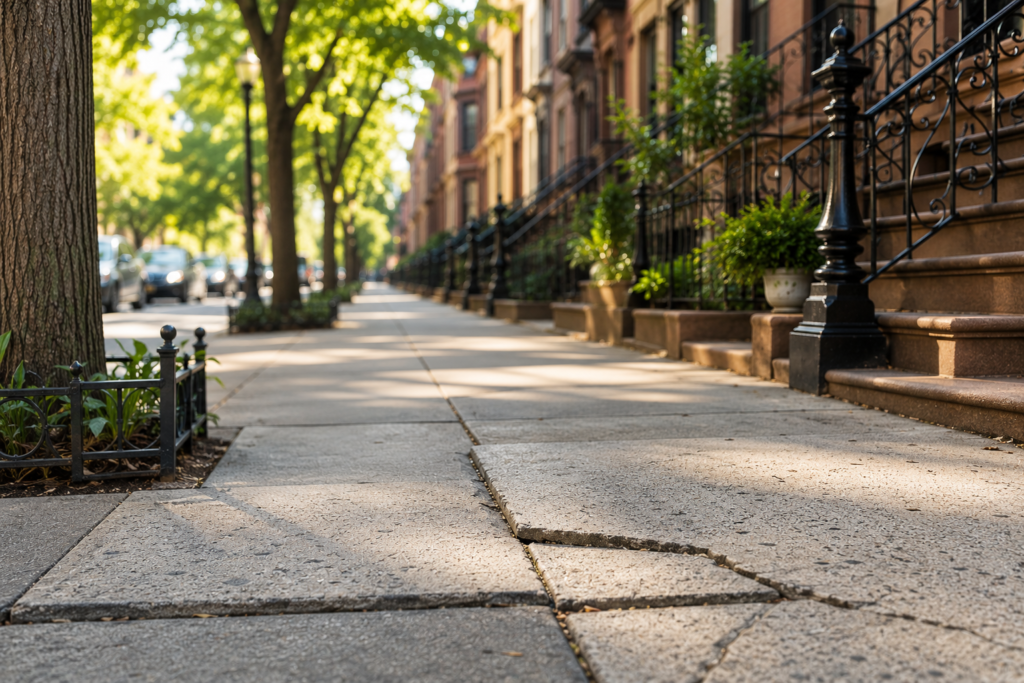
A lot of property owners in New York City are surprised when they find out the city isn’t the one responsible for fixing the sidewalk in front of their building. That confusion is completely understandable. The sidewalk is a public walkway, maintained for public use, but the legal burden of keeping it in good shape falls on you, the property owner. I’ve been doing sidewalk work in New York City for over 20 years, and the calls I get most often start the same way: “I got a notice in the mail. What does this mean? Do I really have to pay for this?” The answer is almost always yes, and the sooner you deal with it, the better. This guide walks you through everything you need to know about NYC sidewalk repair: who’s responsible, what violations mean, what it costs, and how to get through the process without it turning into a bigger headache than it needs to be. Who Is Legally Responsible for Sidewalk Repair in NYC? Under NYC Administrative Code Section 7-210, the responsibility for maintaining and repairing sidewalks in safe condition falls on the owner of the adjacent property. That’s been the law since 2003, and it applies to most properties across the five boroughs. What that means in plain terms: if someone trips on cracked or uneven concrete in front of your building, you can be held liable, not the city. And if the NYC Department of Transportation (DOT) inspects your sidewalk and finds defects, it can issue you a violation and require you to fix it within a set timeframe. Residential vs. Commercial Properties The rules apply a bit differently depending on your property type. One-to-three family homes that are owner-occupied have some additional protections under the law when it comes to civil liability, but they’re still responsible for making repairs. Commercial properties, apartment buildings, and mixed-use properties carry full responsibility. Here’s a quick breakdown: Property Type Responsible Party Common Situations 1–3 family owner-occupied home Property owner (limited civil liability) Tree root damage, cracked slabs, frost heaving Multi-family residential Property owner (full liability) Settlement, heavy foot traffic wear, and drainage issues Commercial property Property owner (full liability) High foot traffic, loading zone damage, utility cuts City-owned property NYC DOT Sidewalks adjacent to parks, city buildings Vacant city-owned lots NYC DOT Varies by situation The one real exception worth knowing: if a city utility company or the NYC DOT itself cuts into your sidewalk for repairs and doesn’t restore it properly, you can potentially get that addressed by filing a complaint with 311. But that’s the exception, not the rule. Why Sidewalk Repairs Matter The obvious reason is safety. Cracked or raised concrete is a genuine trip hazard, and New York City sidewalks see a lot of foot traffic. People get hurt. But beyond the safety issue, there are real financial risks for property owners who let sidewalk damage go unaddressed. Liability exposure. If someone trips and falls on your damaged sidewalk and files a personal injury claim, you could be looking at high legal costs even if the case is eventually dismissed. Judgments in trip-and-fall cases in NYC can run into six figures. DOT violations and fines. If the DOT inspects your sidewalk and issues a violation, you’re on the clock to fix it. Ignoring it doesn’t make it go away; it can result in additional penalties and eventually the city doing the work itself and billing you for it (often at a rate much higher than what a private contractor would charge). Property sales. A sidewalk violation on record can complicate or delay a real estate transaction. Buyers’ attorneys look for open violations during due diligence, and some lenders won’t close until violations are cleared. Common Sidewalk Problems That Require Repair Here’s what I see out in the field regularly: Cracked concrete. This is the most common issue. Concrete cracks over time from freeze-thaw cycles, settling soil, and normal wear. Minor surface cracks might not trigger a violation right away, but deep or wide cracks that create a trip hazard will. Uneven slabs. When one slab shifts up or down relative to the next, you get a lip that people can catch their foot on. Even a quarter-inch difference can create a tripping risk, and the DOT takes those seriously. Tree root damage. This is a big one in neighborhoods with older street trees. The roots push up under the concrete and lift the slabs, sometimes dramatically. Fixing this involves cutting back the roots (carefully, to preserve the tree) and either patching or replacing the affected flags. Spalling. That’s when the surface layer of the concrete flakes off, leaving a rough, pitted surface. It can happen from salt exposure, age, or poor original pour quality. Settlement. When the soil under the sidewalk shifts, which happens a lot in areas with older infrastructure, slabs can sink unevenly and create drainage problems or height differences. Cracks near curb cuts or driveways. High vehicle traffic across these transition points accelerates wear and cracking. What Happens If You Ignore Sidewalk Damage? Let me give you a realistic picture of what the process looks like when sidewalk damage gets ignored. The DOT Violation Scenario Say you’re a homeowner in Woodside, Queens. You’ve noticed a couple of raised slabs on your sidewalk for a few years, but you kept putting off dealing with them. Then one spring you get a notice in the mail: an NYC DOT violation citing “broken or defective” sidewalk flags. You’ve got 75 days to make repairs. You ignore it, thinking maybe nothing will happen. A few months later, you get a second notice, this time with a fine attached. Now the DOT schedules a city-contracted repair job on your sidewalk. The work gets done, and then you receive a bill typically well above what a private contractor would have charged. Now there’s also a lien on your property. Meanwhile, a woman who tripped on that sidewalk six months ago has filed a personal