
If you just had a new driveway or parking lot paved, I already know what you’re thinking. You’re standing at the edge of that smooth black surface wondering when you can actually use it. It’s the question I get asked more than any other, usually before my crew has even finished packing up the truck.
Here’s the short version: asphalt dries fast, but it cures slowly. Those are two different things, and mixing them up is how a lot of good driveways end up with dents, ruts, and premature cracking. I’ve been paving driveways, private roads, and commercial lots across New York for over 20 years, and I’ve seen what happens when people get a little too excited a little too early.
This guide walks you through exactly what to expect after your asphalt goes down, based on real jobs, not textbook numbers.
How Long Does Asphalt Take to Dry?
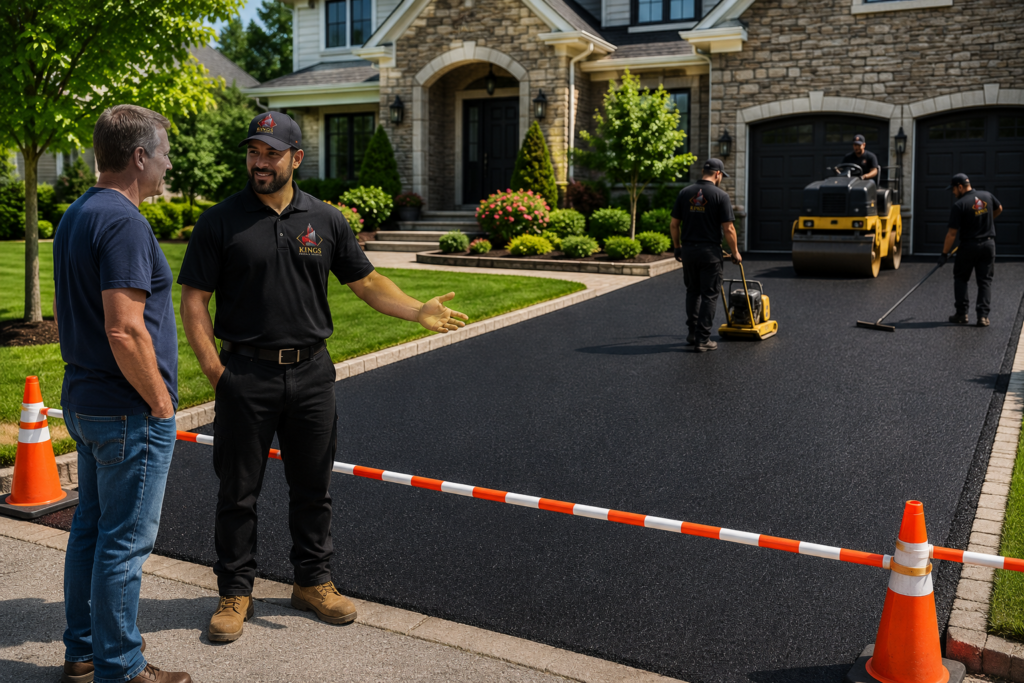
Most fresh asphalt is dry enough to walk on within a few hours, safe for regular car traffic in 24 to 48 hours, and ready for heavier vehicles after about a week. Full curing, when the asphalt reaches its maximum hardness, takes anywhere from 60 to 90 days.
That’s the featured-snippet-friendly answer. Now let me explain what’s actually happening underneath.
Walking on it: You can usually walk on new asphalt after 6 to 24 hours, depending on the weather. On a warm, sunny New York afternoon, I’ve seen it firm up enough to walk on in a few hours. On a cooler, overcast day, I tell customers to give it the full 24 hours just to be safe.
Driving on it: Passenger vehicles can typically drive on new asphalt after 2 to 3 days. I know a lot of contractors quote 24 hours, and technically the surface can handle it, but I’ve always preferred my customers wait the extra day or two. It costs you nothing, and it protects the investment you just made.
Heavy vehicles: Trucks, RVs, dumpsters, and anything with serious weight should stay off for at least 7 days, sometimes longer in cooler weather.
Here’s a quick reference table I give most of my customers:
| Activity | Recommended Waiting Time |
| Walking on the surface | 6–24 hours |
| Parking a regular car | 2–3 days |
| Heavy trucks or RVs | 7+ days |
| Placing a dumpster | 7–14 days |
| Basketball hoops (portable base) | 7 days |
| Motorcycle kickstands | 3+ days, with a support plate |
Drying vs Curing: What’s the Difference?
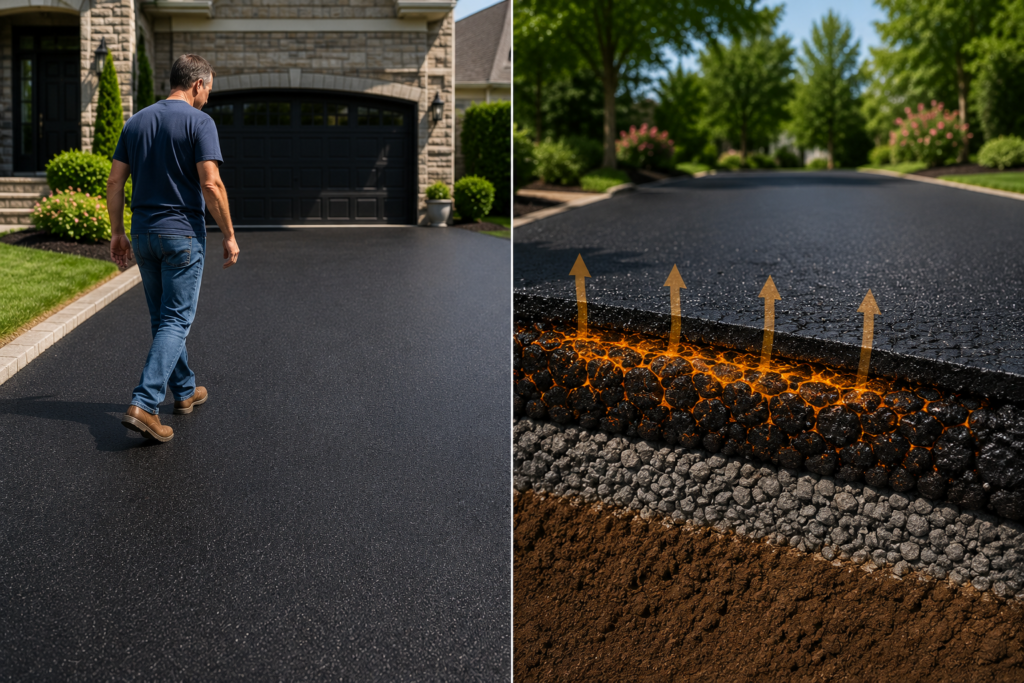
People use these words like they mean the same thing. They don’t, and understanding the difference will save you a headache.
Drying is what happens on the surface. The asphalt mix cools down and firms up enough to hold weight without leaving marks. Think of it like the top of a cake setting after it comes out of the oven. It looks and feels done from the outside.
Curing is what happens all the way through. The oils in the asphalt binder slowly evaporate, and the material keeps hardening, getting stronger and more resistant to damage over weeks and months. It’s less like a cake and more like concrete setting, just on a different timeline.
So your driveway can look completely dry and still be soft underneath. That’s exactly why I tell people not to judge readiness by appearance alone.
What Affects Asphalt Drying Time?
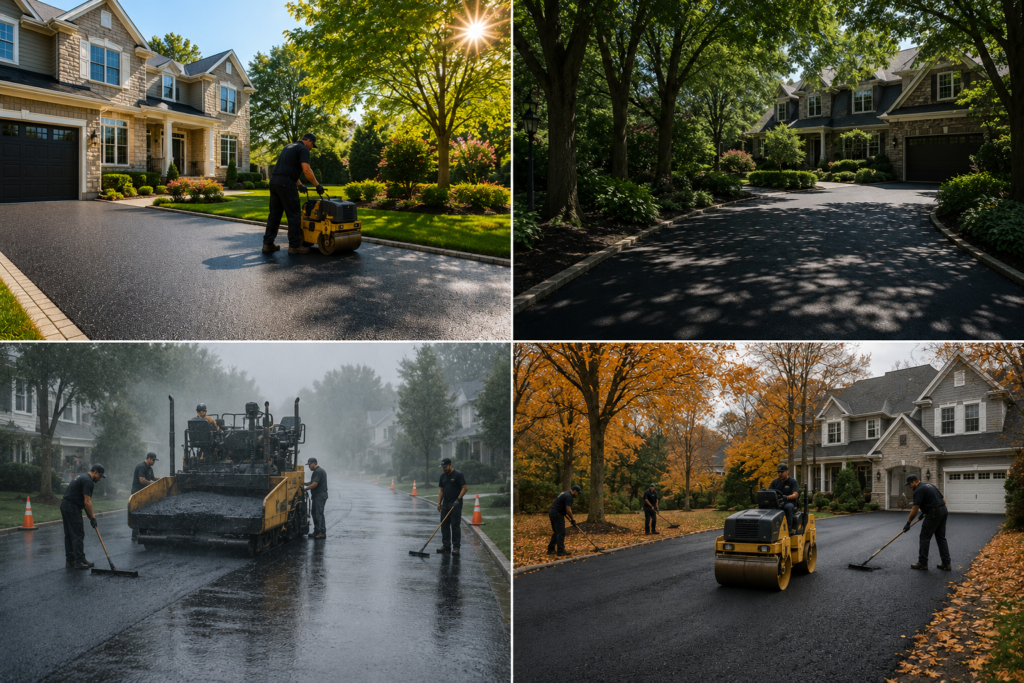
No two paving jobs dry at the same speed, even on the same street. Here’s what actually moves the needle.
Air temperature. Warm weather speeds things up; cold weather slows it way down. I’ve paved driveways in August that were road-ready in two days, and driveways in late October that needed closer to five.
Humidity. New York summers can get sticky, and high humidity keeps moisture in the air longer, which slightly extends drying time even when temperatures are high.
Sun exposure. A driveway that gets full afternoon sun dries noticeably faster than one shaded by trees or a house all day. I’ve paved side-by-side driveways on the same block that dried at different rates just because of shade.
Asphalt thickness. Thicker asphalt, like what we use for commercial lots, holds heat longer and takes more time to firm up compared to a standard residential driveway.
Traffic. Every time weight is added before the surface is ready, drying and curing both get disrupted. This is the number one reason I see early damage.
Type of asphalt mix. Different mixes are designed for different climates and traffic loads. Some are formulated to set up faster, which matters a lot for commercial jobs on a tight schedule.
New York seasons. Late spring and summer paving is usually the most forgiving. Fall jobs need extra patience because cooler nights slow curing down even if the days are warm.
Step-by-Step Guide After a New Asphalt Installation
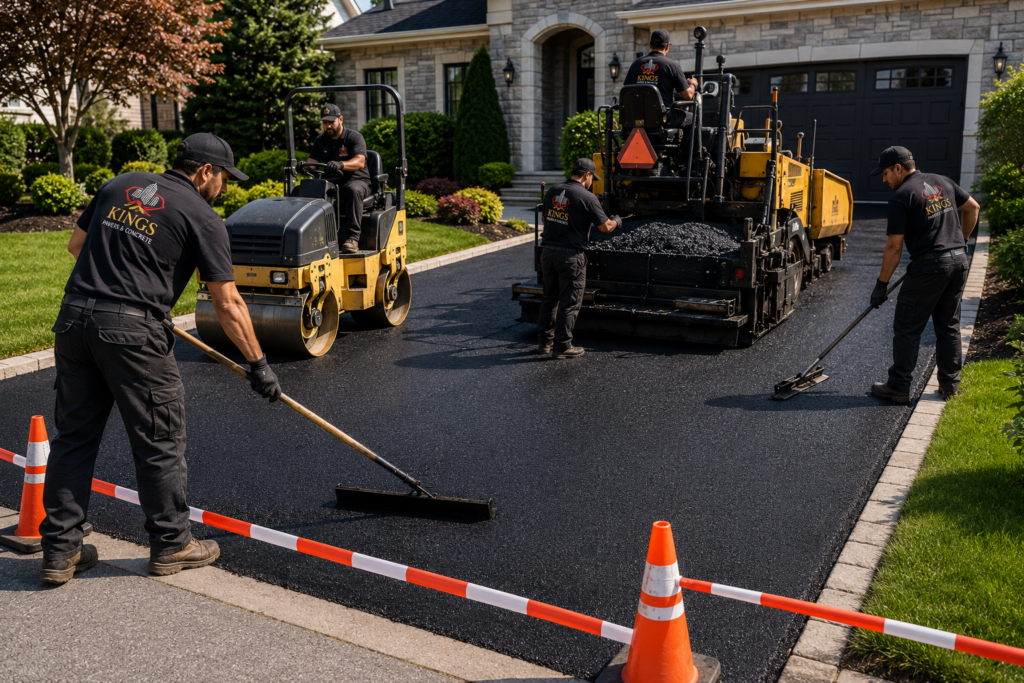
Step 1: Stay off the surface. I know it’s tempting to walk out and admire it, but give it the time outlined above before foot or vehicle traffic.
Step 2: Avoid sharp turns. When you do start driving on it, ease in and out slowly. Cranking the wheel while stopped can leave permanent marks in asphalt that hasn’t fully cured.
Step 3: Don’t park in the same spot every day. For the first few months, try to vary where your tires sit. This prevents indentations from forming in one concentrated area.
Step 4: Protect the edges. The edges of a new driveway are the most vulnerable part. Avoid driving or parking right up against them until the asphalt has had a few weeks to firm up.
Step 5: Wait before sealing. Sealcoating too early traps moisture underneath and can actually shorten the life of your driveway. Most new asphalt needs 6 to 12 months before its first seal coat.
Step 6: Schedule regular maintenance. Once your driveway is past the initial curing period, get in the habit of yearly inspections for cracks, drainage issues, or wear.
Common Mistakes That Damage Fresh Asphalt
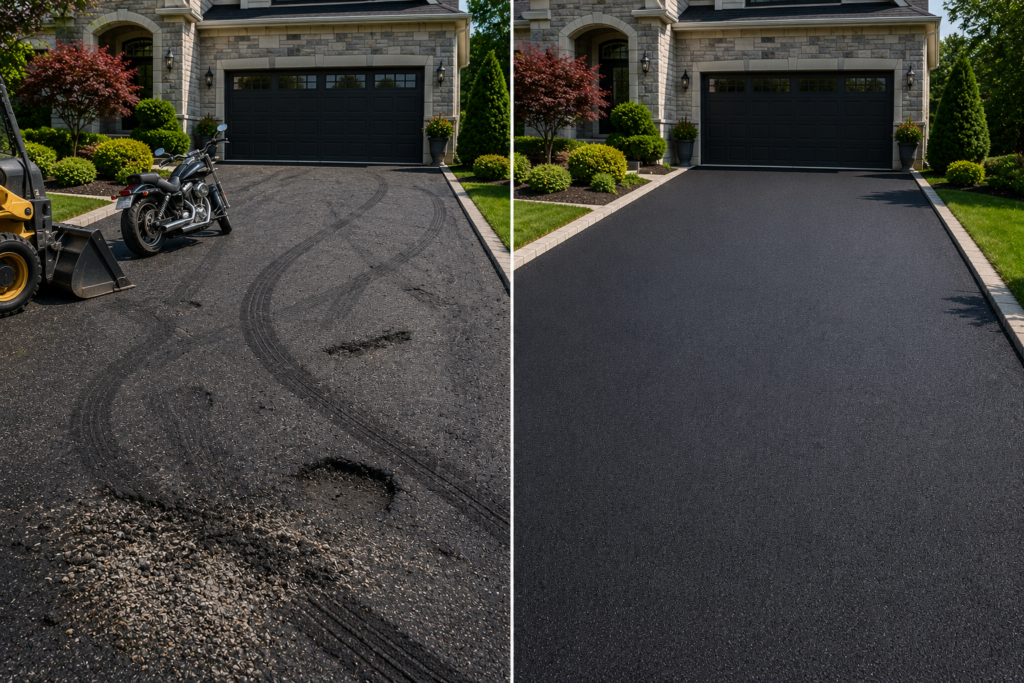
Over the years, I’ve seen the same handful of mistakes cost homeowners real money.
- Parking too soon. This is the big one. Even 24 hours too early can leave tire impressions that never fully disappear.
- Turning the steering wheel while stationary. This creates twisting stress that new asphalt just can’t handle yet.
- Leaving heavy equipment on fresh asphalt. Lawn equipment, trailers, or construction materials left sitting for days can sink right into a surface that isn’t cured.
- Parking motorcycles without a support plate. A kickstand puts all the bike’s weight on a tiny point of contact, which is basically asking for a dent.
- Ignoring hot weather precautions. On very hot New York days, asphalt can stay soft longer than expected. I always tell customers that a 90-degree day changes the timeline more than they’d guess.
How Long Does Asphalt Take to Fully Cure?
Full curing takes about 60 to 90 days, though I’ve told plenty of customers to think of it as an ongoing process for the first six months to a year. During this window, the asphalt is still releasing oils and gradually hardening from the surface down through the base.
This is why I always recommend holding off on sealcoating and avoiding heavy, stationary loads well beyond the initial drying period. The driveway is functional long before it’s finished curing, and treating those as the same milestone is where most premature wear starts.
Case Study
A homeowner in Westchester County had her driveway repaved in early June. She followed the timeline we gave her almost to the letter: no cars for three days, no dumpster or landscaping equipment for two weeks, and she made a point of parking a few inches differently each time she pulled in.
She held off on sealcoating until the following spring, about nine months after installation, and scheduled a crack inspection every fall since. Five years later, that driveway still looks close to new, with no major cracking, no low spots, and no edge crumbling. It’s a good example of how a little patience up front pays off for years afterward.
Expert Insight
“The biggest mistake I see homeowners make isn’t a paving mistake at all; it’s an impatience mistake. They see a smooth, dry-looking surface and assume it’s done. But asphalt is still working, still hardening, for months after we leave the job site. Give it that time, and it’ll outlast almost anything else you could put down. Rush it, and you’ll be calling me back for repairs a lot sooner than you’d like.”
Tips to Make Your Asphalt Last Longer
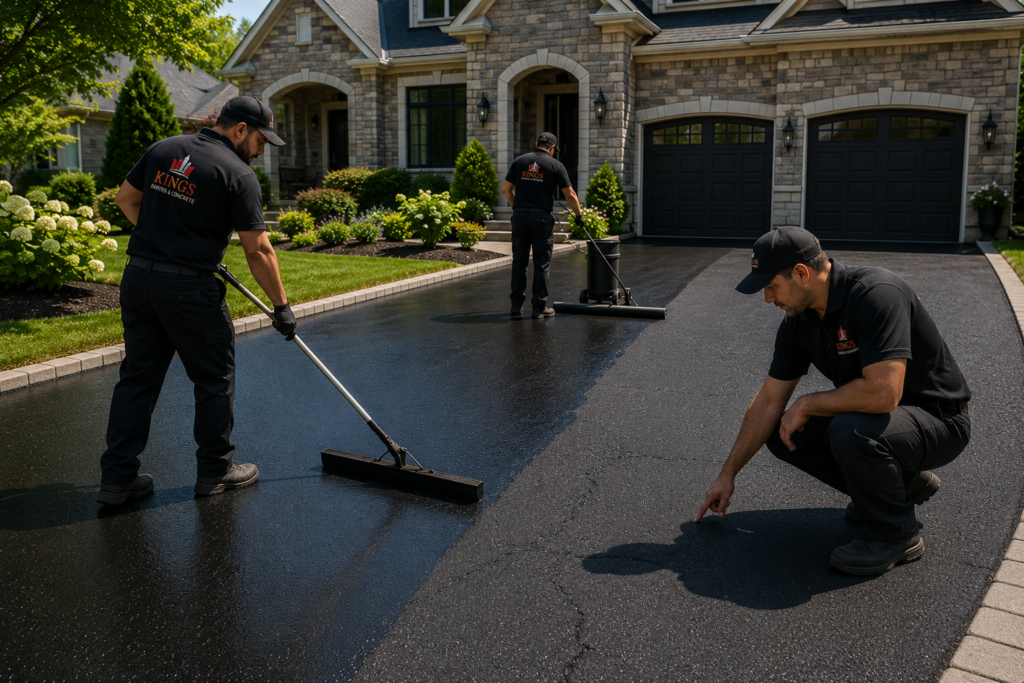
Sealcoating. Once your driveway has cured for 6 to 12 months, sealcoating helps protect it from water, UV rays, and everyday wear. Plan to reseal every 2 to 3 years after that.
Cleaning. Sweep off debris and rinse the surface periodically. Oil and gas stains should be cleaned promptly since they can soften the asphalt binder over time.
Crack repair. Small cracks are normal as asphalt ages, but they should be sealed quickly before water gets in and freezes, which is a fast track to potholes in New York winters.
Drainage. Make sure water isn’t pooling on your driveway. Standing water is one of the fastest ways to age asphalt prematurely.
Snow removal. Use a plastic-edged shovel or plow blade instead of metal when possible, and avoid using rock salt directly on new asphalt during its first winter if you can help it.
Frequently Asked Questions
How long does asphalt take to dry? Most asphalt is walkable within 6 to 24 hours and safe for regular car traffic within 2 to 3 days, though full curing takes 60 to 90 days.
Can I drive on new asphalt after 24 hours? In warm weather, it’s often possible, but I recommend waiting 2 to 3 days when you can. It gives the surface a little extra security before it takes on regular weight.
How long does asphalt take to fully cure? Full curing generally takes 60 to 90 days, with the asphalt continuing to harden gradually for up to a year.
Does hot weather speed up asphalt drying? Yes, warmer temperatures generally speed up surface drying, though very hot days can also keep asphalt softer for longer, so extra caution with heavy loads still applies.
Can it rain after asphalt is installed? Light rain a day or two after installation usually isn’t a problem once the surface has firmed up, but heavy rain in the first few hours can affect the finish. Most contractors will avoid scheduling installation right before a storm.
When should a new asphalt driveway be sealed? Wait 6 to 12 months after installation before applying the first seal coat, so the asphalt has time to properly cure first.
Conclusion
Asphalt drying isn’t complicated, but it does reward patience. Give it a few hours before you walk on it, a couple of days before you drive on it, and a few months before you treat it like it’s fully hardened. Skip a step, and you risk marks, dents, or cracks that show up sooner than they should. Follow the timeline and take care of it along the way, and a well-installed asphalt driveway or lot can easily last you 20 years or more here in New York.

CTA
Have questions about your new asphalt driveway, or need a repair, sealcoating, or maintenance plan? Reach out to a local, experienced asphalt contractor who can walk your property and give you advice specific to your surface, your soil, and our New York weather. A quick conversation now can save you a costly repair down the road.