I get this question on almost every job. The slab is freshly poured, still has that smooth gray sheen, and the homeowner is already asking when they can park their car on it. It’s a fair question. You just spent good money on new concrete, and you want to use it.
The short answer is: it depends. But I know that’s not what you came here for, so let me break it down properly.
How Long Does Concrete Take to Dry?
Here’s the quick version most people need:
- Initial set (surface firm to the touch): 2–4 hours
- Safe to walk on: 24–48 hours
- Light use (foot traffic, lawn furniture): 3–7 days
- Passenger vehicles: 7 days minimum
- Full cure (maximum strength): 28 days
These are general guidelines. Weather, mix design, and slab thickness all play a role. I’ll get into all of that below.
| Concrete Stage | Time Required | What You Can Do |
| Initial set | 2–4 hours | Nothing stay off completely |
| Surface hardened | 24 hours | Light foot traffic only |
| Early strength | 3–7 days | Furniture, foot traffic, light loads |
| Vehicle-ready | 7 days | Passenger cars and SUVs |
| Full cure | 28 days | Heavy vehicles, full normal use |
Drying vs. Curing: What’s the Difference?
A lot of people use these words interchangeably. They’re not the same thing, and the difference actually matters.
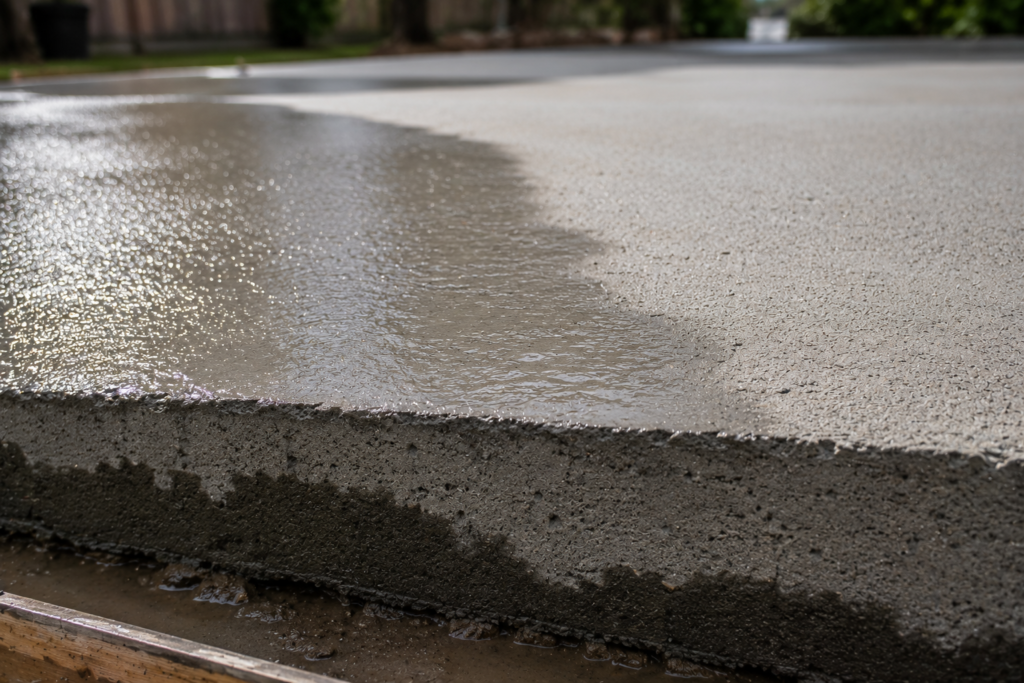
Drying is just the surface water evaporating. When concrete looks dry, it might feel solid enough to walk on, but that doesn’t mean much structurally.
Curing is a completely different process. It’s a chemical reaction called hydration, where water bonds with cement particles to form the crystalline structure that gives concrete its strength. That process takes weeks, not hours.
Think of it like baking bread. The outside of the loaf can look done and feel firm while the inside is still raw. Walk on concrete too early, and you’re essentially cutting into bread that isn’t finished.
The surface dries first. The strength builds from the inside out, over the full 28-day curing period.
Factors That Affect Concrete Drying Time
This is where things get more nuanced. Two slabs poured on the same day can behave completely differently depending on conditions.
Heat speeds up chemical reactions, but too much of it can cause problems. In direct summer sun, the surface can dry out too fast and crack before it’s had time to cure properly. Cold temperatures slow everything down. Below 40°F, the curing process essentially stalls. In freezing temperatures, fresh concrete can be destroyed.
High humidity slows evaporation, which is actually fine for curing; the slab stays moist longer. Very low humidity and dry air pull moisture out too quickly, which can weaken the surface.
Rain Rain on freshly poured concrete is a legitimate concern. In the first few hours after the pour, heavy rain can wash out the surface, cause pitting, and weaken the finish. Light rain after 4–6 hours is generally less damaging, but you still want to protect the surface.
Wind dries out the surface faster than almost anything else. On a breezy day, we take extra precautions to keep the concrete from drying unevenly.
Mix Design: Not all concrete is the same. Standard residential mixes hit about 2,000–3,000 PSI at 28 days. High-strength mixes used for commercial work or heavy-load applications can hit 5,000 PSI or more and may cure differently. Some mixes include additives that speed up or slow down the set time.
Thickness of the Slab: A 4-inch residential driveway slab and a 12-inch commercial foundation don’t cure the same way. Thicker slabs take longer to reach full cure throughout their depth.
New York Weather Conditions Working in New York means dealing with everything: brutal July heat, cold snaps in October, and unpredictable spring weather. We adjust our pour schedules, mix designs, and curing methods based on the forecast. A contractor who doesn’t factor in weather is asking for problems.
How Long Before You Can Walk on Concrete?
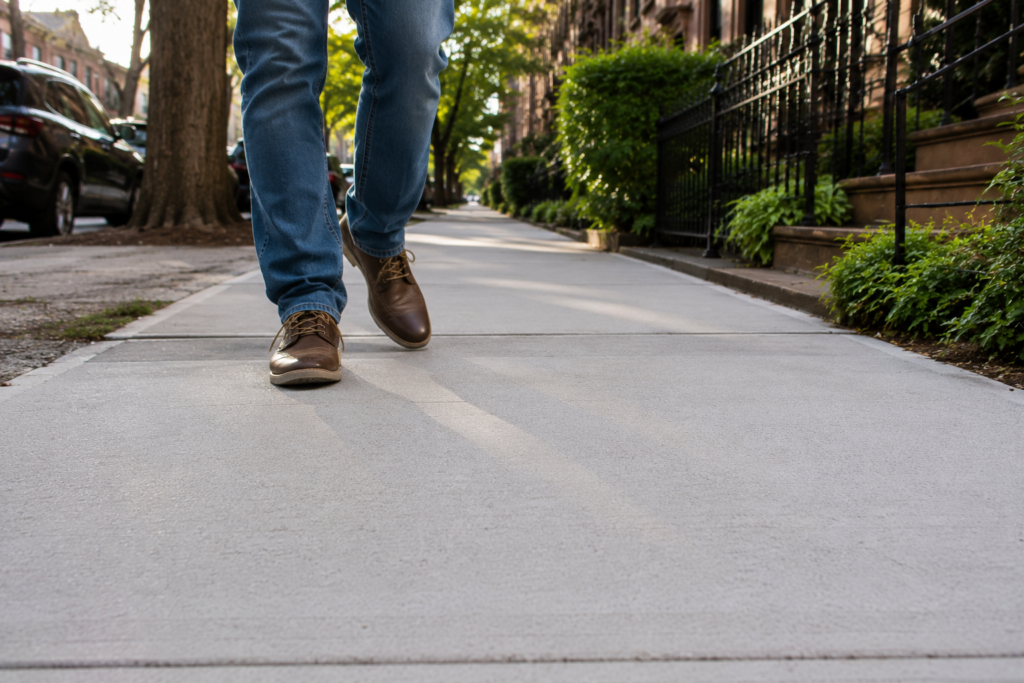
For most residential slabs, a driveway, a patio, or a sidewalk, you’re looking at 24 to 48 hours before it’s safe to walk on. I usually tell customers: wait until the next morning. Don’t let kids or pets on it that same day, no matter how firm it looks.
At 24 hours, the surface can support a person walking carefully. That doesn’t mean it’s “done”; it’s still curing, but it won’t hold a footprint.
If you walked on it for 6 hours and left footprints? That’s going to be there permanently. The surface was still soft enough to deform, and now you’ve got marks in your new concrete.
For stamped or decorative concrete, I recommend waiting the full 48 hours before any foot traffic. The surface finish on decorative work is more delicate, and scuffs or scrapes are much more visible.
How Long Before You Can Drive on Concrete?
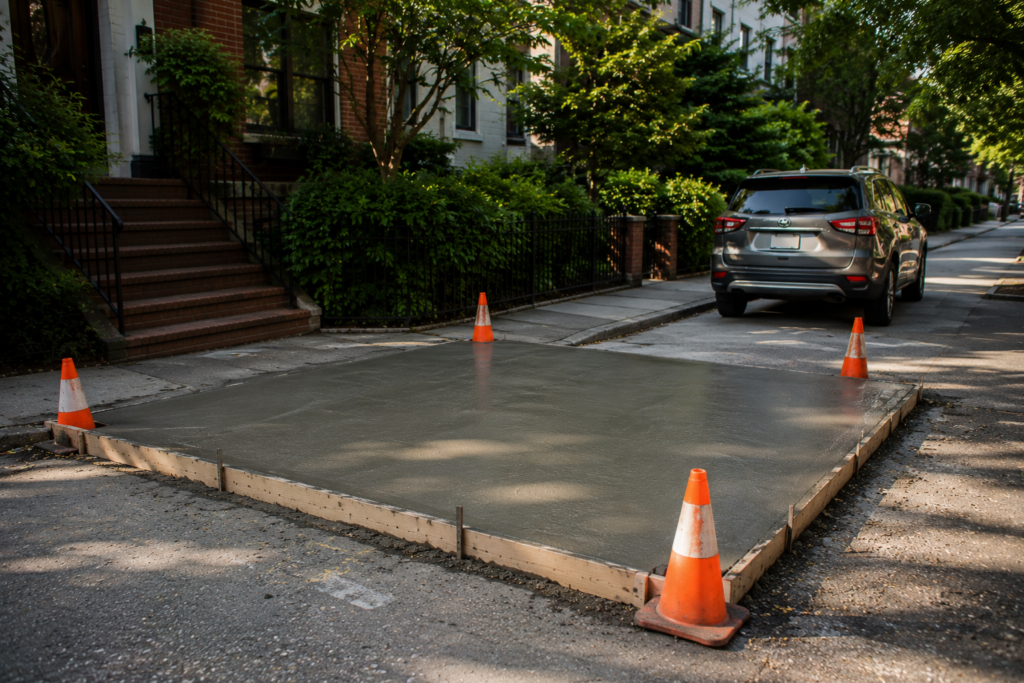
This one causes more problems than walking, because people underestimate how heavy vehicles are and how much stress a stationary load puts on a slab that’s still curing.
Here’s how I break it down:
| Vehicle Type | Minimum Wait Time | Notes |
| Passenger car (sedan) | 7 days | Standard residential mix |
| SUV or minivan | 7 days | Same guideline |
| Pickup truck (loaded) | 10–14 days | Heavier axle loads |
| Delivery truck | 28 days | Wait for full cure |
| Heavy commercial vehicle | 28+ days | May require a higher-strength mix |
Seven days is not a suggestion; it’s the minimum for a standard residential driveway. I’ve had customers park on a new slab for 3 or 4 days and get lucky. I’ve also seen cracking from exactly that mistake. The problem is that you don’t always see the damage right away. Cracks can appear weeks later as the slab finishes curing under stress it wasn’t ready to handle.
Step-by-Step Guide to Protect Fresh Concrete
Once the crew packs up and leaves, the concrete’s fate is partly in your hands. Here’s what to do.
Step 1: Keep Foot Traffic Off. Put up barriers if you have to. Use orange cones, caution tape, whatever works. Keep kids and pets away for at least 24 hours, ideally 48. Even light scuffs on the first day can leave marks.
Step 2: Prevent Standing Water After the initial set, standing water on the surface can weaken it. If it rains, don’t panic, but don’t let puddles sit for hours. Light moisture is fine; saturation isn’t.
Step 3: Avoid Heavy Loads. No dumpsters, pallets, heavy equipment, or parked vehicles for the first 7 days. That includes things people don’t think about, like a fully loaded moving truck pulling up to the house.
Step 4: Follow Your Contractor’s Recommendations. Every pour is a little different. If your contractor tells you to wait 10 days, wait 10 days. They know the mix they used, the slab thickness, and the weather conditions during and after the pour.
Step 5: Monitor Weather Conditions. If temperatures are going to drop below freezing in the days after your pour, cover the slab with insulating blankets. If you’re in a heat wave, keep it lightly misted to slow evaporation and help the curing process along. Your contractor should advise on this.
Common Mistakes That Slow Down Concrete Curing
After 20-plus years in this business, I’ve seen every mistake there is. These are the most common ones.
Parking Too Early Already covered this above, but it bears repeating. A week feels like a long time when you just had a driveway poured. It is not a long time. A cracked driveway is a much bigger problem.
Skipping Curing Procedures: Professional contractors apply curing compounds or use wet burlap and plastic sheeting to maintain moisture during the curing period. Some homeowners doing DIY work skip this step entirely. The result is concrete that looks fine on the surface but hasn’t reached anywhere near its potential strength.
Excessive Watering: Some people read that concrete needs moisture to cure and decide to blast it with a garden hose twice a day. That’s too much. You want the slab to stay moist, not waterlogged. Excessive water, especially in the first 24 hours, can wash out the surface and affect the finish.
Ignoring weather forecasts, pouring concrete the day before a hard freeze, or during a heat wave without proper protection, is a recipe for problems. Good contractors check forecasts and time pours accordingly. If someone is willing to pour your driveway in January with no discussion of cold-weather precautions, that’s a red flag.
How New York Weather Affects Concrete Drying
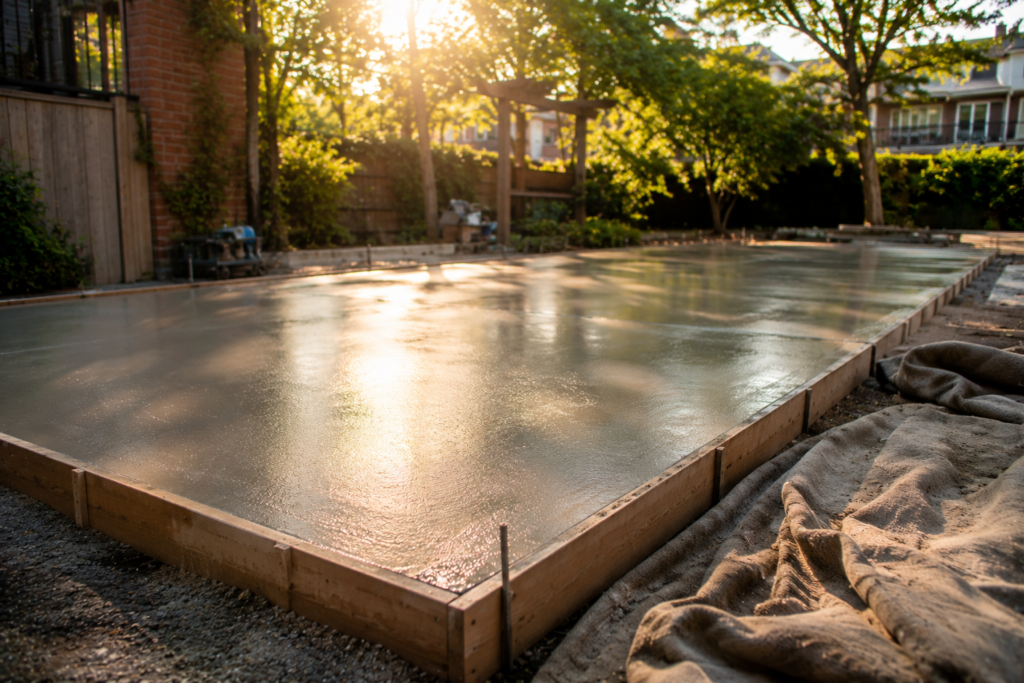
New York’s climate creates real challenges for concrete work. We don’t have the luxury of mild, consistent temperatures year-round.
Summer Installations Summer in New York can mean 90°F and full sun. That accelerates the surface drying dramatically. We typically start pours early in the morning to avoid peak heat, apply curing compounds right after finishing, and sometimes cover slabs with wet burlap to prevent the surface from drying too fast. In these conditions, concrete can feel “done” quickly but still needs the full curing time.
Spring and Fall Conditions: These are actually the best times to pour concrete in New York. Temperatures are moderate, humidity is reasonable, and the slab has ideal conditions to cure slowly and evenly. The main risk is unpredictable weather; a late-spring frost or an early October cold snap can cause problems if you’re not watching the forecast.
Winter Concrete Projects: This is where things get serious. Concrete should not be poured when temperatures are at or near freezing without proper precautions. Water in the mix can freeze before hydration is complete, and that’s essentially fatal for the structural integrity of the slab. We use heated enclosures, insulated blankets, and accelerating admixtures for cold-weather pours. If a contractor offers to pour your driveway in February without any discussion of cold-weather protection, walk away.
Case Study: New Concrete Driveway in Queens, New York
Last spring, we replaced a 40-year-old deteriorated driveway for a homeowner in Queens. The original slab had heaved, cracked, and was causing drainage problems. Total project: about 600 square feet of 4-inch residential concrete with a broom finish.
The pour went smoothly on a Thursday morning in mid-April. Temperatures were in the low 60s, light breeze, no rain in the forecast for several days, ideal conditions.
By Thursday evening, the homeowner called asking if she could pull her car in “just for tonight” because street parking was tight. We said no. She waited.
Saturday, she asked about walking on it to check the mailbox. We said light foot traffic was fine at that point.
The following Thursday, seven days post-pour, she parked her car on the new driveway for the first time. No issues.
We went back at 28 days to apply a penetrating sealer, which we always recommend for New York driveways due to road salt and freeze-thaw cycles. She called us six months later to say the driveway still looked brand new.
That’s what patience gets you. It’s genuinely that simple.
Expert Insight
“The biggest mistake property owners make is treating ‘dry’ like it means ‘done.’ I’ve had customers park on a slab four days after we poured it because it rained and they couldn’t tell it was still curing. You can’t see strength; you can only see surface hardness. Those are two completely different things. Concrete is still building strength at 28 days. The first week is when it’s most vulnerable, and that’s exactly when most people decide to test it.”
A licensed concrete contractor with over 20 years of experience installing residential and commercial slabs throughout New York
Frequently Asked Questions
How long does concrete take to dry?
Concrete surfaces typically feel dry and firm within 24–48 hours of being poured. However, “dry” and “cured” are not the same. Full curing, when concrete reaches its rated structural strength, takes approximately 28 days.
How long does concrete take to cure completely?
The standard concrete curing timeline is 28 days to reach full design strength. Concrete gains roughly 70% of its strength in the first 7 days, with the remaining strength developing over the following three weeks.
Can I walk on concrete after 24 hours?
Generally, yes, light foot traffic is acceptable after 24 hours on most residential slabs. That said, avoid heavy boots, dragging furniture, or anything that could scuff the surface. Decorative or stamped concrete may need 48 hours before any foot traffic.
Can I drive on concrete after 3 days?
No. Three days are not enough. The minimum recommended wait for passenger vehicles on a standard residential concrete driveway is 7 days. Driving on concrete too early is one of the most common causes of premature cracking.
Does rain affect drying concrete?
Rain in the first 2–4 hours after a pour can damage the surface finish, cause pitting, and wash out the cement paste. After the concrete has initially set (usually 4–6 hours), light rain is less damaging, but the surface still needs protection from heavy downpours for several days.
Tips for Long-Lasting Concrete
Getting concrete poured right is step one. Keeping it in good shape for the long haul takes a little ongoing attention.
Proper Curing: For the first 7 days, keep the slab protected. Don’t let it dry out in hot weather. Don’t let it freeze in cold weather. This phase has the greatest impact on the slab’s long-term strength.
Sealing in New York, sealing a concrete driveway or patio is not optional; it’s necessary. Road salt, freeze-thaw cycles, and UV exposure will deteriorate an unsealed slab far faster than a sealed one. Apply a high-quality penetrating sealer 28 days after the pour, then reseal every 2–3 years, depending on traffic and exposure.
Seasonal Maintenance: Avoid using rock salt or harsh chemical deicers directly on concrete, especially in the first winter after installation. They accelerate surface scaling and spalling. Sand or kitty litter provides traction without chemical damage.
Preventing Cracks: Control joints are cut into concrete to direct where cracking occurs. Make sure your contractor includes them at proper intervals. Tree roots, soil settlement, and improper sub-base preparation are common causes of cracking, all things that need to be addressed before the pour, not after.
Conclusion
If there’s one thing I hope you take away from this, it’s that concrete drying time and concrete curing time are two different things, and patience during that 28-day curing window is the cheapest investment you can make in your new slab.
The most expensive concrete repairs I do are on slabs that were used too soon, weren’t sealed, or were poured in bad weather without proper precautions. Most of those repairs were avoidable. A week of careful management after the pour can add years to the life of your driveway, patio, or foundation.
New York winters are tough on concrete. New York summers can be just as unforgiving. When the conditions are right and the curing process is respected, a well-installed concrete slab should last 30 years or more.
Give it the time it needs. It’s worth it.
Ready to Get Your Project Started?
If you’re planning a new concrete driveway, patio, sidewalk, or any other concrete installation in New York, work with a contractor who knows how to handle local weather conditions and treats the curing process seriously, not as an afterthought.
Contact our team for a free consultation and estimate. We’ve been pouring concrete throughout New York for over 20 years, and we’re happy to answer any questions before you commit to a project.