I’ve been pouring concrete in New York for over twenty years, and if there’s one thing I’ve learned, it’s this: the contractor you hire matters more than the concrete itself. I’ve fixed enough driveways, patios, and foundations that were done wrong the first time to know that a bad hire doesn’t just waste money; it costs you sleep.
Most homeowners calling me for the first time have the same worry. They don’t know who to trust. They’ve heard stories about a neighbor’s driveway cracking within a year, or a patio that pooled water every time it rained. They want to avoid becoming the next cautionary tale.
That’s really what this comes down to. Concrete work looks simple from the outside: pour it, smooth it, let it cure. But the difference between a slab that lasts thirty years and one that’s crumbling in five almost always traces back to who did the work and how. So let’s walk through exactly what to look for in a concrete contractor, based on what I’ve actually seen go right and wrong on job sites across this state.
Why Choosing the Right Concrete Contractor Matters
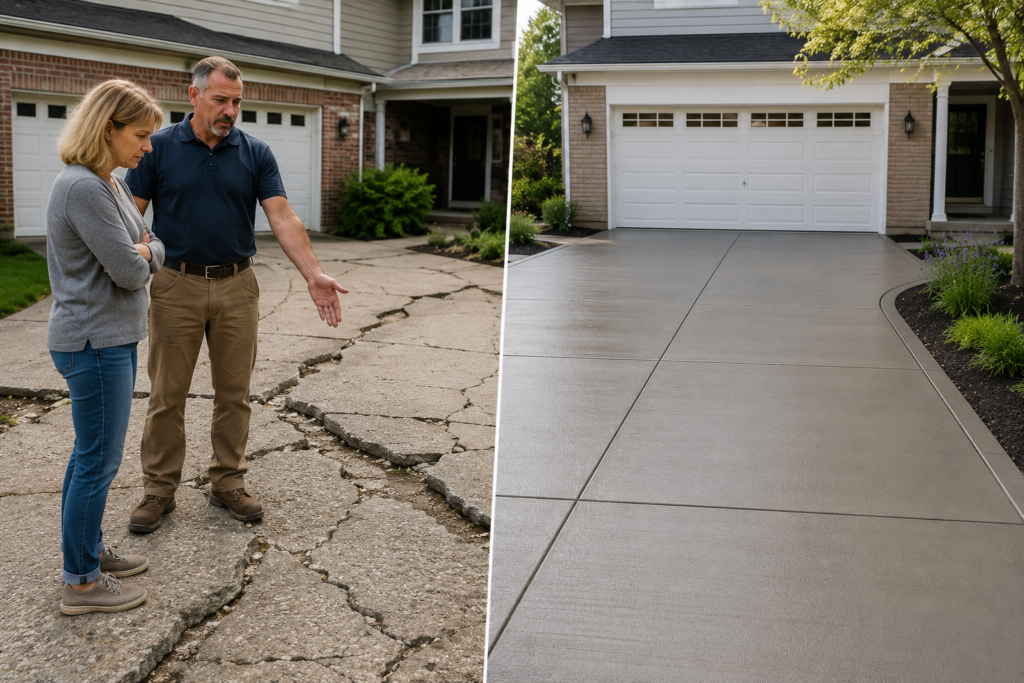
I once got called out to look at a driveway that was only two years old. Cracks running across it like a spiderweb, edges crumbling, the whole thing tilting slightly toward the garage instead of away from it. The homeowner had gone with the lowest bid. Saved maybe eight hundred dollars up front. Ended up paying nearly triple that to have it torn out and redone.
That’s the real cost of hiring the wrong person. It’s rarely about the concrete mix going bad. It’s almost always about shortcuts, skipping proper base prep, pouring in the wrong weather conditions, using too much water in the mix to make it easier to work with. Small decisions that don’t show up until months later.
Here’s what’s actually on the line when you hire a concrete contractor:
Work quality: A rushed job shows itself in uneven surfaces, poor finishing, and joints placed in the wrong spots.
Long-term durability: Concrete that’s properly reinforced and cured can handle New York winters for decades. Concrete that isn’t will flake, crack, and heave within a few seasons.
Safety: Uneven walkways and driveways aren’t just an eyesore; they’re a liability, especially once ice shows up.
Property value: Cracked or sinking concrete is one of the first things a buyer’s inspector will flag.
Warranty protection: A contractor who stands behind their work will fix problems. One who doesn’t will disappear the moment you call.
None of this is meant to scare you off the idea of getting concrete work done. It’s meant to explain why the selection process is worth taking seriously.
What to Look for in a Concrete Contractor
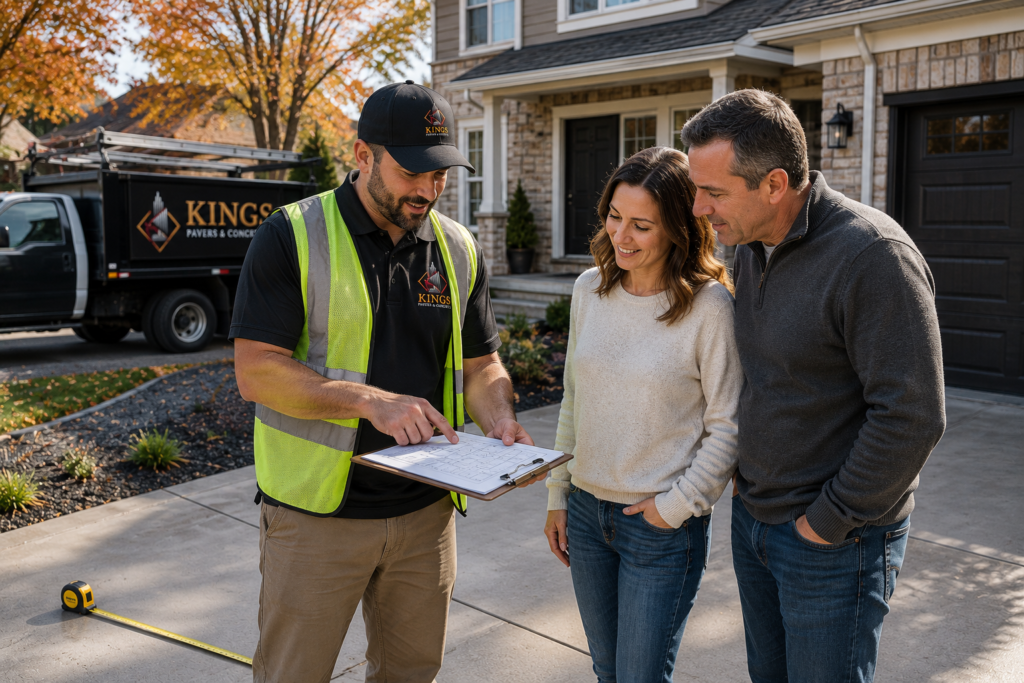
This is the part homeowners ask me about most, so I’ll go through it the way I’d walk a friend through it over coffee.
Proper Licensing
New York requires contractors to carry the appropriate licensing depending on the municipality you’re in. A licensed concrete contractor has met minimum standards and can be held accountable if something goes wrong. Ask for the license number and actually look it up; it takes five minutes, and it’s worth it.
Insurance Coverage
This one gets overlooked constantly. An insured concrete contractor protects you if a worker gets hurt on your property or if something gets damaged during the job. Without insurance, you could be the one holding the bill. Always ask to see a current certificate of insurance, not just a verbal assurance.
Years of Experience
There’s no substitute for having seen a lot of dirt. A contractor who’s been doing residential concrete work in New York for years has already made the mistakes new companies are still making on your project. Experience shows up in how they handle drainage, frost lines, and soil conditions specific to this region.
Portfolio of Completed Work
Ask to see photos of recent jobs, not just the finished product, but the prep work too. A contractor who’s proud of their process will happily show you the forms, the rebar, the base compaction. If they’re cagey about the details, that tells you something.
Customer Reviews
Concrete contractor reviews are one of the most honest windows into how a company actually operates. Look past the star rating and read what people say about communication, cleanup, and whether the work held up over time.
References
A good contractor won’t hesitate to connect you with past clients. Call two or three. Ask specifically how the project went a year or two later, not just right after it was finished.
Written Estimates
Concrete contractor estimates should be detailed: materials, labor, timeline, and what’s included. A vague one-line quote is a warning sign in itself.
Communication
Pay attention to how quickly they respond and how clearly they explain things during the estimate process. That’s usually a preview of how the whole project will go.
Knowledge of New York Weather
This one is specific to us. Concrete behaves differently depending on temperature and humidity, and New York’s freeze-thaw cycles are brutal on anything poured or cured incorrectly. A contractor who understands local weather will know when to pour, when to hold off, and how to protect fresh concrete from an early frost.
Material Quality
Ask what mix they use and why. Cheaper mixes with less cement content might save a few dollars per yard but won’t hold up the same way over twenty New York winters.
Warranty
Ask what’s covered, for how long, and what would void it. A contractor confident in their work will put this in writing without hesitation.
Cleanup Process
It sounds minor until you’re the one left with leftover concrete chunks and tire ruts in your lawn. Ask upfront what cleanup looks like when the job wraps.
Quality Contractor vs. Warning Signs to Avoid
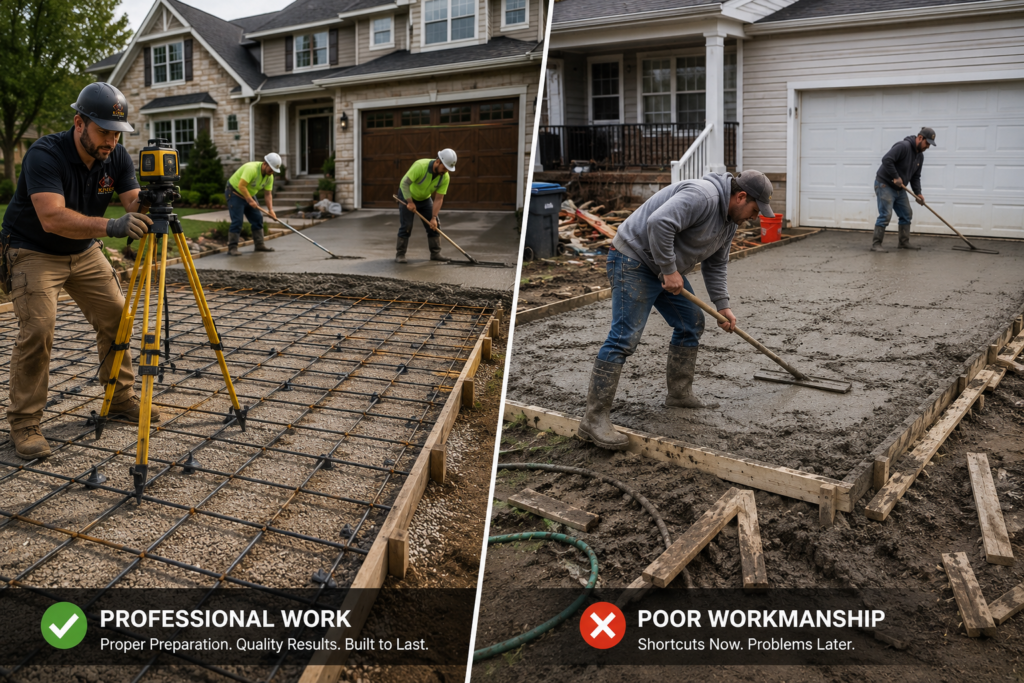
| Quality Contractor | Warning Signs to Avoid |
| Licensed and insured, documentation provided without hesitation | Reluctant or vague about licensing and insurance |
| Detailed written estimate with clear scope | Verbal-only quote or rushed paperwork |
| Willing to share references and past project photos | No references, no portfolio, no online presence |
| Explains the process in plain language | Dismissive of questions or overly technical without explanation |
| Realistic timeline based on weather and site conditions | Promises an unusually fast turnaround regardless of conditions |
| Asks for a reasonable deposit, balance due on completion | Demands large payment upfront, before any work begins |
| Offers a written warranty | No warranty, or “we’ll take care of it” with nothing in writing |
Questions Every Homeowner Should Ask Before Hiring
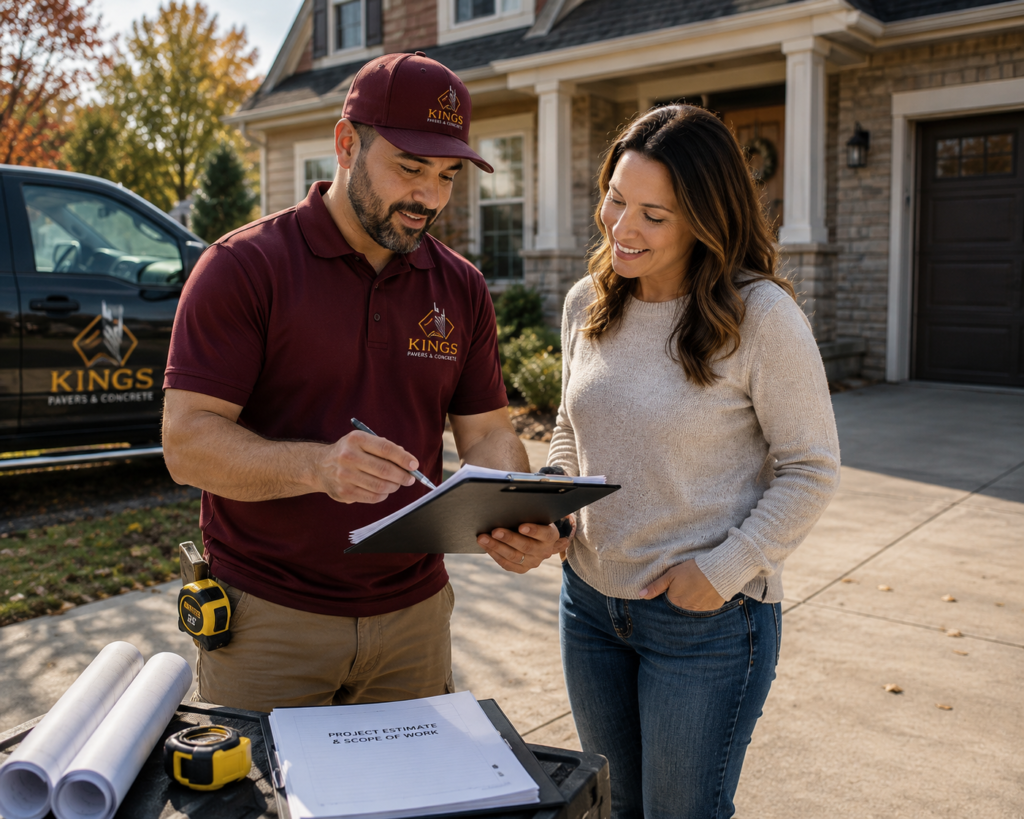
Keep this list handy when you’re talking to a concrete contractor near me search result or a company a neighbor recommended:
- Are you licensed to work in this municipality?
- Are you insured, and can I see proof?
- Can I see photos or visit a site from a recent project?
- Who’s responsible for pulling permits: you or me?
- How long will the project realistically take, start to finish?
- What warranty do you provide, and what does it cover?
- How will weather affect the schedule or the curing process?
If a contractor gets impatient with these questions, that’s useful information too.
Step-by-Step Guide to Hiring a Concrete Contractor
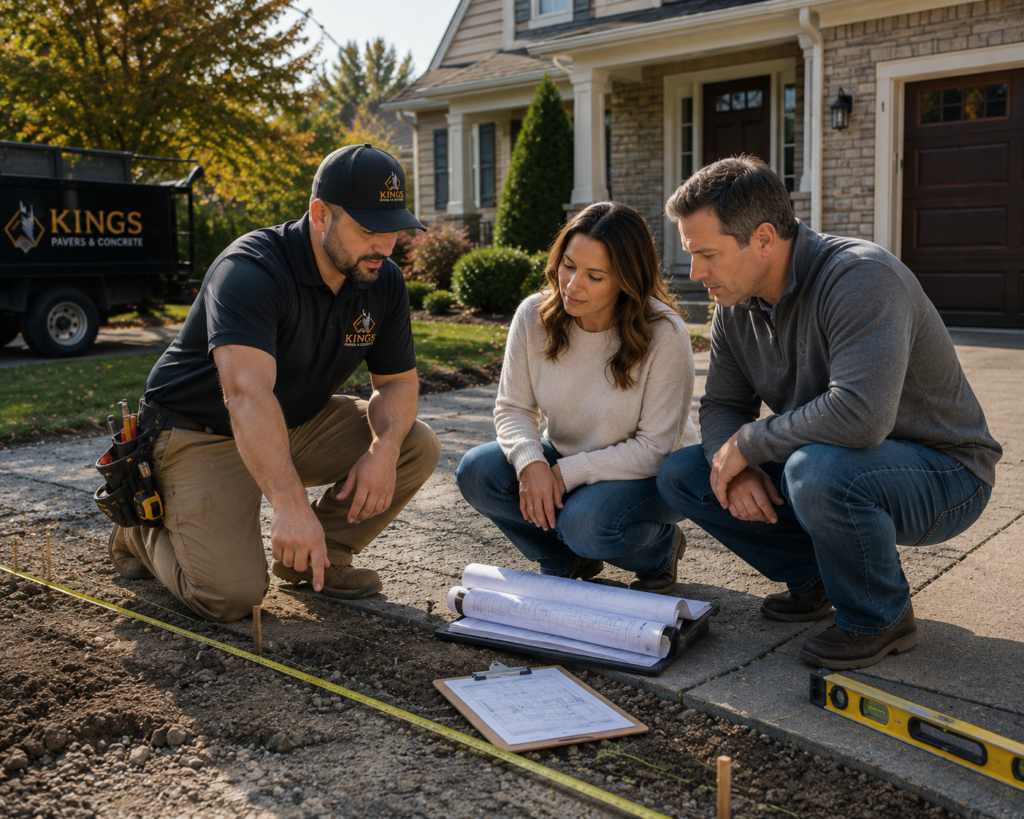
Step 1: Research local contractors
Start with a simple search for a residential concrete contractor or commercial concrete contractor in your area, depending on your project. Narrow the list to companies actually based in New York, since local knowledge matters more than people realize.
Step 2: Read reviews
Look for patterns, not one-off complaints. A company with hundreds of reviews and a handful of negative ones is different from one with five reviews and two bad experiences.
Step 3: Compare estimates
Get at least three. Not just to chase the lowest number, but to understand what a fair price range actually looks like for your project.
Step 4: Verify credentials
Confirm licensing and insurance independently. Don’t take a business card’s word for it.
Step 5: Review contracts
Read the whole thing. Scope of work, materials, timeline, payment schedule, and warranty terms should all be spelled out.
Step 6: Schedule the project
Once you’ve picked a contractor, lock in a timeframe that accounts for New York’s weather patterns; spring and fall tend to offer the most workable conditions.
Mistakes Homeowners Make When Hiring a Concrete Contractor
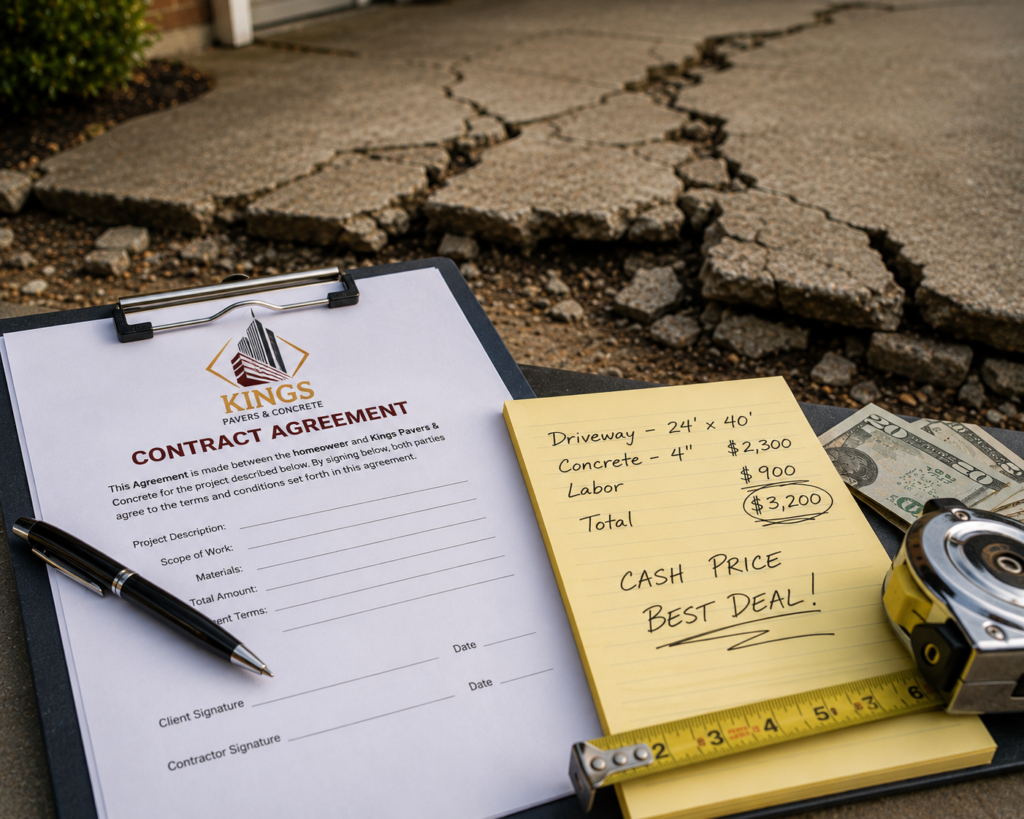
Even experienced homeowners can make costly mistakes when choosing a concrete contractor. Taking a little extra time before signing a contract can help you avoid unnecessary expenses, project delays, and disappointing results.
Choosing the Lowest Quote
It’s natural to compare prices, but the cheapest estimate isn’t always the best value. Extremely low quotes may indicate shortcuts in site preparation, reinforcement, materials, or workmanship that can lead to costly repairs later.
Skipping License and Insurance Verification
Never assume a contractor is properly licensed and insured without asking for proof. Verifying these credentials helps protect you from liability and ensures you’re working with a legitimate professional.
Not Asking for References
A reputable contractor should have no problem sharing recent customer references or examples of completed projects. Speaking with previous clients can give you valuable insight into the contractor’s communication, reliability, and quality of work.
Ignoring the Written Estimate
A professional estimate should clearly outline the scope of work, materials, project timeline, payment schedule, and warranty information. If important details are missing, ask questions before moving forward.
Paying the Full Amount Upfront
While a reasonable deposit is standard practice, requesting full payment before work begins should raise concerns. A clear payment schedule helps protect both you and the contractor throughout the project.
Rushing the Decision
Choosing a concrete contractor is an important investment. Taking time to compare estimates, verify credentials, and ask questions often leads to better long-term results than making a quick decision based on price alone.
Red Flags You Should Never Ignore
Extremely low prices. Concrete has a fairly predictable material and labor cost. A quote far below everyone else’s usually means something’s being cut: thickness, reinforcement, or base prep.
No written contract. Verbal agreements leave you with no protection if something goes sideways.
Large upfront payment requests. A reasonable deposit is normal. Being asked for the full amount before work starts is not.
No insurance. This one’s non-negotiable. Uninsured work puts you at financial risk if anything goes wrong.
Poor communication. If getting a straight answer during the estimate is difficult, it won’t get easier once they have your deposit.
No local references. A contractor with no New York-based references may not understand the specific conditions your project needs to account for.
Expert Insight
“The biggest mistake I see homeowners make is treating concrete like a commodity, like it doesn’t matter who pours it as long as the price is right. But concrete is only as good as the hands and the process behind it. I’d rather lose a bid to someone cheaper than watch a homeowner get burned by a shortcut they didn’t know was being taken.”
Frequently Asked Questions
What should I look for in a concrete contractor?
Look for proper licensing, active insurance, verifiable experience, a portfolio of past work, and a detailed written estimate. Communication and willingness to answer questions honestly matter just as much as credentials.
How do I know if a concrete contractor is reliable?
Check reviews, ask for references, and confirm their license and insurance independently rather than taking their word for it. A reliable contractor won’t hesitate to provide any of this.
Should I always choose the lowest quote?
No. An unusually low quote often means shortcuts somewhere: thinner slabs, skipped base prep, or lower-grade materials. Compare estimates for what’s included, not just the bottom-line number.
Do concrete contractors need insurance?
Yes. Insurance protects you from liability if a worker is injured or property is damaged during the project. Never hire a contractor who can’t provide proof of current coverage.
How long should concrete work last?
A properly installed driveway or patio in New York should last twenty to thirty years or more with normal maintenance. Poor installation can cut that lifespan dramatically.
How many estimates should I get?
Three is a good baseline. It gives you enough to spot outliers, whether unusually high or suspiciously low.
What questions should I ask before signing a contract?
Ask about licensing, insurance, warranty terms, project timeline, payment schedule, and who’s responsible for permits. Get the answers in writing, not just verbally.
Conclusion
Choosing a concrete contractor isn’t something you need to overthink, but it is something worth slowing down for. Check the license. Confirm the insurance. Read the reviews. Ask the questions that feel a little uncomfortable to ask. A few extra hours of research up front can save you years of frustration and thousands of dollars down the road.
Concrete is permanent. The contractor you choose should give you confidence that’s built to match.