
Hiring a driveway paver contractor comes down to a handful of questions, and most homeowners in New Hyde Park do not know which ones matter until the estimate is already in hand. The pavers are the visible part of the job. What decides whether the driveway still looks good after ten winters is mostly hidden: the excavation, the compacted base, the drainage, and the paperwork behind the work. A good contractor will answer questions about all of it without hesitation. This guide covers the questions to ask, why each one matters, and what a solid answer sounds like. Use it as a checklist when you compare two or three bids, so you are judging the same things across each one.
Is the Contractor Licensed and Insured?
Nassau County requires contractors who do residential home improvement work to be licensed, and New Hyde Park falls under that rule. The county’s Department of Consumer Affairs issues the licenses and runs an online search where you can look up licensed contractors and see their insurance details. According to the county, a contractor who does not appear in that search is not currently licensed. That makes it the fastest first check you can run on any bid.
Ask the contractor directly:
- What is your Nassau County home improvement license number?
- Can you send a certificate of insurance showing general liability and workers’ compensation coverage?
- Will subcontractors work on my driveway, and are they licensed and insured too?
Then confirm the answers yourself instead of relying on a verbal yes. You can use the Nassau County Department of Consumer Affairs license search. A contractor with nothing to hide will not mind you checking.
What Will the Written Contract Cover?
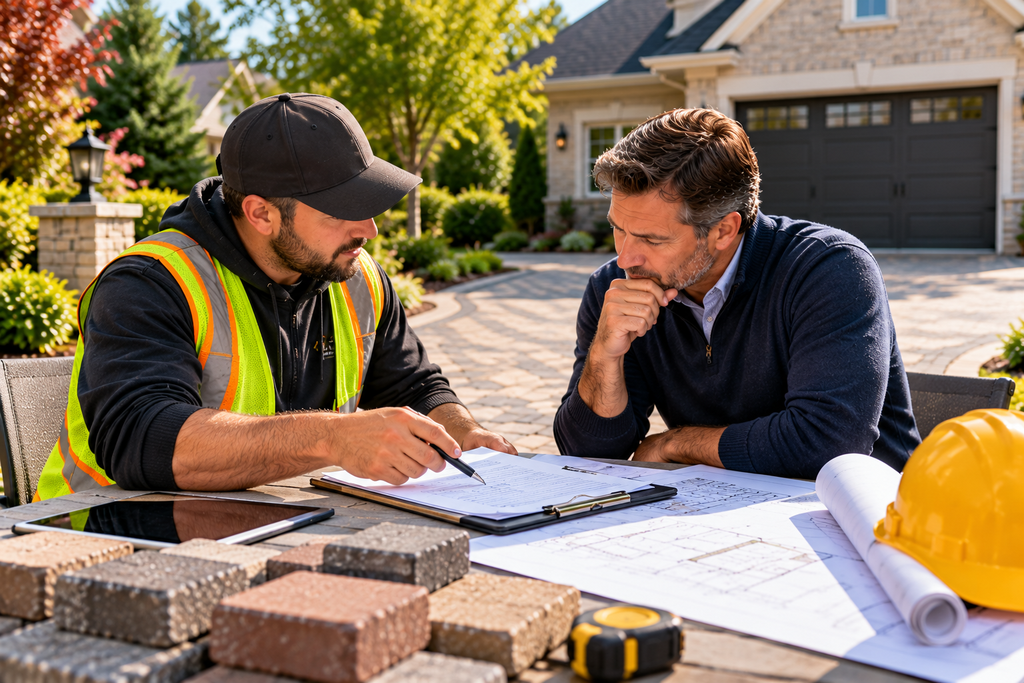
New York requires a written contract for home improvement work, and the rule applies to most projects costing more than $500. The contract has to be legible and written in plain English. Beyond that baseline, a good contract describes the work and materials, the total price, the approximate timeline, and the payment schedule in enough detail that two people would read it the same way.
State law also speaks to your money. Contractors must either place payments received before completion in an escrow account or post a bond, and they are required to disclose how the funds are being protected. The New York Attorney General’s home improvement fact sheet explains these rules in plain terms. This is general information, not legal advice.
Questions to ask:
- Is everything we discussed written into the contract, including the paver type, base depth, and drainage plan?
- How will my deposit and progress payments be protected?
- How are changes to the scope or price handled?
Which Pavers Will You Use, and Why Those?
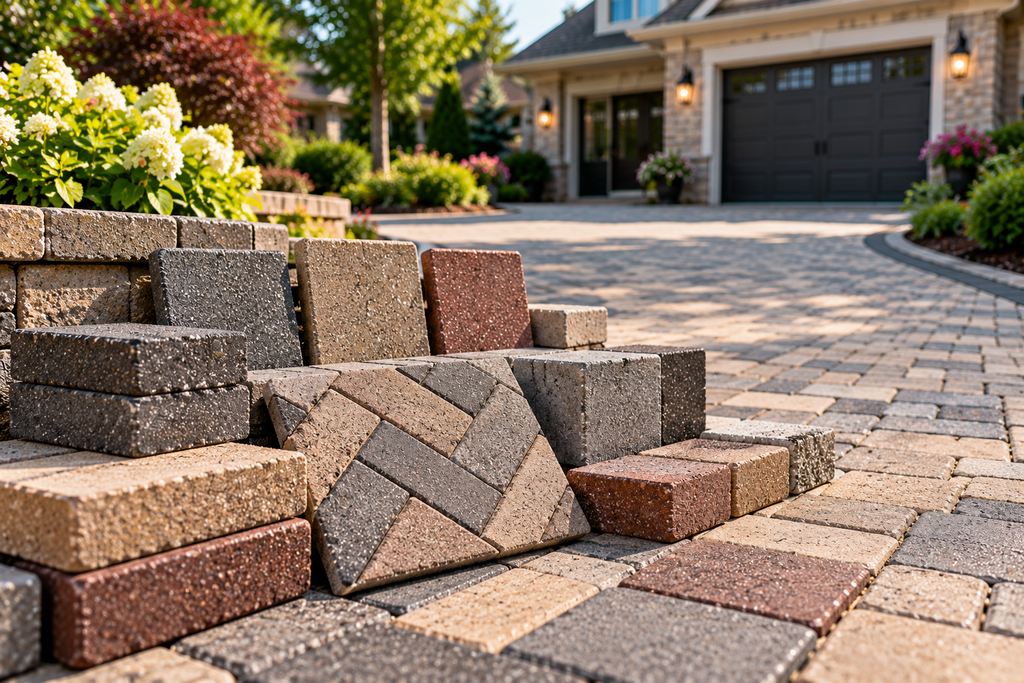
Not every paver is built for vehicles. Driveway pavers are generally thicker than the units used on patios and walkways, because they carry cars and delivery trucks instead of foot traffic. Specific answers also show whether the contractor planned the job around your property or is quoting a generic one.
- Which manufacturer and product line will you use, and can I see a physical sample?
- Is this paver intended for driveway use, and how thick is it?
- Which pattern do you recommend for a driveway? Patterns such as herringbone are commonly recommended for vehicle areas because they interlock tightly, so the choice is not purely cosmetic.
- How will the edges be restrained so the surface does not spread over time?
The material itself changes cost and upkeep, so it helps to know your options before the first meeting. You can see what Kings Pavers & Concrete offers on its driveway paver installation page.
How Will You Prepare the Base and Manage Drainage?
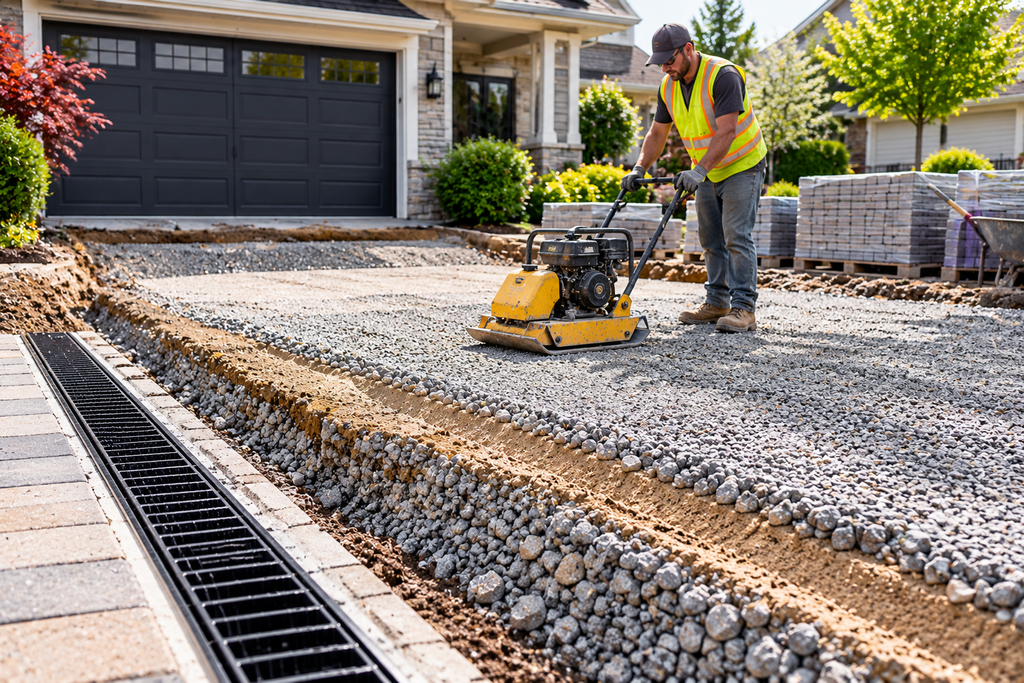
This is the most important part of the conversation, and it is the one rushed contractors tend to skip. Pavers are a surface layer. The compacted base underneath carries the load, and the slope of the driveway controls where water goes. A thin or poorly compacted base is a common reason pavers settle, rut, or shift after a few seasons, and no paver brand can make up for it. Our article on laying pavers without a base explains why.
Winter raises the stakes in New Hyde Park. Water that sits in or under a driveway surface freezes and thaws repeatedly through a Long Island winter, and each cycle can push the surface up and let it settle unevenly. Good drainage and a well-compacted base reduce that risk.
Ask these questions:
- How deep will you excavate, and what material goes into the base?
- Will the base be compacted in layers, and with what equipment?
- Which direction will the driveway slope, and where will runoff end up: the street, the garage, or a neighbor’s yard?
- What will you do if you find soft soil or a wet spot after digging?
- Will you remove the existing driveway, and how is that handled and priced?
A strong answer is specific. The contractor can describe the layers, the equipment, and the slope for your lot. A vague answer about doing it right is a signal to keep asking.
What Is the Timeline, and Who Handles Permits and Utilities?
Ask for a start date, an expected duration, the crew size, and the plan for rain delays. Find out when you can drive on the finished surface and where to park during the work. Confirm who will arrange utility markouts before any digging and how old material and debris will be hauled away.
Permits deserve a direct question. Requirements for driveway work depend on your exact address and on what the project involves, especially if it touches the driveway apron or the curb. Ask who decides whether a permit is needed and who applies for it, then confirm with your local building department, since the responsible office can vary by address. Do not rely on a general rule from the internet, including this article.
How Is the Estimate Built, and What Could Change the Price?
A single total price hides too much. Ask for an itemized estimate that lists removal and disposal, excavation, base material, bedding sand, pavers, edging, joint sand, sealing if included, and cleanup. When you compare bids, line those items up side by side. A much lower price often means something is missing or thinner than the other bids.
- What is excluded from this price?
- What conditions could change it, such as soft soil, drainage fixes, or tree roots?
- Will extra work be priced and approved in writing before it starts?
Our guide to driveway paver costs in New Hyde Park walks through the factors that move a quote up or down.
What Warranty and Aftercare Come With the Job?
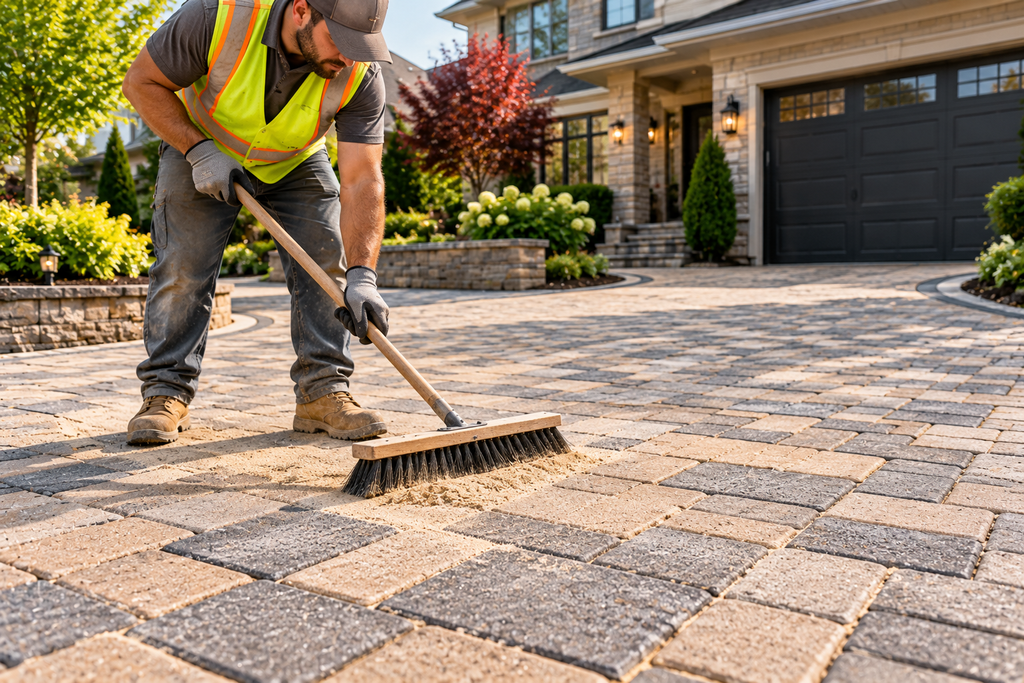
Warranty can mean very different things from one contractor to the next. Ask whether the workmanship is covered, whether the pavers carry a separate manufacturer warranty, how long each lasts, and what could void them. Request all of it in writing. Also ask what routine care to expect, such as topping up joint sand or sealing, and who to call if a section settles. Our seasonal paver maintenance guide covers upkeep through the year.
Red Flags to Watch For
- No license number, or reluctance to share insurance paperwork
- Pressure to sign immediately or pay a large deposit up front
- No written contract, or a contract that leaves out the paver type and base details
- A bid far below the others with no explanation
- Vague answers about base depth, compaction, or drainage
- Reluctance to put promises in writing
Frequently Asked Questions
How do I check whether a driveway contractor is licensed in Nassau County?
Use the license search on the Nassau County Department of Consumer Affairs website. It lets you look up licensed home improvement contractors and view their insurance information. The county states that a contractor who is not listed is not currently licensed, so ask for the license number and verify it before signing anything.
Does New York require a written contract for driveway work?
Yes. State law requires home improvement work to be covered by a written contract in plain English, and it applies to most projects costing more than $500. Make sure the contract names the pavers, describes the base and drainage work, states the price, and lays out the payment schedule.
How do I know my deposit is protected?
State law requires contractors to either place payments received before completion in escrow or post a bond, and to disclose which applies. Ask where the money will be held and get the answer in the contract. This is general information, so consider asking a lawyer about your specific agreement.
How can I compare two paver driveway estimates fairly?
Ask each contractor for an itemized estimate covering removal, excavation, base, pavers, edging, joint sand, and cleanup. Then compare the same line items, base depth, and drainage plan across both. A lower total with a thinner base or missing items is not a true savings.
Do I need a permit to install a paver driveway in New Hyde Park?
It depends on your address and the scope of the work, especially if the apron or curb is involved. Ask the contractor who determines whether a permit is needed, then confirm with your local building department. Requirements and the responsible office can differ, so verify before work begins.
Choosing With Confidence
Take the same questions to every contractor and lay the answers side by side. The right choice is rarely the cheapest bid or the smoothest presentation. It is the contractor whose answers are specific, consistent, and written down.
If you are planning a paver driveway in New Hyde Park, you are welcome to put these questions to Kings Pavers & Concrete. Contact Kings Pavers & Concrete to discuss your project, then compare what you hear with any other bids you collect.

One Response