Driveway Pavers vs. Concrete: Which Is Better for New Hyde Park Homes?
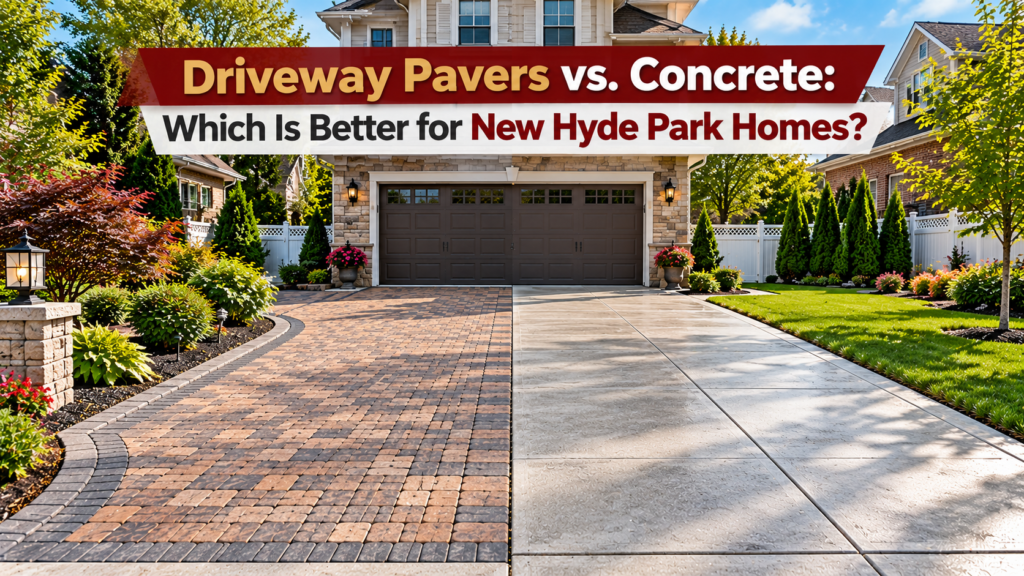
If you’re standing in your driveway right now looking at cracks, sunken sections, or just a surface that’s seen better days, you’ve probably already asked yourself the question: pavers or concrete? There isn’t a single right answer. The material that makes sense for your neighbor’s house on the next block might not be the one that fits your budget, your soil, or how you actually use your driveway. What matters is understanding how each option performs, what it costs you over time (not just on day one), and how it handles a Long Island winter. This guide walks through both options honestly, including where each one tends to fall short, so you can make a decision that fits your property rather than a generic recommendation. Pavers vs. Concrete at a Glance Here’s a quick side-by-side before we get into specifics. Feature Driveway Pavers Poured Concrete Appearance Wide range of patterns, colors, borders Clean, uniform, can be stamped or colored Initial investment Generally higher upfront cost Generally lower upfront cost Expected longevity Long-lasting when properly installed and maintained Long-lasting when properly installed and maintained Crack resistance Individual units flex slightly with ground movement Rigid slab, relies on control joints to manage cracking Repairability Individual pavers can often be lifted and reset Cracks typically require patching or slab replacement Maintenance Occasional joint sand refill, weed control, periodic sealing Periodic sealing, crack monitoring, joint maintenance Winter performance Handles minor shifting without cracking the whole surface Can perform well with proper drainage, but cracking is a real possibility Installation More labor-intensive, unit by unit Faster overall pour, but curing time matters Design flexibility High, patterns and borders are straightforward to customize Moderate, mostly through stamping, coloring, or scoring Neither column is the “winner” here. A homeowner who wants a distinctive look and doesn’t mind a bit more upfront cost often leans toward pavers. Someone who wants a simpler, more budget-friendly surface and is fine with typical concrete maintenance often goes the other way. What Is a Paver Driveway? A paver driveway is built from individual units, usually concrete or brick-style pavers, laid over a compacted base and locked together with sand-filled joints. Instead of one continuous surface, you’ve got dozens or hundreds of separate pieces working together. That joint system is the whole point. Because the units aren’t bonded into one rigid slab, they can shift slightly as the ground beneath them moves, without the surface cracking the way a solid slab would. Edge restraints, typically a hidden plastic or concrete border, keep the outer pavers from creeping outward over time. What Is a Concrete Driveway? Poured concrete is exactly what it sounds like: a continuous slab poured into forms, finished, and left to cure. Because concrete doesn’t have the same flexibility as jointed pavers, contractors cut control joints into the surface at regular intervals. Those joints give the concrete a planned place to crack as it naturally expands and contracts, rather than cracking randomly across the slab. When people talk about concrete driveways developing cracks over the years, they’re usually talking about cracks that show up outside those control joints, often from settlement, drainage issues, or a base that wasn’t compacted well enough to begin with. Pavers vs. Concrete for New Hyde Park Weather This is where the decision gets real. New Hyde Park winters bring repeated freeze-thaw cycles: water gets into small cracks or joints, freezes, expands, and then thaws again once temperatures rise. Do that dozens of times over a winter, and weak points in a driveway get exposed fast. Pavers tend to handle this cycle reasonably well because of that joint flexibility. Minor ground movement from frost heave can shift individual units slightly without cracking the whole surface. That doesn’t mean pavers are immune to problems. Poor base preparation or inadequate drainage can still cause settling, and a paver driveway installed on a soft or poorly compacted base will show it, especially after a rough winter. Concrete can perform well through a New York winter too, when it’s designed and installed correctly. Proper reinforcement, adequate slab thickness, and drainage that keeps water from pooling near the surface all matter. But even a well-installed concrete driveway isn’t crack-proof, and homeowners who go this route should expect that some hairline cracking over the years is a normal part of how concrete ages, not necessarily a sign of failure. Salt and de-icing products deserve a mention here too. Both surfaces can be affected by certain de-icers over time, particularly ones with harsh chemical compositions, so it’s worth using products labeled safe for your driveway material. Which One Lasts Longer? This is a harder question to answer than most marketing material suggests, because service life depends on more than the material itself. Installation quality, base preparation, drainage, how much weight the driveway regularly carries, and how well it’s maintained all factor in. Generally speaking, both well-installed paver and concrete driveways can last several decades with reasonable care, though sources vary somewhat on exact ranges and a lot depends on local conditions. What tends to separate a driveway that lasts 15 years from one that lasts 30 usually isn’t the material category. It’s whether the base was prepared correctly and whether drainage was handled before the surface ever went down. Installation and Base Preparation Here’s something that doesn’t show up in a lot of driveway marketing, but it’s the part that actually determines whether either material performs well: the base. Before any pavers or concrete go down, the site needs to be excavated to an appropriate depth, graded correctly, and built up with a compacted aggregate base. For pavers, that base needs to be uniform enough to support individual units evenly, with edge restraints installed to lock the whole system in place. For concrete, the base needs to provide consistent support across the entire slab so the concrete doesn’t settle unevenly and crack outside its control joints. A beautiful paver pattern or a perfectly finished concrete surface can’t make up for a base that
How to Maintain Driveway Pavers in New Hyde Park Through Every Season
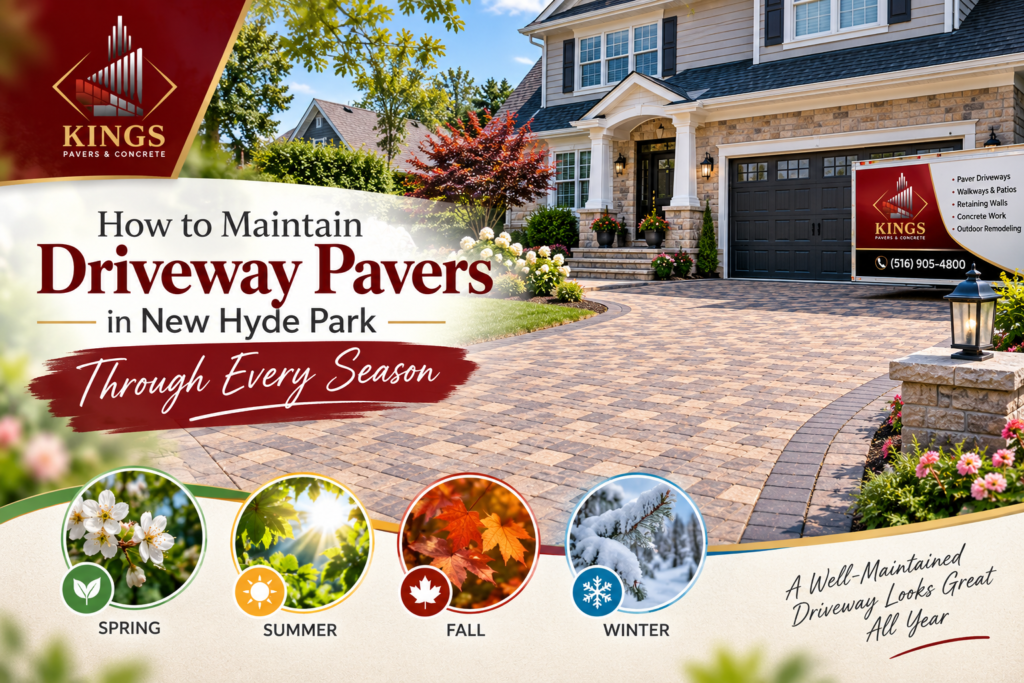
A driveway can look perfectly fine in November and completely different by April. That’s a pattern a lot of New Hyde Park homeowners run into. The pavers held up all fall, then winter happens, and by the time the snow is gone, there’s sand missing between the joints, a paver or two sitting slightly lower than the rest, and maybe a puddle near the garage that wasn’t there before. None of that necessarily means something went wrong with the installation. It usually just means the driveway went through a full New York winter without much attention, and small things that get overlooked tend to show up all at once once the weather warms. So what maintenance do driveway pavers actually need throughout the year? The honest answer is that it’s not complicated, but it does need to happen on a schedule that matches the seasons here, not a generic list written for a warmer climate. Long Island winters, spring rain, summer heat, and fall leaf drop each put a different kind of stress on interlocking pavers, and the maintenance that matters changes with them. Why Seasonal Maintenance Matters for Paver Driveways in New Hyde Park Pavers are built to handle a lot. They’re individual units set on a compacted base with sand-filled joints, which is actually part of why they hold up well over time compared to poured concrete or asphalt. Individual pavers can move slightly and settle back without cracking the whole surface the way a solid slab would. But that same flexibility is also why ongoing care matters. Joint sand isn’t permanent. It washes out with rain, gets displaced by snow removal, and slowly erodes with regular foot and vehicle traffic. Once enough sand is gone, the pavers next to that joint have less support and start to shift under load. Add a New York winter’s freeze-thaw cycle into that equation, where water gets into small gaps, freezes, expands, and thaws again, sometimes dozens of times between December and March, and you’ve got a good explanation for why driveways that seemed stable in the fall show real movement by spring. None of this is dramatic on its own. A little settled joint sand or a slightly uneven paver isn’t a structural emergency. The issue is what happens when it’s ignored for a few seasons in a row. Small problems that would take twenty minutes to fix in year one can turn into a section of driveway that needs to be pulled up and reset by year three. Seasonal maintenance is really just about catching those small things while they’re still small. Spring Maintenance Spring is when a New Hyde Park driveway shows its hand. After a winter of snow, ice melt, and freeze-thaw cycles, this is the best time to actually look at the surface closely rather than just clearing off winter grime. Start with a general inspection. Walk the length of the driveway and look for pavers that have shifted, sunken, or tilted compared to the ones around them. Check the joints for sand loss, especially near the edges of the driveway and around drainage points, since those areas tend to lose material fastest. A few things worth doing each spring: Replacing joint sand in spring is one of the simplest things a homeowner can do, and it makes a real difference. Sand that’s been washed out over winter needs to be replaced before summer rain and heat set in; otherwise, weeds tend to move into those gaps instead. Summer Maintenance Summer maintenance for paver driveway maintenance in New Hyde Park is more about staying on top of things than fixing anything major. The heat and sun exposure through July and August aren’t usually hard on the pavers themselves, but they do bring their own set of routine issues. Weeds are probably the most common one. Once joint sand is a little low, seeds find their way in and take advantage of the warm weather. Pulling them early, before the root system gets established, is a lot easier than dealing with them once they’ve spread across several joints. Staining is the other summer issue that comes up regularly, whether it’s from a car that’s been leaking a little oil, a grill that got moved onto the driveway for a cookout, or general outdoor activity. Most surface stains can be handled with the right cleaner for the type of stain and a stiff brush, without needing anything aggressive. This is also the season people start asking about paver sealing, and it’s worth being straightforward about it. Sealing has real benefits: it can make cleaning easier, help resist staining, and improve the color of the pavers. But it’s not something that needs to happen every single year, and it’s not a fix for structural problems like sinking or poor drainage. If the joint sand is in good shape and the surface isn’t heavily stained or faded, there’s no urgency to reseal just because a season has passed. It’s worth evaluating case by case rather than treating it as an annual requirement. Fall Maintenance Fall is really about getting the driveway ready for winter, and it’s arguably the most important seasonal maintenance window of the year, since it’s the last real chance to fix small things before freezing temperatures make everything harder to work with. Leaves and organic debris need to come off regularly, not just once at the end of the season. Wet leaves sitting on pavers can hold moisture against the surface and contribute to staining, and if they collect over a drain or low point, they can interfere with drainage right when heavy fall rain is more likely. This is a good time to clean any stains that built up over the summer, since it’s easier to do now than after the surface has been sitting under snow for a few months. It’s also worth checking the edges of the driveway and any border pavers, since edge restraints can loosen over a year of use and
Best Driveway Pavers for New Hyde Park Homes: Materials and Styles
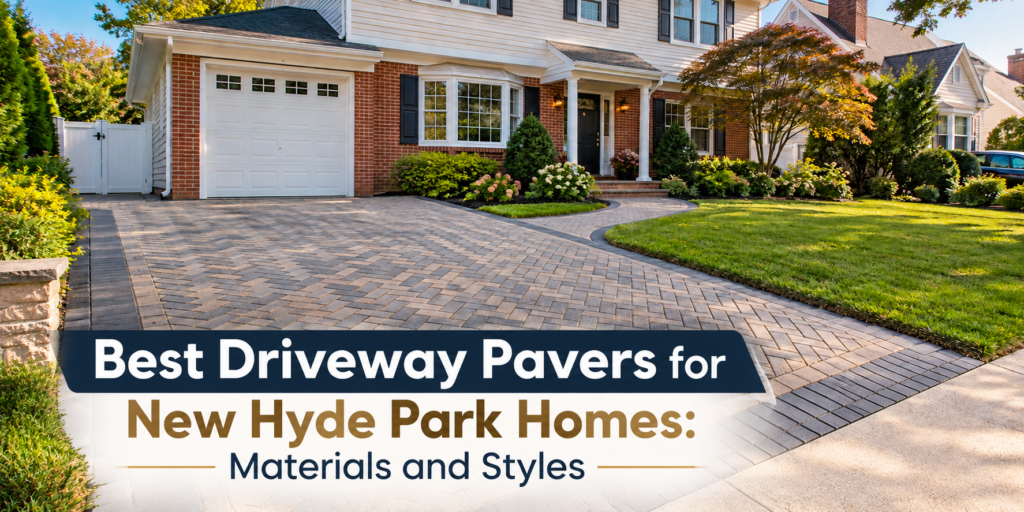
If you’re weighing options for a new driveway, you’ve probably already noticed there’s no shortage of opinions on what’s “best.” Some people swear by natural stone. Others won’t consider anything but concrete pavers because of the price. The honest answer is that the right choice depends on your driveway’s size, how it’s used day to day, and how well it’s installed, not just which material looks nicest in a showroom. For homeowners and property managers in New Hyde Park, there’s an added layer to think about: winters here aren’t gentle. Between freeze-thaw cycles, road salt, and driveways that see everything from a single sedan to a contractor’s truck, picking driveway pavers in New Hyde Park means balancing looks with how a surface actually performs over years of Long Island weather. This guide walks through the materials, styles, and practical considerations that matter most, so you can go into a conversation with a contractor already knowing what questions to ask. What Makes a Good Driveway Paver for New Hyde Park? Appearance matters, obviously. It’s the first thing anyone notices pulling into a driveway. But a paver that looks great in July and starts heaving or cracking by February isn’t doing its job. A few things separate a driveway that ages well from one that becomes a headache: None of these factors work in isolation. A beautiful stone paver installed on a poorly compacted base will still shift and settle. A budget concrete paver, installed correctly with proper drainage, can outperform expectations for a long time. Best Driveway Paver Materials There are three material categories most homeowners end up comparing: concrete, brick, and natural stone. Each has a different personality, and each fits a different kind of property. Concrete pavers are the most common choice for residential driveways, and for good reason. Manufacturers produce them in a huge range of colors, textures, and shapes, which makes it easier to match a specific look without a custom budget. They’re manufactured under controlled conditions, so quality tends to be consistent from paver to paver. On the downside, some lower-end concrete pavers can fade over time with UV exposure, and color consistency across a large driveway depends on ordering enough material from the same production run. Brick pavers bring a classic, traditional look that suits a lot of the colonial and cape-style homes common around Long Island. Clay brick holds its color well since the color runs through the entire paver rather than sitting on the surface, so fading is less of a concern. Brick can be more brittle than concrete under heavy point loads, though, and it tends to cost more per square foot. Natural stone pavers, things like granite, bluestone, or travertine, offer a look that’s hard to replicate with manufactured materials. Every piece is unique, which some homeowners love, and others find inconsistent. Stone is generally very durable, but it’s also the most expensive option, and certain stone types need periodic sealing to resist staining, especially from oil or road salt residue. Material Appearance Maintenance Durability Considerations Best For Concrete Pavers Wide range of colors, textures, and patterns; consistent look Moderate; occasional cleaning and joint sand refresh Strong under vehicle loads when properly installed; some fading possible over time with lower-grade products Homeowners wanting flexibility in design at a moderate budget Brick Pavers Classic, traditional, warm tones that hold color well Low to moderate; color doesn’t fade like surface coatings Can be more prone to cracking under heavy point loads than concrete Colonial, cape, or traditional-style homes Natural Stone Pavers Unique, high-end, varied texture and color Higher; sealing often recommended, more careful cleaning Very durable material, but individual pieces can vary in thickness and finish Homeowners prioritizing a custom, premium look Popular Driveway Paver Styles for New Hyde Park Homes The pattern you choose changes the personality of a driveway almost as much as the material does. A few patterns come up again and again in this area: Herringbone is popular because the interlocking angles genuinely add strength under vehicle traffic, not just visual interest. It’s a common recommendation for driveways specifically because of how well it distributes weight. Running bond is a simpler, brick-like layout where each row is offset from the one before it. It’s clean, doesn’t compete visually with the house, and works well on more traditional properties. Basketweave creates a woven look using pairs of rectangular pavers. It reads as more formal and can suit a home with symmetrical architecture, though it’s used less often on driveways than on patios since it doesn’t lock together quite as tightly under load. Large-format contemporary pavers are gaining ground with newer or renovated homes that lean modern. Fewer joints, cleaner lines, a more minimal look overall. Contrasting borders are less about pattern and more about framing. A darker border paver around a lighter field, or vice versa, can define the edges of a driveway and make it look more intentional, especially on properties with a long or wide apron. The driveway’s dimensions matter here too. A tight, straight driveway on a smaller lot can look busy with an intricate pattern, while a wide, curved driveway often has enough visual space to support something like herringbone with a border. Take a look at your home’s roofline, window trim, and any existing hardscaping like walkways or a front step. Matching those tones, even loosely, ties the whole property together instead of making the driveway look like it was added as an afterthought. Which Pavers Handle New York Weather Well? New Hyde Park sits in a climate zone that goes through real freeze-thaw cycles most winters. Water gets into tiny gaps in a surface, freezes, expands, and repeats that cycle dozens of times over a season. Over years, that process is what causes cracking, heaving, and surface flaking in materials that aren’t suited for it. Denser, low-absorption pavers generally hold up better against this kind of cyclical freezing. That’s one reason properly manufactured concrete and clay brick pavers are common choices here; they’re